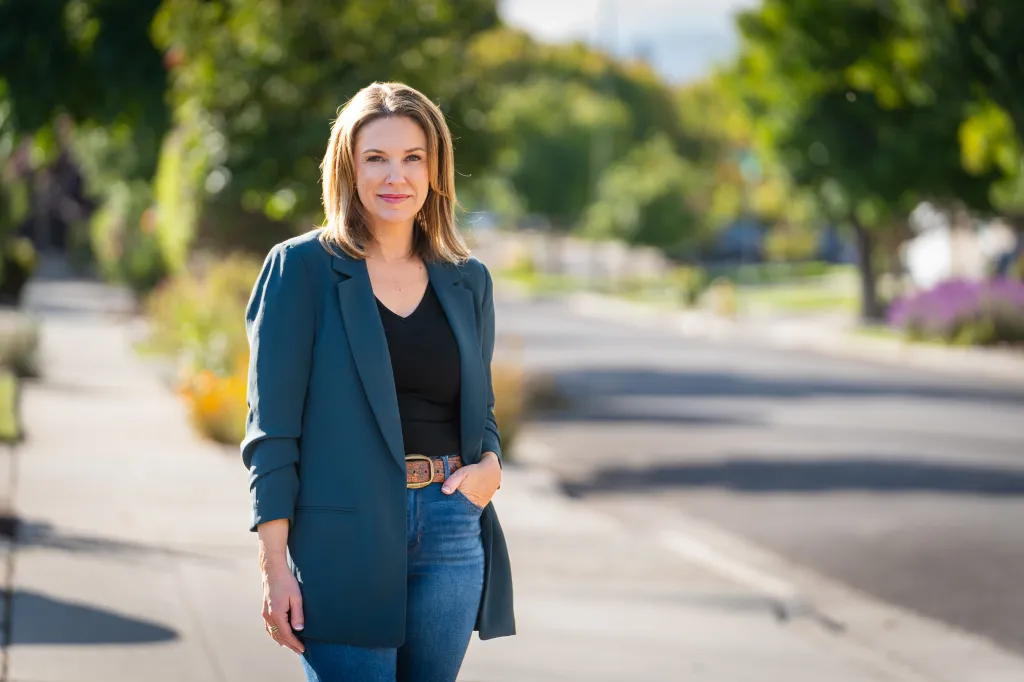
Ahead of the June primary election, the Bay Area News Group compiled a list of questions to pose to the candidates for California’s 14th Congressional District. You can find the full questionnaire below. Questionnaires may have been edited for spelling, grammar, length and clarity.
To read our endorsements for other important Bay Area races click here.
Name: Genny Altwer
Current job title: Therapist, Small Business Owner, Commissioner on the City of San Jose Appeals Hearing
Board
Date of birth: October 28, 1980
Other political positions held: None
District where you reside: Dartmouth Neighborhood
What are the top three problems you’re seeking to solve if elected to represent this district?
Housing development, ending street homelessness and public safety. We must build more housing at every affordability level, especially downtown and along transit corridors, where it makes sense. We also need to maintain and streamline our interim housing sites and work with county and federal partners to secure more funding. As a former police officer, I’m committed to ensuring everyone feels safe on our streets. That’s why I have a plan to hire 100-plus police officers and invest in programs that address the root causes of crime.
Why are you uniquely qualified to address the three problems you’ve identified above?
As a sworn officer on the beat — I was a hostage negotiator and sexual assault detective — I’ve put in the work to keep our communities safe. As a therapist and small business owner, I understand the mental health challenges facing our community and the barriers to starting and running a business in San Jose. I currently serve as a commissioner on the city’s Appeals Hearing Board, where I oversee blight cleanup in our neighborhoods. My top priorities are building more housing at every affordability level, ending street homelessness and public safety.
How do this district’s challenges differ in degree or kind from the rest of the city’s, if at all?
District 9 faces many of the same challenges that the rest of the city faces: affordable housing, safety and ending street homelessness.
Housing: We need to create housing at all affordability levels with a focus on building near transit corridors.
Safety: It is important that all of our residents, regardless of the district, feel safe in their neighborhoods.
Ending street homelessness: We must partner with the county and other agencies to address the root causes of street homelessness, proactively working towards prevention and creating pathways to permanent stabilization for our unhoused.
What differentiates you from your most serious competitors for this seat?
I was raised in District 9, so I really get the challenges families in our district face. I’ve gotten real-world, tough jobs done — as a hostage negotiator and sexual assault detective, as a therapist, as a small business owner and as a mother of a child with a disability. The city hall insiders I’m running against don’t have that kind of lived experience; they have experience running the status quo system. Unlike my opponents, I’m running to help Mayor Matt Mahan bring the change our neighbors are demanding. That’s the difference in this race.
What committee or board would you most like to lead, if given the opportunity? And how would that position serve your constituents?
I would choose the Public Safety, Finance and Strategic Support Committee because of my professional background and firsthand experience in emergency response and community safety. I understand the complexities, costs and staffing needs required for effective emergency preparedness and response. I bring a unique, multifaceted perspective on how to support police, fire, medical and disaster response systems in a way that keeps both residents and first responders safe. The committee’s focus on managing the city’s fiscal, physical, technological and human resources directly aligns with my experience and skill set. I am the only candidate with this level of practical insight.
You’re running to be a lawmaker. If you were going to be remembered for writing and passing one law, what would it be?
I would champion a law that streamlines blight cleanup by simplifying the rules and making the city’s response faster and more effective. Right now, the process can be confusing, slow and inconsistent, which leaves neighborhoods dealing with ongoing safety and quality-of-life issues. This law would create clear, easy-to-understand standards, set firm timelines for compliance and allow the city to act more quickly when properties become hazards. It would also improve coordination across departments so cases don’t fall through the cracks. Clean, safe neighborhoods shouldn’t be complicated to maintain — and this is a practical way to deliver that for our community.
You’re running to replace Vice Mayor Pam Foley. What has Foley done right while representing this district?
Vice Mayor Foley supports responsibility to shelter and the directing of Measure E funds to interim shelter, both of which I also support.
How has Vice Mayor Foley failed her constituents? What would you do differently if elected?
As I knock on doors in District 9, neighbors are asking for more transparency and communication from their elected leaders. Responsiveness is going to be prioritized so that constituents feel heard. As a former police officer my duties included investigating and solving tough problems to improve people’s day-to-day lives. And that is what I intend to do on council.
San Jose is now close to finalizing its third four-year review of its Envision 2040 General Plan, the details of which will shape the city’s future development path. What priorities would you like to see in this revised general plan?
I’d like us to develop more housing near transit and jobs. We should ensure we bolster public transit, local retail and keep our air clean by keeping more cars off the road. We should do an excellent job of getting community input, build a plan with that input in mind, then execute. We also need to ensure we address our homelessness crisis. I would seek input from county, state and federal leaders to think through where we might plan for additional shelter capacity, and how we can build out a greater number of inpatient mental health beds.
What solutions would you support to reduce housing costs in San Jose? Explain the policies and clarify how they differ from previous attempts.
While there are a number of macro factors that we don’t control in City Hall — construction labor availability, interest rates, material costs — there are plenty we do control. Well-intentioned policies like certain zoning mandates and fees are effectively taxes on the new housing our leaders claim they want to see. It’s common sense that if you want less of something, you tax it. But our leaders seem to have this flipped. We need to continue taking a hard look at our fees, planning process and building requirements.
San Jose has placed a 2% hotel tax increase on the June ballot. Do you support that tax? Why or why not?
I support San Jose’s hotel tax. This would generate millions of dollars for the city each year to help stabilize the city’s budget.
Why should renters in your district vote for you?
I support policies that will make renting cheaper, and quality of life better for all our neighbors. When we build more housing, as we’ve seen in other cities, rent prices go down. The best thing we can provide renters is the ability to move down the block at relatively low cost. If we do that, we take power away from bad landlords and put it back in the hands of our neighbors. And all of us want safer, cleaner streets, an end to unsheltered homelessness and a City Hall that works — including renters.
Is PG&E serving San Jose residents well? If not, explain what actions you would take to lower energy costs for San Jose ratepayers.
No, they are not. We should decrease rates by investing in clean energy and pushing new data centers to invest in our local infrastructure. We should also explore expanding San Jose Clean Energy, our municipal utility, to provide lower rates, like Palo Alto and Sacramento have done.
What actions would you take to tackle homelessness? How are your policy prescriptions different from what’s already been done?
Our problem isn’t a lack of original ideas about how to solve homelessness. Fundamentally, people without a home need a place to go. Ideally, that’s a permanent, affordable home. But while we can’t afford to provide that for everyone, we need to be clear-eyed about alternatives, and ensuring that our interim shelter sites are effectively operated is imperative. I’ll look for ways to reduce costs and bring in partners from the nonprofit community as well as county, state and federal leaders to get the job done.
Why should your district’s commuters vote for you?
I support policies that will improve commutes. Commuters whose commute involves walking or biking will appreciate lower levels of blight and street homelessness, and safer streets. Commuters taking public transit will appreciate the new services and frequency that come with new revenue from increased ridership. And commuters on the road will appreciate fewer cars and less traffic as we invest in public transportation and build more homes near public transit and jobs.
San Jose is facing a $56 million budget shortfall. With property and sales tax revenue growth slowing and labor costs rising, how should the city balance its budget? What specific programs or services would you cut? What contracts, if any, would you renegotiate?
We must first protect first responder jobs and make the necessary investments to hire the 100 additional police officers our city so desperately needs. We must also maintain investments in homelessness and permanent affordable housing. These are the top areas I’d focus on preserving. Special interest groups will want our city to do everything, but the simple truth is that we can only afford to do a few things well. I’ll work with Mayor Mahan to protect funding for our core priorities and be prepared to make cuts to waste and unnecessary services where needed.
The San Jose Police Department spent more than $71 million in overtime last year. This year, it is on track to surpass its personnel services budget once again. What financial cuts or reforms will you demand of SJPD, if any?
Overtime is a consequence of understaffing. We need to invest in increasing the number of sworn officers so we reduce total expenditures, as overtime makes up an incredibly large part of our budget. Where there are opportunities for savings, I’ll work with our officers and city leaders to ensure we can save money without sacrificing safety.
SJPD has an exceptional record closing murder cases, and the city has a low violent crime rate relative to many other big U.S. cities. But in what ways could SJPD better serve your district?
When I’m knocking on doors, I hear residents’ concerns that response times (especially for nonviolent calls) are too slow, and community policing is underinvested in. I’d like to see SJPD expand community engagement and invest in the Community Service Officer program so sworn officers can focus on serious crime while CSOs build neighborhood relationships.
Do you support San Jose’s policy to cite and arrest homeless residents who repeatedly refuse shelter?
If shelter is available and a counselor or police officer offers it multiple times and it’s refused, accountability is necessary. At that point, I agree with the city’s responsibility to shelter policy in order to keep our unhoused community safe and our public spaces clean and usable. While this policy is not perfect, I have yet to hear of a better solution from its critics. I’ll work to continue and expand the Responsibility to Shelter program.
Explain your position on San Jose’s use of Flock license plate cameras.
We should be judicious about their use. I agree with council’s recent decision to keep the Flock cameras. The cameras have saved lives and solved crimes.
If you were elected, would you be in favor of more data centers in the city? Why or why not?
San Jose is, and should remain, a leader in AI. We’re fortunate to have the energy to supply and build several new data centers in North San Jose, and we have an exciting upcoming mixed-use project downtown that uses data center heat to warm nearby housing. These projects present tremendous economic benefit to the city and have minimal impact on neighborhoods and residents. New data centers must continue to present minimal impact to residents and neighborhoods, and I’ll hold them to that standard.
The San Jose office vacancy rate remains stubbornly high post-pandemic. In downtown, offices sit empty and countless retail storefronts are boarded up. What policies would you support to revitalize the city’s downtown core?
I support continuing to extend San Jose’s downtown tax and fee waivers to spur development — it’s simply too hard for too many projects to pencil in San Jose. I also support Single-Stair Reform, planning process streamlining and attracting more AI and tech companies downtown. I’m also interested in working with business owners to create more community benefit improvement districts to beautify the city and make long-term investments that will help our businesses thrive. San Jose needs to add jobs downtown and build housing to support those workers — that virtuous cycle is how we fill our empty storefronts.
San Jose is attracting a fraction of Bay Area venture capital. And the city, relative to San Francisco, is weak in attracting seed- and early-stage startups, per overwhelming VC data reports. What should San Jose be doing to attract tech firms, if anything at all?
We need to show the tech community that San Jose is a place they can do business, and also call home. The Nvidia conference was a wonderful example of what San Jose can offer to help tech companies thrive. We have created vibrant spaces to hold conferences that include a variety of restaurants and entertainment nearby. We need to utilize opportunities like the Super Bowl and FIFA World Cup to the fullest to make sure that tech is also seeing the value of what our city has to offer.
What do the biggest contributors to your campaign expect from you?
My biggest contributors are District 9 neighbors who expect me to deliver on housing, homelessness and public safety.
What more should we know about you that might inform our board’s judgment of your capacity to serve this district’s constituents?
I bring a unique and diverse educational background that distinguishes me from the other candidates. My professional experience spans multiple disciplines, including serving as a police officer, a business owner and a licensed therapist, which provides me with a well-rounded and versatile skill set.
Read more Anne Kepner, state senatorial candidate, answers Bay Area News Group’s primary questionnaire
About the Author