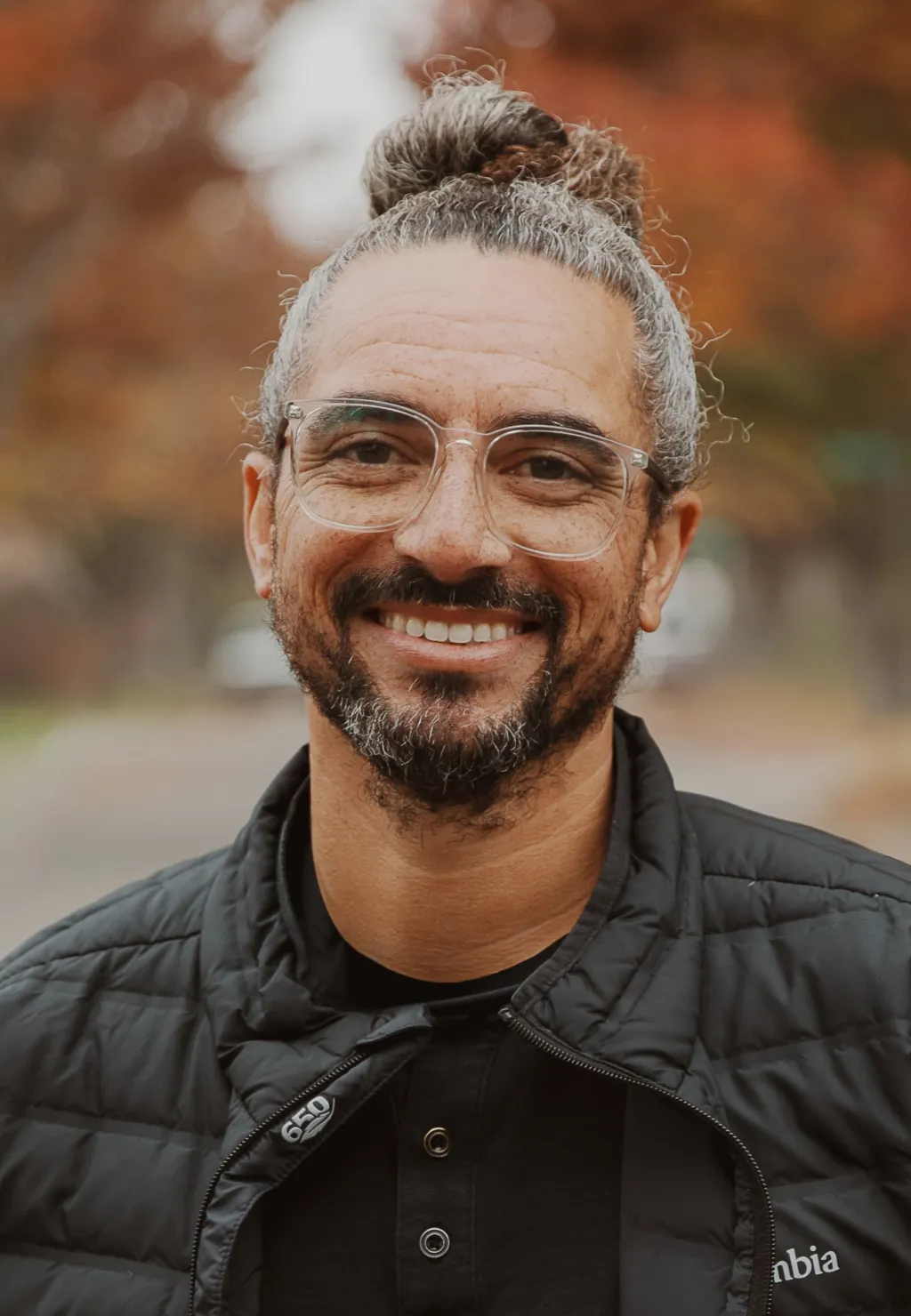
Ahead of the June primary election, the Bay Area News Group compiled a list of questions to pose to the candidates for California’s 14th Congressional District. You can find the full questionnaire below. Questionnaires may have been edited for spelling, grammar, length and clarity.
To read our endorsements for other important Bay Area races click here.
Name: Gordon Chester
Current job title: Associate Engineering Technician
Date of birth: September 27, 1986
Other political positions held: None
District where you reside: Carlton Neighborhood
What are the top three problems you’re seeking to solve if elected to represent this district?
1. Safety: I plan to (improve safety) by upgrading crosswalks, expanding protected bike lanes, increasing and improving street lighting, building better bus shelters and adding public art.
2. Environmental sustainability: We need smarter growth, cleaner transportation options and infrastructure investments that will stand the test of time.
3. Economic sustainability: My focus is not only to acknowledge what causes our unsustainable economic model, but to fight to improve it through sound, economic data-driven and carefully designed policy changes.
Why are you uniquely qualified to address the three problems you’ve identified above?
My unique experience and perspective as a city employee across multiple departments for over a decade have given me insight into our city government’s operations. I know the funding methods. I know how the frontline operations function for employees and for our residents, contractors and developers.
Working in the Department of Planning, Building and Code Enforcement led me to explore the economics and history of land use and transportation in San Jose and Santa Clara County. The reason we don’t have the funding for services and infrastructure is that we haven’t used land use properly to drive economic growth.
How do this district’s challenges differ in degree or kind from the rest of the city’s, if at all?
The district is largely made up of single-family homes and has relatively few jobs, which means we rely on other parts of the city to generate revenue for the services we depend on. Our high-performing schools make the area attractive, but limited housing options for families and the lack of density drive up prices. As higher-income households move in, the lack of affordable housing forces more young people and families to move, leading to a decline in school-aged children and school closures. Most neighborhood businesses are located along major roads, which makes them harder to access safely.
What differentiates you from your most serious competitors for this seat?
I take a historical and multigenerational approach to my policy prescriptions. I am also unique in perspective. I have the greatest direct understanding of how our city operates, as someone who has completed work on tasks directed to staff by the City Council. I have the outside perspective to spur change. I have the most impactful economic policy prescription of any candidate. Fostering growth through land use will relieve stress on current residents while offering more opportunities to be a part of our growth.
What committee or board would you most like to lead, if given the opportunity? And how would that position serve your constituents?
Both the Community and Economic Development (CED) and the Transportation and Energy (T&E) Committees appeal to my strengths.
My constituents want to allow small businesses to start and grow in our neighborhoods to pull us out of our homes and form stronger bonds with our neighbors. The CED Committee will provide strong direction to help us achieve our goals of supporting families.
The T&E Committee would continue the progress started by the city’s Vision Zero initiative, a policy that will require consistent upgrades to foster safety and improved mobility, while supporting growth along transportation corridors.
You’re running to be a lawmaker. If you were going to be remembered for writing and passing one law, what would it be?
The legislation that takes a holistic approach to creating more family, retiree and young-adult housing for all income levels to support our public schools, and leads to greater economic health.
You’re running to replace Vice Mayor Pam Foley. What has Foley done right while representing this district?
Her leading the Vision Zero task force was something I truly appreciated. This program is something I want to further enhance. Additionally, Vice Mayor Foley led the way on transit signal priority. While the policy passed, we need to implement it and ensure it leads to quicker buses, particularly on major corridors and through downtown San Jose.
How has Vice Mayor Foley failed her constituents? What would you do differently if elected?
In her first term, Foley acknowledged Senate Bill 9 and SB 10’s passing and believed it was unnecessary to pursue opportunity housing because it would take too much staff time. While she had concerns that SB 9’s implementation could add enough new homes, she felt it would be better to leave planning staff without that workload. That was a significant error.
Today, more than a full four-year General Plan review cycle later, we are hearing conversations about missing-middle housing. We could have led the way in developing this important housing type. Instead, we held back, further negatively impacting our schools.
San Jose is now close to finalizing its third four-year review of its Envision 2040 General Plan, the details of which will shape the city’s future development path. What priorities would you like to see in this revised general plan?
I would like to see a decidedly underutilized land-use type, mixed-use neighborhood, become more common and issue a memo directing the director of the Department of Planning, Building and Code Enforcement to streamline the land-use change. This is rarely used, increases the potential for home and small-business development and would broaden the city’s tax base because this zoning type increases tax revenue. It would increase employment lands while boosting small-business growth and improve the job-to-employment ratio, while allowing housing growth. This would allow the city to be a better employer, a better service provider and more resilient.
What solutions would you support to reduce housing costs in San Jose? Explain the policies and clarify how they differ from previous attempts.
I would support using San Jose’s mixed-use neighborhood zoning more aggressively to build mid‑rise, wood‑frame homes over neighborhood‑serving uses near existing schools and services, while continuing traditional affordable housing tools. This lets us build more homes at lower cost than steel‑and‑concrete towers next to transit, and could help stabilize or grow local school enrollment. A mixed-use neighborhood allows 3.5 stories. This means that even if there is a developer height bonus, it can be entirely wood-frame, a quicker and much more affordable construction method than steel and concrete, and can also provide important missing middle housing.
San Jose has placed a 2% hotel tax increase on the June ballot. Do you support that tax? Why or why not?
I would support the 2% hotel tax increase because it asks visitors, not residents, to help close San Jose’s budget gap and protect core services like public safety, clean parks and homelessness response, while still keeping our hotel tax below other large cities in the region. However, I’m clear on the risks too: slightly higher room costs could shift some budget travelers to nearby smaller cities or short‑term rentals, which could affect hotel workers’ jobs. I would require strong transparency and annual reporting on the exact impacts to ensure we do our best to avoid negatively impacting workers.
Read more Anne Kepner, state senatorial candidate, answers Bay Area News Group’s primary questionnaire
Why should renters in your district vote for you?
I want to build more homes. Homes you can buy. Homes you can rent. The more homes available, the more freedom renters can have to choose their neighborhood until they are prepared or capable of buying in their desired neighborhood. My goal is to increase opportunities for people in each stage of life.
The city needs to create stronger renter protections to improve the quality of life for tenants, while allowing more homes to be built, benefiting the greatest number of people at different stages in their lives, from young tenants to retiring homeowners.
Is PG&E serving San Jose residents well? If not, explain what actions you would take to lower energy costs for San Jose ratepayers.
The vast majority of PG&E workers serve residents well, but company executives are not well-liked by residents because of the utility’s high profitability and continued rate increases amid outages and wildfires. The frustration is real; people do not feel that PG&E cares about rate payers. Unfortunately, the solution is likely beyond what a city government can control, except for building our own power resources.
What actions would you take to tackle homelessness? How are your policy prescriptions different from what’s already been done?
I recommend focusing on steps toward self‑sufficiency once Emergency Interim Housing services have helped stabilize people. That means prioritizing permanent affordable housing, including purchasing 4‑, 6‑, or 8‑plexes, instead of relying only on old hotels. It also means being creative about what comes next and ensuring these homes are located where residents can live and work without a car, so the city does everything it can to lower the cost of living for people recovering from homelessness.
I would continue to look for ways to support preventive measures so that it’s less likely people become homeless in the first place.
Why should your district’s commuters vote for you?
I’m the only candidate who regularly takes public transportation (before campaigning).
I’m aware of the shortfalls, and that’s where I can help. We can have public service lanes dedicated to our public services. This would include emergency services, meaning they have dedicated lanes and don’t have to be concerned about people hearing the siren and pulling to the side of the road. Additionally, I would work with Santa Clara Valley Transportation Authority on their annual review and proposals for revamped bus routes. Lastly, with my mixed-use neighborhood land-use change, having more commercial space available could increase sales tax.
San Jose is facing a $56 million budget shortfall. With property and sales tax revenue growth slowing and labor costs rising, how should the city balance its budget? What specific programs or services would you cut? What contracts, if any, would you renegotiate?
I would focus on whether paving negotiations would be possible and what contracted services the General Fund has left (since this year is expected to renegotiate our EIH services). I would focus my efforts on working with unions to reduce the number of hours needed to earn full health benefits.
The San Jose Police Department spent more than $71 million in overtime last year. This year, it is on track to surpass its personnel services budget once again. What financial cuts or reforms will you demand of SJPD, if any?
I would look to hire Community Service Officers (CSOs) to respond to non-imminent-threat calls (which account for 90% of calls). I believe this has the potential to alleviate the need for so many overtime hours. This may result in more employees and better response times as well.
SJPD has an exceptional record closing murder cases, and the city has a low violent crime rate relative to many other big U.S. cities. But in what ways could SJPD better serve your district?
Given current staffing levels, there’s only so much more SJPD can do on its own. One clear way they could better serve our district is by expanding the use of Community Service Officers, especially if state law allowed them to handle moving violations in school zones and other areas. Current staffing and shift schedules simply cannot meet that demand. Having CSOs focused on school‑area traffic could go a long way toward meeting families’ safety concerns and may be part of, or even most of, the solution.
Do you support San Jose’s policy to cite and arrest homeless residents who repeatedly refuse shelter?
No. There are far too many unaddressed concerns for this type of blanket policy to be effective.
Explain your position on San Jose’s use of Flock license plate cameras.
Flock, as a company, has lost my trust because it valued its federal government contracts over the safety and independence of people, their entrusted data and their contractual agreements with local governments. I think Automatic License Plate Readers have a great ability to solve crime. I want a company with a proven track record of not sharing personal and local law information, data and resources. A company where all data remains in-house, not in a cloud where it can be hacked, and that has safety protocols to help police solve crimes effectively while ensuring it’s not taken advantage of.
If you were elected, would you be in favor of more data centers in the city? Why or why not?
We do not need them in every neighborhood, I want clear information on how effectively they can rely on recycled water. I also want to hear and feel for myself the vibration issues residents have reported in other parts of the country. And I need to see hard data on energy use and the impacts on our electric grid.
Industrial-zoned areas are likely better locations for data centers. This also reflects the fact that data centers are the new industry replacing the old industrial work that has disappeared in so many cities.
The San Jose office vacancy rate remains stubbornly high post-pandemic. In downtown, offices sit empty and countless retail storefronts are boarded up. What policies would you support to revitalize the city’s downtown core?
We need targeted, time‑limited incentives, and we need to treat small businesses as the core of our tax base, not an afterthought. I would be open to a temporary construction‑related tax incentive to encourage companies to lease and improve existing downtown office space, but I would not support a permanent reduction. We should also revisit how on‑site corporate cafeterias are treated, including whether employer‑provided meals should be subject to sales tax, because those closed systems can starve surrounding restaurants and retailers of customers.
I want to see deeper partnerships with local businesses and property owners to fill vacant storefronts.
San Jose is attracting a fraction of Bay Area venture capital. And the city, relative to San Francisco, is weak in attracting seed- and early-stage startups, per overwhelming VC data reports. What should San Jose be doing to attract tech firms, if anything at all?
The bigger question may be how we attract other groups and companies to downtown San Jose and how we better use current and underway transit systems and surrounding land use. San Jose should be a great place for market expansion, with proximity to Levi’s and SAP Center at San Jose for entertainment, as well as proximity to San Pedro Square, Japantown and Willow Glen. We have a wealth of cultural resources that are such an important part of our amazing city and a draw to attract younger workers.
Have you been convicted of any felonies? If so, when and of what?
No.
What do the biggest contributors to your campaign expect from you?
They expect me to commit to my policies. Safety for everyone to move throughout our neighborhood and city, regardless of income or mode of travel. Environmentally thoughtful and sustainable practices. Economic sustainability that keeps residents here and even encourages relocation to this great community. Economic sustainability for the city to provide and improve much needed services. But perhaps most of all, they expect me to make decisions with care, thinking of each generation, each stage of life and each income level to create more opportunities than we have had in the past.
What more should we know about you that might inform our board’s judgment of your capacity to serve this district’s constituents?
I was recently given the biggest compliment I can imagine: someone called me a “universalist.” I am someone who wants the best for the most people. I listen. I learn. I report back on what I learned to educate and explain why I came to my conclusion. I am a candidate who created policies after years of self-directed deep learning on our shortcomings. I know our city’s limitations and who we need to partner with to fully achieve real equity, as we were taught when we were kids.
Read more Kurtenbach: Brock Purdy might be the NFL’s most disrespected MVP candidate
About the Author