SANTA CRUZ — When a tool designed by humans and meant for animals is introduced into the wild for the first time, success is never assured.
Read more Packages, bicycles, vehicles reported stolen in Los Gatos
And while no one knows that better than Land Trust of Santa Cruz County Conservation Director Bryan Largay, the latest figures emerging from the wildlife undercrossing at Laurel Curve in the Santa Cruz Mountains — the first structure of its kind in the Central California region — have him convinced that the experiment is working.
RELATED: Drivers hit 196 animals on this Bay Area “roadkill hotspot.” A new project aims to make it safer.
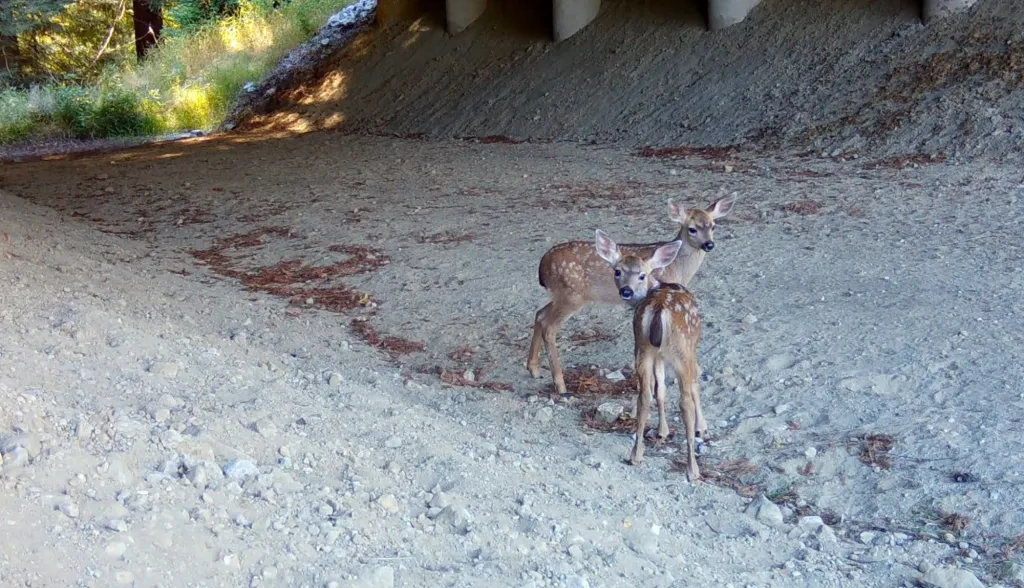
Between February 2024 and January 2025, more than 1,100 animals and approximately 10 different species were recorded passing through the 85-foot-long, car-free tunnel beneath Highway 17. That’s at least 100 more than the total number of animals observed the previous year, which was the crossing’s first in operation after more than a decade of research and planning.
“Until this structure was built, this was an experiment. There was some uncertainty about whether utilization would be observed,” said Largay. “That we’re now at 1,000 crossings a year is a wonderful affirmation that the experiment is working well.”
Using several strategically placed cameras installed around the crossing, the land trust and its collaborators documented 862 black-tailed deer, 22 bobcats, 240 gray foxes and six skunks utilizing the passageway throughout 2024 and early 2025. The greatest gains were seen among bobcats and gray foxes, which were observed using the crossing only seven and 56 times, respectively, during the crossing’s inaugural year.
Just because the project was, by its nature, experimental, Largay stressed that these totals are not the result of a simple guessing game. The idea for the crossing was founded in strong scientific evidence that the land trust compiled in collaboration with UC Santa Cruz’s Puma Project and Pathways for Wildlife, which specializes in wildlife connectivity ventures. The groups analyzed years of collision data and the movements of collared pumas and discovered a hot spot of activity along the sweeping curve, which is about 3 miles south of the Highway 17 summit.
These findings were convincing enough to rally support from Caltrans, the state agency responsible for the highway, along with a number of elected officials and private donors who helped the project reach viability.
Notably absent from the most recent figures were mountain lions, which were a key driver of the project in the first place. Experts said the pumas faced “genetic disaster” as a result of inbreeding and that they needed a way to safely migrate from the Santa Cruz Mountains to a larger acreage of wild terrain in Santa Clara County and beyond.
During the crossing’s first year of operation, four mountain lions were spotted passing through while none were seen during the second year of observation. Largay said he’s not concerned by the absence of pumas, as there are fewer than 100 adult mountain lions spread across 300 acres in the Santa Cruz Mountains and the odds of funneling them all through Laurel Curve are low. Plus, the steady stream of other species at the crossing will likely help facilitate puma adoption eventually.
Read more Suspect dead in Vallejo police shooting after alleged carjacking
“Where the deer go, the mountain lions follow,” said Largay.
In addition to the swelling usage totals, it is also the absence of some data that has been encouraging to project leaders. , with 34 of those incidents occurring within the vicinity of Laurel Curve. But during the two years of study since the crossing opened, only one animal has been killed: One puma was hit by a car after slipping past directional fencing that had been installed at the edge of the project zone.
Since that incident, Caltrans extended the preventative walls on the border of the crossing, but other tools continue to funnel wildlife to the underpass. These include the creation of simple mountain trails for the animals to use, as well as installation of electric concrete mats near where Laurel Road meets Highway 17 which produce low-level shocks that signal the animals to turn around.
Morgan Robertson, Caltrans District 5 biology and environmental engineering office chief, has worked on the Laurel Curve project since its infancy and said she won’t be surprised if crossing numbers continue to rise for years to come.
“I think what’s really exciting is we see a lot of animals with offspring, so they’re basically training their young to use it,” said Robertson. “It can take animals years to find these crossing points. It’s really (common) to see an increase in use from years one through five.”
Robertson added that the promising data logged at Laurel Curve will only give the California Legislature more confidence in bills from recent years that encourage Caltrans to make wildlife crossings a more prominent feature of the state’s transportation network. Caltrans and the land trust are collaborating on another crossing that passes over Highway 101 near San Juan Bautista that Largay said they hope to finish within five years, and Midpeninsula Regional Open Space District is exploring the possibility of establishing another wildlife undercrossing and a separate recreational trail overcrossing along Highway 17 near the Lexington Reservoir.
“They’ve been installing different types of wildlife crossings in Europe and Canada for several decades now,” said Robertson. “What we have seen in the last 10 years is, I think, a great deal of growing interest in the United States.”
The Laurel Curve crossing was constructed thanks to a $5.14 million investment from Caltrans, $10 million from the land trust, including the purchase of more than 700 acres of land adjacent to the undercrossing, as well as $5 million from the Santa Cruz County Regional Transportation Commission that was made available through its Measure D sales tax, which was passed by more than two-thirds of county voters in 2016.
“I think there is a greater willingness to express compassion for wildlife and a willingness to invest in recognizing that we share this place with these other living creatures who deserve to be able to get where they want to do,” said Largay. “In some ways, the least we can do is — if we’re going to build our roads through their habitats — is to provide the occasional passageway for them. I think that sentiment has gained traction in our culture.”
Read more Santa Cruz County mall placed on lockdown after killing
Laurel Curve wildlife crossing
Black-tailed deer: 862
Bobcat: 22
Gray fox: 240
Mountain lion: 0
Skunk: 6
About the Author