SAN JOSE — The judge overseeing the murder retrial for Antolin Garcia Torres in the notorious 2012 disappearance and presumed death of Sierra LaMar is aiming to have a jury start hearing evidence in October and hoping for a verdict landing before the Thanksgiving holiday.
Read more North coast homeless advocate meets the pope
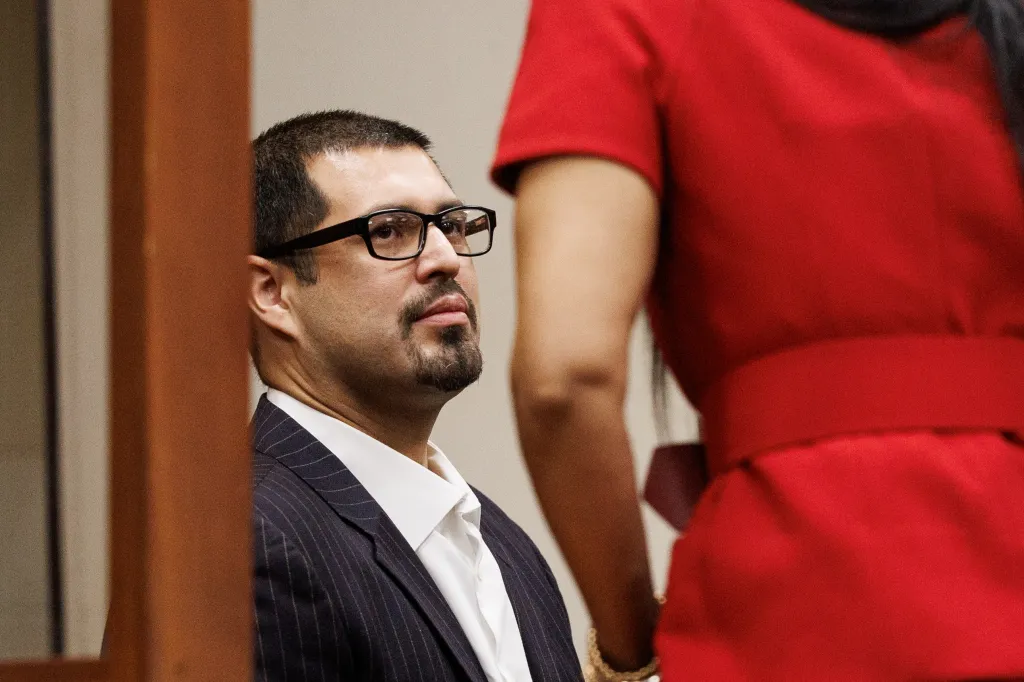
Santa Clara County Superior Court Judge Brian Buckelew laid out the prospective timeline Wednesday during his first official court hearing presiding over the closely watched and anticipated proceeding, which became necessary after Garcia Torres saw his murder and kidnapping convictions thrown out by an appellate court earlier this year.
The defense, led by Deputy Alternate Defender Al Lopez, invoked Garcia Torres’ speedy trial rights after the appellate ruling was finalized in May, and then at a June 29 hearing, the starting deadline for trial proceedings was pushed back from July 13 to Aug. 27. But Buckelew said he anticipates that those hearings will “begin in earnest” Aug. 17, and aims to have a jury empaneled around the beginning of October.
Lopez has also sought a gag order to prevent the attorneys litigating the case, including lead prosecutor O’Bryan Kenney, from discussing the proceedings outside of court. On Wednesday, he voiced concern about the prospective jury pool consuming media coverage about the case and being influenced or prejudiced by remarks made in the media.
“We don’t want to have pretrial publicity that will overly taint this case,” Lopez said.
A gag order “is one of the guardrails I’m asking for … to ensure we can keep this case fair,” he added.
Kenney and co-counsel Sheryl Leung objected to the gag order request, citing concerns about prior restraint on speech and arguing that neither prosecutor has said anything publicly that remotely approaches trying to influence potential jurors.
“Because they have failed to meet the burden I don’t think the court should make a gag order,” Leung said.
Buckelew said Wednesday that he expected to rule on the gag request “shortly.”
Lopez, who defended Garcia Torres at the original trial, also raised the specter of moving the trial out of county, and informed Buckelew of his intent to file a change of venue motion but not actively seek a trial relocation, contingent on how jury selection plays out.
Alluding to remarks he made about his gag order request, Lopez told the judge, “I’m hopeful we don’t need to do a change of venue in this case,” to which Buckelew replied, “So am I.”
Change of venue motions are seldom granted, though the exceptions tend to be high-profile cases like the Scott Peterson murder trial — moved from Stanislaus to San Mateo County — and the shooting trial of ex-BART police officer Johannes Mehserle in the Oakland death of Oscar Grant, which was moved to Los Angeles.
Read more Major pop superstar performs at beautiful, intimate Bay Area concert venue
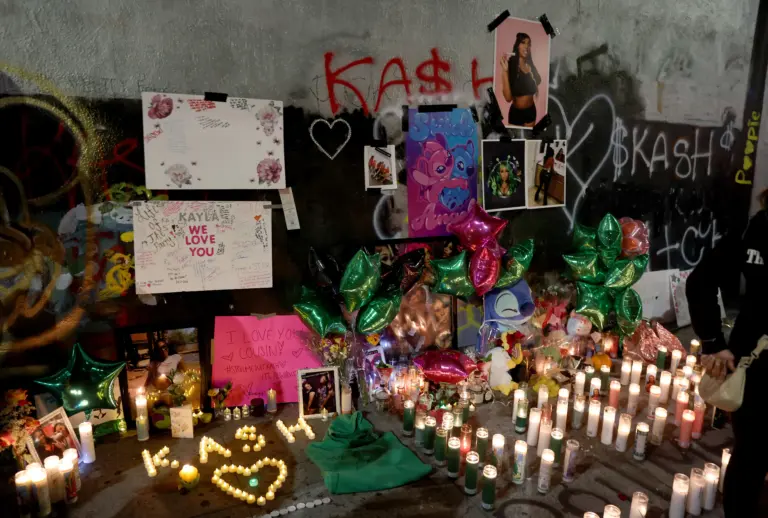
Lopez also signaled to the judge that he might seek an exclusion of South County residents from the jury. Legal experts have told this news organization that they anticipated such a tactic given how the case remains an “open wound” for the community emanating from the Morgan Hill region, where 15-year-old Sierra disappeared while walking to a bus stop headed for school on March 16, 2012. Volunteer-organized search teams combed the area on weekends for several years looking — unsuccessfully to this point — for Sierra’s remains.
Kenney and Lopez also sparred over whether the district attorney’s office should be allowed to tap the firm Cybergenetics to consult and potentially conduct DNA analysis, with Lopez arguing that the alternate defender’s office’s past consultation with the vendor disqualifies them from doing any work for prosecutors.
Lopez cited confidentiality concerns and contended that the DA office’s pursuit of Cybergenetics could be a tactic to glean insight from the defense, while Kenney argued that the work his office needs is not replicable by any other available firms, and objected to the idea of the defense “locking up” a firm to hamper his case.
Garcia Torres, 35, is currently in Santa Clara County jail custody and will be held there for the duration of his trial, after being transferred last month from Corcoran State Prison. He had previously been serving a sentence of life without parole.
On Feb. 27, the 6th District Court of Appeal reversed Garcia Torres’ murder and kidnapping convictions after ruling that his 2017 trial court erred when it consolidated three attempted kidnapping allegations against Garcia Torres from 2009 with the murder charge for Sierra’s presumed killing.
The appellate ruling found that the previous allegations — accusing Garcia Torres of trying to force his way into women’s cars in supermarket parking lots in three separate instances — did not sufficiently resemble the prosecution’s theory of Sierra’s disappearance, namely of Garcia Torres luring or forcing her into his car. As a result, the court ruled that the jury was improperly allowed to consider the cumulative threat Garcia Torres posed when evaluating the murder case, rather than the individual merits of each alleged crime.
Appellate justices also ordered that any retrial for Sierra’s presumed death cannot introduce the prior attempted kidnapping claims as evidence — those alleged crimes will now be tried separately — and cannot argue Garcia Torres acted with premeditation in presenting a murder case to jurors. For the latter issue, the court noted that the continued absence of Sierra’s body means there is insufficient evidence to prove beyond a reasonable doubt how she died or why she was killed.
That is the backdrop for what is expected to be a ferocious legal battle over the central remaining evidence behind Garcia Torres’ initial conviction nearly a decade ago, hinted at in Wednesday’s arguments over the forensic analysis vendor.
The prosecution has a circumstantial case revolving around incriminating DNA connected to Garcia Torres: a strand of Sierra’s hair found on a piece of rope in his car trunk, and his genetic material found on Sierra’s pants, abandoned in a field in the vicinity of where she was last seen, all contradicting his claim to investigators that he never met the girl. Defense attorneys are expected to challenge the strength of that evidence, and, drawing on the absence of a body, attack the theory of her killing as speculation rather than proof that Garcia Torres was responsible.
Read more Fugitive in Georgia murder arrested after evading BART fare
Attorneys are scheduled to return to court July 29.
This is a developing story. Check back for updates.
About the Author