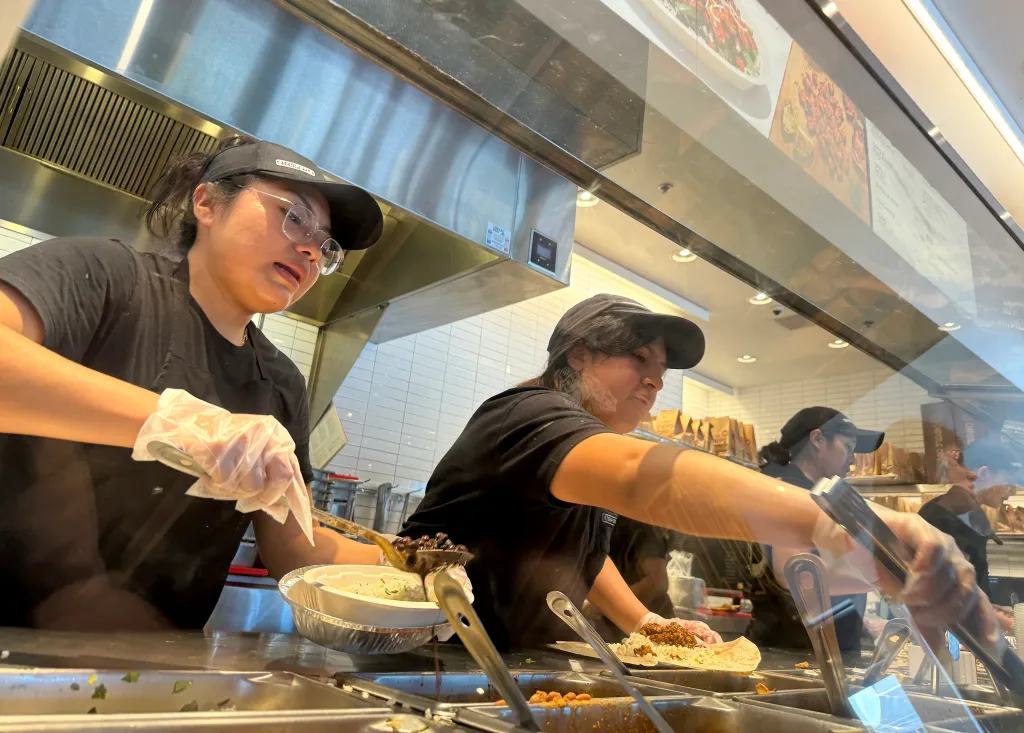
A potential November ballot measure would increase the minimum wage in Alameda County to $30, making it the highest in the country as residents continue to combat high costs of living in the Bay Area.
Read more Apple files lawsuit accusing ChatGPT maker OpenAI of stealing trade secrets
The Living Wage for All coalition submitted 51,725 signatures to the Registrar of Voters office on Tuesday, surpassing the 48,797 threshold required to put the measure on the ballot — though the coalition stated it secured more than double the required amount, according to organizers.
The Alameda County Registrar of Voters has 30 business days to verify the signatures, then the Board of Supervisors will vote to place it on the November ballot at their Aug. 4. meeting.
“It’s the top issue on every person’s mind who doesn’t earn $30,” said Saru Jayaraman, president of coalition partner One Fair Wage. “People are struggling to survive, to stay in their homes, to afford gas, to afford food to feed their children. They’re working multiple jobs and just feeling completely exhausted, defeated, and hopeless.”
If approved by voters, the measure would phase-in a $30 minimum wage based on the size of the business. Large employers with either $1 billion in revenue or with more than 100 employees would be required to raise its minimum wage to $30 by 2030.
Small- and medium-sized businesses would be given a larger runway to adjust to the increase. Businesses with 26 to 99 employees would be required to raise their minimum wage to $30 by 2035, while businesses with 25 or fewer employees would be given a full decade to raise their minimum wage to $30.
The measure also would strengthen protections against wage theft and enforcement of Alameda County’s wage and employment standards, and enhance compensation for lost wages.
The coalition largely relied on workers from restaurants and retail shops to gather signatures and paid them $30 per hour for their work. This was vital to the campaign, Jayaraman said, not only to show the benefits of receiving $30 an hour, but also to demonstrate how financial stability allows workers to better participate in democracy itself.
Still, the prospect of a $30 minimum wage is daunting for some small business owners who have also faced challenges with rising costs.
Read more Is buying a home still the way to wealth? Some young Americans aren’t sure
Joey Diaz-Varela, a manager for the Oakland coffee roaster and bakery Timeless Coffee, said that an increase as significant as what is being proposed would likely increase the cost of the shop’s $6.50 latte, but there may be benefits to the shop, too.
“With every increase in the city (minimum wage), prices probably will increase,” said manager Joey Diaz-Varela. “But for employees, it just creates longevity at the job. If their wages go up, they would want to stay at it longer.”
A working paper published in March by the Institute for Research and Labor and Employment reviewed inflationary effects of California’s $20 minimum wage for fast food workers of large chains.
The paper – which has not been peer reviewed – found the policy “increased average weekly wages for covered fast food workers by 11% and did not reduce employment.”
Meanwhile, costs for consumer items increased just 1.5%. Co-author of the paper, Michael Reich, said there are prevalent misconceptions about the negative effects of raising the minimum wage, as specific worker salaries are not the only costs businesses need to consider.
“It’s a misconception that any time you raise the price of labor, (businesses) are going to hire fewer workers. That seems intuitive, but the labor market doesn’t work that way. Why? Because recruiting, screening and training new workers are costly,” Reich said. “As a result, firms have a choice whether they are going to pay low wages and have high worker turnover, or pay higher wages with lower turnover.”
The estimated inflationary effects of a proposed $30 minimum wage are negligible, Jayaraman said, with just a 0.9% increase over a decade of implementation. The bigger issue, she said, is the lost buying power that is stifling workers’ lives.
“The benefit to workers – who will get almost a 50% wage increase over many years – far outweighs any of the cost increases,” Jayaraman said. “The real problem is not that this is going to contribute to inflation; the real problem is that wages have nowhere near kept up with the cost of living.”
About the Author