As Americans struggle with affordability amid inflation and high cost of living, crafty hobbies and buying secondhand have been on the rise.
Read more Bay Area News Group girls athlete of the week: Sabrina Neal, Los Altos
Some activists tackle wastefulness and high prices by promoting the “right to repair,” pushing for new laws to force manufacturers to make their products easier to repair and combat planned obsolescence. Last month, agricultural machinery company John Deere settled with the Federal Trade Commission, agreeing to give people who buy their products the ability to repair them on their own. In Silicon Valley, some are keeping with grassroots “repair cafes,” where volunteers and community members gather to share tools and help repair electronics, clothing and other household items.
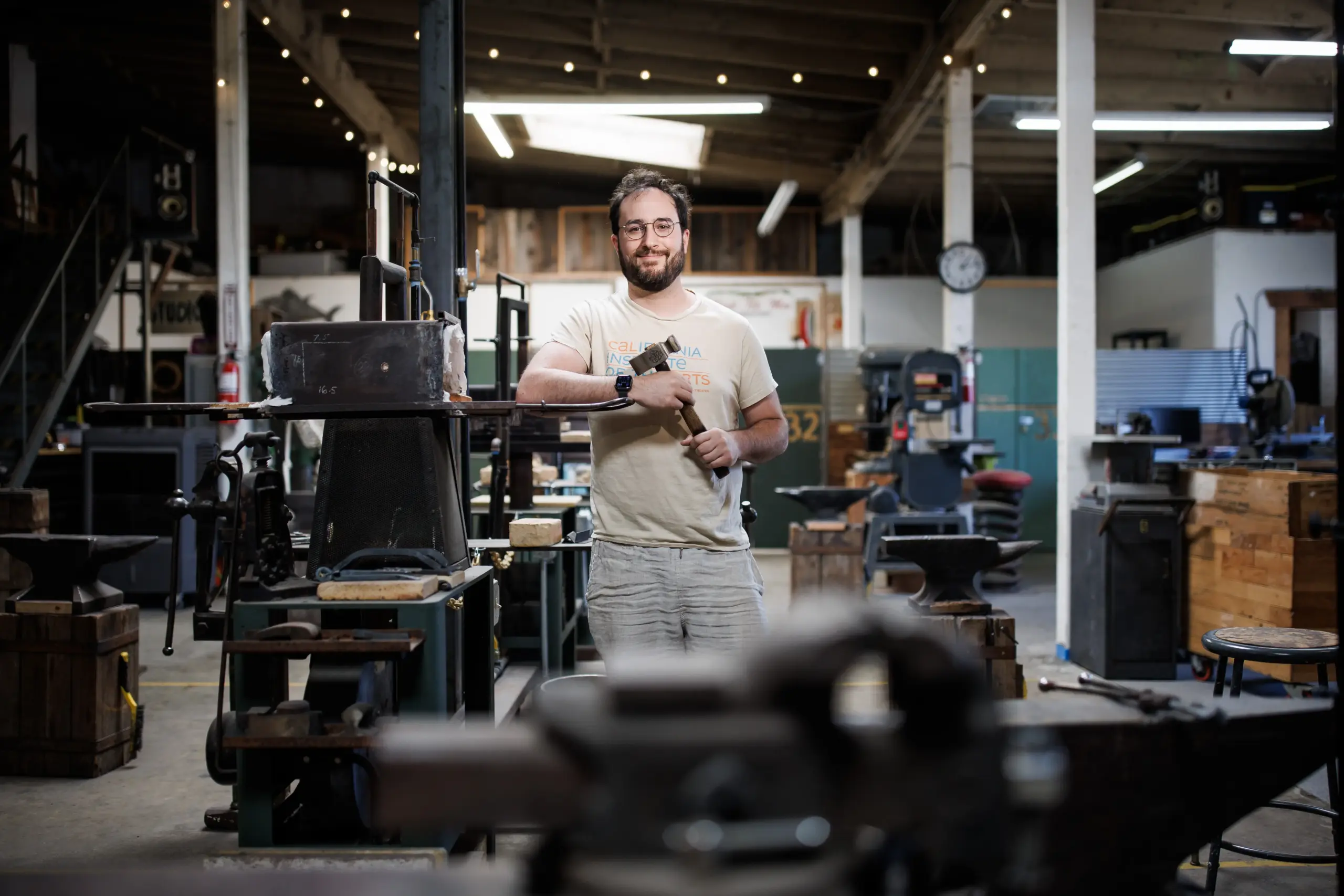
Dimitri Diakopoulos, an expert blacksmith and woodworker at the School of Visual Philosophy in San Jose, has been helping people at the makerspace make and fix things. As a bladesmith and knifemaker, Diakopoulos makes all kinds of cutting utensils, leather knives, paring knives, kitchen knives and chisels.
This conversation has been condensed and edited for clarity and length.
Q: Why is it important to preserve craftsmanship?
A: It’s really important because we have this philosophy of consumerism and the notion of disposable objects. Back in the days of yore, every town would have a blacksmith, a cobbler, a leather worker, and all of these crafts were not crafts; they were professions. They were people involved in making the community work. I think that philosophy has shifted a lot, given the digitalization of everything. The ability to fabricate and manufacture difficult objects has largely become computerized. You can have a factory make a million of these things, but you lose some quality in the process. You also lose the ability to customize. It’s great for people to recognize that some of these artisans still exist in the world — you can commission them and have them be more like a collaborator on different things.
Q: How can the makerspace at the School of Visual Philosophy in San Jose be used to repair certain things that people need?
A: It comes down to community. You can use Google or AI tools to find out more about an object that’s broken; maybe you can even get some steps or instructions about how to fix it. But you’re not necessarily going to have access to somebody who has done these things before, who has worked with their hands. That’s really hard to replicate digitally. What I find about this community is that you have a lot of experts who have honed their craft over time and also have access to the tools to practice that.
We’ve had many examples over the years where individuals from the community come and ask to use the workshop for a very bespoke thing. For instance, I needed to repair my partner’s leather sandal, and there is a leather worker here. I recall another instance where a community association for trail building had a very specific tool. That’s not something you can really buy, but it’s something they use for trail building. They came in and said their tools are actually wearing out and asked if we could fabricate some new ones.
Q: Why repair things in the world now? We have mass production. We’ve moved to a mostly digitalized economy. Why should we even try to keep these skills alive when we could buy something off Amazon for cheaper?
A: Quality has a lot to do with it. When you repair things or have access to different objects in your environment, you gain a sense of the quality of a thing. People appreciate well-made objects — and a well-made object is usually something that can be repaired. Repair extends the lifespan of these objects because they’re made out of materials designed for it. There are objects in this world that were made to last. If you maintain it and eventually repair it, it can outlast you.
Also, just because something is cheap or somewhat disposable, that doesn’t mean it can’t be repaired. Wooden cooking utensils are a really great example of that. There’s no reason to buy something new when all it needs is a coat of oil or a very light sanding.
Q: What resources would you suggest to someone to learn how to repair their own belongings?
A: Reddit is actually one of the most amazing communities. Reddit has so many subreddits around home repair. People just post photos all the time and you get a community of experts willing to give advice and even instructions on how you can repair something yourself or connect you with an expert or resources, like a YouTube tutorial.
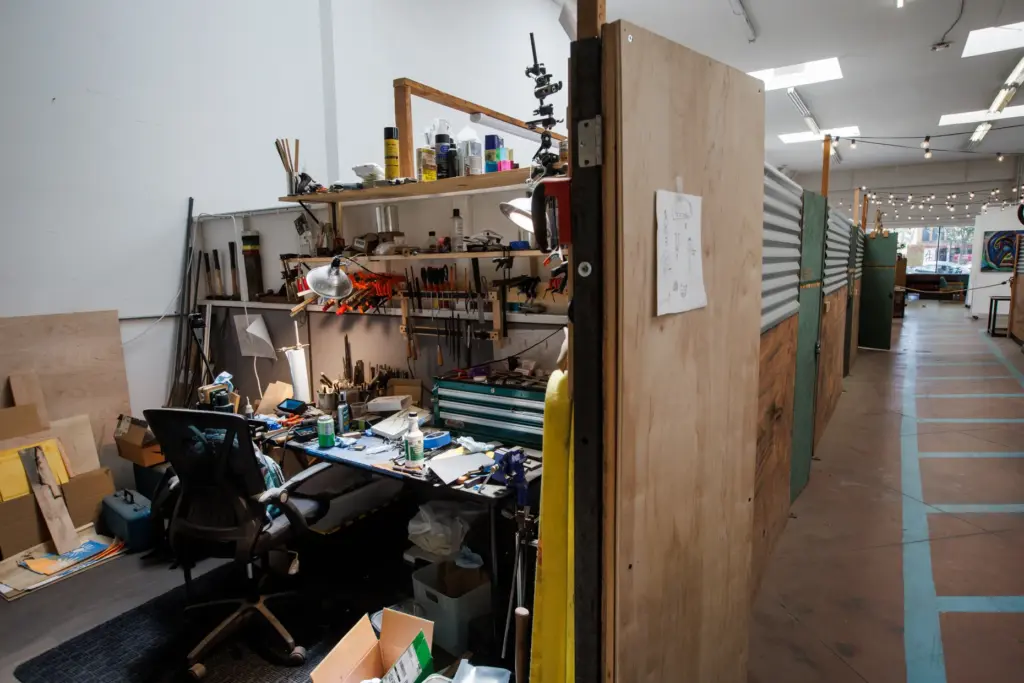 The workspace of Dimitri Diakopoulos, an artist at the Visual Philosophy Studio, is seen in San Jose, Calif., on Aug. 13, 2026. (Dai Sugano/Bay Area News Group)
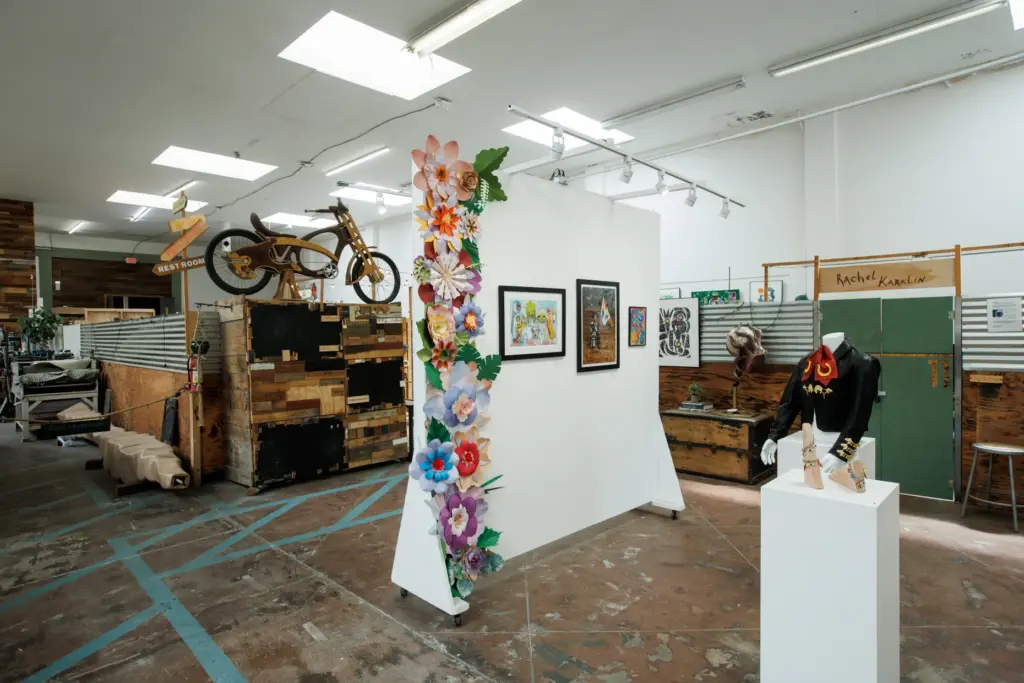 Various artworks are on display inside the Visual Philosophy Studio in San Jose, Calif., on Aug. 13, 2026. (Dai Sugano/Bay Area News Group)
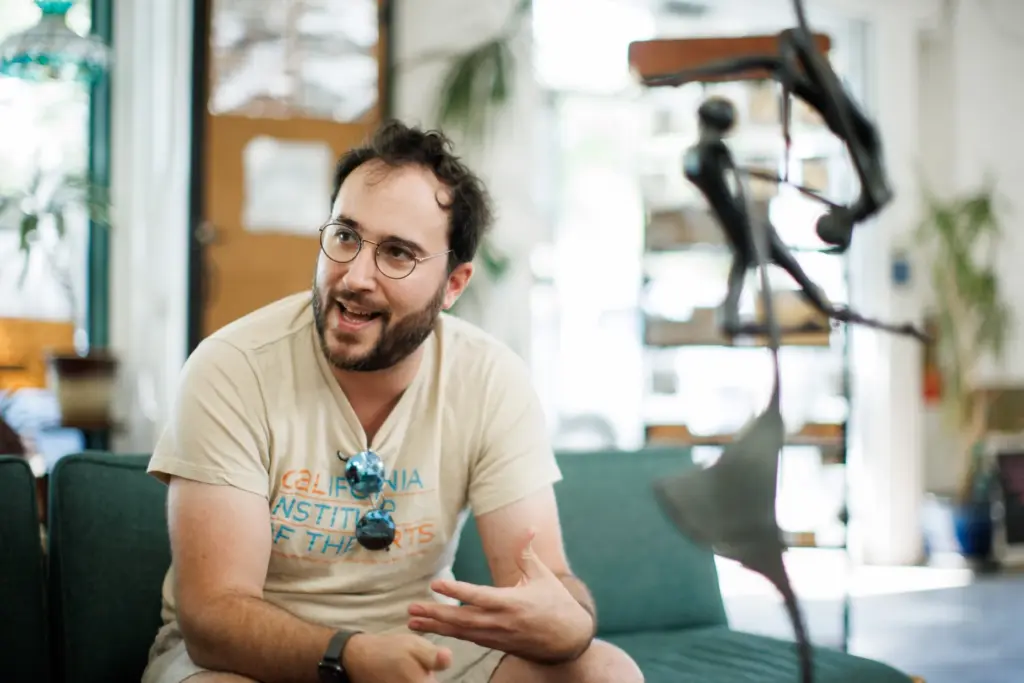 Dimitri Diakopoulos, an artist at the Visual Philosophy Studio, talks during an interview on Aug. 13, 2026, in San Jose, Calif. (Dai Sugano/Bay Area News Group)
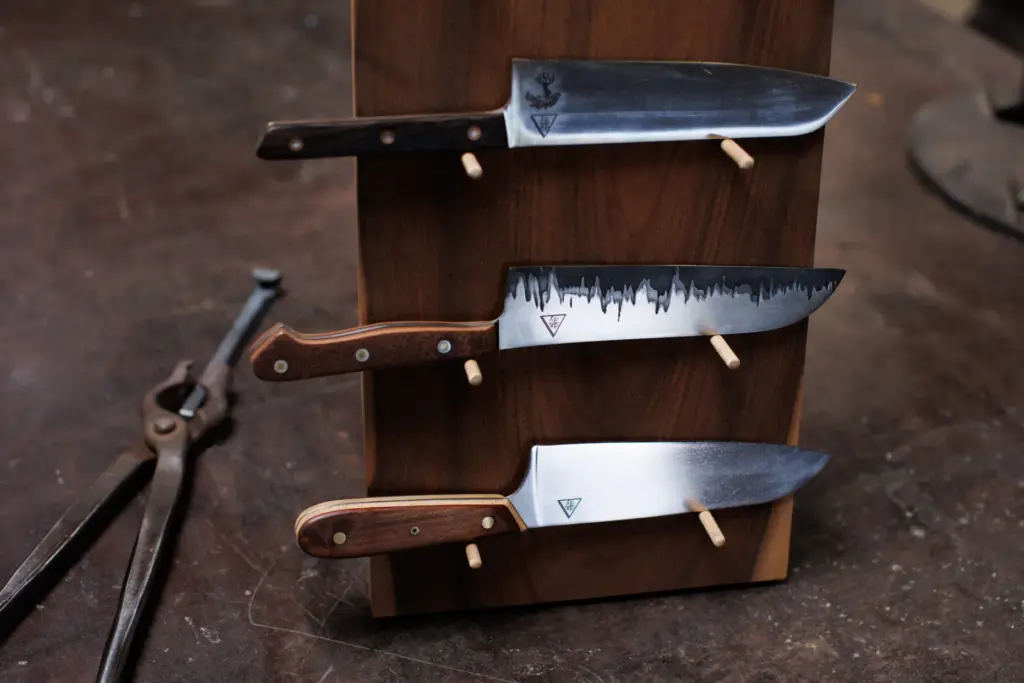 Santoku-style knives made by Dimitri Diakopoulos, an artist at the Visual Philosophy Studio in San Jose, Calif., are seen on Aug. 13, 2026. (Dai Sugano/Bay Area News Group)
 The exterior of the Visual Philosophy Studio in San Jose, Calif., is seen on Aug. 13, 2026. (Dai Sugano/Bay Area News Group)
__________________________________________________________________________
Dimitri Diakopoulos
Age: 37
Position: Research Engineering Manager at Apple, creator/studio member at the School of Visual Philosophy in San Jose
Hometown: East Greenwich, Rhode Island
Residence: San Jose, Calif.
Education: BFA, Music Technology, California Institute of the Arts (2011); MFA, Music Technology, California Institute of the Arts (2012)
Read more Victims identified in fiery Santa Clara wrong-way crash
Five facts about Dimitri Diakopoulos
- His favorite TV show at the moment is BBC’s “The Repair Shop.”
- He can juggle three pins and up to four balls.
- One of his best mentors is Washington-based inventor Trimpin, a MacArthur “Genius” Award recipient.
- His family was a huge influence on him for getting into blacksmithing. He learned the trade from his older brother and his father influenced him to be able to look at an object and see its ability to be improved, modified, customized or repaired.
- He credited his friend and fellow studio member Eliseo Rosales for inspiring him to work with unfamiliar materials and forms without starting with a design or intentional goal. Rosales, who recently passed away, taught a class called Intuitive Painting to encourage people to “think with your hands.”
About the Author