After nearly three decades behind bars, a parole board on Thursday morning denied the Fremont Bomber’s release, finding that he still poses a risk to public safety if he were to go home to his wife.
Read more Major delays continue to plague BART; two service lines closed
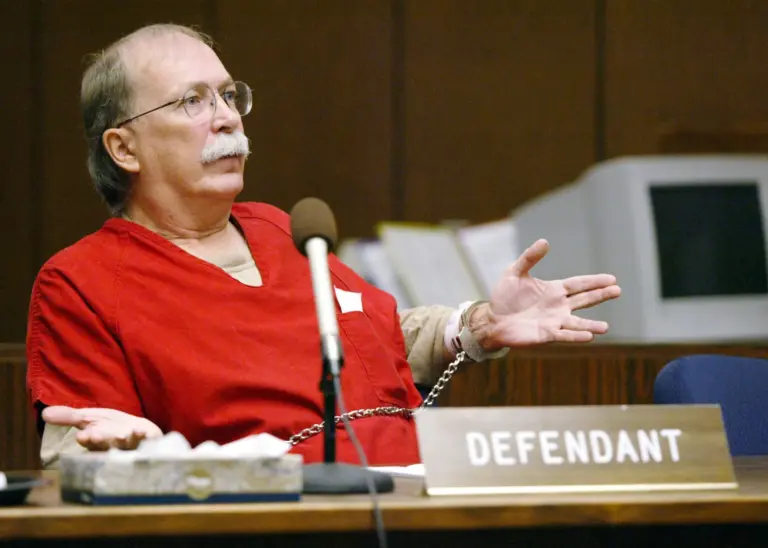
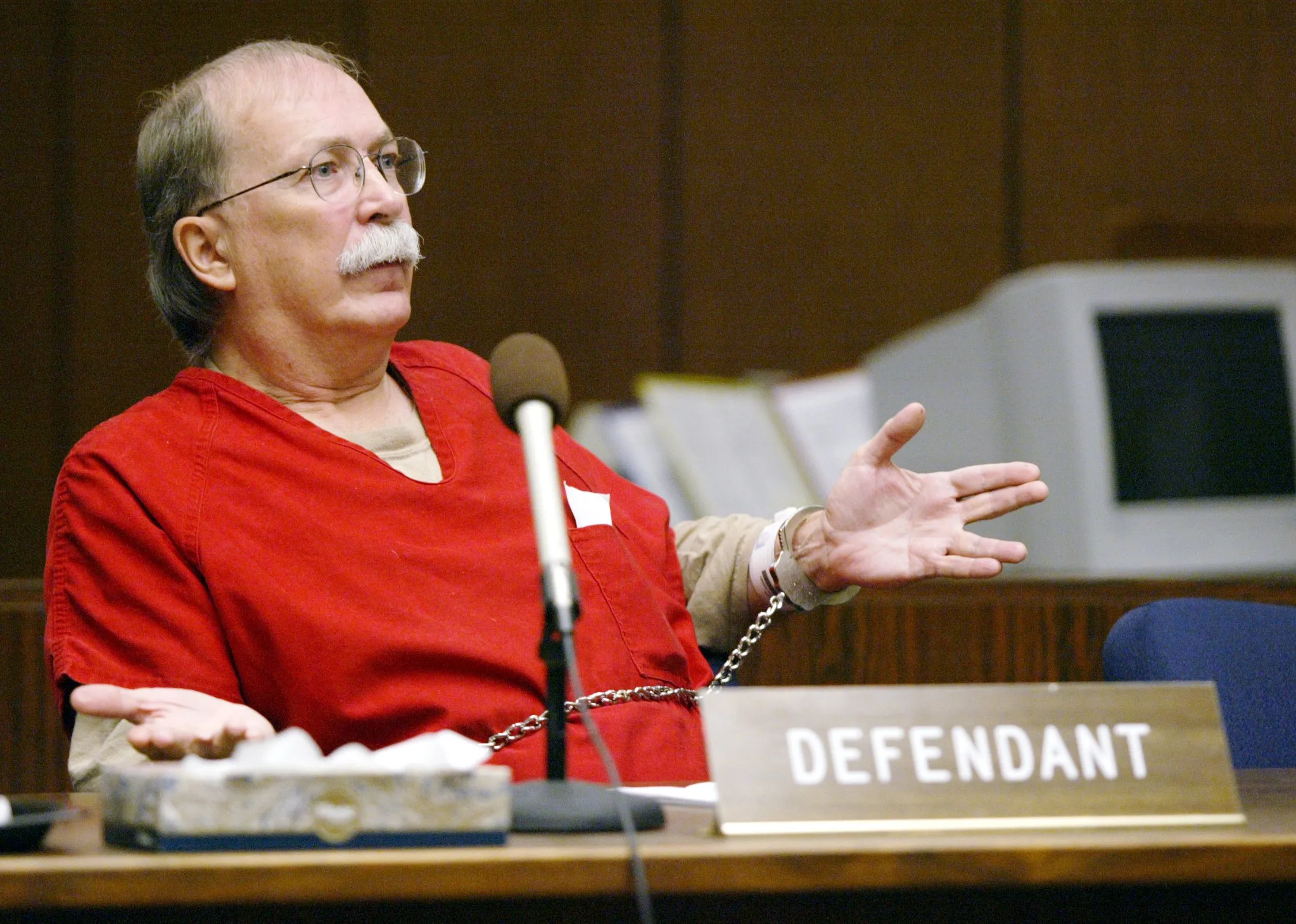
Rodney Blach, 80, who is serving a 37-years-to-life sentence in San Quentin State Prison, continued to deny the charges against him. During the hearing, he maintained his innocence in a string of 1998 bombings in Fremont for which he was convicted 25 years ago.
He appeared at his hearing on a video call Thursday, white-haired, with black glasses, in a blue prison uniform. The curtains were drawn in the room he sat in, blocking the outside light. During the hearing, commissioners acknowledged that Blach is suffering from a number of health complications related to his age.
“I want to get out of here. I want to go to a halfway house,” Blach said. “I’ll probably do a lot of writing. I want a garden. I want my big ol’ garden again, a quarter-acre. I want a farmers market.”
Board of Parole Hearings commissioners Clifford Kusaj and Eleanore Adams deliberated for about 20 minutes before denying Blach’s parole.
“This is a denial of parole for Mr. Blach,” Kusaj said. “Based on the legal standards, for the record, we do find you pose a current risk to public safety.”
The board’s decision remains under review until finalized 120 days later. Once finalized, Blach will get another chance at parole in three years.
Blach, a former Chicago Police forensic investigator, is eligible for parole as an elderly inmate.
Parole commissioners again agreed with the board’s 2023 decision to deny his parole, noting Blach has failed to change enough through his incarceration to be safely released. Adams also served as deputy commissioner in Blach’s previous parole hearing.
“In the environment where you are living, you are doing just fine,” Kusaj said. “But when I really look at the totality of your case, I do not see a substantial change in the person that you were three decades ago.”
In June 2001, a jury found Blach guilty of 11 felony charges of attempted murder, arson and possessing explosives after he planted six bombs in Fremont, which detonated across three days in March 1998.
Authorities said that Blach’s targets included a former Fremont councilmember and police chief Bob Wasserman and then-police chief Craig Steckler, as well as personal acquaintances with whom he had issues. No one was hurt as a result of his six bomb attacks that spanned a period of three days.
Blach was responsible for what federal investigators at the time called the largest domestic pipe bombs ever detonated in the history of the U.S.
Dozens of federal investigators from the FBI and the Bureau of Alcohol, Tobacco, Firearms and Explosives (ATF), and state and local authorities investigated the string of bombings.
Read more Travis Kelce among victims of a $31 million Ponzi scheme
Authorities in 1999 found significant incriminating evidence in a storage locker that ultimately led to Blach’s conviction at trial.
The locker contained electronics, chemicals, other bomb making materials and detailed journals with plans in Blach’s encrypted handwriting describing his plots to bomb his targets, and other future plans to attack other places, such as the Fremont Police Department and an office building in Pleasant Hill.
During the Thursday hearing, Kusaj also pointed out that Blach appeared to harbor a “fixation” on women, particularly women who have served as his clinicians and Commissioner Adams. He noted that Blach called Adams “judgemental” during the hearing, showing “indications of really tending to get fixated on people in an unhealthy way.”
“I found little evidence of any written work that was really geared toward pro-social rehabilitative efforts,” Kusaj said. “I see very clear parallels between your writing today and your writing 30 years ago.”
Kusaj also expressed concern with his wife, sister and other people who appear to be helping Blach investigate his clinicians’ and parole commissioners’ social media accounts, which are not supposed to be accessible in prison.
“I have people all over the state of California in law enforcement. If I were on the street and I wanted to know something about you, it would take me five minutes,” Blach explained to the board. “Even though I’m in here and I can’t contact the people I knew, there’s probably a dozen people I know that could help me on the street.”
This contributed to his denial, Kusaj said.
Former Alameda County Deputy District Attorney Tom Rogers, 75, was 50 years old when he prosecuted Blach’s case.
The former prosecutor keeps a binder in his home, loaded with old newspaper clippings detailing the bombings through to Blach’s conviction and imprisonment, labeled “BLACH 1999-2001.”
Rogers told the Bay Area News Group that he was not surprised by the board’s denial. He also said he was not surprised that Blach continued to claim his innocence.
“That’s very common [for] people in prison, they say they’re innocent when they’re not,” Rogers said. “Everybody’s innocent in prison.”
Of all the hundreds of cases he oversaw in court, both as a prosecutor and former Alameda County Superior Court judge, Rogers also said Blach’s was the only one where he felt his life could be in danger. He said he previously believed Blach, who previously owned a wide collection of guns, would try to shoot him.
In his investigations, Rogers was instrumental in identifying the watch that proved in court that Blach was able to plant the bombs months in advance.
“I feel badly for him,” Rogers said. “But on the other hand, I definitely feel he would be very dangerous if he got out.”
Read more Chick-fil-A coming to Stevens Creek location in San Jose
About the Author