In the first meeting of its kind since work on an ICE facility outside of Gilroy came to light, community members voiced fear of what immigration enforcement would do to a tight-knit town with deep Latino and immigrant roots.
Read more San Francisco jury convicts man in violent SOMA robbery; sentencing set for June
While local officials acknowledged their limited power to combat the federal government, they promised to fight back and support the immigrant community as the battle to stop the facility continues.
“This community finds faith and hope by sticking together and sticking with each other,” said Gilroy Mayor Greg Bozzo at the meeting on Wednesday. “We will get through this.”
Earlier this month, reports revealed plans for an ICE facility on Santa Clara County land just outside of Gilroy, leading to a swift condemnation of the facility by local leaders. County leaders vowed to legally oppose the facility, pointing to county zoning laws that do not allow for detention centers or any type of facility that holds or imprisons people on county land.
Reporting by this news organization confirmed that work had begun on the facility. Bozzo, a long-time professional contractor, noted that available plans suggested the site would be a smaller facility rather than a large-scale detention center, and estimated that the work would take a year or more based on the plans.
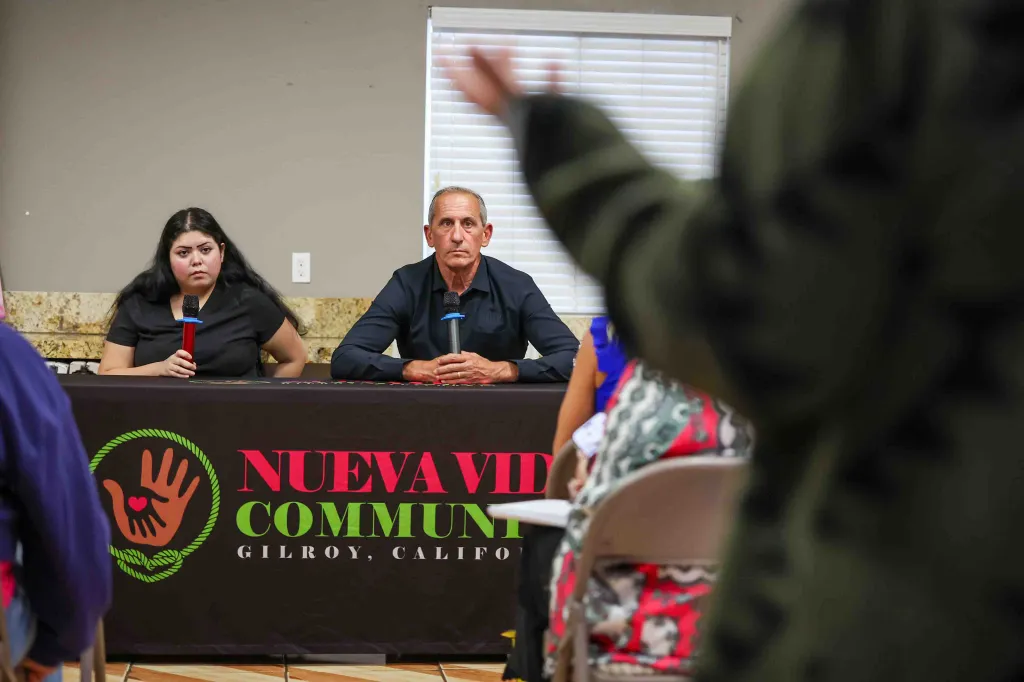
The threat of a detention center has led to wide-spread concern among many Gilroy residents. Wednesday evening, dozens crowded into the community room of a local church, chattering in Spanish and English in the fading light of day as part of a forum on the upcoming ICE facility.
There, many cited the images of immigration enforcement agents violently arresting and even killing people and feared that similar scenes might play out within their community. Some worried they might be deported and separated from their families and have even considered leaving the area or the country to avoid deportation.
Others expressed concern about being detained and subjected to conditions that could leave them physically or psychologically traumatized.
Several community members noted that they had stopped travelling with their families or meeting up with their friends in public, including Luisa, a local farmworker who like many others declined to share her last name out of fear of immigration enforcement.
“We can’t go out like we used to. There’s this immense anxiety for those of our community and our race,” said Luisa in Spanish, citing instances where Latinos and others were profiled and detained regardless of their immigration status. “There aren’t words for this feeling. This town is our home. We love this town … but this is taking our freedom.”
Read more Bay FC loses third straight as NWSL scoring leader Banda scores twice in Orlando’s 3-1 win
She and others noted that the site of the facility is located among the fields where many of them work. They feared that if the facility was completed, they wouldn’t be able to safely work in the fields and support their families.
Bozzo assured them that the City of Gilroy would do everything it could “possibly and legally” do to fight back against the facility, but noted that because the site was outside of city borders, the city had limited power.
Even so, Bozzo exhorted the community to continue relying on the city and gathering in spaces that felt safer, like churches or city-run events. He noted the city has a long-standing policy of not cooperating with federal immigration enforcement, and suggested that finding community amid admittedly troubling times was essential.
“The fear and intimidation is part of the plan … If we are isolated, they win,” said Bozzo.
Other leaders highlighted that even in the midst of the threat, residents could take action. Jorge Mendoza, founder of the Gilroy community organization Nueva Vida, organized the forum to make sure members of the public had accurate information and could voice their concerns to the mayor.
“A lot of the time, the solutions to the problems that we face come from within the community,” he said in Spanish, noting that even those without documentation could pressure their elected officials, pastors and business leaders to take a stand. “We can take action, regardless of our legal status.”
Mendoza has organized mobile health clinics for those who are afraid to go to a doctors office, and others handed out know-your-rights documents to help immigrants know the best course of action if confronted by immigration officials.
Bozzo said the meeting is the first of several which he will conduct throughout the city to inform the public and allay what fears he can. Monday, the City Council is slated to vote on a resolution condemning the proposed facility.
Read more Trump plans to appeal order allowing all importers that paid struck-down tariffs to seek refunds
About the Author