A Santa Clara County Superior Court judge dealt a legal blow on Thursday to a group of Bay Area voters who filed a lawsuit last week hoping to rid a November regional sales tax measure they’re opposing to fund public transit of what they considered “misleading” and “biased” ballot language.
Read more Why two teenagers at Single-A San Jose could be the future of the SF Giants
In his ruling, Superior Court Judge Frederick S. Chung denied all 14 requests to strike or change certain words in the measure’s text, calling some arguments “unpersuasive” and stating that they didn’t meet the required “burden of proof.”
“I really think that you’re focused so much on whether this ballot measure is effective and the merits of it, rather than on whether the language is misleading,” Chung told attorney Jason Bezis, who is representing the ten voters, at a hearing this week.
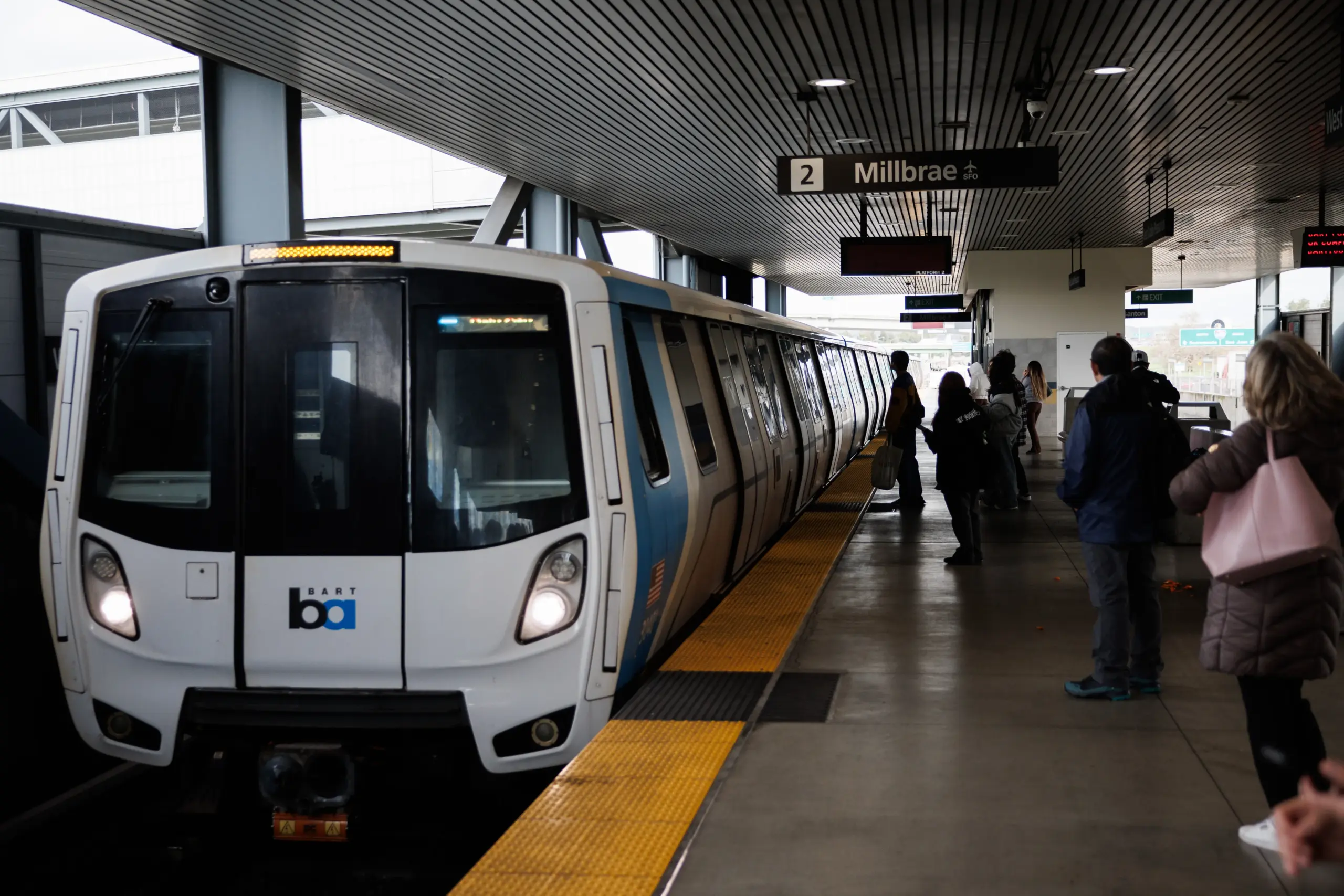
The sales tax measure was placed on the ballot earlier this year to help support the region’s struggling public transit agencies that have yet to see ridership levels return to pre-pandemic levels.
If it passes, the measure is expected to generate about $980 million annually for bus, train, ferry and metro lines in Santa Clara, San Mateo, Alameda, Contra Costa and San Francisco counties by raising the sales tax by 0.5% in every county except San Francisco, where the increase would be 1%. The tax would go into effect in 2027 and last for 14 years.
“We’re disappointed with the outcome but we will be continuing to fight this tax with all the abilities that we have,” Marc Joffe, one of the plaintiffs and the treasurer of Committee for Affordable Bay Area Transit, said. “We continue to think that it’s a very bad choice for the Bay Area, given the Bay Area’s incredible level of unaffordability that this will exacerbate.”
Among the arguments made in the lawsuit was that it was misleading to say it would “prevent major service cuts” and “preserve BART.” The group of voters opposing the measure argued that “what are ‘major service cuts’ to one person might not be ‘major service cuts’ to another person.”
Read more San Jose State’s ‘spread-and-shred’ offense still has room to grow
Chung, though, said the group of critics didn’t show “clear and convincing evidence” that the word “preserving” isn’t “false, misleading, partial or argumentative.”
“It accurately describes the purpose of the ballot measure, and it is not factually incorrect,” he wrote.
BART has warned that without the tax it may need to close between 10 and 15 stations and two lines, while Caltrain might have to cut weekend service and end weekday service after 9 p.m.
Another point of contention in the ballot measure language was mention that it would provide funding for “repairing targeted roads/potholes.” The voters argued that there “is no guarantee that any funding actually would be spent on ‘roadway re-pavement projects,” and that “roadway re-pavement” is not the same thing as “repairing targeted roads/potholes.”
“Petitioners argue that ‘potholes’ is a politically charged word, designed to inflame the electorate, and that ‘repairing’ should be replaced with ‘repaving,’” Chung wrote in his decision. “The court is not convinced. Potholes are a species of the problems addressed by repaving; and road repaving is a species of the broader concept of ‘repair.’”
The ballot language challenged in the lawsuit was approved last month by the Public Transit Revenue Measure District — a governing body of Metropolitan Transportation Commission members created to oversee the measure. MTC could not immediately be reached for comment on the ruling.
Read more ‘NYPD Blue’ star Rick Schroder slammed for political Dolly Parton tribute
About the Author