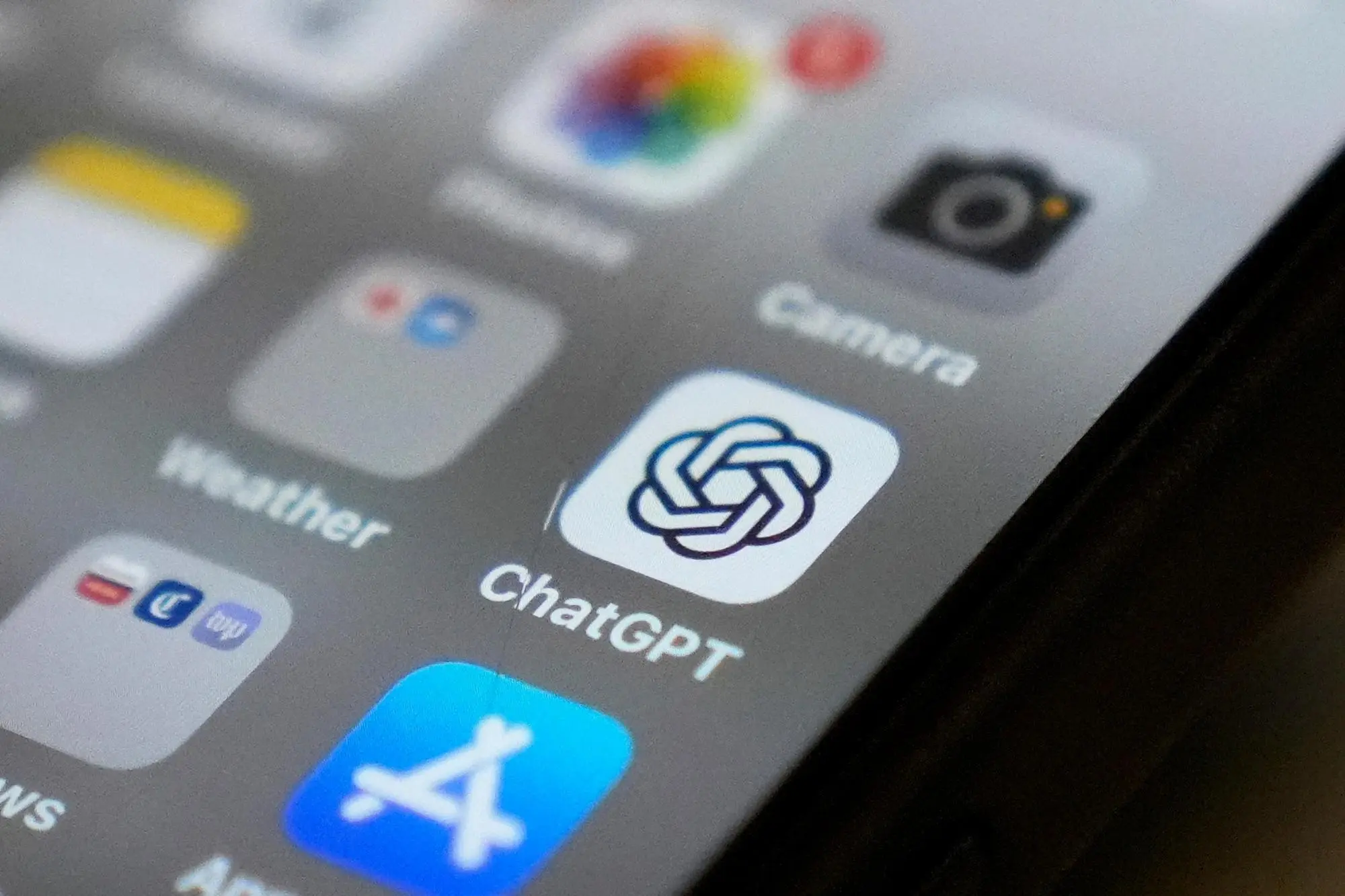
Los Angeles Unified has blocked students from accessing generative artificial intelligence on district-issued devices while it develops new rules for the technology, a move that has won praises from some parents but raised questions about how students will learn to navigate AI if they cannot use it in school.
Read more Feds open probe into Musk’s steering-wheel-free taxis a day after he began offering rides in them
The restriction, which took effect this school year, but was little publicized until this week, applies across grade levels and marks a shift from the district’s previous policy allowing students 13 and older to access approved generative AI tools after completing required digital citizenship instruction.
As LAUSD weighs a long-term policy, its decision is raising a broader question: Can schools teach students to navigate generative AI without giving them access to the technology itself?
Parent advocates who pushed for the restriction say students can learn to critically understand AI without using it, while an education researcher cautioned that restricting access could leave some students less prepared to evaluate the technology and widen disparities between those who can use it at home and those who cannot.
At the inaugural meeting of LAUSD’s Generative AI Ad Hoc Committee meeting Wednesday, Interim Chief Information Officer Douglas Le said the district uses its firewall and Lightspeed web-filtering software to block categories of online content on student devices, including AI.
Officials said that approach allows the district to block new websites and apps that fall into a restricted category. But Le said some sites can be miscategorized or contain embedded content, making it difficult to provide a comprehensive list of everything that is allowed or blocked.
In response to questions Thursday, an LAUSD spokesperson said the current restriction applies both to standalone AI services and to AI features embedded within Google Workspace applications.
Teachers, however, continue to have access to generative AI for their own work. The district said educators receive professional development on using the technology for tasks including instructional planning, developing lessons and resources and differentiating instruction.
The training emphasizes educator professional judgment, student data privacy, reviewing AI-generated material and maintaining teachers’ responsibility for instructional decisions, according to the district.
The district did not answer questions Thursday about who made the decision to impose the restriction, whether board members were notified before it took effect, what evidence informed the change or what criteria would eventually allow student access to resume.
District restrictions can also follow students onto personal devices if they are logged into their district accounts, Le said at the committee meeting. A student seeking to access a tool such as ChatGPT outside those controls would generally need to use a personal device and a non-district account.
The restriction surprised even some members of the school board, though those who raised concerns at the meeting did not object to the moratorium.
Board member Kelly Gonez said she had believed the district was still operating under last year’s policy and urged officials to make the new restrictions clearer to students, families and educators.
Board member Nick Melvoin similarly expressed discomfort that the board had not explicitly approved the change and that it had not been widely publicized.
He also raised a potential equity concern: Students with personal computers or phones may continue using generative AI at home while classmates who rely on district devices cannot.
“It seems like, one, folks aren’t aware of the policy with regards to restrictions, and two, if the policy is ‘we’re not going to allow students to use generative AI for the meantime,’ then we should publicize that,” Melvoin said, adding that the change “didn’t really come from the board.”
For Lila Byock, an LAUSD parent and founder of Schools Beyond Screens, the restriction was a welcoming surprise.
Read more 31 male lifeguards now say former California State Parks boss filmed them undressed in locker room
Her organization had been calling for a temporary moratorium on student-facing generative AI until the district’s committee could review the research and recommend safeguards, Byock said she arrived at Wednesday’s meeting expecting to reiterate that demand during public comment, only to learn that the district had already imposed one.
She argued that the district should maintain the restriction across all grade levels, including for teenagers, citing concerns about potential harms to students.
“We have to remember that teenagers are also children,” Byock said.
Byock said restricting student access should not mean avoiding the subject of AI. Instead, she said schools should teach students how the technology is built, how training data is used, how generated information can mislead users and what economic, environment and social interests may shape the tools.
Stephen Aguilar, an associate professor of education at the University of Southern California who studies educational technology and generative AI and is the author of the book “Authenticating Intelligence: Preventing AI from Hijacking Education” said restrictive policies on student AI use can be appropriate in some circumstances, but cautioned that broad restrictions can create problems of their own.
Students with greater resources at home may continue experimenting with AI on personal devices, Aguilar said, while students dependent on school-issued technology may have fewer opportunities to do so.
“It can encourage sort of an equity gap in terms of accessing different types of AI platforms,” Aguilar said.
He also said older students, in particular, need opportunities to learn how to assess AI-generated material because they are likely to encounter the technology in college and the workplace.
“Ideally that’s what schools do,” Aguilar said. “It’s a safe space for students to try things and fail with the guidance of a teacher.”
Aguilar said the effect of AI can vary significantly depending on the student, the classroom and the specific tool. One student might use it to avoid doing difficult thinking, he said, while another might use the same type of technology to create a study guide or deepen understanding of a difficult concept.
“One of the challenges in this space is that there is no right or wrong answer,” he said. “There’s only a right or wrong answer for a particular student within a particular classroom.”
The tension is particularly pronounced as LAUSD says it wants students to become AI-literate even while direct access is restricted.
One question LAUSD did not answer Thursday is what students will actually be taught about generative AI while their direct access remains restricted.
The district said it is continuing to train educators in the responsible use of generative AI, but did not describe what AI literacy instruction for students will look like during the moratorium.
Byock said such literacy should begin with critical understanding rather than hands-on use. Aguilar said students ultimately need experience evaluating the technology itself, particularly as they get older.
LAUSD said its generative AI committee will develop recommendations for student guardrails and procedures and bring them to the school board for consideration at the end of the school year.
Read more 40 years covering California’s economic thrill ride
About the Author