Ahead of the June primary election, the Bay Area News Group compiled a list of questions to pose to the candidates for California’s 14th Congressional District. You can find the full questionnaire below. Questionnaires may have been edited for spelling, grammar, length and clarity.
Read more Endorsement: Elect Hector Camacho to lead San Mateo County’s fragmented, unequal school system
To read our endorsements for other important Bay Area races click here.
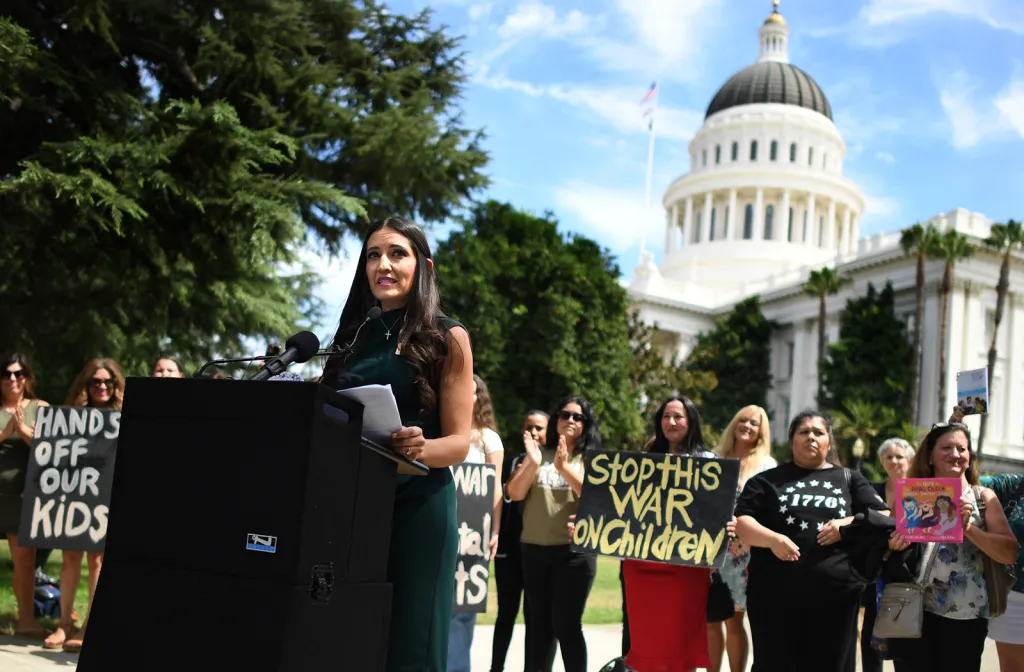
Name: Sonja Shaw
Date of birth: June 10, 1982
Current job title: President, Chino Valley Unified School District
Other political positions held: President, Chino Valley Unified School District Board of Education, 2022-Present.
City where you reside: Chino
If you’ve held elective office before, how has your work directly and measurably improved your constituents’ lives?
I helped turn around a struggling district by removing radical ideology, empowering parents and teachers, and focusing on basics. In just a few years, we saw measurable academic gains, and we have even been highlighted by a Stanford University study as a model for post-COVID academic recovery. And importantly, girls’ safety and fairness were protected.
What are the top three problems you’re seeking to solve if elected?
Refocusing schools on reading, writing, and math by removing radical political agendas. Protecting fairness and safety for girls’ in their sports, bathrooms, and locker rooms. Making sure parents are given a seat at the table in their kids’ education.
What makes you qualified to solve these problems?
I’ve actually done it. In Chino Valley, we turned around a struggling district by empowering parents and teachers and refocusing on core academics. We saw measurable academic improvement, protected our girls in their sports and private spaces and gave parents a real voice in education. By working closely with teachers and the community, we helped all of our students succeed. That kind of practical, proven experience is exactly what California needs right now.
What differentiates you from your most serious competitors for this seat?
Every one of my serious competitors has played a direct role in creating the failed education system we have today. – a former Assembly Speaker, former Assembly Education Chair, former Senate Education Chair and current consultant to the California Department of Education. Four people who created this mess now expect us to believe they can fix it.
If they couldn’t deliver real improvement while holding powerful positions in Sacramento, why should anyone trust them to fix it now?
What objective metrics would you use to measure teacher performance?
Student academic growth in reading and math, classroom discipline and attendance rates and parent feedback surveys. Teachers should be evaluated on how well their students are actually learning the basics.
Should lower-performing teachers be easier to remove than current state law allows? Explain.
Yes. Our children’s education is too important to protect failing teachers. We must streamline the process so chronically underperforming teachers can be removed while still protecting due process for good teachers.
When and how would you use the superintendent’s limited but concrete levers of power?
I would highlight failures and spotlight successes, direct curriculum guidance to emphasize teaching critical skills, issue clear enforcement on Title IX, and redirect any available funding away from ideology and toward proven academic programs.
What did Tony Thurmond do right as California’s state superintendent for public instruction?
While I consider Thurmond’s term in office to be an abject failure, he expanded some career technical education programs and increased awareness around teacher shortages.
In what ways did Tony Thurmond fail as California’s state superintendent for public instruction?
He championed boys in girls’ sports and private spaces, fought against parental notification, and presided over continued academic decline with reading and math proficiency stuck below 50%. He prioritized radical agendas over children’s learning and safety.
Explain your position on Gov. Newsom’s plan to transfer control of the Department of Education from the state superintendent to the governor? If it goes through, how would you lead the superintendent’s office? How might you push back?
I strongly oppose it. This is a blatant power grab to eliminate independent oversight. The Superintendent is a constitutional office created by voters to be independent from the Governor. If it passes, I will use every available tool to fight it and preserve the independence of the office.
California State Sen. Dave Cortese (District 15) introduced Senate Constitutional Amendment 5 (SCA 5 — the Education Equalization Act), which seeks to close the growing funding divide between basic and non-basic aid school districts “to ensure every student has access to a quality education regardless of their zip code.” Do you support Sen. Cortese’s legislation? Explain.
No. While we must examine issues surrounding how districts are funded, this measure shifts more control to Sacramento and weakens local district accountability. I believe stronger solutions come from local flexibility rather than centralized state control.
With California facing a projected budget deficit and a steady decline in student enrollment, some districts are facing bankruptcy or school closures. What fiscal reforms would you implement to help districts manage right-sizing without compromising student services?
I would push districts to prioritize classroom spending over bloated administrative budgets, eliminate unnecessary mandates and focus resources on proven basics instead of expensive social experiments. We can fix our issues with honest budgeting without having to cut core services.
The Bay Area faces a critical teacher shortage. (A 2026 Education Week survey found that nearly 50% of California teachers plan to quit or retire within the next decade, a figure significantly higher than the national average, about 35%.)
Beyond increasing pay, how would you make teaching a more attractive and sustainable profession?
Read more Residents confront Fairfield leaders over viral arrest video of high school student
Reduce useless paperwork, restore teacher authority in the classroom as it relates to student behavior, eliminate divisive mandates that demoralize staff and give teachers the freedom to actually teach reading, writing, and math without political interference.
There has been a wave of teacher strikes in the state recently. How would you handle balancing their demands with a shrinking state budget and declining student enrollment?
I would insist on transparency and prioritize student learning. Strikes should not be the first resort. We must negotiate in good faith while protecting taxpayer dollars and ensuring children remain in the classroom.
With AI entering classrooms, should the state deploy AI tutors or restrict them?
No. We need less screen time and more one-on-one interaction with real teachers if we want our students to succeed.
Critics often argue the superintendent’s role is more administrative than influential. If elected, what is the first major initiative you would personally lead to prove that this office can be a primary driver of change rather than just an administrator of the status quo?
I would immediately launch a statewide “Back to Basics” initiative, mandating rigorous reading and math standards while removing radical ideology from classrooms. This would be my signature effort to highlight how the office can serve as a vehicle to drive real academic change.
What are California schools doing well? In what ways do you think California schools are unfairly criticized?
Many individual teachers and local schools do excellent work despite Sacramento’s interference. Schools are sometimes unfairly painted as completely failing when the real problem is Sacramento’s top-down mandates and radical priorities that distract from actual learning.
Explain your policy on smartphone use during the school day.
I support strong restrictions or outright bans on student smartphone use during the school day. Phones are a major distraction and contribute to mental health issues. Learning must come first.
How can California schools improve math instruction?
Return to rigorous, proven math standards, emphasize mastery of fundamentals, and stop watering down curriculum to chase equity at the expense of competence.
Explain your approach to teaching reading, particularly your thoughts on phonics instruction.
Phonics is the most effective way to teach children to read. I will push for mandatory, science-based phonics programs across the state because the current approach has failed California students.
Do you think the state Legislature should ban social media use for children? If so, explain.
Social media has had serious effects on children’s mental health. I support age-appropriate restrictions and strong parental controls to protect kids from addiction, bullying, and harmful content.
Given the current national political climate, what is your strategy for ensuring California schools remain “safe havens” — particularly regarding the protection of student data from federal immigration authorities and protections for transgender students?
Schools should be safe learning environments for all students. I will protect student data privacy while fully complying with federal law.
No child should be used as a political pawn. My focus is on protecting all students regardless of who is in the White House.
What do you think is the cause of the stark student achievement gap in California public schools? How would you fix it given the current powers of this office?
The gap is caused by decades of failed policies: radical ideology in classrooms, weak reading and math instruction, and parents being shut out. I would fix it by refocusing on basics, giving parents a seat at the table, and removing distractions, so every child has a real chance to succeed.
Please tell us anything else we should know about why you’re the best candidate for California superintendent of public instruction.
I’m not a career politician. I’m a parent who stepped up when Sacramento failed our kids. I’ve already delivered results on the ground, won tough fights, and proven that I will never back down when it comes to our children. California needs a fighter, not another insider.
Lastly, what’s your favorite movie about going to school or being an educator in California?
McFarland USA is one of my favorites because it’s ultimately about hard work, discipline, and opportunity. It shows how committed teachers and coaches can help students discover talents they didn’t even realize they had, while also highlighting the importance of family and community.
Read more Pac-12 football: The 2026 kickoff times and TV networks are (mostly) set
About the Author