By DARLENE SUPERVILLE, Associated Press
WASHINGTON — The Stonewall National Monument, the President’s House Site and the Women’s Rights National Historic Park are among 11 sites on this year’s annual list of the most endangered historic places in the United States compiled by the National Trust for Historic Preservation.
Read more Feds charge San Francisco man with having gun when police came to arrest popular rapper
The 2026 list, announced Wednesday, marks America’s 250th anniversary with the foundational principle that everyone is created equal as the theme, said Carol Quillen, president and CEO of the nonprofit organization. The 11 sites offer examples of how, over time, Americans have fought against injustice and for equality, she said.
“We wanted to think about those ideas, especially this notion that all human beings are created equal and find places, sometimes unsung places … that not all Americans routinely think about,” Quillen told The Associated Press.
The sites are spread across the United States — from New York and California on the East and West Coasts, to Alabama and Texas in the South, to Michigan in the Midwest and the Four Corners of Arizona, Colorado, New Mexico and Utah in the Rocky Mountain West.
At least three of the sites — Stonewall, the El Corazon church in Texas and President’s House in Philadelphia — have been endangered by Trump administration actions.
“We want to save these places,” Quillen said, “not just because the bricks and mortar is important but because the stories these places hold are important.”
For the first time since the list debuted in 1988, each site on the 2026 list will receive a one-time $25,000 grant to help highlight their connections to the principle that all people are created equal and address the threats they face.
The 11 sites are:
Montgomery, Alabama: Ben Moore Hotel
The hotel was a refuge for Black people living under laws that enforced racial separation in the South. Prolonged vacancy has caused structural deterioration and the historic Centennial Hill neighborhood surrounding it faces pressure from development. The hotel housed key players from the Civil Rights Movement, including the Rev. Martin Luther King, Jr. and Rev. Ralph Abernathy. The Conservation Fund announced in November that it would help preserve the hotel.
Modoc County, California: Tule Lake Segregation Center
 Kyoko Oda, a former incarceree of the Tule Lake Segregation Center and now president of the Tuna Canyon Detention Station Coalition, speaks at a press conference on March 18, 2025 in Little Tokyo Los Angeles, to condemn President Donald Trump’s recent invocation of the wartime “Alien Enemies Act.” The move would allow the U.S. president to speedily detain and deport noncitizens considered part of an enemy nation. (Courtesy of Sherrill Ingalls / Japanese American National Museum)
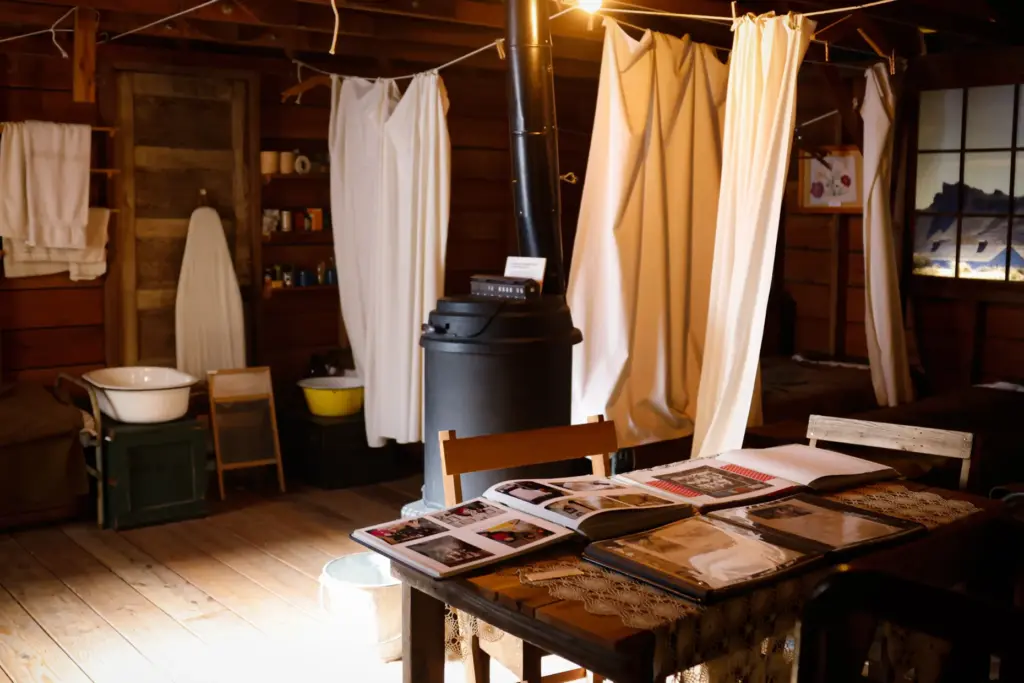 A recreation of the barracks at the Tule Lake Segregation Center at the Japanese American Museum of San Jose in San Jose, Calif., on Friday, Dec. 19, 2025. (Shae Hammond/Bay Area News Group)
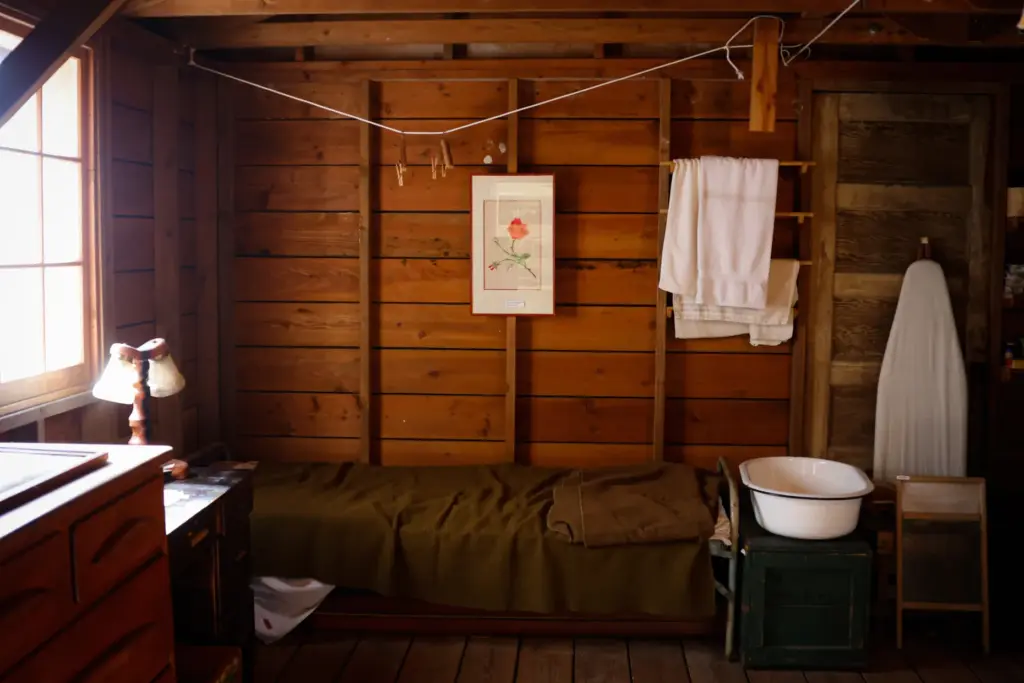 A recreation of the barracks at the Tule Lake Segregation Center at the Japanese American Museum of San Jose in San Jose, Calif., on Friday, Dec. 19, 2025. (Shae Hammond/Bay Area News Group)
Initially known as the Tule Lake War Relocation Center, it was set up as a camp but later became a segregation center where Japanese Americans who were thought to be disloyal to the United States were imprisoned. The site is now a national monument managed by the National Park Service. Only 37 acres of the 1,100-acre site is protected. Most of it is at risk of permanent alteration from a proposed nearby construction project.
California: Angel Island Immigration Station
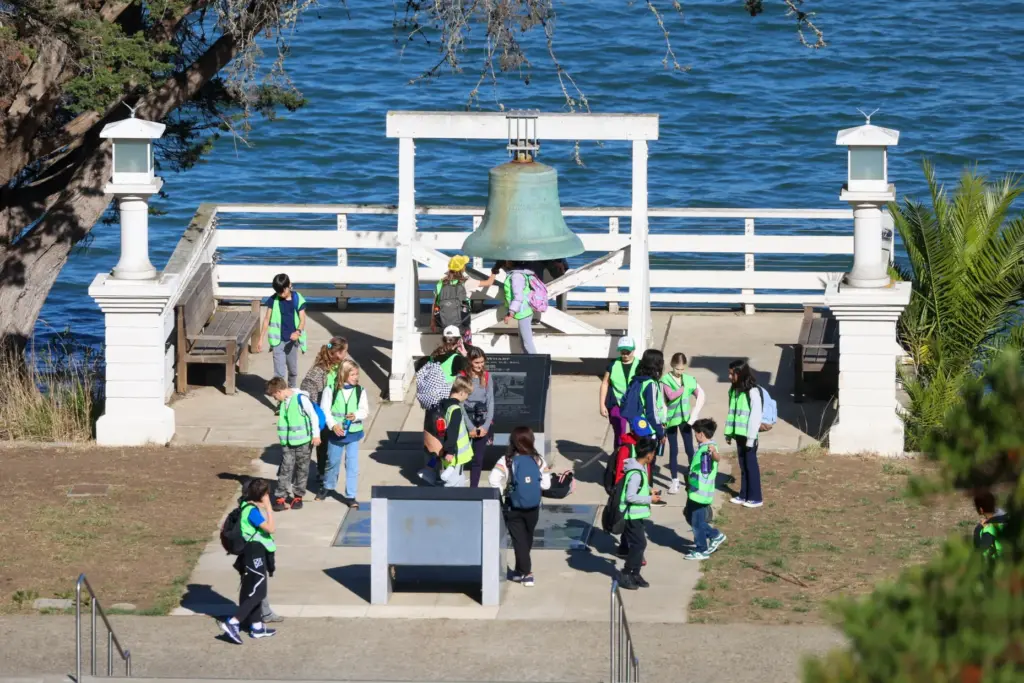 A group of students tour around the original fog-warning bell at the end of the landing pier, the immigrants’ first steps on U.S. soil after disembarking at the historic Angel Island Immigration Station in Tiburon, Calif., on Friday, Nov. 8, 2024. (Ray Chavez/Bay Area News Group)
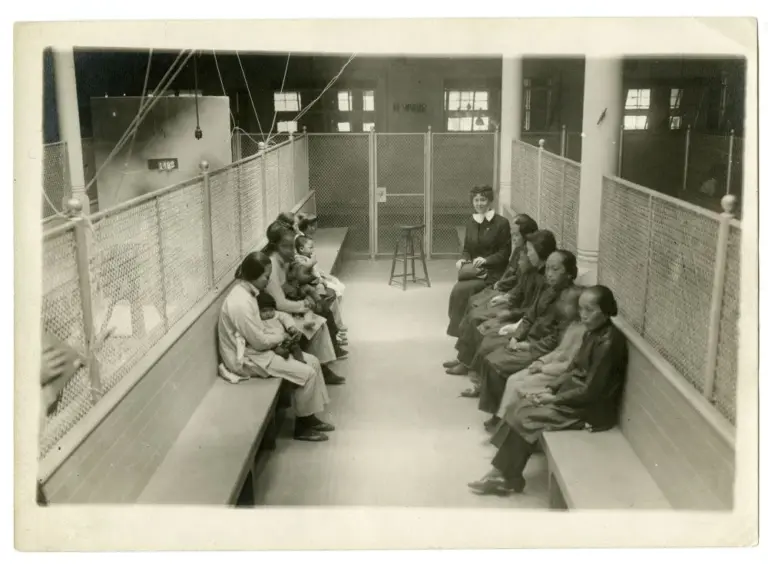 Chinese women and children under 12 were held together at Angel Island Immigration Station (Courtesy of the California Historical Society).
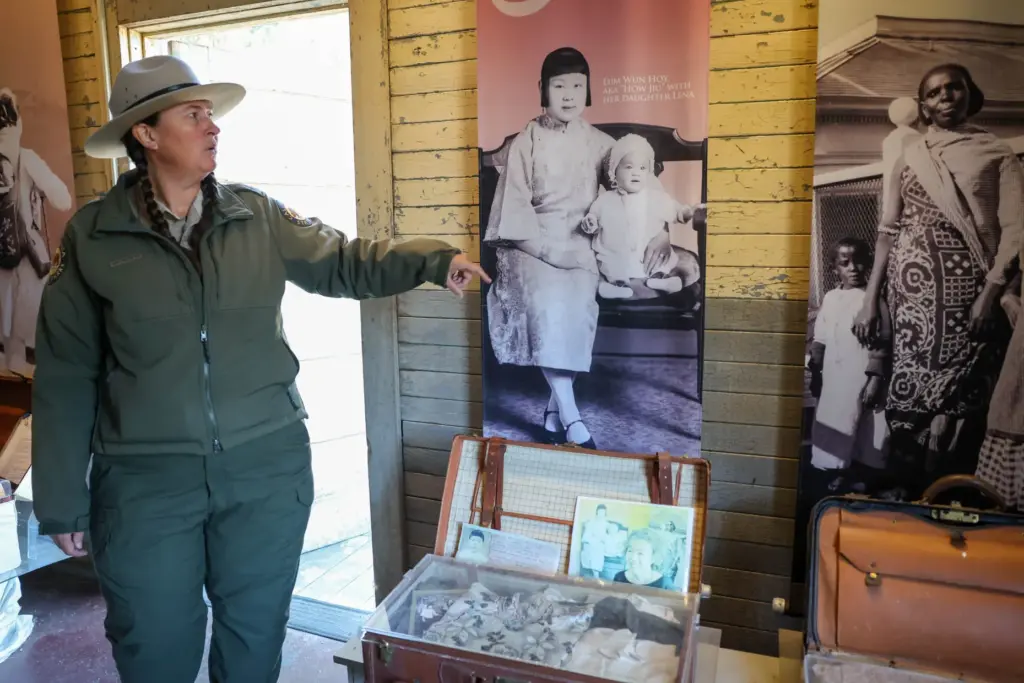 Angel Island State Park Interpreter Casey Dexter-Lee shows enlarged photos of immigrants who were detained at the historic Angel Island Immigration Station in Tiburon, Calif., on Friday, Nov. 8, 2024. Immigrants from over 80 countries were detained after being interrogated, medically examined, and separated by gender and nationality after disembarking at Angel Island between 1910 and 1940. (Ray Chavez/Bay Area News Group)
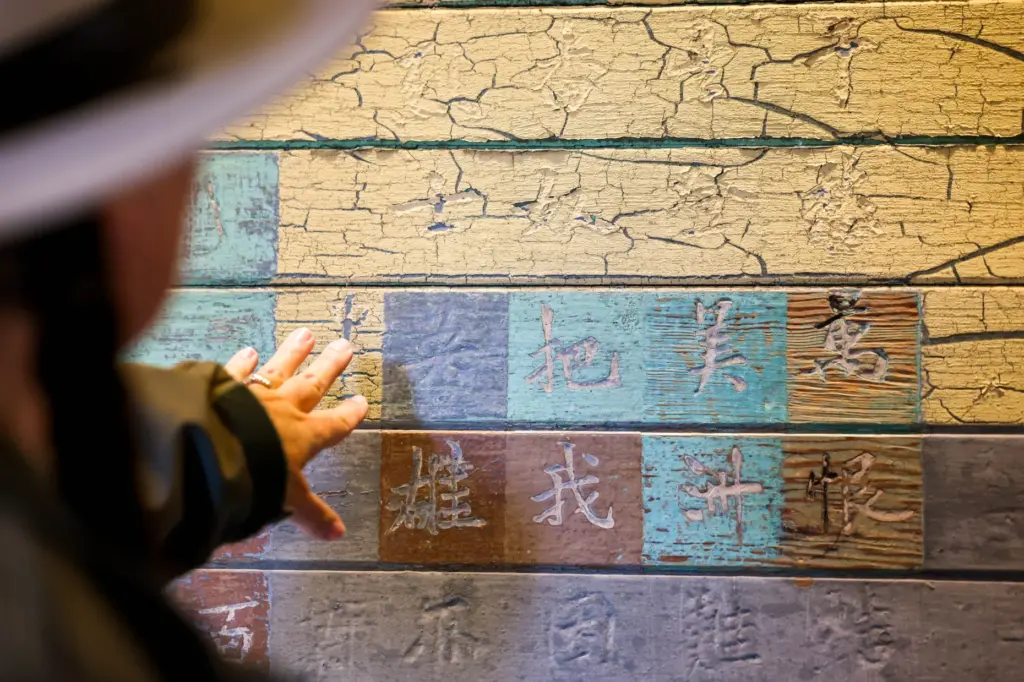 Angel Island State Park Interpreter Casey Dexter-Lee shows a Chinese engraved poem made by detained immigrants on the walls of the historic Angel Island Immigration Station in Tiburon, Calif., on Friday, Nov. 8, 2024. Immigrants from over 80 countries were detained after being interrogated, medically examined, and separated by gender and nationality after disembarking at Angel Island between 1910 and 1940. (Ray Chavez/Bay Area News Group)
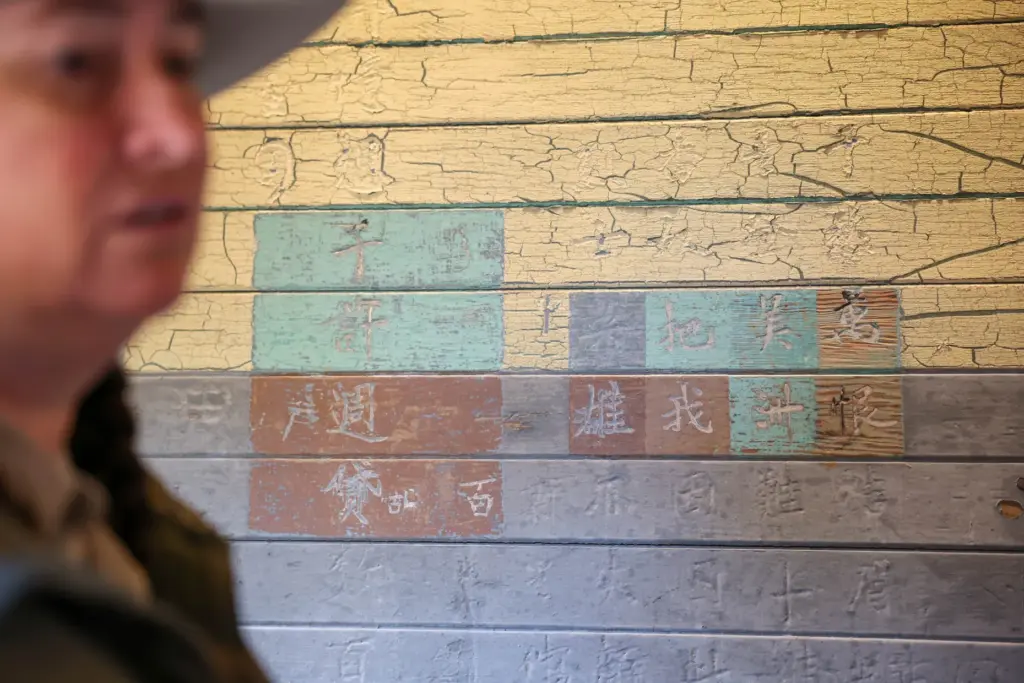 Angel Island State Park Interpreter Casey Dexter-Lee shows a Chinese engraved poem made by detained immigrants on the walls of the historic Angel Island Immigration Station in Tiburon, Calif., on Friday, Nov. 8, 2024. Immigrants from over 80 countries were detained after being interrogated, medically examined, and separated by gender and nationality after disembarking at Angel Island between 1910 and 1940. (Ray Chavez/Bay Area News Group)
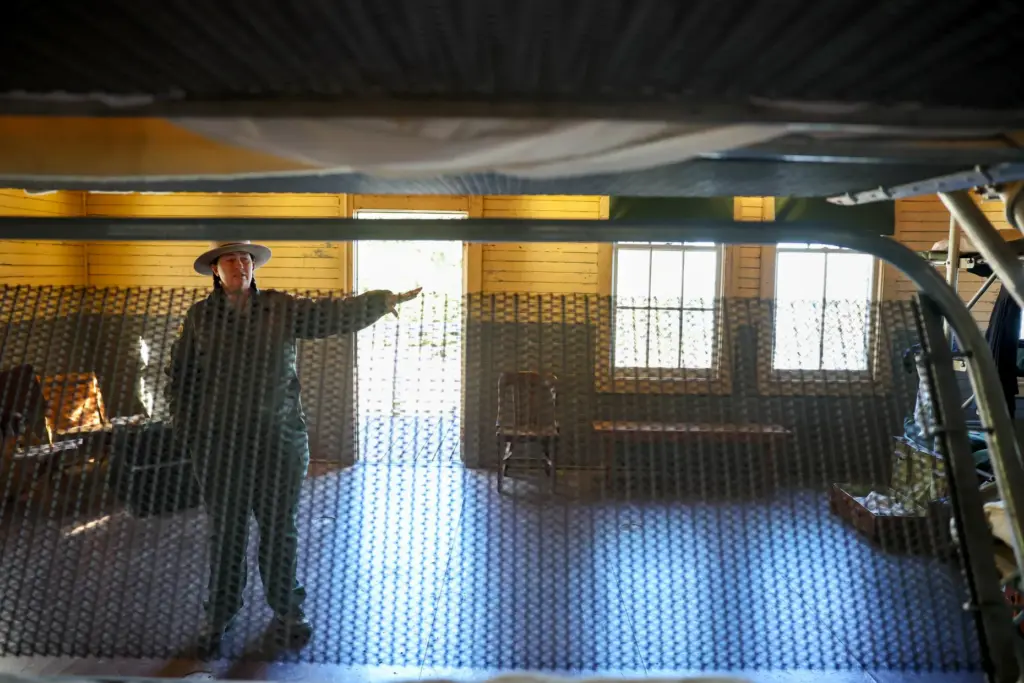 Angel Island State Park Interpreter Casey Dexter-Lee shows the men’s detention barracks at the historic Angel Island Immigration Station in Tiburon, Calif., on Friday, Nov. 8, 2024. Immigrants from over 80 countries were detained after being interrogated, medically examined, and separated by gender and nationality after disembarking at Angel Island between 1910 and 1940. (Ray Chavez/Bay Area News Group)
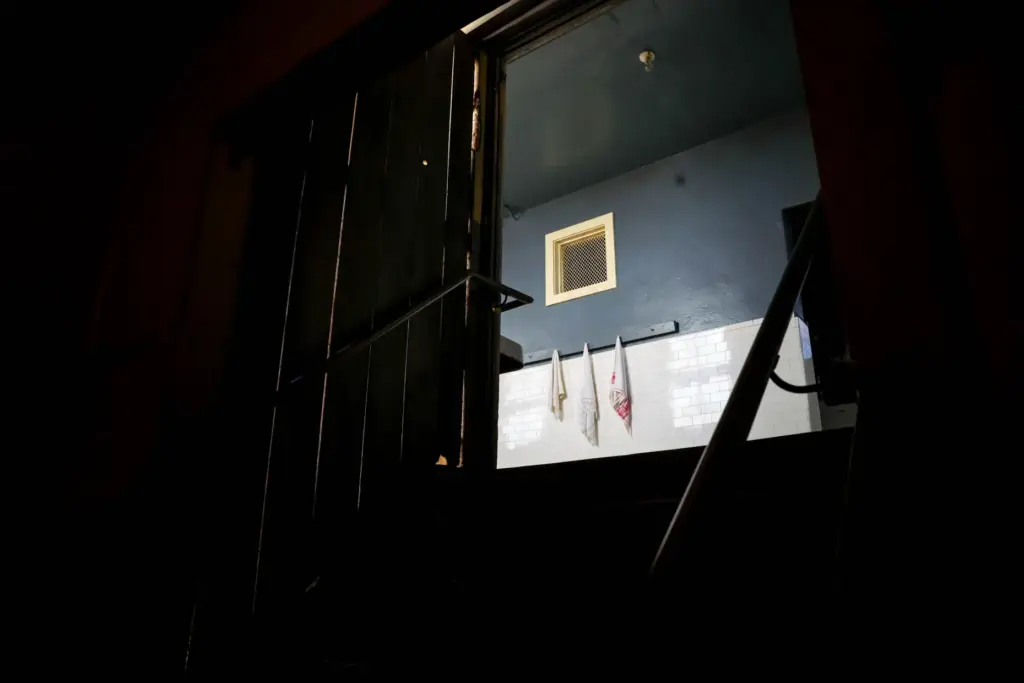 Towels hang on the bathroom wall for exhibition purposes at the historic Angel Island Immigration Station in Tiburon, Calif., on Friday, Nov. 8, 2024. Immigrants from over 80 countries were detained after being interrogated, medically examined, and separated by gender and nationality after disembarking at Angel Island between 1910 and 1940. (Ray Chavez/Bay Area News Group)
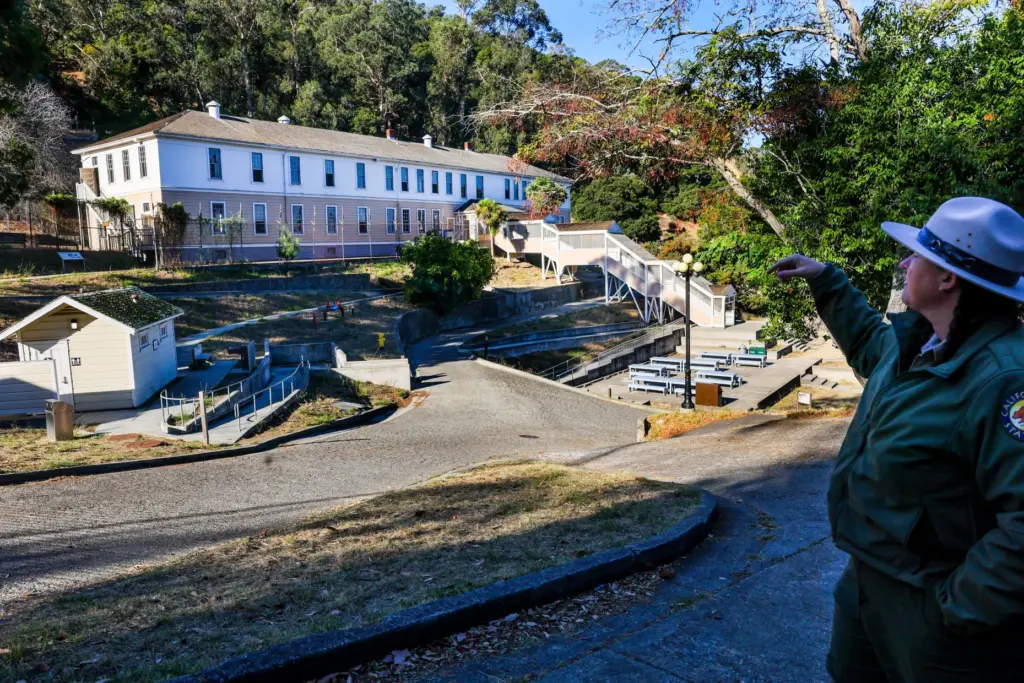 Angel Island State Park Interpreter Casey Dexter-Lee points at the historic Angel Island Immigration Station in Tiburon, Calif., on Friday, Nov. 8, 2024. Immigrants from over 80 countries were detained after being interrogated, medically examined, and separated by gender and nationality after disembarking at Angel Island between 1910 and 1940. (Ray Chavez/Bay Area News Group)
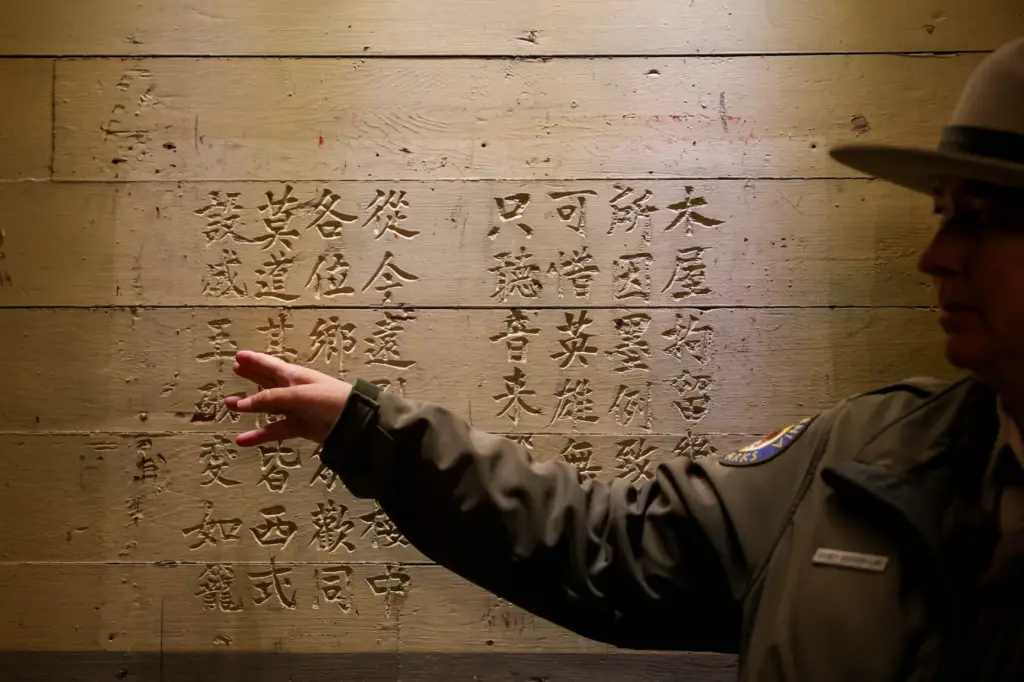 Angel Island State Park Interpreter Casey Dexter-Lee shows a Chinese engraved poem made by detained immigrants on the walls of the historic Angel Island Immigration Station in Tiburon, Calif., on Friday, Nov. 8, 2024. Immigrants from over 80 countries were detained after being interrogated, medically examined, and separated by gender and nationality after disembarking at Angel Island between 1910 and 1940. (Ray Chavez/Bay Area News Group)
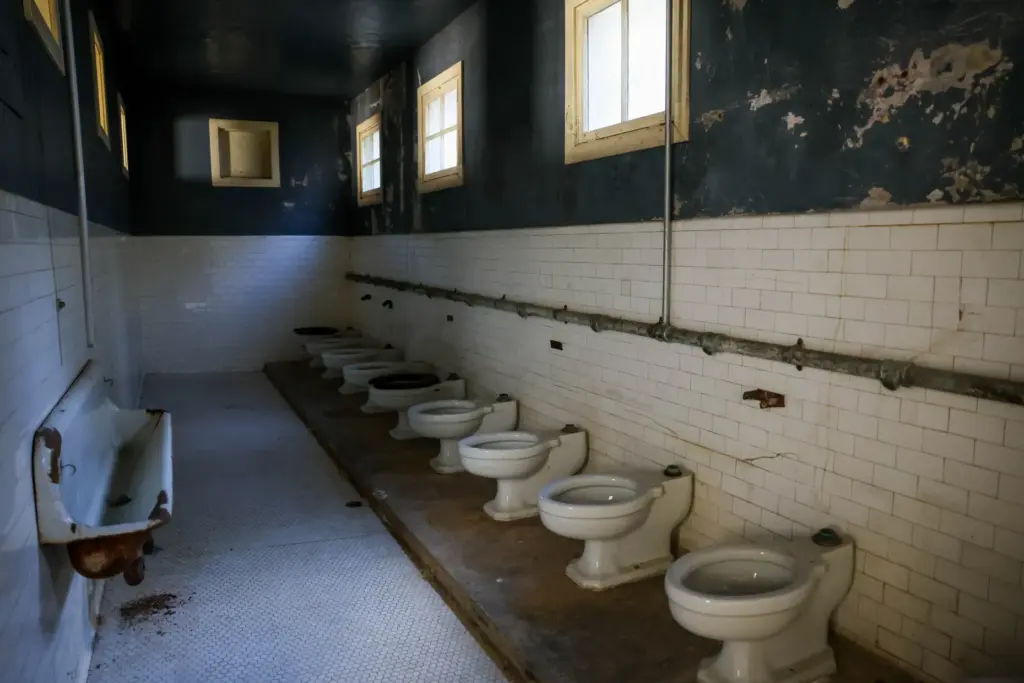 View of the toilet wing addition at the historic Angel Island Immigration Station in Tiburon, Calif., on Friday, Nov. 8, 2024. Immigrants from over 80 countries were detained after being interrogated, medically examined, and separated by gender and nationality after disembarking at Angel Island between 1910 and 1940. (Ray Chavez/Bay Area News Group)
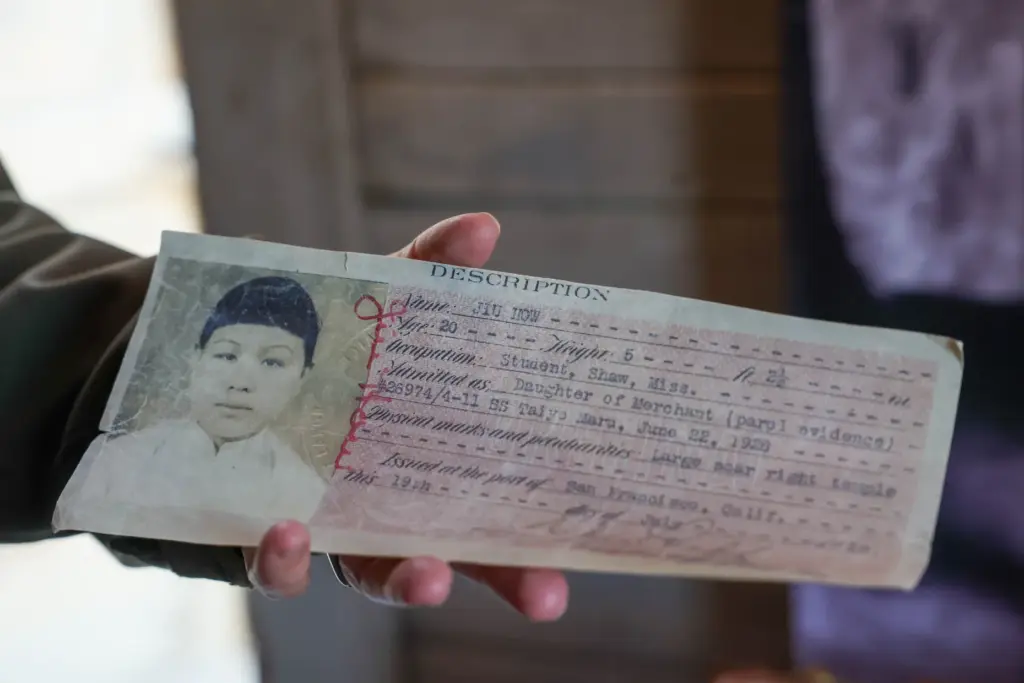 Angel Island State Park Interpreter Casey Dexter-Lee shows an identification card issued to a Chinese immigrant who was detained at the historic Angel Island Immigration Station in Tiburon, Calif., on Friday, Nov. 8, 2024. Immigrants from over 80 countries were detained after being interrogated, medically examined, and separated by gender and nationality after disembarking at Angel Island between 1910 and 1940. (Ray Chavez/Bay Area News Group)
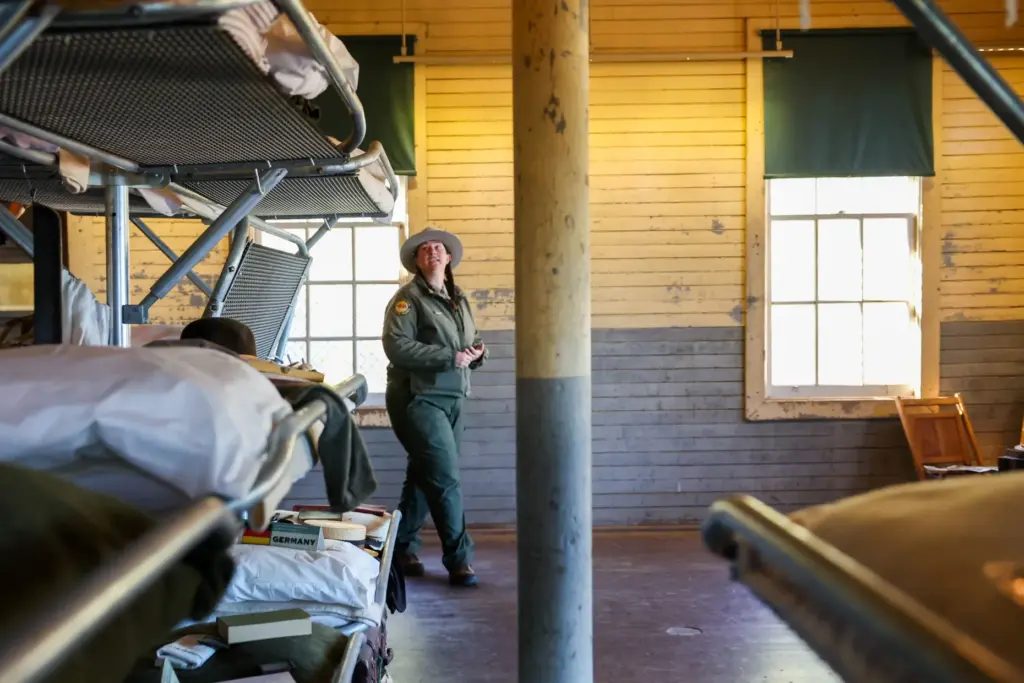 Angel Island State Park Interpreter Casey Dexter-Lee shows the men’s detention barracks at the historic Angel Island Immigration Station in Tiburon, Calif., on Friday, Nov. 8, 2024. Immigrants from over 80 countries were detained after being interrogated, medically examined, and separated by gender and nationality after disembarking at Angel Island between 1910 and 1940. (Ray Chavez/Bay Area News Group)
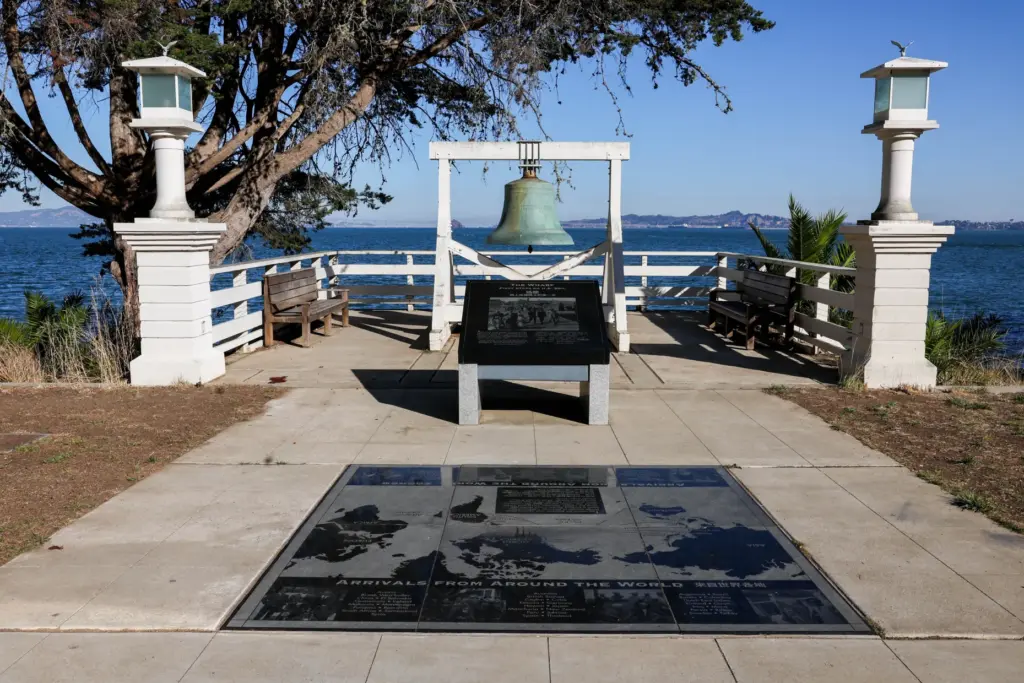 The original fog-warning bell sits at the end of the landing pier, the immigrants’ first steps on U.S. soil after disembarking at the historic Angel Island Immigration Station in Tiburon, Calif., on Friday, Nov. 8, 2024. (Ray Chavez/Bay Area News Group)
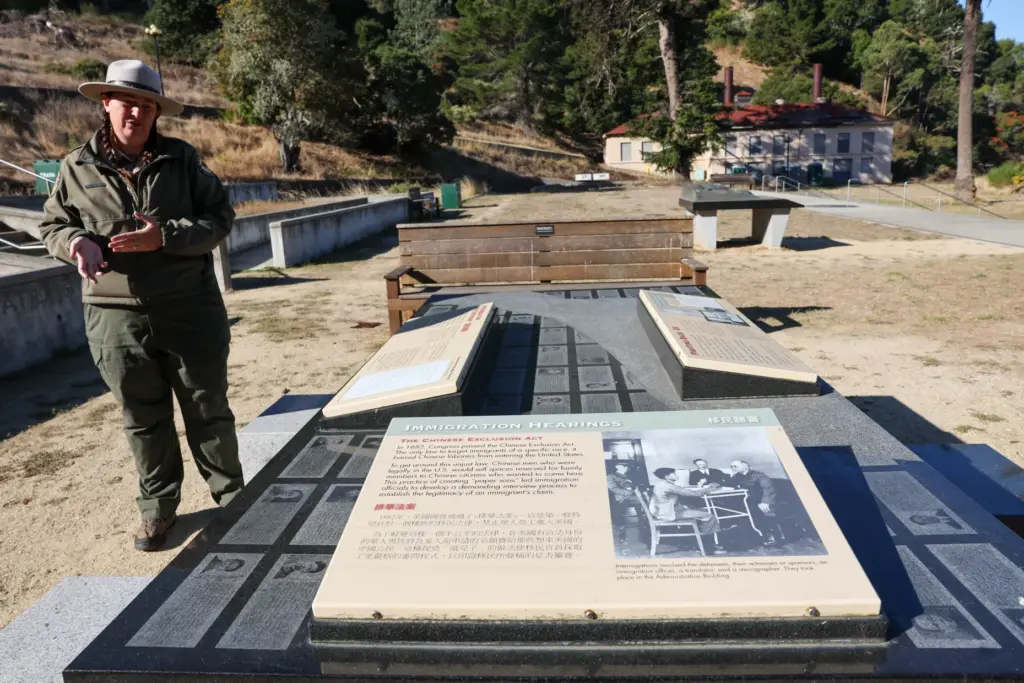 Angel Island State Park Interpreter Casey Dexter-Lee stands at the former Administration Building where immigrants were interrogated, medically examined, and separated by gender and nationality after disembarking at Angel Island in Tiburon, Calif., on Friday, Nov. 8, 2024. Immigrants from over 80 countries were detained at the historic Angel Island Immigration Station between 1910 and 1940. (Ray Chavez/Bay Area News Group)
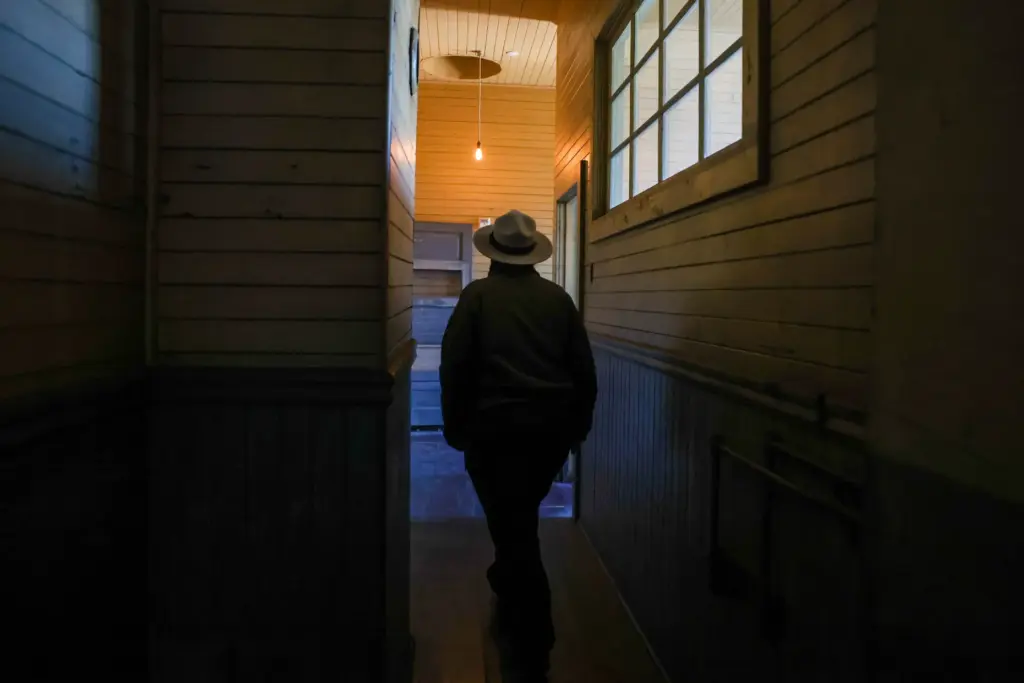 Angel Island State Park Interpreter Casey Dexter-Lee walks through a hallway at the historic Angel Island Immigration Station in Tiburon, Calif., on Friday, Nov. 8, 2024. Immigrants from over 80 countries were detained after being interrogated, medically examined, and separated by gender and nationality after disembarking at Angel Island between 1910 and 1940. (Ray Chavez/Bay Area News Group)
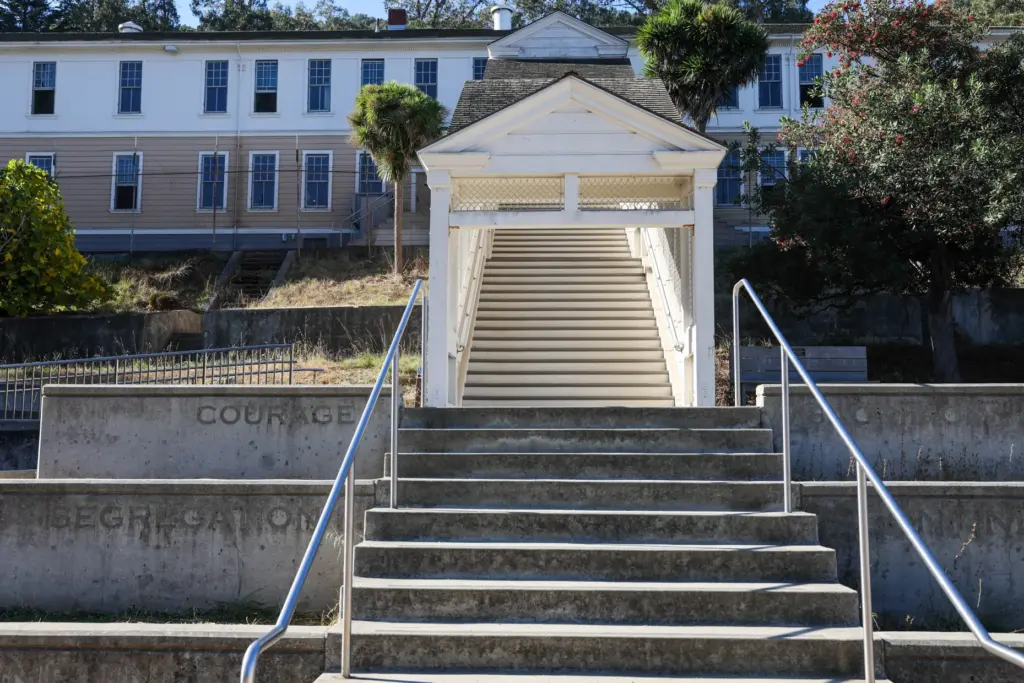 Steps to the historic Angel Island Immigration Station in Tiburon, Calif., on Friday, Nov. 8, 2024. Immigrants from over 80 countries were detained after being interrogated, medically examined, and separated by gender and nationality after disembarking at Angel Island between 1910 and 1940. (Ray Chavez/Bay Area News Group)
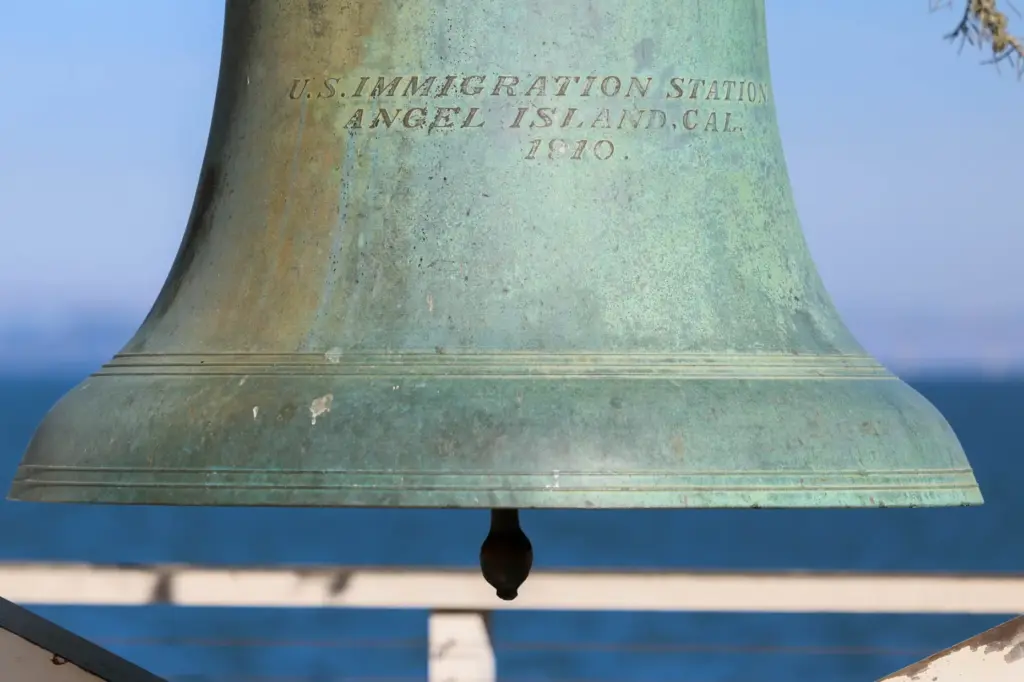 The original fog-warning bell sits at the end of the landing pier, the immigrants’ first steps on U.S. soil after disembarking at the historic Angel Island Immigration Station in Tiburon, Calif., on Friday, Nov. 8, 2024. (Ray Chavez/Bay Area News Group)
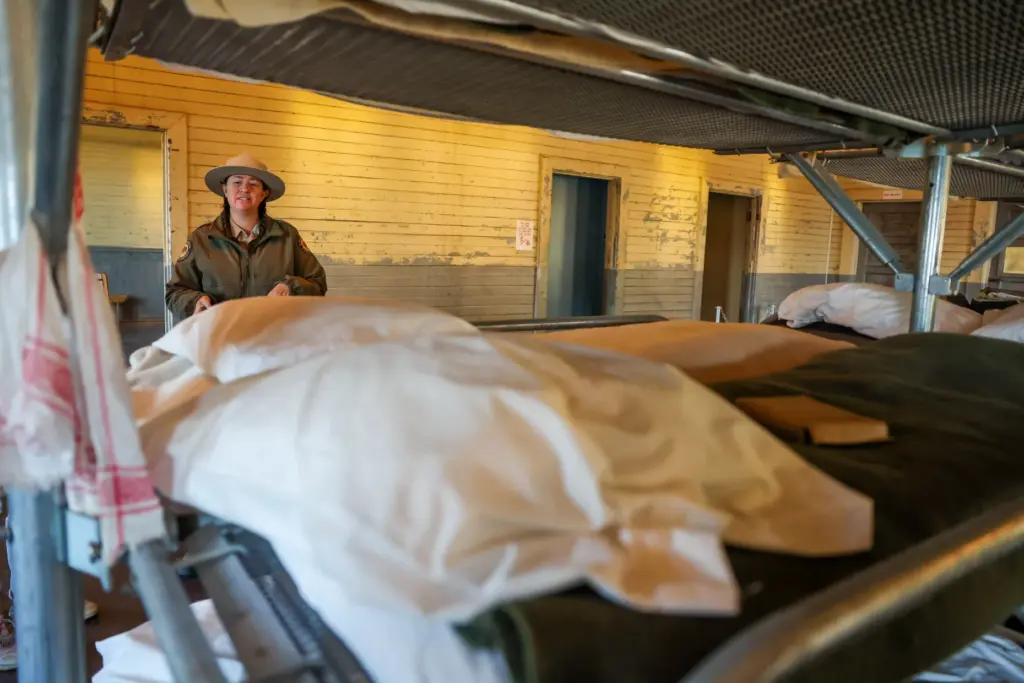 Angel Island State Park Interpreter Casey Dexter-Lee shows the men’s detention barracks at the historic Angel Island Immigration Station in Tiburon, Calif., on Friday, Nov. 8, 2024. Immigrants from over 80 countries were detained after being interrogated, medically examined, and separated by gender and nationality after disembarking at Angel Island between 1910 and 1940. (Ray Chavez/Bay Area News Group)
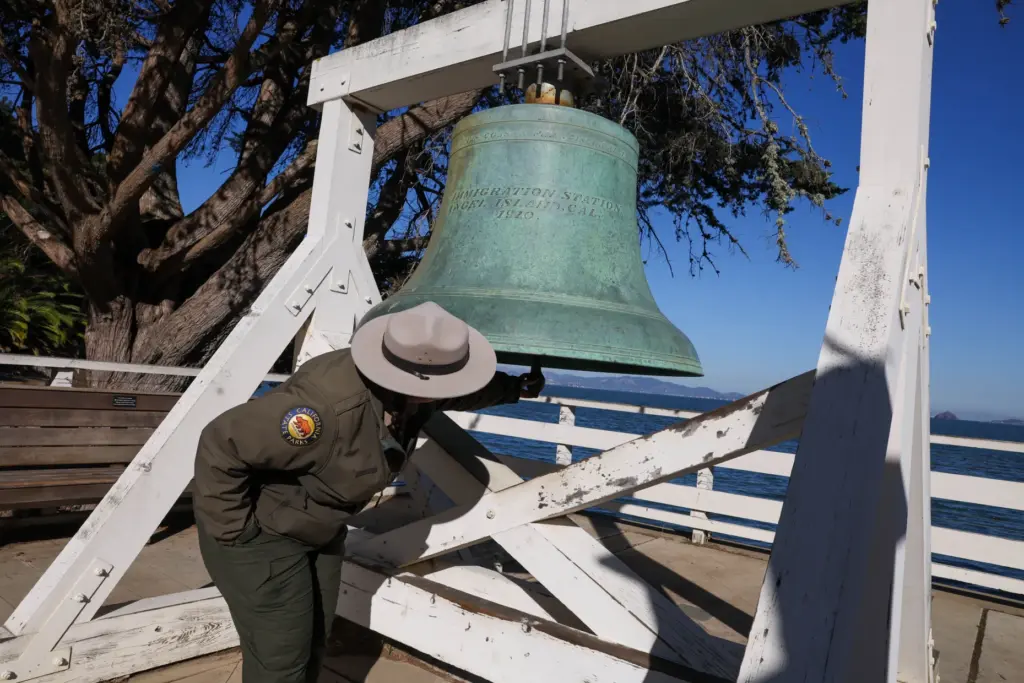 Angel Island State Park Interpreter Casey Dexter-Lee rings the original fog-warning bell sits at the end of the landing pier, the immigrants’ first steps on U.S. soil after disembarking at the historic Angel Island Immigration Station in Tiburon, Calif., on Friday, Nov. 8, 2024. (Ray Chavez/Bay Area News Group)
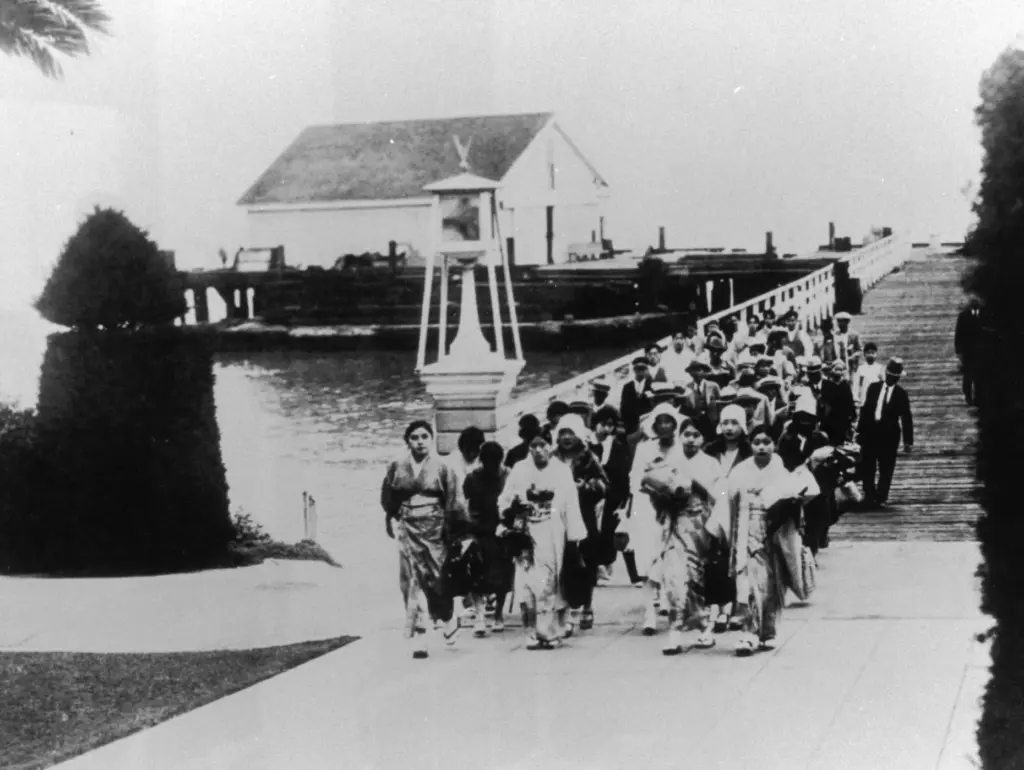 A Photograph of Asian Immigrants arriving at the Quarantine Station at Angel Island, San Francisco Bay circa 1911. (Fotosearch/Archive Photos/Getty Images)
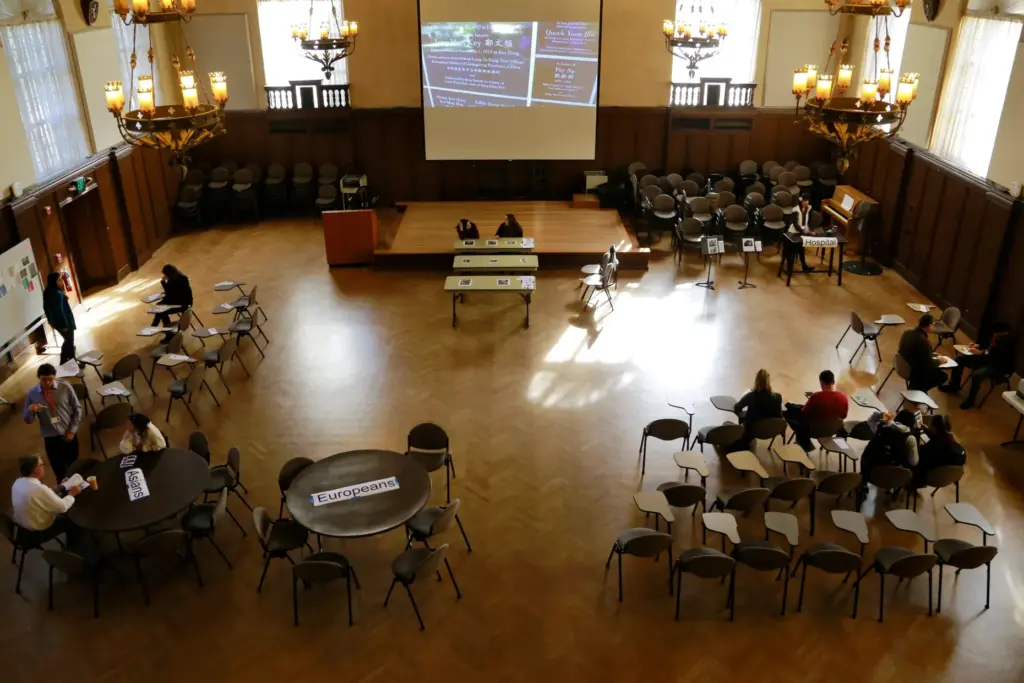 Dominican history students create a historical simulation of the Angel Island Immigration Station in Guzman Lecture Hall at Dominican University in San Rafael, Calif. on Friday, Dec. 7, 2018. (James Cacciatore/Marin Independent Journal)
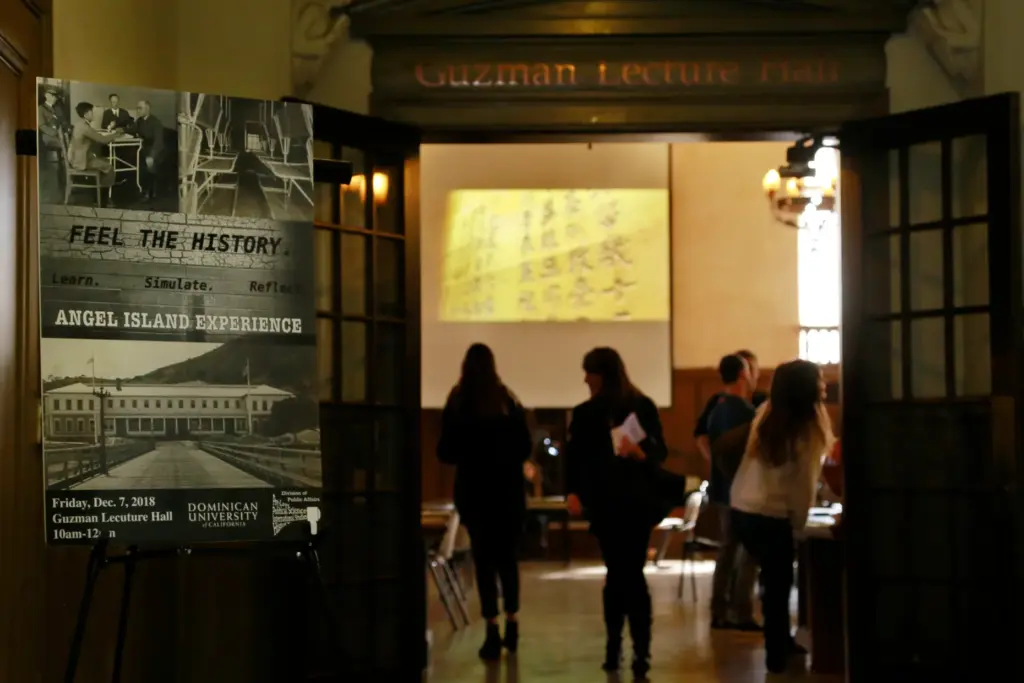 The entrance “boat dock” where participants start their tour during a historical simulation of the Angel Island Immigration Station in Guzman Lecture Hall at Dominican University in San Rafael, Calif. on Friday, Dec. 7, 2018. (James Cacciatore/Marin Independent Journal)
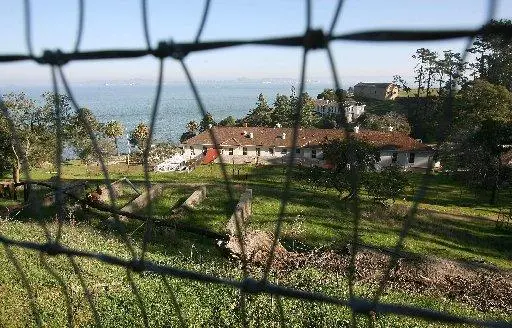 A view of the detention barracks at the Angel Island Immigration Station is shown on Saturday, Jan. 31, 2009, on Angel Island.
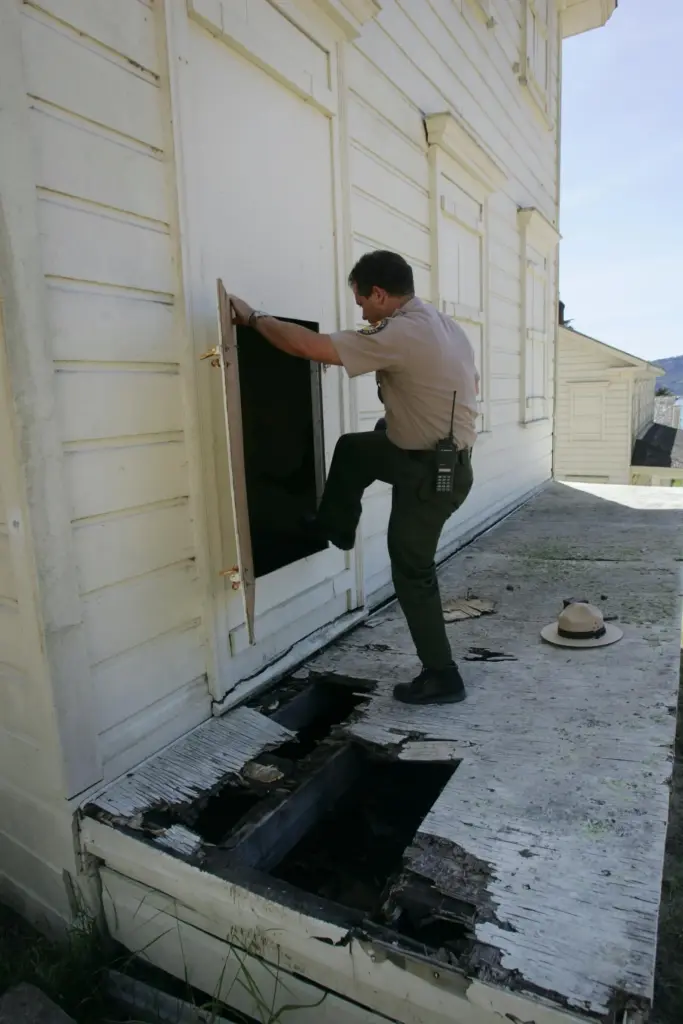 Dave Matthews, the Angel Island Superintendent, inspects one of the homes on “Officer’s Row” at Camp Reynolds in Angel Island State park Thursday May 15, 2008. The circa 1867 Civil War structures are falling down but there is no money to restore them or even stop their decline. The park was a military fort in the Civil War, then an immigration processing station known as the “Ellis Island of the West” from 1910 to 1940, and finally a military area where Army soldiers left from to fight in WWII in the Pacific. Many of the island’s 120 buildings have broken windows, collapsing porches, and roofs that leak in rainstorms. Meanwhile, the staff has been cut on the island, so there aren’t enough rangers to do public tours. (Patrick Tehan/Mercury News)
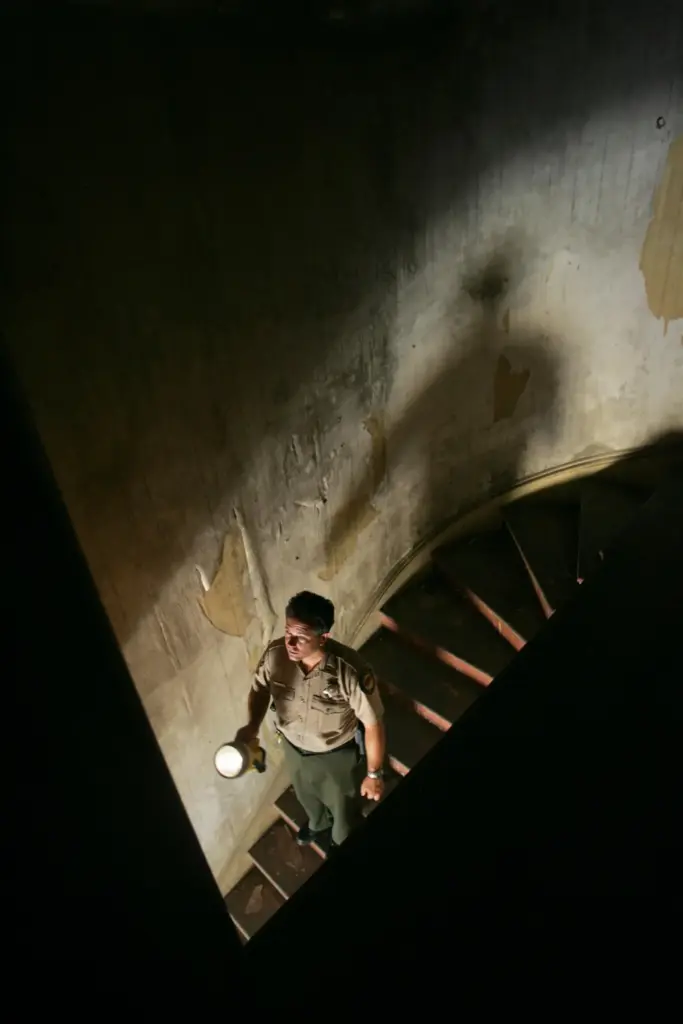 Dave Matthews, the Angel Island Superintendent, inspects a one of the homes on “Officer’s Row” at Camp Reynolds in Angel Island State park Thursday May 15, 2008. The circa 1867 Civil War structures are falling down but there is no money to restore them or even stop their decline. The park was a military fort in the Civil War, then an immigration processing station known as the “Ellis Island of the West” from 1910 to 1940, and finally a military area where Army soldiers left from to fight in WWII in the Pacific. Many of the island’s 120 buildings have broken windows, collapsing porches, and roofs that leak in rainstorms. Meanwhile, the staff has been cut on the island, so there aren’t enough rangers to do public tours. (Patrick Tehan/Mercury News)
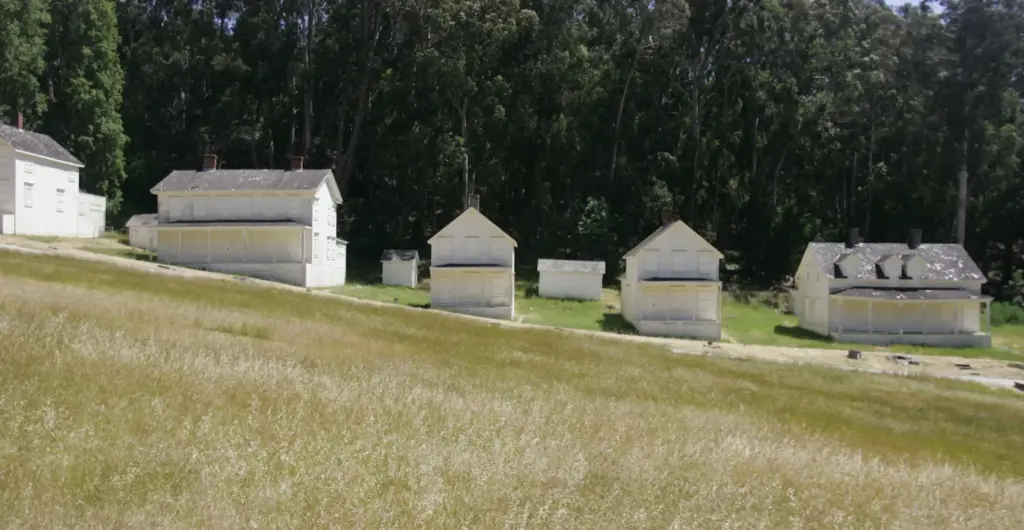 Shuttered homes on “Officer’s Row” at Camp Reynolds in Angel Island State park Thursday, May 15, 2008. The circa 1867 Civil War structures are falling down but there is no money to restore them or even stop their decline. The park was a military fort in the Civil War, then an immigration processing station known as the “Ellis Island of the West” from 1910 to 1940, and finally a military area where Army soldiers left from to fight in WWII in the Pacific. Many of the island’s 120 buildings have broken windows, collapsing porches, and roofs that leak in rainstorms. Meanwhile, the staff has been cut on the island, so there aren’t enough rangers to do public tours. (Patrick Tehan/Mercury News)
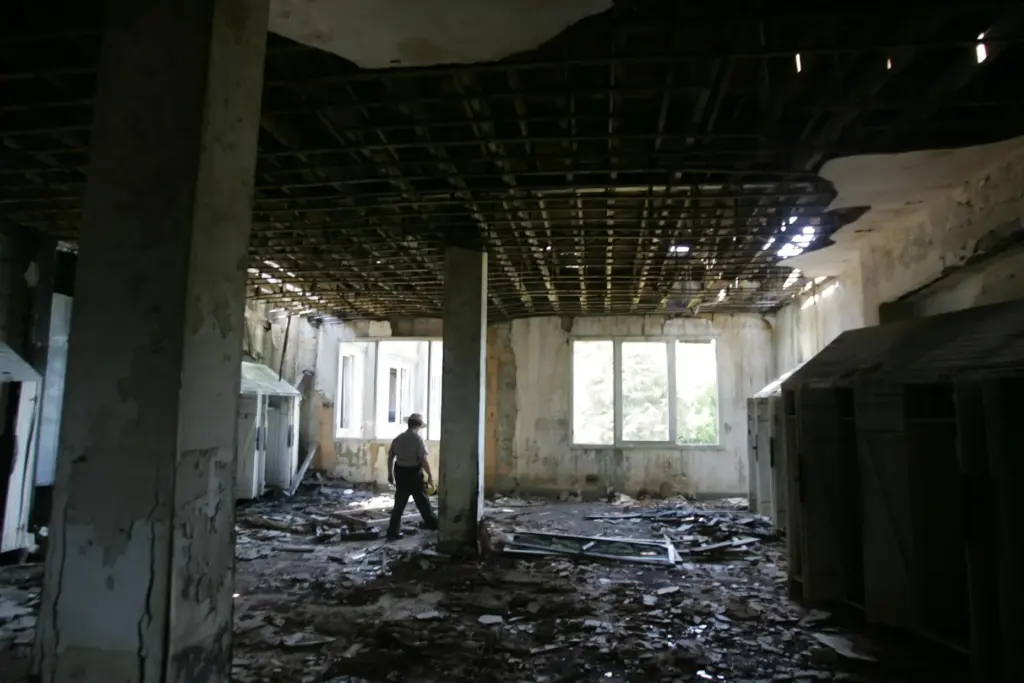 Dave Matthews, the Angel Island superintendent, inspects a military mess hall that was built around 1909 in Angel Island State park on Thursday, May 15, 2008. Historic structures are falling down in the park but there is no money to restore them or even stop their decline. The park was a military fort in the Civil War, then an immigration processing station known as the “Ellis Island of the West” from 1910 to 1940, and finally a military area where Army soldiers left from to fight in WWII in the Pacific. Many of the island’s 120 buildings have broken windows, collapsing porches, and roofs that leak in rainstorms. (Patrick Tehan/Mercury News)
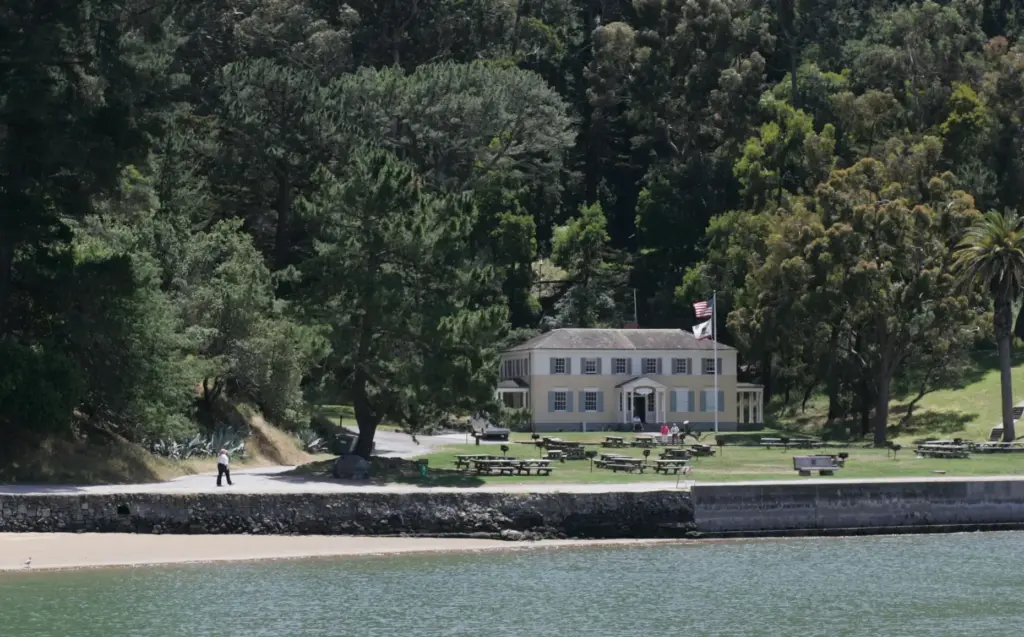 The main visitors center at Angel Island State park Thursday May 15, 2008. The park was a military fort in the Civil War, then an immigration processing station known as the “Ellis Island of the West” from 1910 to 1940, and finally a military area where Army soldiers left from to fight in WWII in the Pacific. Many of the island’s 120 buildings have broken windows, collapsing porches, and roofs that leak in rainstorms. Meanwhile, the staff has been cut on the island, so there aren’t enough rangers to do public tours. (Patrick Tehan/Mercury News)
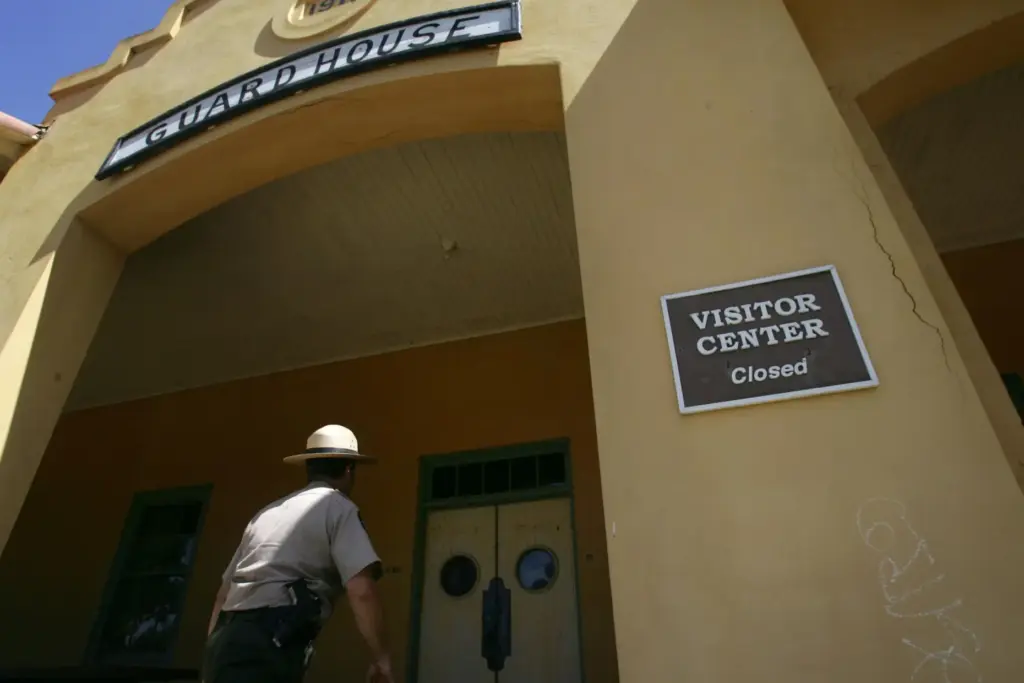 Dave Matthews, the Angel Island Superintendent, inspects a recently restored visitors center near military installations at Angel Island State park Thursday May 15, 2008. The visitors center is only open six times a year due to lack of staffing. The park was a military fort in the Civil War, then an immigration processing station known as the “Ellis Island of the West” from 1910 to 1940, and finally a military area where Army soldiers left from to fight in WWII in the Pacific. Many of the island’s 120 buildings have broken windows, collapsing porches, and roofs that leak in rainstorms. Meanwhile, the staff has been cut on the island, so there aren’t enough rangers to do public tours. (Patrick Tehan/Mercury News)
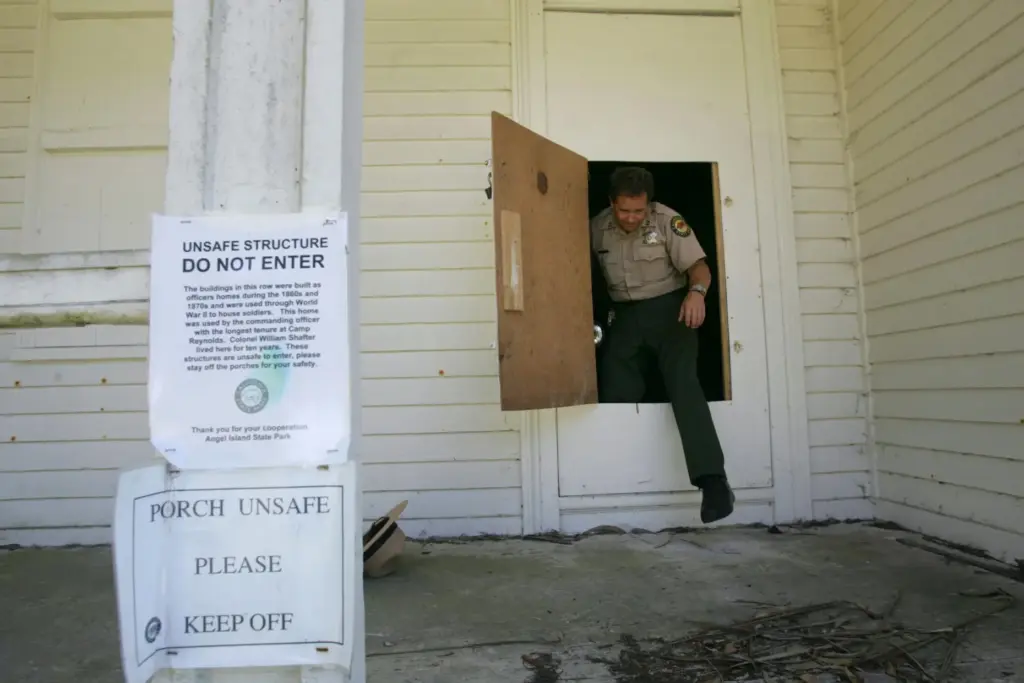 Dave Matthews, the Angel Island Superintendent, inspects one of the homes on “Officer’s Row” at Camp Reynolds in Angel Island State park Thursday May 15, 2008. The circa 1867 Civil War structures are falling down but there is no money to restore them or even stop their decline. The park was a military fort in the Civil War, then an immigration processing station known as the “Ellis Island of the West” from 1910 to 1940, and finally a military area where Army soldiers left from to fight in WWII in the Pacific. Many of the island’s 120 buildings have broken windows, collapsing porches, and roofs that leak in rainstorms. Meanwhile, the staff has been cut on the island, so there aren’t enough rangers to do public tours. (Patrick Tehan/Mercury News)
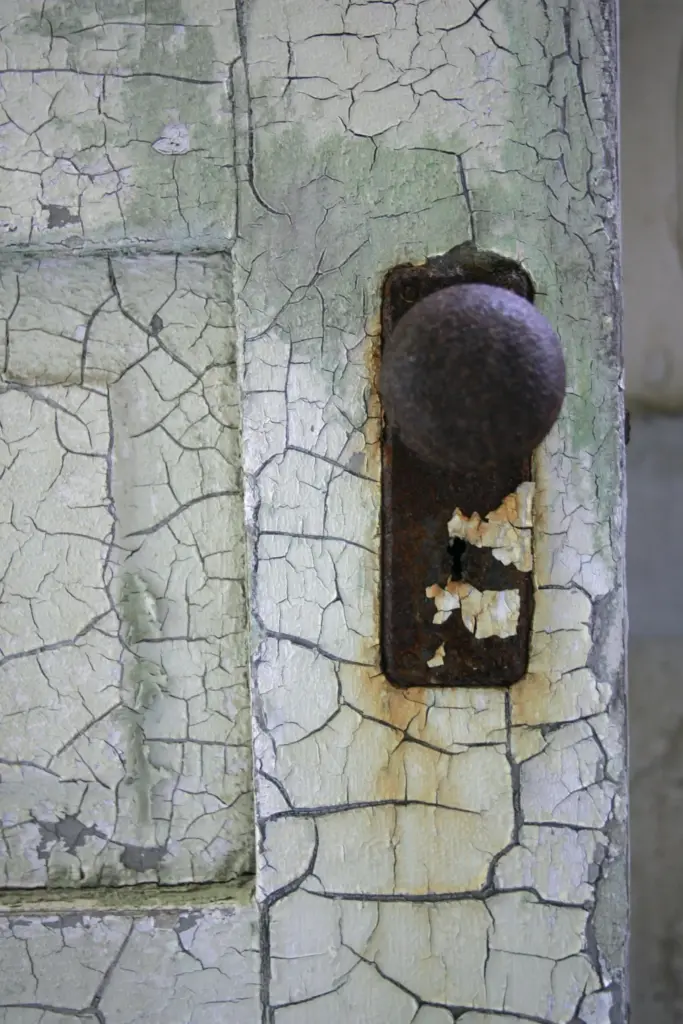 Peeling paint in a military mess hall that was built around 1909 in Angel Island State park Thursday May 15, 2008. Historic structures are falling down in the park but there is no money to restore them or even stop their decline. The park was a military fort in the Civil War, then an immigration processing station known as the “Ellis Island of the West” from 1910 to 1940, and finally a military area where Army soldiers left from to fight in WWII in the Pacific. Many of the island’s 120 buildings have broken windows, collapsing porches, and roofs that leak in rainstorms. Meanwhile, the staff has been cut on the island, so there aren’t enough rangers to do public tours. (Patrick Tehan/Mercury News)
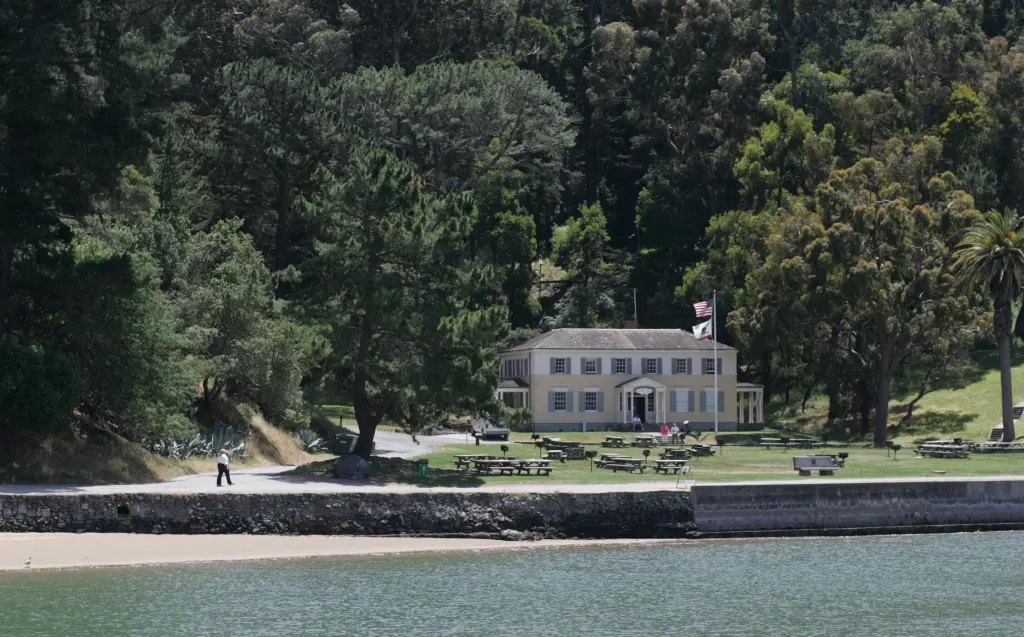
It was the largest immigration port on the West Coast between 1910 and 1940, particularly for immigrants from Asia and the Pacific. Hundreds of thousands were processed, detained and/or interrogated there because of their race. The station currently is threatened by physical, environmental, political and economic factors. Additional funding is needed for structural repairs and programming to increase awareness.
RELATED: On Angel Island, some Asian-Americans are learning their family’s painful history for the first time
Read more Review: ‘Forza Horizon 6’ brings a Japanese ethos and world to players
Somerset, Massachusetts: Swansea Friends Meeting House
Recognized as the oldest surviving Quaker meeting house in the state, it was built in 1701 to serve as a refuge by a congregation fleeing religious persecution and looking for a safe place to worship. The building has been closed for years and needs significant rehabilitation.
Michigan: Detroit Association of Women’s Clubs
Founded in 1921, the association was one of the first Black organizations in Detroit to own their headquarters building, which was purchased in 1941. But the building has been closed since 2024, when water pipes burst and damaged the interior. Money is needed to help the association reopen the building.
New Mexico, Colorado, Arizona, Utah: Greater Chaco Cultural Landscape
The landscape is an ancestral homeland sustained for over a millennium by the Pueblo and Hopi people, but is threatened by changes to federal land policy that could open up significant portions to oil and gas development. Permanent protections and tribal consultation are needed to protect its cultural integrity.
Seneca Falls, New York: Women’s Rights National Historical Park
The park tells the story of the first Women’s Rights Convention, held in Seneca Falls, in July 1848. It faces a deferred maintenance backlog of over $10 million. Additional funding and support are needed to help preserve the park as a place to teach visitors about the history of women’s rights.
New York: Stonewall National Monument
The first and only U.S. national monument dedicated to LGBTQ+ history was the subject of administration actions that saw the rainbow Pride flag removed from its flagpole earlier this year before it was restored. The National Park Service had removed the flag in February, citing federal guidance that limited the agency to displaying only the American, Interior Department and POW/MIA flags. But the administration reversed course in April as it agreed to settle a lawsuit filed by advocacy and historic preservation groups that sought to block the flag’s removal at the Manhattan site.
After Trump returned to office, he ended diversity, equity and inclusion initiatives, and many references to transgender people were excised from the Stonewall monument’s website and materials. The Republican administration similarly has put national parks, museums and landmarks under a messaging microscope, aiming to remove or alter materials that it says are “divisive or partisan” or “inappropriately disparage Americans.”
Philadelphia: The President’s House Site
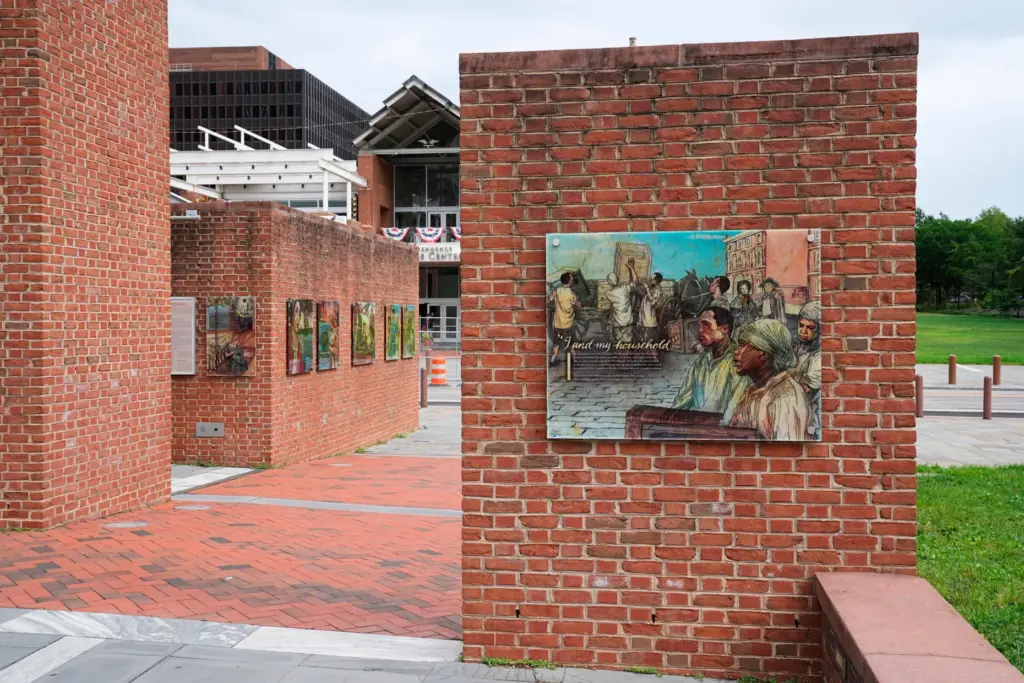 FILE – An informational panel is seen at President’s House Site Aug. 19, 2025, in Philadelphia. (AP Photo/Matt Rourke)
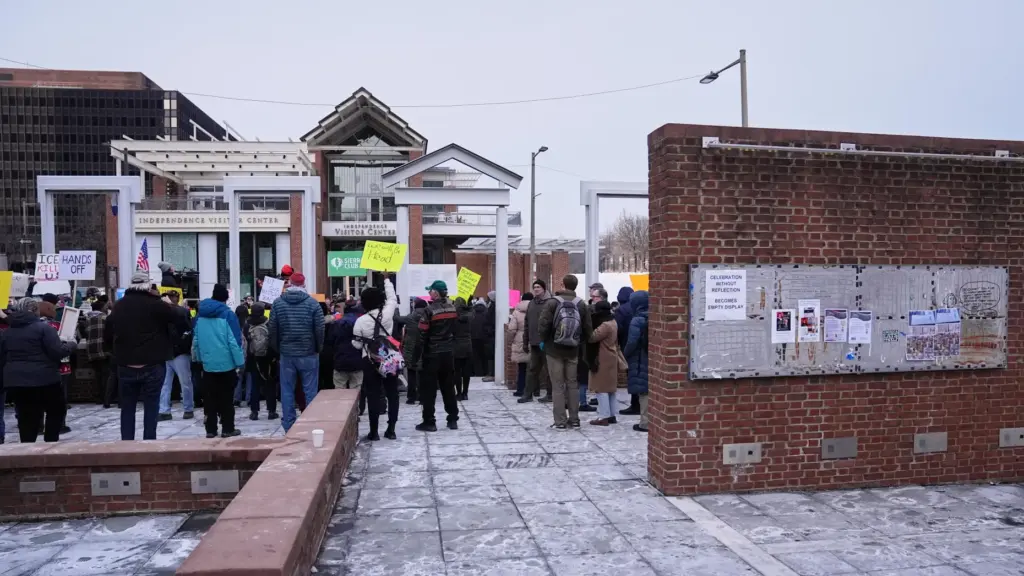 FILE – Demonstrators gather to protest removal of explanatory panels that were part of an exhibit on slavery at the President’s House Site in Philadelphia, Feb. 10, 2026. (AP Photo/Matt Rourke, file)
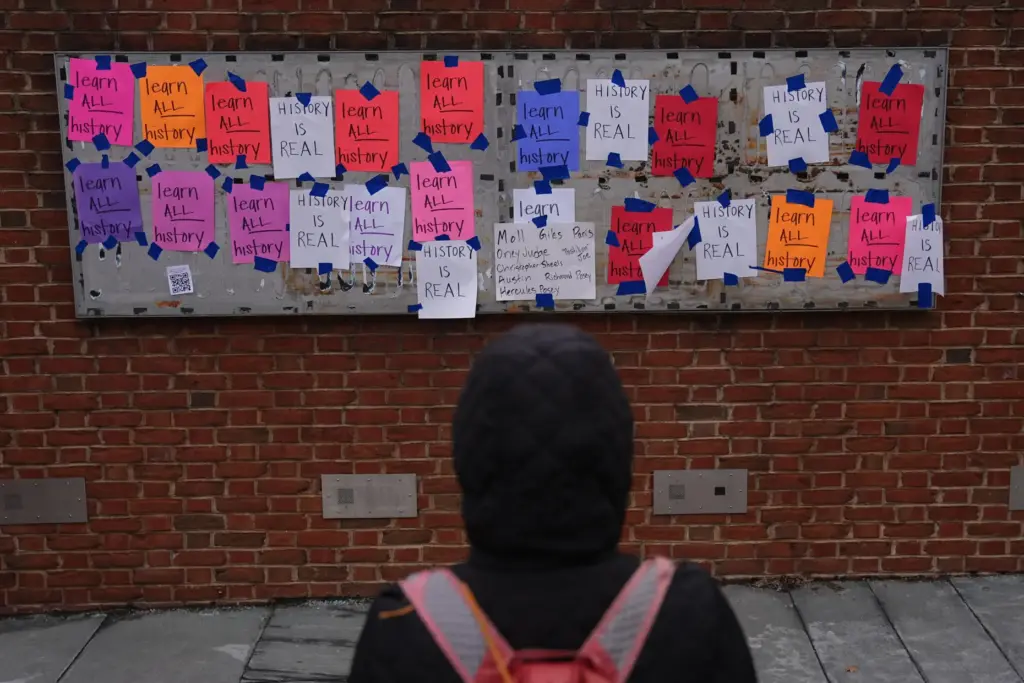 FILE – A person views posted signs on the locations of the now removed explanatory panels that were part of an exhibit on slavery at President’s House Site in Philadelphia, Jan. 23, 2026. (AP Photo/Matt Rourke, file)
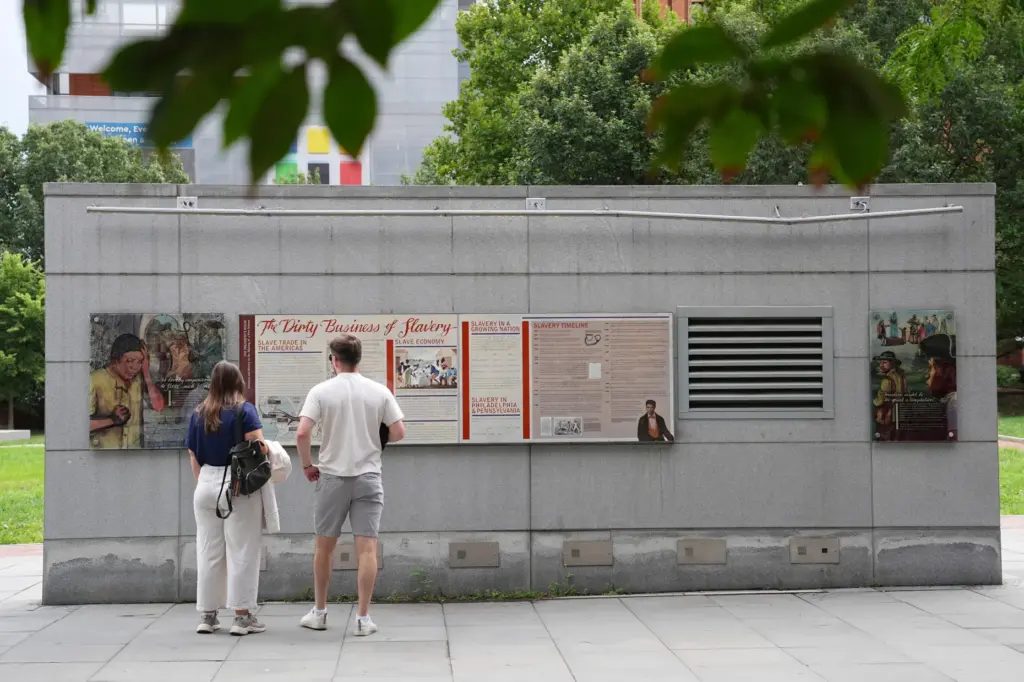 People look an informational panel at President’s House Site Tuesday, Aug. 19, 2025, in Philadelphia. (AP Photo/Matt Rourke)
 People walk past an informational panel at President’s House Site Tuesday, Aug. 19, 2025, in Philadelphia. (AP Photo/Matt Rourke)
The administration abruptly removed exhibits on the lives of nine people enslaved at the site in the 1790s under George Washington, the first U.S. president, who lived there when Philadelphia served as the nation’s capital. The exhibits were taken down as part of a broad effort by the administration to remove from federal properties information it deems “disparaging” to Americans. The issue is currently the subject of litigation between the city and federal government.
Heath Springs, South Carolina: Hanging Rock Revolutionary War Battlefield
The Battle of Hanging Rock was a key battle in the Southern Campaigns of the Revolutionary War and is considered a Patriot victory that helped boost morale and ultimately weaken British control in South Carolina. Only portions of the core battlefield are protected and open to the public, with the area anticipating population growth and increasing development pressures.
Ruidosa, Texas: El Corazon Sagrado de la Iglesia de Jesus
The more than century-old adobe church served as a refuge and place of worship for Mexican and Mexican American farming communities on both sides of the U.S.-Mexico border along the Rio Grande River. Vacant since the 1950s, the structure has benefited from continued restoration provided by the nonprofit Friends of the Ruidosa Church but remains threatened by proposed construction of a U.S. border wall that could come within a few hundred yards of the property.
Read more Tech layoffs top 5,000 in Bay Area this year after LinkedIn announces cuts
About the Author