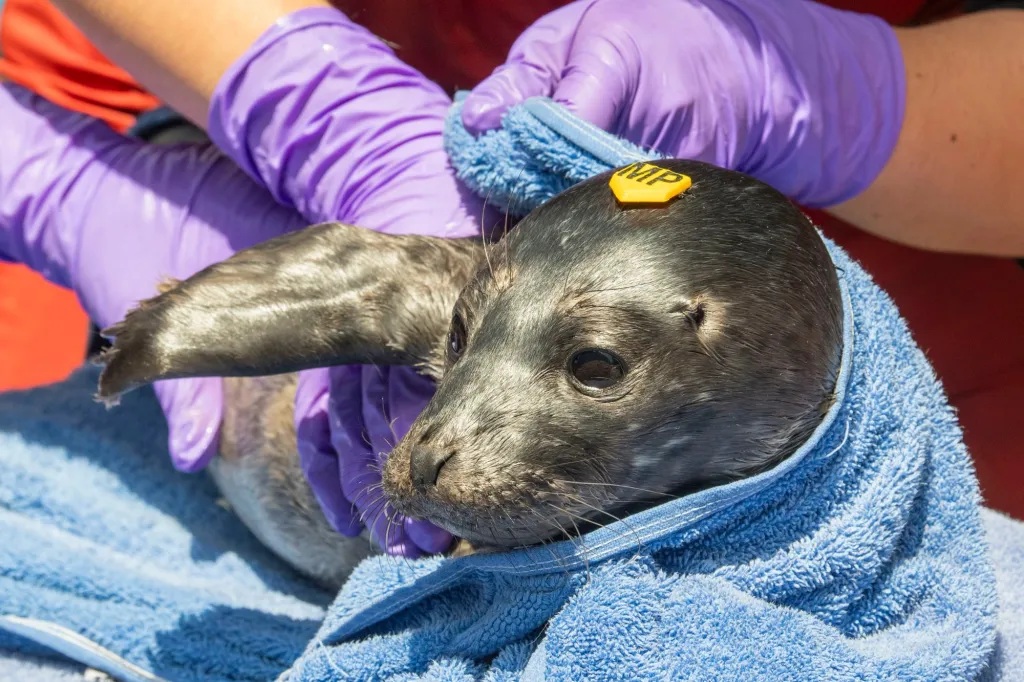
Spring and early summer are the busiest months of the year at the Marine Mammal Center. Our rescue hotline rings constantly, and our hospital in the Marin Headlands fills with patients. Many of them are harbor seal pups, born right here on local beaches from March through June. It’s a season we love, and one that comes with an urgent message for anyone who walks the California coast: the most helpful thing you can do for a marine mammal is often the hardest thing to do. Stay back.
Read more Indicted Bay Area real estate mogul to vacate his $6 million Sonoma estate as part of bankruptcy
We understand the impulse. You spot a small seal alone on the sand, its big eyes blinking up at you, and your instinct says something must be wrong. But harbor seal mothers routinely leave their pups on the beach while they head out to sea to forage, sometimes for hours at a time. A pup resting alone is almost always just waiting for mom to return. It is not abandoned. It is not dying. It is doing exactly what harbor seal pups do.
Here’s where good intentions become dangerous. If people or dogs crowd a resting pup, the mother’s instinct is to flee. If she’s scared away repeatedly, she may abandon that pup permanently, leaving a healthy newborn without the nutrition and nursing it needs to survive. Last year, over 235 animals, which is more than a quarter of the marine mammals our trained responders rescued, had been affected by human or dog disturbance. Half of Marin County’s disturbance cases fell into the “severe” category that included physically touching, feeding, moving or pouring water on animals. These behaviors, while often well-intentioned, can lead to life-threatening separations for harbor seal pups. Research by the Marine Mammal Center shows that most people are well-intentioned and want to help but don’t know how and end up taking the wrong action.
So what should you do when you see a marine mammal on the beach?
Give it space, at least 50 yards, roughly half a football field. Keep dogs leashed and at that same distance. Watch from afar and enjoy the encounter; it’s a genuine gift to see wildlife in the wild. And resist the urge to alert everyone around you. A small crowd, even a well-meaning one, is still a crowd.
The question we hear most is: how do I know if an animal actually needs help? If you see an animal with an open wound, one that is tangled in ocean trash or plastic, one that is coughing, having seizures or clearly struggling to breathe, or a very young pup that is so skinny you can see rib or hip bones, call our rescue hotline at 415-289-SEAL (7325). Our team will assess the situation and, if needed, safely bring the animal in for care. Don’t try to intervene yourself.
The animal you report may end up spending weeks at our Sausalito hospital, the world’s largest marine mammal hospital, where it will be treated by veterinarians and cared for by volunteers before being returned to the ocean. Since our founding in 1975, the Marine Mammal Center has rescued and treated more than 27,000 marine mammals along the California coast and in Hawaii. But the animals that never need to come to us at all, because beachgoers gave them the space to thrive on their own, are the success stories we celebrate most.
Marin’s coastline is home to extraordinary wildlife. This season, be the neighbor these animals need and share the shore responsibly.
Krista Maloney is the director of marketing and communications for the Marine Mammal Center. Marin Humane contributes Tails of Marin and welcomes questions and comments. Visit marinhumane.org, find us on social media @marinhumane, or email [email protected].
Read more Bay Area braces for Trump’s tougher CalFresh rules
About the Author