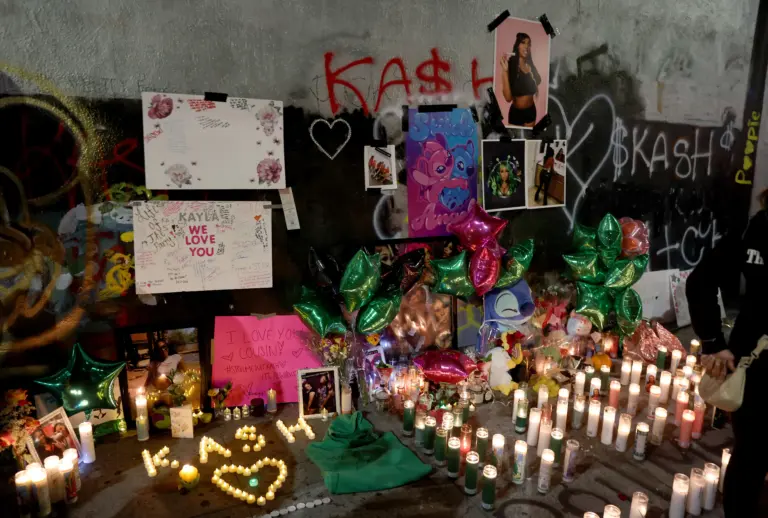
MARTINEZ — A coroner’s inquest jury has ruled that last year’s death of 72-year-old Yolanda Ramirez resulted from an accident after Brentwood police officers left her handcuffed in the back of a car as she deteriorated and went unconscious, a determination that runs afoul of two dueling autopsy reports.
Read more San Jose police seek assistance in locating dognapped Frenchie
The jury’s non-unanimous decision came after a Wednesday coroner’s inquest that included testimony from two officers who arrested Ramirez last year on suspicion of misdemeanor resisting arrest and one of two forensic pathologists who performed an autopsy, and determined she died from a stroke brought about by pre-existing medical conditions, like high blood pressure and diabetes. A second autopsy, contracted by Ramirez’s family, ruled her death a homicide.
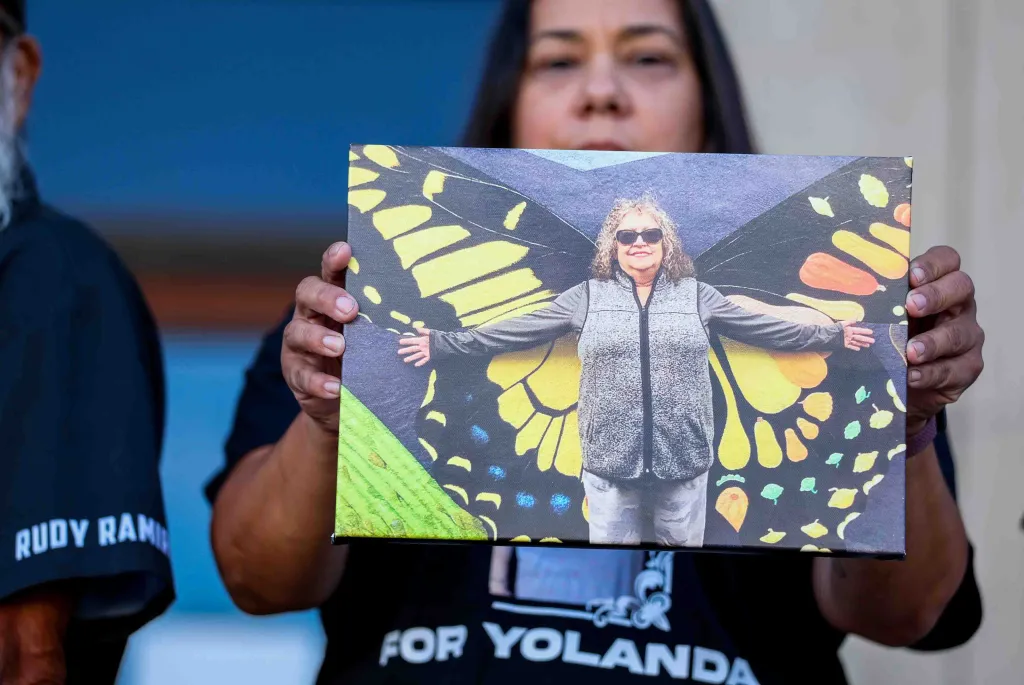
The inquest was held in response to public outcry over the controversial death, and Ramirez’s family and friends packed the Martinez courtroom. As members of the public filed out, Ramirez’s son loudly called for “justice.” After the hearing, her widower, Rudolf “Rudy” Ramirez, called the verdict a “small win” but said the police investigation amounted to, “we investigated ourselves and we found that we did nothing wrong.”
“That’s not the case,” said Rudy Ramirez, Yolanda’s husband of 49 years. His family has retained a lawyer and sued the Brentwood police department, accusing them of killing her and injuring her head during the arrest.
“We will continue this fight for Yolanda, and to make sure that we’re a thorn in their side,” he added, “And we need support.”
Members of the jury were seen weeping in court as they watched lengthy videos from police body camera footage and inside a cop car, showing Ramirez calling for help and begging someone to contact her husband before she slumps over, limp and unresponsive. The Brentwood officers who arrested Ramirez, Danielle Tjhia and Aaron Peachman, gave brief testimony, answering a handful of questions by stating she appeared fine when they put her in the car and that they were trying to arrest her with “as little force as possible” after she started “resisting.”
Their body cameras show Ramirez audibly refused to get into a car after police attempted to detain her during an argument at her sister’s home, where she allegedly knocked over a potted plant. Minutes after being carried and placed into the back of the car, Ramirez seems to realize she’s in distress. She calls out for police to take off her handcuffs and give her water, but a man can be heard telling, “no, you can get that stuff when you’re in jail.”
Ramirez died Oct. 3, 2025, after a seven-day hospital stay, and Brentwood police didn’t publicly acknowledge her death until weeks later, after this news organization reported about it. The two arresting officers testified they were never sequestered after Ramirez went unresponsive, failure that Brentwood’s police chief attributed to the weeklong delay between the arrest and Ramirez’s death.
Dr. James Caruso, the forensic pathologist hired by Contra Costa County to do Ramirez’s autopsy, testified that he reviewed CT scans and other documents from her hospital stay, and ultimately looked at the body camera footage from police. He said there was nothing in the footage to explain Ramirez’s brain bleed, roughly two-and-a-half inches long, and that it was most likely due to a stroke.
Read more Review: The message, not messenger, is true star of record-setting concert
“That’s a tough video to watch,” Caruso said of the footage inside the police car. “We’re actually watching somebody have a stroke.”
The jury did not hear from Dr. Matthias Okoye of the Nebraska Institute of Forensic Sciences, who conducted an autopsy after Ramirez’s family reached out to him. The autopsy, funded through an initiative started by former NFL player Colin Kaepernick, determined Ramirez died of “multiple blunt force trauma and asphyxiation” due to physical “restraint” by police. Caruso rebutted that determination on the witness stand, calling it “pretty hard to comprehend” how a doctor could draw that conclusion.
“Once I read the report, it became obvious to me that I did not miss anything,” Caruso said, adding that the asphyxia determination was particularly questionable given Ramirez died days after the initial incident.
Outside of court, Rudy Ramirez mocked police officials who touted “transparency” inside court but didn’t call Okoye to speak. Yolanda’s son, Rich Ramirez said the officers involved in the incident failed to de-escalate the situation said the “biased” hearing officer didn’t ask certain questions submitted by the family.
“To me, there was only one manner of death, which was at the hands of another, because the police used excessive force on a 72-year-old woman for a $12 coffee cup, allegedly that she broke for not giving her information.”
Coroner’s inquests used to be held for all police-related deaths. That ended in 2025, when the county’s police chief’s association quietly voted to end the practice, announcing their decision in a two-page document posted to the county’s website. The justification was that technological “advancements in transparency” make the hearings obsolete.
When they were standard, inquests resulted in the involved officers giving sworn testimony, pathologists testifying, and jurors sometimes watching footage of the incidents, all in a hearing open to the public. The jury would rule whether the death was a homicide, suicide, natural, or accidental, a decision that carries no criminal or civil liability but holds as the official manner of death. Melissa Nold, the lawyer hired by Ramirez’s family, said it was “legally significant” that the jury found Ramirez died of an accident.
“It changes it from where the situation was a natural cause, there’s no kind of liability for that,” she said. “If it’s an accident that is caused by somebody else. There’s a possibility of liability for the negligence that led up to her death, which we now see a lot more of.”
Read more Redwood City: Police seeking driver who struck, killed person on foot
About the Author