The year did not start out well for the bees at Petaluma’s Honeybutter Farm. According to farm coordinator Paulina Binsfeld, the roller coaster of weather since the start of the year took its toll on the farm’s colonies, which had just arrived in February as the owners launched a new line of honey.
Read more Marine layer will keep Bay Area heat-up to a minimum
In late May, Binsfeld said her team discovered they had lost two of six hives. The weather, swinging from too warm early in the spring to April and May’s cool showers, was hard on the bees and some began to die, she said.
“They seemed to be doing really well in the beginning, and then in the extreme changes in weather and later rains, we definitely see them suffering,” she said. “It’s been a little while since we’ve harvested.”
Beekeeping in California has been challenging for many years, but growing environmental stressors and costs are a challenge for small beekeepers hoping to make honey and pollinate crops across Northern California.
The extreme swings in temperature and moisture are just one of many factors driving bee colony deaths. Binsfeld pointed to parasitic Varroa mites as one of the growing threats to honeybees across the country.
The mites, which burrow into adult bee populations or infect their larvae with viruses that leave them deformed and flightless, have had a major impact on the already struggling honeybee industry, according to Alan Morrell, owner of Beehaven in Santa Rosa.
Morrell said his property enjoyed an early bloom during the March warm weather, providing his bees with plenty of flowers to pollinate.
“I’ve caught some swarms. They seem to be doing OK,” he said. “But the mites are breeding, too.” He described how mites can get into a hive by laying eggs and, during metamorphosis periods, can take over an entire hive.
“When they get to a sufficient number, you have colony collapse,” Morrell said. “Too many bees get a virus and are born without wings or crumpled. They’re in all of the hives.’’
The mites can cause great financial loss, Morrell said. They’re also notoriously difficult to manage with chemicals, as beekeepers have to avoid contaminating honey with large doses of chemicals.
Honeybutter Farm has been treating its hives for mites. Although they aren’t the “leading problem” for bees on the farm, climate swings have impacted their ability to survive and fight diseases, Binsfeld said.
The issue is just one of many environmental changes Morrell said have contributed to declines in the honeybee population for years.
What’s happening to small California beekeepers?
The mites plaguing most hives have been widespread around since the 2000s but began to have devastating effects in recent years, according to commercial beekeepers. Climate change has impacted honeybees as well. Colonies are threatened by extreme heat, pesticides, habitat loss and a lack of food and nutrition, and the U.S. has recorded growing hive deaths in recent years. About 1.6 million colonies were lost between June 2024 and March 2025, as commercial producers reported losing an average of 62% of their colonies.
Last year California lawmakers approved a bill that would have directed the Department of Food and Agriculture to establish a health program for managed honeybees and provide grants for research. But Gov. Gavin Newsom vetoed the bipartisan legislation on the grounds that it amounted to an unfunded mandate.
“I appreciate the author’s interest in protecting our honeybee population, but this bill would create an unfunded grant program and, therefore, should be considered as part of the annual budget process,” Newsom wrote in rejecting the bill in October.
The business of managing honeybees has long been essential for pollinating many of the state’s most lucrative crops, particularly almond orchards. California almonds are a multibillion-dollar industry and the state’s beekeepers in 2024 produced — 10% of the country’s supply — valued at $32.8 million.
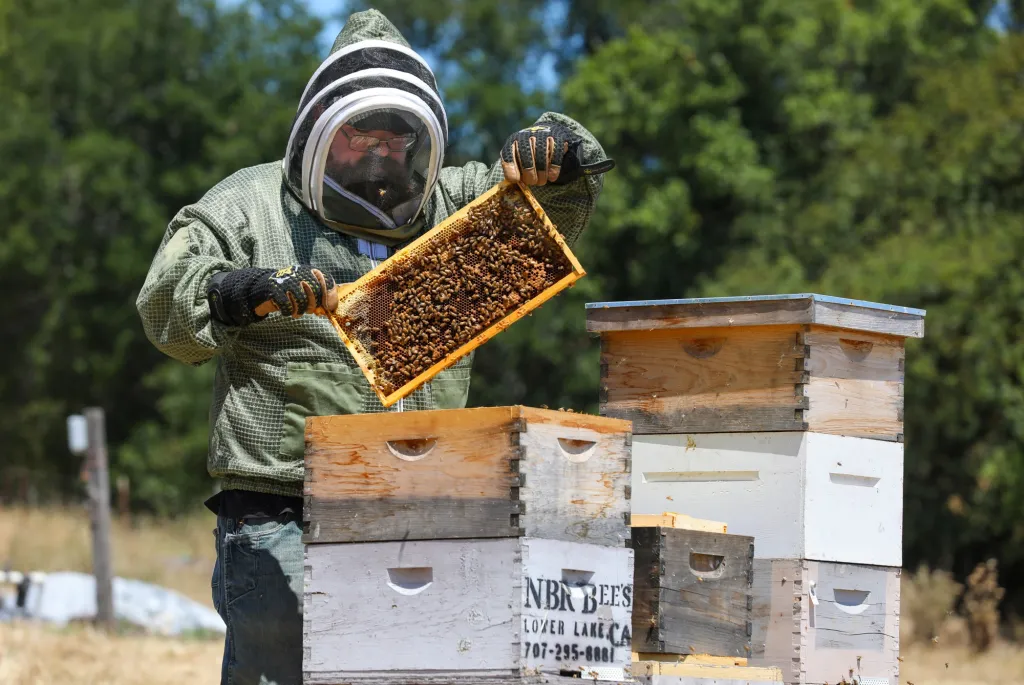
 Don Merrill, owner of No Bull Beekeeping, performs a hive inspection at Beffa Springs Ranch in Petaluma on Tuesday, June 16, 2026. (Christopher Chung/The Press Democrat)
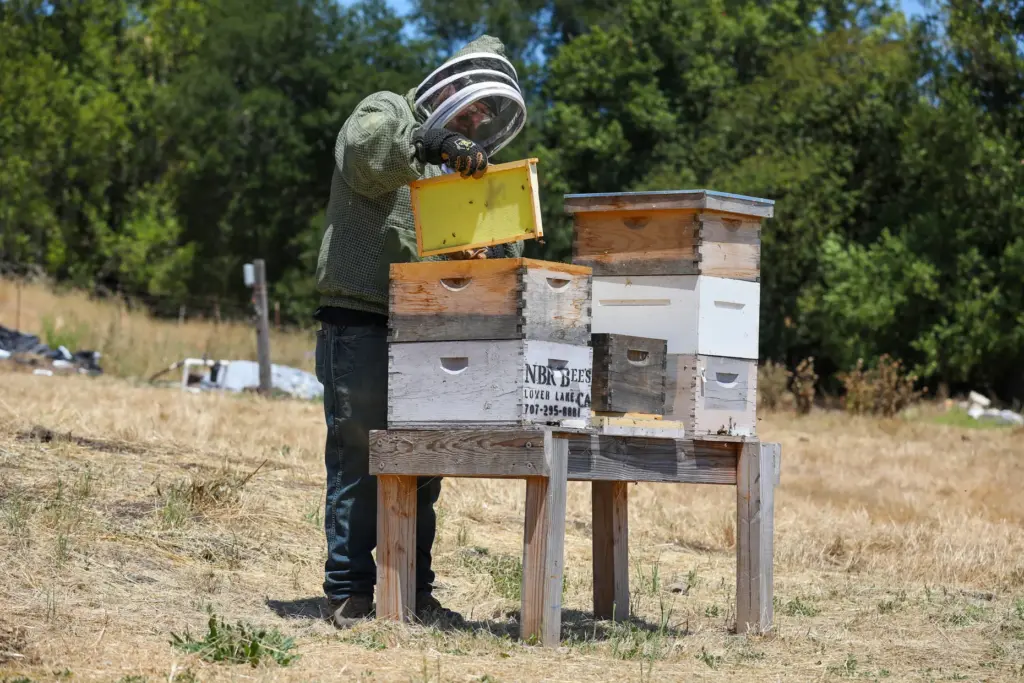
 Don Merrill, owner of No Bull Beekeeping, inspects a hive at Beffa Springs Ranch in Petaluma on Tuesday, June 16, 2026. (Christopher Chung/The Press Democrat)
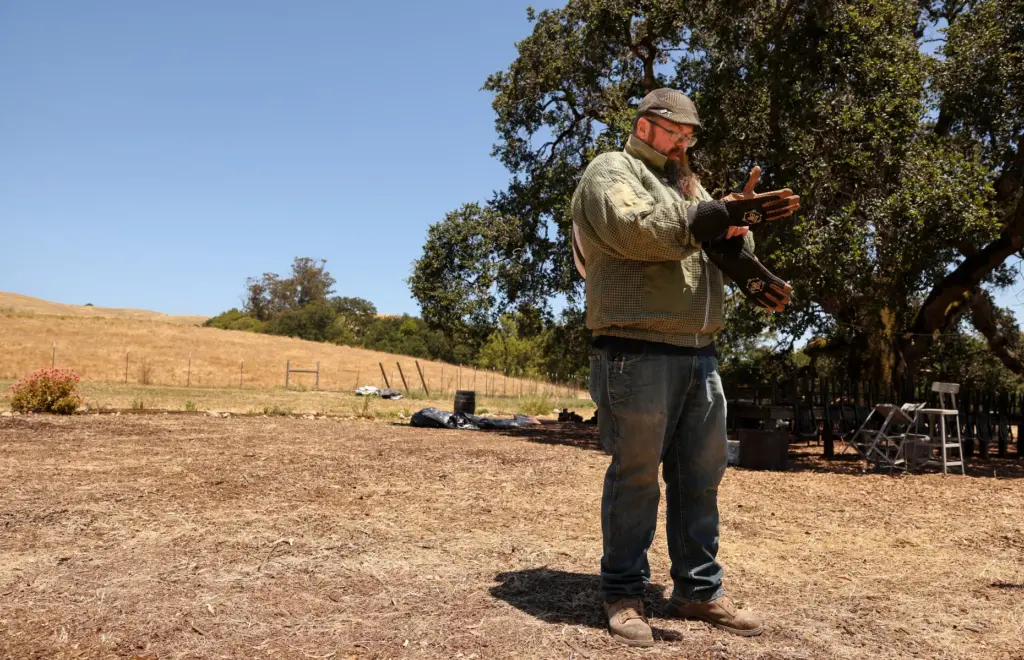 Don Merrill, owner of No Bull Beekeeping, puts on his beekeeping gear before inspecting a hive at Beffa Springs Ranch in Petaluma on Tuesday, June 16, 2026. (Christopher Chung/The Press Democrat)
It’s a difficult line of work without much support available, particularly for small-scale producers, according to regional beekeepers like Don Merrill. He has spent the past decade as head of No Bull Beekeeping, managing hives across Northern California that stretch from coastal sites in Humboldt and Marin counties to inland Lake County.
During the winters, Merrill takes colonies north to pollinate orchards in the Sacramento Valley from Yolo County to Chico. His bees pollinate berries and field crops such as cucumbers and tomatoes, and many of his honey varieties originate from these crops or wildflower blooms.
This year, his hives in the coastal areas are already showing a lower yield because of the “long fog” season creating high moisture, which bees don’t like. Further inland in Lake County hives, he said bees struggled because they left the hives early because of the March heat to find there weren’t enough flowers in bloom yet.
“That really caused a drop,” Merrill said. “Three of my sites produced little to nothing.”
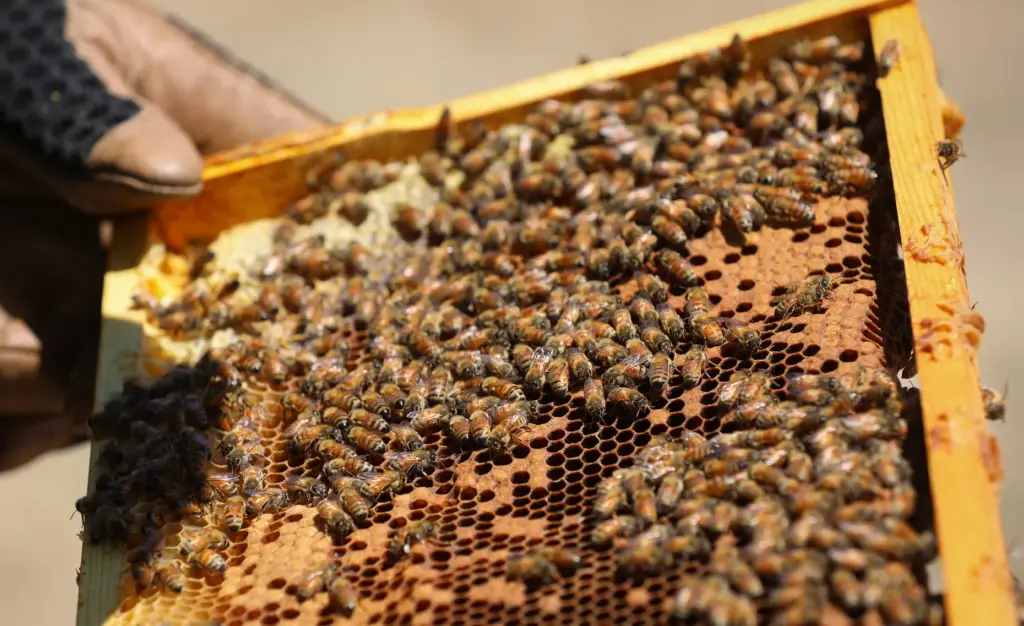
Merrill has been beekeeping for about 10 years and manages around 120 hives, including those owned by others. Each hive houses 5,000 to 25,000 bees, depending on the site and season. Since the business was established, Merrill estimates he collects on average 6,000 pounds of honey per year.
That’s a little different this year, Merrill said. All in all, he expects to get only half of what he saw last year from many hives. El Niño is a great concern, as it could bring bursts of rain to help with blooms. But it could also bring a “low summer” if no rains return, which would require moving bees into the mountains earlier in the year. Merrill said he expects to see the latter.
Merrill gets about 100 pounds of honey per hive during average seasons. But this year, he said he is seeing about a 25% loss, which he considers fairly typical: “It’s down, but it’s too early to tell how much we’re going to get.” He said commercial producers are used to losing at least 30% of their colonies each year, and smaller beekeepers may experience additional losses because of inexperience and inadequate preparation for cold months, such as not leaving enough honey for bees to feed on.
But the biggest issue facing new and longtime beekeepers is a lack of state resources — which the 2025 bill was intended to address. Merrill said beekeepers in California don’t have the same support as in other states, which “burned out a lot of our beekeepers,” and generational knowledge has been lost. He also thinks the state’s “firewall” for disease prevention has weakened in recent years, and that colony deaths could be related to new diseases entering with migrating bees from other states and countries.
The volatility of the business has led him to pivot away from training new beekeepers and instead toward encouraging novice beekeepers to focus on being “stewards of native bees.” Despite his and others’ efforts to assist newcomers, Merrill said the population of longtime beekeepers is dwindling.
“We’re losing three to five commercial-size beekeepers a year through aging out. Nobody’s replacing them,” he said. “We’re a decade, probably, away from just not having much in the way of small scale, single-family operators.”
The next generation of beekeeping
Despite these challenges, some are still trying their hand at the business.
Honeybutter Farm was launched last August after Bob and Brittany Turley of San Francisco decided to try farming in Petaluma. Taking on the legacy of the former owners, who farmed the 100-acre property from 1975 to 2025, the Turleys are starting out small with just under an acre of vegetables planted. Another half acre is planned, along with four pigs and about 200 chickens for eggs and meat.
But the main focus is honey, so they started out by planting plenty of flowers and seeking the assistance of Marin Coastal Bee Co. to secure six hives, Bob Turley said. The company brought in new colonies of bees in January, which did well more quickly than expected: “They got into it so well that they swarmed. So we lost a lot of them.”
Following this challenge and uneven weather conditions, two hives were “diminished,” Turley said.
However, he said isn’t worried, with four other hives doing well.
“It’s really just been this is our first year getting established,” he said. “This year’s (yield is) going to be pretty small anyway, because we want to make sure they have enough honey for them to eat during the winter.
“Hopefully soon they’ll be thriving,” Turley said. “Our goal is going to be to see if we can break even by the third year.”
Turley’s wife Brittany said she’s been reticent about expanding the honey operation too quickly, having lived on farms in the past that failed to make ends meet. But she’s passionate about making honey and energized by her husband’s enthusiasm.
“We have great hopes for having honey coming out of our ears someday,” she said.
Brittany Turley is also excited about raising their children, ranging in age from 7 to 20, on the farm once they can renovate the property and permanently live there. The owners are both 47 and say they have already felt supported by the local beekeeping community.
“We’ve had multiple people share honey with us, which I think is supersweet,” she said. “Everybody has been giving and considerate of just wanting to benefit the world, very welcoming. We are hoping as it goes forward that we can learn a lot from the people in the community.”
‘Beekeeping is alive’
Morrell said new beekeepers are needed to keep the work alive, as it has grown more difficult for him. He’s been beekeeping for 55 years, and at 81 said he’s finding it harder to stay in the business.
“It doesn’t make much money,” Morrell said, describing his costly insurance policy for selling honey at the farmers market and a permit from the county to operate about 30 hives.
In an average year, he may see about 25 pounds of honey produced from each hive — although that yield may be lower this year by July. He usually sells a 4-ounce jar of honey for about $10.
His greatest concern is climate change — and whether younger farmers can afford to run a small farm like his with so many environmental challenges. “Beekeeping is alive, and there’s a lot of small beekeepers. But for some, it’s disheartening to have it all together and then have the hive die on you.”
Morrell said it will take more farmers with enough to invest and last multiple seasons, like the Turleys, to prevent losing many more in the business. That takes land: “There’s no new land. The people who possess all the farmable land don’t want to give it up.”
To him, what happens to the bees represents what happens to the rest of agriculture, and the planet.
“As a beekeeper, I’ve been watching the environment,” Morrell said. “We’re looking at a collapse. We are being visited by our own hubris. I’m hoping my children and grandchildren can find a way through this and recreate it, using the actual capacity of the planet to repair itself, to have a cooperative correction of this stuff.”
Staff Writer Natalie Hanson reports on business and agriculture for The Press Democrat. She can be reached at [email protected] or at 619-665-5887.
About the Author