This week, we review the remake of a gothic thriller that still thrills, and another great season of an Anne Rice-born vampire series. They arrive at the same time as the new superhero film “Masters of the Universe.”
Read more Review: ‘Masters of the Universe’ needs to take itself less seriously
Here’s our roundup.
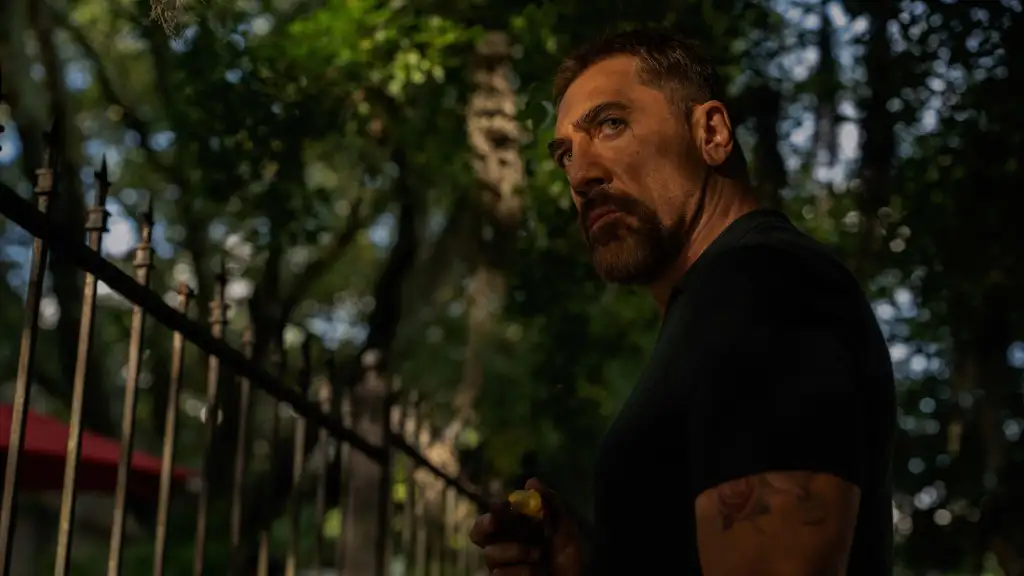
“Cape Fear”: Legendary noir author John D. MacDonald gifted Hollywood with one of its most durable, cruel and unforgettable punishers in 1957’s “The Executioners”: an unrepentant vengeance-seeker named Max Cady, who was played with creepiness by Robert Mitchum and later a tatted-out Robert De Niro in two film versions renamed “Cape Fear.” If you met Cady either on the page or in the films, you know he’s a piece of evil work and that portraying this slime bucket is also an actor’s dream. (De Niro scored an Oscar nomination for his depraved madman in Martin Scorsese’s lauded horror film.) Now it’s versatile Oscar winner Javier Bardem’s turn to make everyone’s skin crawl — and he does so with gusto and with a welcome difference. Both he and showrunner Nick Antosca give Cady a deeper backstory, delving into how his past driven him down the road toward madness. It broadens his psychic roadmap and the story itself, making Cady part monster/part human even while he coils himself like a viper around the privileged necks of the rich, dysfunctional Bowden brood in Savannah.
A former hot-shot restaurateur, Cady landed behind bars — at least in this version — for a savage slaying, and now he’s out 17 years later and prepped to avenge. He’s not right in the head and has been dealing with the fallout from a sicko past and a gruesome prison fight (flashbacked with full-on gore) that mushed up his brain. Cady relentlessly moves himself into the Bowdens’ world so he settles a bad score with his attorney (Amy Adams) and her husband (Patrick Wilson) for reasons I’m not gonna tell you about.
In both film versions, we held little to zero sympathy for Cady, but in this thornier, more morally complicated version, the scales of justice aren’t weighted entirely to one side, increasing the dramatic tension and broadening the scope of Cady’s ire itself. Don’t get me wrong, he’s just as prone to savage attacks. But if you’re going to bother to redo a well-worn premise such as this one, it’s the right way to breathe something new into it.
Anna (Adams) and Tom (Wilson) are also cunning, ambitious cutthroats with unseemly pasts, too, and it is their ethical rule-blurring that adds dimension and a sense of uncertainty about where this version will take us. Both consider Cady to be an inferior being, a lowly pest at first, who turns into a formidable menacing presence with the power and wiles to destroy them and their rebellious teen children — the unstable Zack (Joe Anders) and the fed-up with her parents former “good kid” Natalie (Lily Collias). With executive producers Martin Scorsese (who directed the 1991 version) and Steven Spielberg backing this 10-episode series (eight were available for review), creator Nick Antosca got the blessing from heavyweight players. It’s understandable given his vision, which wisely moves the story into modern times, and is loaded up with surprises and new twists galore.
The cast is sensational. Bardem is on fire in every scene, Adams expresses volumes with one tentative, wary glance (she’s one of our best actresses), Wilson nabs his best role since “Little Children” and Anders and Collias tap into unnerving teen angst to express and show just how messed up the well-regarded Bowdens are on the inside and out. In a pivotal role you need to see and absorb for yourself, Malia Pyles frightens the hell out of any parent. I’ll say nothing more about that. Equally essential is the evocative sweaty noirish look and texture of the series – from its old-school opening credits, to its swelling melodramatic music and on to its off-kilter but seductive cinematography by Eben Bolter and Celiana Cárdenas – some of the finest work you will find in a series or a film. Those elements make “Cape Fear” a breathless experience, a shattering new impression that repurposes what came before and strives to do something similar yet different. Is it better than either film? In some ways. But we’ll just have to see where Antosca docks his story in the end and then get back to you on that one. Details: 3½ stars; two episodes drop June 5, followed by new episodes every Friday through July 31.
Read more 49ers’ o-line coach endures ‘gut punch’ by Myles Garrett’s trade to rival Rams
“The Vampire Lestat”: AMC’s excellent adaptation of Anne Rice’s iconic “Interview With the Vampire” novel gave us two exceptional seasons that were just as good as the book and better than the 1994 movie that spawned it. For the third season, lead showrunner Rolin Jones pulls off a hell of a hat trick and puts a lot onto the chiseled shoulders of Sam Reid, reprising his role as the sexy, witty bloodsucker Lestat de Lioncourt. Good news: Reid is electrifying and looks, acts and struts around like a legit rock star from the Bowie and Jagger age. Rice’s novel did miff some since it turned her bisexual toxic hunk into a vain, vamping rock star. Others lapped it up. Jones puts an exclamation point on the music — making the audience the roadies to Lestat’s wicked showman ways. Reid is mesmerizing to watch. Jones also further expounds on the vampire’s wretched lineage and mythology through flashbacks. He smartly shifts the time frame too, from the ‘80s to 2025 with Lestat embarking on a multi-city tour (the titles to the seven episodes are taken from the city where his band is performing). His tour coincides with the “Great Conversion,” which witnesses a big uptick in the number of vampires amongst us. Unlike the previous seasons, Lestat is the focus in Season 3 with Louis de pointe du lac (Jacob Anderson) — the lover he turned into a vampire and who was the one interviewed before — popping in (Episode 6 is the best and he’s featured prominently in it). Other regulars appear and play key parts in the plot: the evil Armand (Assad Zaman) and the ego-driven journalist and writer Daniel Molloy (Eric Bogosian) — who’s on tour with Lestat and his band and is making a documentary about him. Lestat is still fuming over the recently published “Interview With the Vampire” tome and declares much of its innards a pack of lies. The presence of his mom Gabrielle/Sophia (Jennifer Ehle, going a little overboard with the accent) serves as a distraction and brings up some queasy stuff. The origins of Lestat’s vampirism gets explored and important characters surface and resurface. In between, it gives us wild concert performances, trips back to 1772 to watch Lestat’s dysfunctional family in action and a slew of killer songs from composer Daniel Hart. The dialogue is so substantial you almost want to replay it so you can savor it. Lestat’s egomania does get tiresome at times, but Reid makes him always fascinating to watch. AMC made six of seven episodes available and the best way to view them is indeed every week, rather than in one big binge. A sidestory involving Louis and a key character from the past evolves into a strong, moving storyline that buttresses this impressive season that could have crashed on the rocks of its own ambition, but instead rocks and rolls like the vampire rock star at its radical center. Details: 3½ stars; first episode drops June 7 on AMC and AMC+.
“Power Ballad”: “Where do artists get their ideas?” That question is at the crux of Irish filmmaker John Carney’s sixth sometimes magical, at times tonally dissonant solo directorial feature. It’s a fertile subject and Carney comes up with some thought-provoking near answers to it in his sweet but not air-tight summer crowdpleaser. Carney hits the best notes at the film’s beginning and most notably at its tear-you-up end. The parts in between? Not so much, as they meander into bouts of L.A. mischief. It’s a definite slip but its two leads — Paul Rudd and Nick Jonas — sell the film. An unshaven Rudd lands his best role in recent memory as burnt-out wedding singer Rick Power, a music man who creates songs that come from the heart. He put his dreams on hold, though, when he became a family man. It’s at one big wedding at a castle where he meets and even sings with former boy-band sensation Danny Wilson (Jonas). Danny has fame but is stuck in a musical rut. The two hang out, get stoned, talk and then play music till late in the morning. Rick plays and sings one from his past — “How to Write a Song.” It sticks. Six months later, Danny has recorded a song and it knocks everyone else off the record charts, rescuing from being a has-been and out of his creative funk. But is it really his song? Rick says no that song is mine after hearing it in a mall. An overly contrived scenario brings the two back together and it’s then when Carney and co-screenwriter Peter McDonald hit a screenplay snag. The film bounces back after that reunion and brings the film home to a smart, sentimental celebration of music that isn’t manufactured but comes out of a place of pure love and absolute passion. It’s a beautiful ending and is one that gives Jonas a chance to remind us that he can be a very good actor when given the right material. “Power Ballad” isn’t as consistent as “Once,” “Sing Street” and “Flora and Son” but as with all of Carney’s films have a big heart and a huge capacity to champion the unsung. Details: 3 stars; opens June 5 in theaters.
“Time and Water,” Oscar-nominated documentarian’s Sara Dosa transcendent eulogy to nature’s sacred and majestic — and dying — glaciers, is fueled by the work of Icelandic poet/author Andri Snær Magnason. The documentary, which lands in theaters this weekend, creates a time capsule of videos, memories and eloquent observations that add up to work of incredible beauty and heartache.
As with all of the former Berkeley filmmaker’s graceful work — 2022’s “Fire of Love,” 2019’s “Seer and the Unseen” and 2014’s “The Last Season” (all must-sees) — “Time and Water” allows the people who are featured in it to tell the story and that makes it even more special. Magnason’s love for capturing the visual and the sensory in his work shines throughout this dazzling film, which features seamlessly edited together clips of Magnason, his children and his wife, and generations that came before, all of whom celebrate the healing abundances and visual marvels that nature gives us. But as Magnason mourns the loss of his beloved grandparents, he also grieves at another loss — the glacier. Given the dire outlook for the future of other glaciers in Iceland and around the world, he might well be attending — as Dosa’s film illustrates — many more funerals for glaciers in the near future. Details: 3½ stars; opens June 5 at the Smith Rafael Film Center in San Rafael and the Roxie in San Francisco; opens June 12 at the Rialto Cinemas in Elmwood; Dosa and Magnason will appear after the 6 p.m. June 6 screening; Dosa will appear after the 6:30 p.m. June 15 screening at the Elmwood and the 7 p.m. June 18 screening at the Smith Rafael Film Center.
“Carolina Caroline”: Caroline (Samara Weaving of “Ready or Not”) needs an escape hatch from a humdrum existence in an itty-bitty Texas town where she stocks shelves at a gas station. Enter slick swindler Oliver (Kyle Gallner of “Strange Darling”). He teaches Caroline shady ways to bilk bucks from the unsuspecting, and soon they’re red-hot lovers. They later zip off like Bonnie and Clyde wannabes on a crime spree. Director Adam Carter Rehmeier (“Dinner in America,” “Snack Shack”) and screenwriter Tom Dean keep this thriller zipping along but what really fires it up are its two leads and a great assist from Kyra Sedgwick in a hold-on-to-your-socks cameo that gives us a reason why Caroline is so susceptible to wanting to break away from all the junk she’s been given in life. It’s a summer surprise done by pros — the editing and the colors of the film add more pop. So hop in and enjoy the ride in a sleek summer vehicle. Details: 3 stars; opens June 5 in theaters.
Read more ‘It’s a shock’: Fremont school sacks its football program as academic year ends
Contact Randy Myers at [email protected].
About the Author