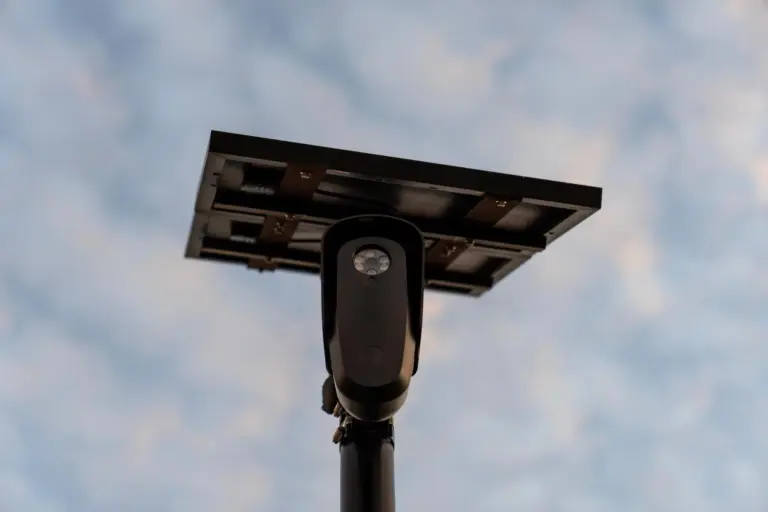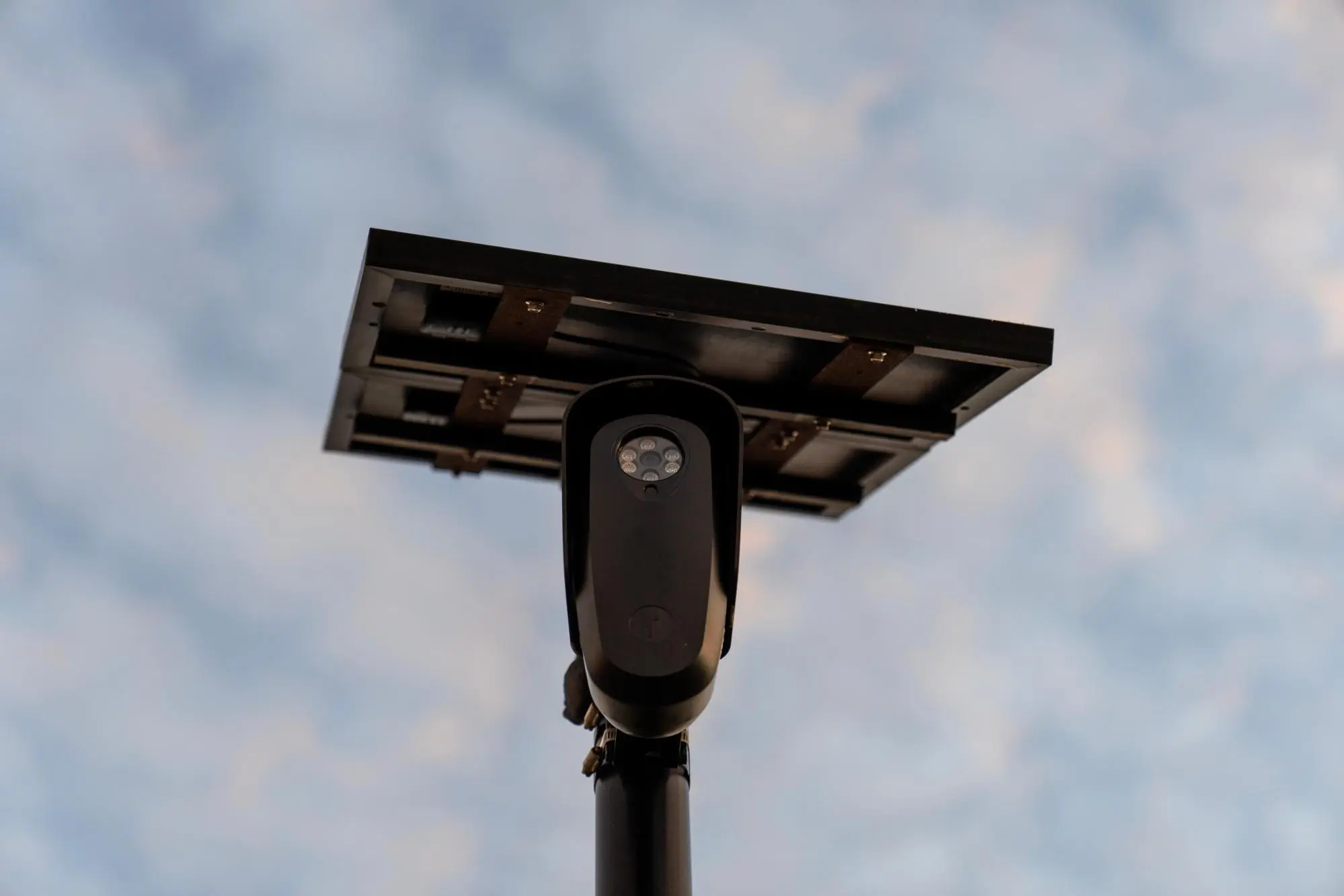
San Jose police fired an officer who used the department’s license-plate tracking system to track a woman who had accused his cousin of domestic violence, Chief Paul Joseph disclosed Friday.
Read more Valkyries star Gabby Williams, France again denied by US in women’s FIBA World Cup final
The incident adds to a growing list of law-enforcement breaches across the country that has prompted ongoing scrutiny for the polarizing surveillance technology, which has seen surveillance cameras pop up in almost 500 locations in San Jose and many other communities in the Bay Area and beyond.
Joseph told this news organization Friday that the officer, who was with the department for about two years, was fired in April following a yearlong investigation into allegations that the officer used his personal phone to access vehicle information that he then shared with his cousin, a man who was searching for a woman alleging he abused her.
Ultimately, the cousin was not criminally charged in the incident involving the domestic-violence allegation. Neither was the officer, which Joseph said was due in part to a shortcoming in state law that makes it illegal for an officer to access confidential criminal databases without a legitimate law-enforcement purpose, but does not currently cover data covered by the increasingly pervasive automated license-plate readers, of which Flock Systems is a major vendor.
The terminated officer’s actions surfaced in February 2025 when a woman reported to police that a man she was accusing of domestic violence had conveyed to her that he knew where she was, Joseph said. Knowing that the man’s cousin was a police officer, she reported the interaction with police, who ran her license plate through their Flock database and discovered the improper access by the officer.
“What we have here is a betrayal of the public’s trust. Plain and simple,” Joseph said of the officer, who he did not name in deference to personnel protections and the absence of prosecution. “I can’t emphasize enough how upset, disappointed and furious I am with that. And what I would want the public to know is that an officer who violates their trust in that way will be dealt with accordingly. They will be held accountable up to and including termination.”
When asked about why he chose to disclose the breach and firing now, Joseph said he issued a department-wide directive this week prohibiting officers from accessing any law-enforcement databases from personal electronic devices. The chief noted that even though the fired officer used a personal device, the illicit access was still found in an audit trail.
San Jose is being sued by the American Civil Liberties Union and Electronic Frontier Foundation — on behalf of the immigrant-rights group SIREN and the Bay Area chapter of the Council on American–Islamic Relations — on the grounds that the ALPR systems’ “retrospective” monitoring of people’s movements without warrants violates the Constitution. That lawsuit is currently being litigated in Santa Clara County Superior Court.
To the EFF, the violations revealed by the police chief Friday reinforce the tenets of their suit.
“Stored ALPR data exposes private information about our movements. When police can search this mass surveillance system without a warrant, some officers inevitably will abuse that unchecked power to run searches for themselves or their friends for personal purposes,” said Adam Schwartz, privacy litigation director for the pioneering San Francisco-based tech-rights firm. “This is just one of many reasons we are now in court asking for a ruling that San Jose police officers must get a warrant before searching stored ALPR data.”
In addition to revising the department’s policy on database access, Joseph said he wants changes in state law to expressly make the officer’s actions a crime.
Read more Conservative group files federal civil rights complaint against East Bay school district
“I would support a legislative change that would include unlawful access and disclosure of ALPR data as being a criminal violation,” he said.
In the meantime, Joseph said his department has referred the officer to the Commission on Peace Officer Standards and Training — which administers police licensing in California — for potential decertification to bar him from getting another law-enforcement job in the state.
Other critics of the ALPR cameras — there are nearly 500 of the devices installed throughout San Jose — view the officer’s offenses as proof of their concerns and fears about the normalization of such surveillance with few civil liberty protections. That includes the Virginia-based Institute for Justice, which is suing the city in federal court on behalf of three residents objecting to the constant monitoring of their movements without warrants or judicial oversight.
The institute has established a national database charting instances of unauthorized access and resulting discipline and other fallout. The violations, which have received widespread media attention, include officers found to have used the tracking data to stalk their former romantic partners and confirm if women have sought abortion services.
Other controversies documented people being errantly stopped and held at gunpoint because of incorrect plate reads. And perhaps the most resonant privacy concern revolves around police either accessing, or allowing access to, the database for explicit or passive cooperation with immigration authorities, which violates law in many states, including California.
“This is the exact type of abuse that our clients are trying to prevent through their lawsuit by requiring police to follow the Fourth Amendment and get a warrant,” IJ attorney Michael Soyfer said. “Whether it’s stalking, wrongful detention or something else, the best way to prevent abuse of these mass surveillance systems is by requiring police to go to a judge before tracking people’s movements.”
Joseph said Friday that the breach by the officer should not outweigh what he called the clear crime-fighting benefits of the technology, asserting that the violation is no different than if the officer had illegally accessed a legacy criminal database.
In cities like San Jose, Oakland, Alameda County, Antioch and Oakley, officials have praised the boost the cameras have provided as a necessary “force multiplier” for understaffed police departments. Joseph’s department repeatedly lauds ALPR technology for yielding swift arrests, and in the past has credited it for helping SJPD achieve a 100% annual homicide solve rate several years running.
“This technology is so incredibly vital to our ability to keep our community safe,” Joseph said. “The technology is new, but the standard is not. Officers are given great responsibility and trust. And they have access to other databases that are also informative, like ALPR. And if they violate any of these, there will be consequences.”
Joseph is backed by Mayor Matt Mahan and the City Council, which in March unanimously approved a clawback policy that reduced SJPD’s retention for plate data from one year to 30 days, and prohibited cameras from recording vehicles entering and leaving houses of worship, reproductive health clinics and consulate offices. Last month, Flock updated its systems allowing police agencies to change the default retention period from 30 days to seven days.
Still, those moves have done little to appease civil rights and privacy advocates who continue to insist on legal restraints, citing as an example police agencies’ history of finding workarounds for vendor restrictions on impermissible searches.
Clashes over surveillance provided by Flock cameras continue to emerge throughout the Bay Area and beyond. Joseph and other police leaders say the technology is vital to their efforts to stop crime, while critics point to similar cases to San Jose’s and say the danger of abuse by those with access is too strong to ignore.
Read more US wins fifth straight women’s FIBA World Cup title, beating France 97-79
About the Author