RICHMOND — Before committing to a new automatic license plate readers contract, Richmond officials voted to seek for more information about the surveillance system’s crime-fighting efficacy.
Read more Motorcyclist suffers fatal injuries in Fremont collision
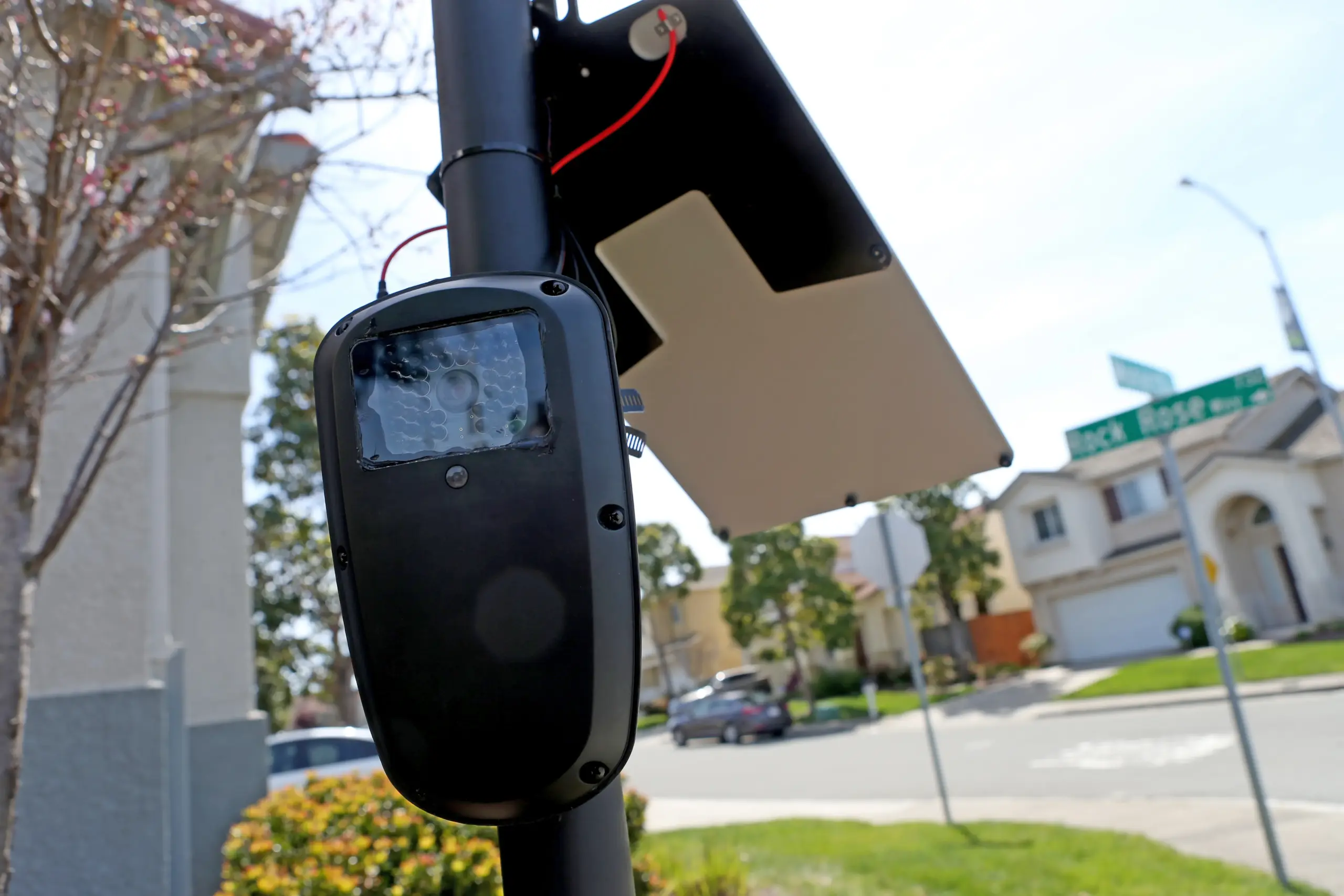
Richmond has been searching for a new vendor to provide automatic license plate reader (ALPR) capabilities since February. Late last year, Richmond Police Chief Tim Simmons disabled the cameras after learning the system had a “national lookup” feature that allowed any agency using the Flock system to access the city’s data by searching a full license plate number.
There’s no evidence that the city’s data has been accessed by outside agencies, Simmons said. The national lookup feature was disabled by the company in California and data sharing relationships initiated from inside or out of the state are now prohibited, Simmons said.
“Before we decide to spend more money on automatic license plate readers, I think we owe it to our constituents to seek out better information about, one, privacy and security risks, and two, their effectiveness in fighting crime,” Councilmember Sue Wilson said during the Tuesday meeting.
Flock has provided ALPR cameras to the city since 2023. What started out as a contract for 30 ALPR cameras evolved into a $2 million agreement for more than 150 cameras, including 110 automatic license plate readers; 60 closed-circuit televisions; a fixed surveillance camera system; and a drone that provides aerial coverage during emergencies.
Councilmembers decided in March to turn the license plate readers back on and to extend its contract with Flock through the end of the year, with the understanding that a replacement vendor would be selected by then.
Flock’s staff-recommended replacement vendor may be Axon Enterprise, an Arizona-based weapons and technology manufacturer. The company already provides services to the Richmond Police Department, including body-worn cameras, virtual reality training, digital evidence storage and TASERs.
Under the new agreement, the city would increase its existing Axon contract by $3.5 million, for a total of $12 million over five years, but will also expand the city’s surveillance footprint.
The new proposed plan under Axon is to replace Flock’s equipment with a slew of new gear. The full slate of surveillance tools would include 110 automatic license plate readers, 60 fixed-lens cameras, 24 spare cameras, 11 drones, detection capabilities for unauthorized drones in the area, and access to a retail crime hub dashboard.
“Cameras don’t solve crimes,” Simmons said.
“You still need detectives to put the case together. The ALPR provides indisputable evidence oftentimes that leads the detective to the place they need to go, efficiently, quickly, expediently, rather than other techniques that have to be used that hopefully eventually get you where you need to be.”
Specific examples of how ALPR cameras have been successfully used in solving crime were not given during the Tuesday meeting, but officers in the past have said the cameras have been used to track down suspects.
The decision on whether or not to contract with Axon was ultimately pushed off to another meeting after the council hit a hard stop at 11 p.m. before a vote could be held.
Read more Rivian R2 vs. Tesla Model Y, an Edmunds electric SUV showdown
The council instead spent much of the meeting debating whether they should find an unbiased third-party to conduct a statistical analysis into how effective ALPRs in the city have been at preventing crime, recovering stolen vehicles, supporting criminal investigations, and making arrests that lead to convictions.
Those in favor of the idea ultimately won with a 4-1-2 vote from Wilson, Vice Mayor Doria Robinson, who noted she supports license plate readers as public safety tools, along with Mayor Eduardo Martinez and Councilmember Claudia Jimenez. Councilmembers Soheila Bana and Jamelia Brown abstained from the vote while Councilmember Cesar Zepeda voted no.
Lawmakers also agreed to receive a presentation from Electronic Frontier Foundation, a San Francisco-based nonprofit focused on digital privacy, ideally by Oct. 6, when the Axon contract item will be revisited.
“It sounds like we are protecting a portion of the residents, and I think all residents deserve protection,” Brown said.
“What a privilege it is to sit at a distance from violence and determine what level of protection should be enough for people who actually live with it.”
Zepeda also expressed concern over the fact that EFF has worked with Brian Hofer, founder of the Oakland-based surveillance watchdog organization, Secure Justice. Hofer has threatened to sue Richmond over its alleged illegal data sharing.
Hofer submitted a letter to Richmond in March warning that the city and the police department may face legal liability by working with companies like Flock Safety, which can and have shared ALPR data without authorization outside of California, in violation of state law.
Flock creates large databases of sensitive information, making them prime hacking targets, he argues. Plus, agencies also lack adequate oversight of police departments and data monitoring protocol to ensure information is secure and not being shared improperly.
“I’m trying to change the police department, not the vendors,” Hofer told Bay Area News Group.
“There can’t be a middle ground if we don’t have accountability and elected officials who take oversight seriously.”
Read more Holmes to transfer to a halfway house in August 2027
About the Author