(A New York Times exclusive)
JERUSALEM — In late March, at the height of the Iran war, Israel quietly approved more settlements in the Israeli-occupied West Bank than it ever had at one time.
Read more Park service could remove more than 500 trees at historic golf course Trump wants to redesign
Staff members at the U.S. Embassy in Jerusalem saw the move as potentially flouting one of President Donald Trump’s explicit red lines for Israel — no annexation of the West Bank — and drafted an urgent report intended for policymakers in Washington.
That memo never reached Washington. It was quashed by David Milstein, a top aide to Ambassador Mike Huckabee, according to three U.S. officials briefed on the process.
This was no isolated incident.
Since taking up his post in April 2025, Milstein, 36, has repeatedly suppressed or significantly revised embassy reporting on Israeli activities to present the Netanyahu government in a favorable light, according to a dozen people who work with or interact with Milstein in both Jerusalem and Washington:
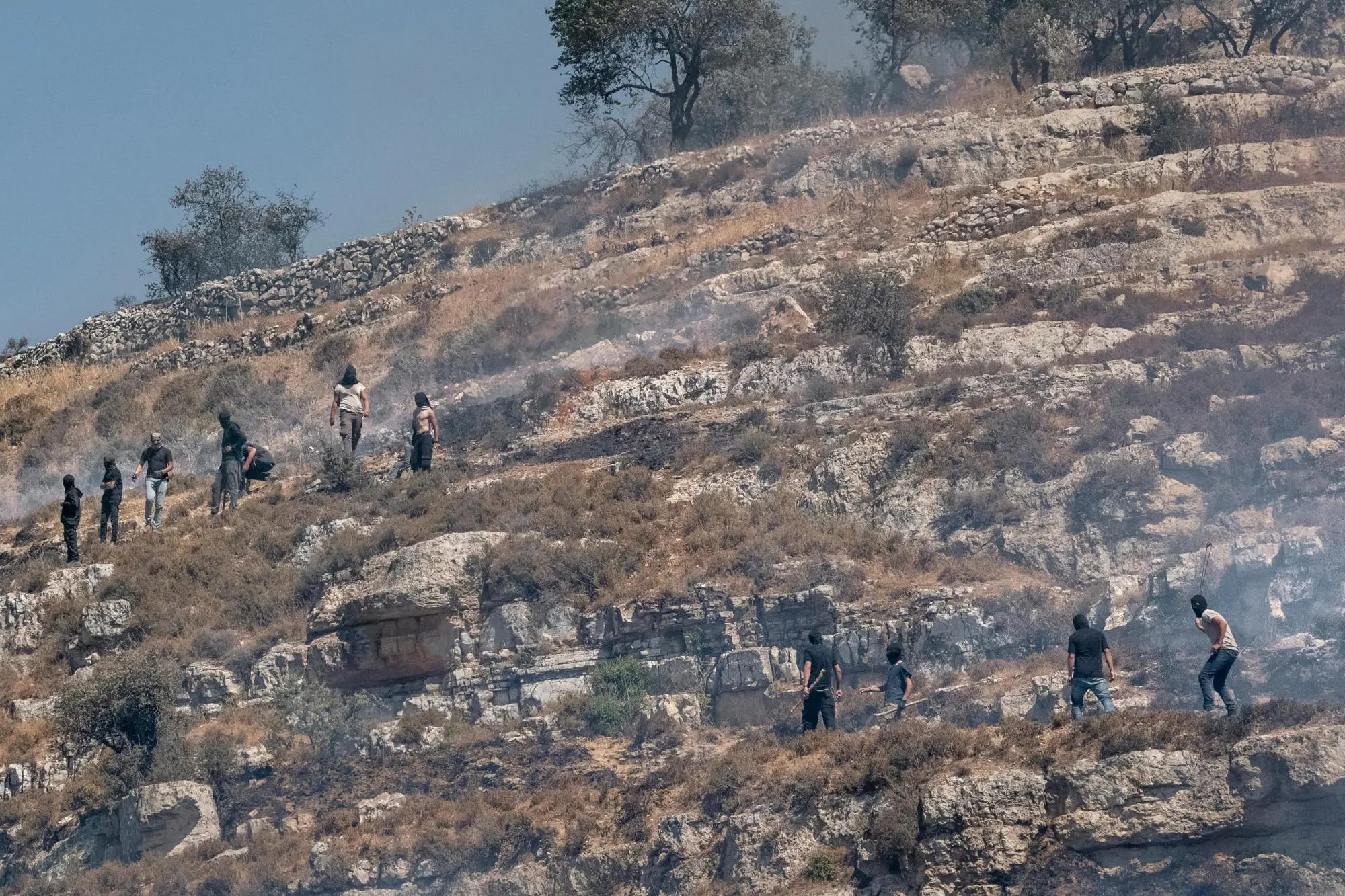
• As settler violence in the West Bank surged in the spring, for instance, he stymied embassy reporting suggesting that the Israeli government was failing to take action, according to the three officials. Instead the embassy sent a cable to Washington, viewed by The New York Times, praising Israel for “cracking down” on the attacks.
• When members of Congress pushed for accountability over the killings of Palestinian Americans by Israeli settlers and security forces, he suppressed a detailed report that the embassy staff had written, effectively stonewalling lawmakers’ efforts to gain information, according to multiple officials briefed on the matter.
• Soon after arriving in Jerusalem, Milstein began insisting on approving communications from the embassy section that handles Palestinian affairs, multiple officials with direct knowledge of the process said. The flow of cables plummeted from several a week to a few a month, as some staff members refrained from writing reports for fear that Milstein would block or rewrite them, these officials said.
Milstein’s interventions go far beyond those of any recent predecessor, several officials said. They and others said they were speaking out of concern that officials in Washington were getting a distorted view of Israeli actions through core diplomatic channels.
Milstein’s efforts have helped insulate Israel’s right-wing government against potential blowback from a Trump administration that has been its closest ally.
Among the most contentious issues on which Milstein has intervened is the accelerating expansion of Israeli settlements in the West Bank.
It’s an inflammatory subject that has soured Israel’s relationship with some of its longtime allies. Last month, Britain, Canada and France announced sanctions on Israeli settlements in the occupied West Bank in response to the Israeli policy on settlement expansion. Britain accused some settlers of “ethnic cleansing.”
It is unclear to what extent Huckabee is aware of his adviser’s actions. Both he and Milstein declined requests for an interview.
The ambassador, a longtime advocate for the Israeli settlement movement, has denounced specific attacks by settlers, calling them “Israeli terrorists,” but he has played down settler violence more broadly, saying it is being carried out by a small group.
Huckabee is required to sign off on most cables and significant decisions, but officials said Milstein sometimes acts on his own. The ambassador has also sometimes worked in concert with Milstein to suppress or recast information, these officials said. But in several cases when he believed Milstein had gone too far, they said, Huckabee has reined him in.
Earlier this month, after an article critical of Milstein for inviting wedding guests to give him money appeared in Politico, Huckabee posted on social media that he had “absolute confidence” in his aide, whom he said possesses “impeccable integrity.”
Milstein is a familiar figure in right-wing circles in the United States and Israel, and has organized meetings between Huckabee and some top Israeli officials. But he is not well known in either country, and his role as a gatekeeper of information sent to Washington has drawn little attention.
His effort to shape embassy reporting was first reported a year ago by the online magazine of the Quincy Institute for Responsible Statecraft, a Washington think tank that advocates de-escalation and U.S. military restraint.
But fresh reporting by the Times unearthed documentary evidence and previously unreported instances of Milstein’s effort to skew information to the benefit of the Netanyahu government, which has continued throughout this year.
The Times interviewed 15 U.S. officials for this article, including many in Washington, all of whom worked with Milstein in some manner. The Times also talked to nine former diplomats who provided context on the role and responsibilities of senior embassy officials. All spoke on the condition of anonymity for fear of reprisal. The Times also obtained or reviewed dozens of documents, cables, memos and other internal communications.
The people who spoke to the Times were career government officials and political appointees, including strong supporters of the U.S.-Israel relationship. Most said they were speaking out of concern that Milstein’s actions are undermining standard diplomatic work, expressing worry that, in some cases, they contradict the president’s stated policies.
The concern extended to senior administration officials in Washington, including in the White House, who have expressed frustration to colleagues over some of Milstein’s actions, according to four officials, who have either witnessed or been briefed on the dissatisfaction.
It is not clear whether Milstein’s interventions have affected White House policy. But since Trump declared a year ago that he would not allow Israel to annex the West Bank, he has said little about the issue beyond briefly reaffirming in February that he opposed annexation, even as Israel was extending more control over the territory.
In response to questions sent to the embassy about Milstein’s actions, Huckabee did not address specific instances cited by the Times. He wrote in a statement: “The elements of the story The New York Times is trying to assemble are so lacking in fact that it ranks up with other Times farcical endeavors.” He added: “I personally and categorically refute the elements of your proposed ‘story.’ ”
Asked about the Times’ reporting on Milstein, the State Department provided the following statement: “The entire team at State remains focused on advancing President Trump’s America First agenda.”
The White House referred the Times to the State Department.
A chilling effect
Milstein is the stepson of right-wing radio host Mark Levin — a close ally of Trump and Netanyahu. That relationship is well known in Washington and the embassy, and has been a factor in how he is treated, officials in both Jerusalem and Washington said.
Read more Delivering double time at Fairfield hospital
As an adviser to Huckabee, Milstein is one of the most senior officials in the embassy, acting as a chief of staff of sorts to Huckabee. The ambassador has empowered him to oversee much of the mission’s portfolio, particularly the West Bank and the Gaza Strip.
Previous ambassadors to Israel have had political appointees as senior advisers who, like Milstein, tried to influence the reporting back to Washington. And Milstein’s responsibilities include reviewing and amending information sent to Washington.
People who interact with Milstein professionally, however, say he goes to unusual lengths to frame Israel in a positive light. He has blocked reporting from being sent, rewritten cables to deliver a different — sometimes opposite — message from the original and delayed approving drafts until the topic was no longer relevant, these officials said.
In the summer of 2025, for instance, dozens of Palestinians seeking food were killed near the distribution sites run by the Gaza Humanitarian Foundation, backed by Israel and the United States. U.S. diplomats in Israel drafted a cable, viewed by the Times, warning that the foundation’s distribution process was chaotic and deadly and risked more “mass casualty events.”
Milstein rewrote the cable to declare GHF’s operation a success while overlooking the mass casualties, according to people who saw the cable and were briefed on the editing process.
Troubled by glaring discrepancies between news coverage and the embassy’s official reports, White House and State Department officials seeking a clearer picture of events bypassed standard channels at least twice to communicate directly with embassy staff, according to two officials briefed on the outreach and an internal communication from late this summer seen by the Times.
Veteran U.S. diplomats said that withholding or twisting the information sent to Washington should raise serious concerns.
“The embassy ought to tell Washington everything — the good, the bad and the ugly,” said Dan Kurtzer, who was the U.S. ambassador to Israel under President George W. Bush. “If they’re not doing so, they are damaging the policymaking process and possibly undermining the president’s policies.”
Milstein also questioned several colleagues on whether they were “pro-Israel” or “pro-Hamas,” according to four officials, who found the question inappropriate and said it made some people fearful of speaking freely.
A conservative and longtime Republican, Milstein served as an aide to Sen Ted Cruz of Texas from 2013 to 2018 before relocating to Israel to study at a Jerusalem yeshiva, a school for Jewish religious studies. In 2020, he landed a job as an assistant to David M. Friedman, Trump’s ambassador to Israel from 2017 to 2021.
During the Biden administration, Milstein worked for Florida Gov. Ron DeSantis, handling outreach to pro-Israel voters.
In April 2025, Milstein was back at the embassy in Jerusalem after Trump was elected to a second term.
Questions about American deaths
In February, Nasrallah Abu Siyam, 19, was trying to stop settlers from stealing livestock when one of them shot him dead in his West Bank village.
He was the ninth American citizen of Palestinian or Turkish heritage killed in the West Bank by Israeli settlers or soldiers in four years. Weeks later, seeking an update on the investigations into the killings, 30 members of Congress led by Sen. Chris Van Hollen, D-Md., sent a letter to Secretary of State Marco Rubio demanding answers from Israel.
In response, officers in the embassy compiled a report that was completed in March detailing the status of each investigation, according to multiple officials briefed on the process.
Its central findings suggested that, in most cases, investigations had made little progress, that some cases had been closed and that no one had been charged in any of the killings, these officials said. Instead of forwarding the report, Milstein argued that the embassy should send a letter saying that Israel was properly handling the investigations, two officials briefed on the discussions said.
On May 4, Paul D. Guaglianone, a State Department official, sent a letter responding to Van Hollen, saying that the embassy, which had reduced staff because of the Iran war, was focused on security cooperation with Israel and protecting Americans against Iranian attacks. (The intense fighting had wound down nearly a month earlier, after a ceasefire was struck April 8.)
The letter, provided to the Times by Van Hollen’s office, said the embassy was working with Israel to “ensure accountability for these deaths.”
The response did not reassure Van Hollen.
“If you don’t get accountability, you endanger more American citizens,” he said in a phone interview.
Downplaying West Bank expansion
In February, the Netanyahu government passed a measure that made it easier for Israelis to buy land in the West Bank, a move widely condemned internationally as speeding the way to annexation.
Any formal Israeli annexation of the West Bank, which Israel captured in the 1967 Arab-Israeli war, would carry immense consequences. But in embassy discussions, Milstein portrayed the government’s announcement on land purchases as a domestic matter with little significance to the outside world, according to two officials.
An embassy report sent to Washington, reviewed by the Times, said the Israeli policy was meant “to address humanitarian needs” of Israeli settlers, without detailing those needs.
A similar intervention occurred in April, when top Israeli military commanders publicly warned that West Bank settler violence could set off a new Palestinian uprising. Embassy staff members tried to alert Washington to those warnings, but Milstein prevented the reports from being sent as drafted, according to three officials.
In a cable viewed by the Times on which he is listed as the first author, Milstein praised Netanyahu’s “unprecedented new initiatives to combat” rising violence in the West Bank. The report’s title read, “Government Cracks Down on Escalating West Bank Violence.”
Read more Police: Oakland motorcyclist killed in collision Friday
This article originally appeared in The New York Times.
About the Author