I’m eating Masumoto Sun Crest peaches with my children. Grooved stonefruit pits scrape against my teeth as I savor the flesh. Thoughts of Grandma flood my mind. I’m reminded of her stories of pins and pendants that she sculpted long ago. Trash she transformed into treasures.
Read more Many of California’s youngest students keep missing weeks of school, data show
I hear her voice in my head saying, “We had nothing. For birthdays, we polished peach pits for presents.”
Asano rarely spoke about Heart Mountain, the internment camp she was sent to when she was 26 years old. My parents, the sansei generation, tiptoed on the subject. When stories slipped out, I savored them like ripe fruit.
Here’s what I know: Before WWII, Asano worked at her parents’ grocery store. Born in 1915 to Japanese immigrants in Alviso, California, she lost her vision after contracting measles as a child. My great-grandfather carted her off to a doctor on a bumpy wagon ride. She partially regained her sight, finished high school, and with one good eye, read the newspaper into her 90s.
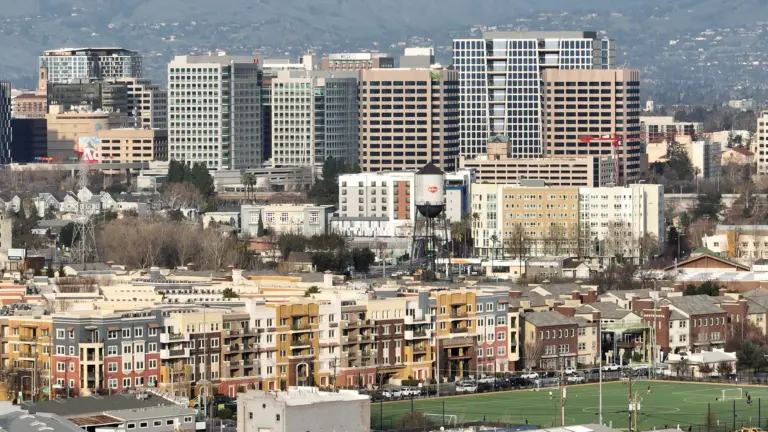
Her parents were farmers near Santa Clara. Now it’s part of San Jose, enriched by Silicon Valley, with a stadium that hosted the World Cup. People hike nature trails and enjoy marinas. But when President Roosevelt’s Executive Order 9066 was enacted, my ancestors’ proximity to the coast incriminated them.
Simple things behind barbed wire made life bearable. Gardens offset war rations and kids played baseball on dusty sandlots. My cousin Kathleen treasures a black-and-white Ansel Adams photo of her grandmother at Manzanar. In the camps, when she had nothing, peach pits became presents for my grandma.
Shikata ga nai — it can’t be helped. I grew up with this phrase. A reminder: the other shoe always drops. My parents won’t admit it, but we’re superstitious. We never celebrate holidays early and Mom didn’t want to jinx our births by learning our genders. So, in the womb, she gave us nicknames.
I’m “Pumpkin.”
•••
We’re celebrating my birthday on a blissful June evening. Michelin-starred chef Niki
Nakayama, a hero of mine, wraps her arms around me for a hug. We’re at N/naka, her and her wife Carole’s temple dedicated to California kaiseki.
Each dish is a momentary masterpiece that echoes back to flavors I grew up with. Lightly smoked spring peas from Niki’s garden channeled Asano.
As kids, my brother and I picked vegetables behind her koi pond. I remembered the damp soil beneath my flip-flops. I still crave her cucumbers and tomatoes in the summer.
Simultaneously that evening, I’m reminded of Grandma Tanaka, who was so sweet and petite that you wondered how she ever survived Poston. Her rosy manicured nails and coiffed jet-black hair remained dyed well into her 80s.
Her fighting spirit showed only when she watched the Dodgers. Grandma’s “boys” — or “those bums,” depending on how they played — were less spectacular back then. Her specialty: beef sukiyaki simmered on the stove as Vin Scully’s voice rang out in the living room.
Close games meant we’d boil hot dogs or instant udon with squishy brown [BEGIN ITALICS] yuba [END ITALICS]. We’d eat off TV trays, huddled around watching the game.
These days, Grandma’s Dodgers are back-to-back World Series champs and Shohei Ohtani is the greatest player in the world. He’s also married to a Tanaka! My grandma is probably smiling from above. She’d love that the City of Angels is painted Dodger blue.
•••
In Japan, my grandmothers’ spirits continued to guide us. It was my first visit and I was traveling with my children. We stumbled on a small udon shop and devoured bowls of thick noodles. Our server spoke Japanese and wore an apron that looked exactly like Grandma Tanaka’s. Nearby, another diner read a newspaper. The page turned and Ohtani’s picture stared back at us. [BEGIN ITALICS] Go Dodgers! [END ITALICS]
The next day, at Tsukiji, a historic fish market that’s now a tourist attraction, we devoured binochan-grilled eel skewers. Steam escaped from my son’s mouth as he sucked in air between bites of seafood. Rain fell on the pavement and the smell conjured up memories of Asano’s koi pond.
Read more Is California’s wine industry facing a ‘last pour’?
•••
A couple months later, Kathleen and I arrived early for a celebration of life honoring Akira Hirose, owner of Azay Little Tokyo. Only a few Japanese American family owned businesses remain downtown. Each year, another landmark shutters. Hirose’s passing really impacted the community.
Now, his son, Philip, runs Azay with his mom. He handles outreach and everything in between. Kathleen knew the family growing up. Her brother Matt and Philip were Boy Scouts in the same troop. Japanese American sports leagues and community groups are remnants of “camp” life, and there’s always food.
“Your dad made the best dishes for the kids,” Kathleen said to Philip.
Hirose’s mentees: Ray Hayashi, Gary Matsumoto, Chris Ono and Charles Namba prepared the five-course tribute with the godfather of Japanese Hawaiian cooking, Roy Yamaguchi. His nishime with lotus root, carrots and short rib reminded me of Asano and my mom’s food on New Year’s Day.
“We had the privilege of doing events with chef Akira-san,” Yamaguchi said. “He was a legend, an awesome individual. He loved to nourish the minds and talents of kids. He was into teaching. With him in mind, we’ll keep that legacy.”
I looked outside. The zen garden at the Japanese American Cultural & Community Center (JACCC) safeguards a rescued persimmon tree. When an atomic bomb was dropped on Hiroshima, nuclear radiation should have annihilated it. But, it’s alive. A miracle hidden in downtown Los Angeles.
Dr. Takeo Uesugi designed the “clear stream” garden to symbolize our journey as Japanese descendants. A waterfall flows towards the basement level. It represents the issei generation’s struggles; their economic hardships and the prejudices of immigrating to a new home. The waterfall divides into two streams, representing the next generation’s conflicts, their political and cultural achievements. Then the water trickles into a meditative pond. It symbolizes hope. It’s our ancestors’ dreams for peace and a better life for generations to come.
In my darkest moments, I still channel Asano. Actually, both my grandmas. When you lose everything, it’s possible to rebuild. Maybe that’s why I became a food journalist. I’m an idealist and a dreamer. Even when the world feels doomed, there are glimmers of hope.
This is my form of soft diplomacy. As a writer, I interview people who tell me their dreams and passions. They trust me and share their struggles. Seeds that sprout into stories, like that persimmon tree. After catastrophe life continues, in a world where peach pits are presents and I’m a Pumpkin.
Grandma’s Pink Salad
This is Grandma Asano’s version of Hawaiian mac salad. She was always making recipes better and tinkering with the ingredients until it tasted incredible. Asano referred to her food as “passable in the dark,” but she could rival any Top Chef competing today.
She thought the regular mayo flavor tasted too bland so she added ketchup and made a pink sauce. After the war, she lived in Utah with my Japanese grandfather who loved seafood. So to make him happy, she added canned shrimp. It also makes the salad more substantial like a real meal. Now it’s a family favorite. My uncle dubbed it “Pink Salad” when my mom and her siblings were kids – the name stuck. Now, my children enjoy Grandma’s Pink Salad every New Year’s Day.
INGREDIENTS
1 package Anthony’s short (salad) macaroni
1⁄2 medium sized onion, finely minced (4 oz)
5 stalks celery, finely minced (6.5 oz)
1 cup Best Foods Mayonnaise (or Hellman’s) (8 oz)
3⁄4 cup Heinz Ketchup (or Del Monte) (5 oz)
3 cans of Geisha tiny shrimp,* liquid drained
water
Kosher Salt
DIRECTIONS
• In a large stock pot, bring to a boil 4 quarts water. Season generously so it tastes like the ocean. Add macaroni. Boil for 8 minutes until macaroni is al dente. Drain and rinse with cold water. Cool completely and refrigerate.
• Finely mince onion and celery. You can use a food processor. If you do, drain any excess liquid after gently pulsing vegetables.
• Open and drain liquid from tiny shrimp cans. Refrigerate until ready to use.
• In a large mixing bowl, combine mayonnaise and ketchup. Add celery and onions.
• Combine pasta and sauce. Gently mix with a spatula. Then add shrimp.* Season with two to three pinches of salt (if desired).
• Refrigerate for at least an hour and serve chilled.
• The flavors build overnight so my mom recommends serving this salad the next day.
Grandma Asano would prepare it the night before big family dinners or she’d make it early in the morning when everyone was still asleep.
*If you’re avoiding shrimp, substitute with canned tuna. Remember to drain the liquid. My mom started serving this version on New Year’s Day. I actually prefer it. My younger brother refers to it as the “gray salad.” But I think it’s tastier. If you make the pink salad with tuna, you only need to use 2 cans.
About the Author