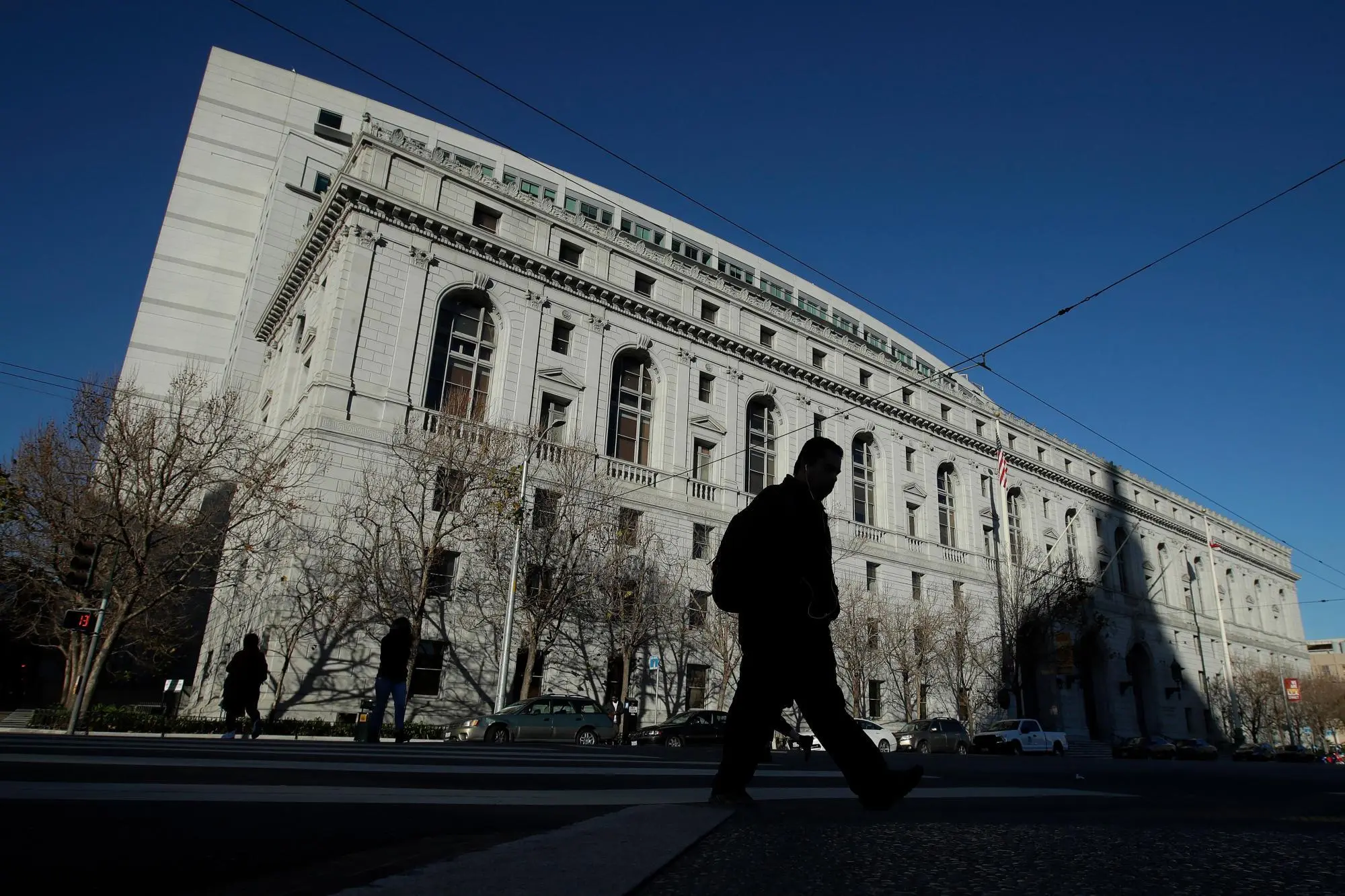
A federal appeals court has taken the unusual step of steering a class-action case to the California Supreme Court, saying the state high court is best suited to resolve the dispute.
Read more For people who live in cemeteries, the scariest thing may be the puns
The case involves past and current members of the U.S. armed services who were allegedly charged higher insurance rates than military officers by USAA, the high-profile insurer that caters to active service members and veterans.
“This case is withdrawn from submission,” the 9th U.S. Circuit Court of Appeals wrote in issued Thursday. “Further proceedings before us are stayed pending final action by the Supreme Court of California.”
The was filed in 2021 by Eileen-Gayle Coleman, a Marine Corps radio operator from Oceanside, and Robert Castro, an Army culinary specialist from Banning in Riverside County.
The two plaintiffs filed suit against USAA, an acronym for United Services Automobile Association, alleging they were denied discounted rates the company made available to military officers.
The case was certified as a class-action by a federal judge in San Diego two years ago, and now as many as 200,000 USAA customers across California could be affected by the eventual settlement or verdict.
According to the plaintiffs’ legal team, the USAA policy violates state law by denying qualified drivers access to the lowest premiums.
The lawsuit claims USAA steered enlisted service members into one program with higher rates and allowed military officers to buy insurance from a related company that charged some 20% less.
“Proposition 103 guarantees qualifying good drivers access to the lowest-priced policy offered by an insurance group,” said Cyrus Mehri, one of the attorneys who represent the plaintiffs.
“USAA should not be allowed to evade that protection by sorting military families into different corporate affiliates based on pay level,” he added.
Read more Anthropic CEO Dario Amodei says AI industry needs to slow down for safety
In a statement Friday, a spokesperson said the allegations are unfounded and noted that the company prevailed at the trial court level.
“USAA provides competitive products and exceptional value to the military community,” the spokesperson said. “The allegations in this suit have no merit, which is why it was dismissed at the trial court. We will continue to defend against this suit.”
According to 9th Circuit judges, two specific questions need to be resolved — and they should be decided by the state Supreme Court because of discrepancies in state law.
First, the state court should decide whether USAA can charge lower-paid personnel and veterans more than it charges officers, an alleged policy that would appear to conflict with the 1988 ballot measure approved by voters.
The high court also needs to discern whether policyholders who were charged higher premiums can recover damages even though the rates were approved by the California insurance commissioner.
Los Angeles attorney Harvey Rosenfield, who co-authored Proposition 103 and is another of the plaintiffs’ lawyers, said winning rate approval from the Department of Insurance does not mean an insurance company can break the law.
“If an insurer discriminates, violates Proposition 103 or engages in another unlawful practice, the fact that money was collected through an approved rate should not place an insurance company above the law,” Rosenfield said.
“This case gives the California Supreme Court an opportunity to restore the private-enforcement rights the voters enacted,” he said.
The federal lawsuit is formally stayed until a state decision is reached. It was not immediately clear when a state ruling might be issued.
Read more Liberty completes stunning 24-point second-half comeback to beat El Cerrito
About the Author