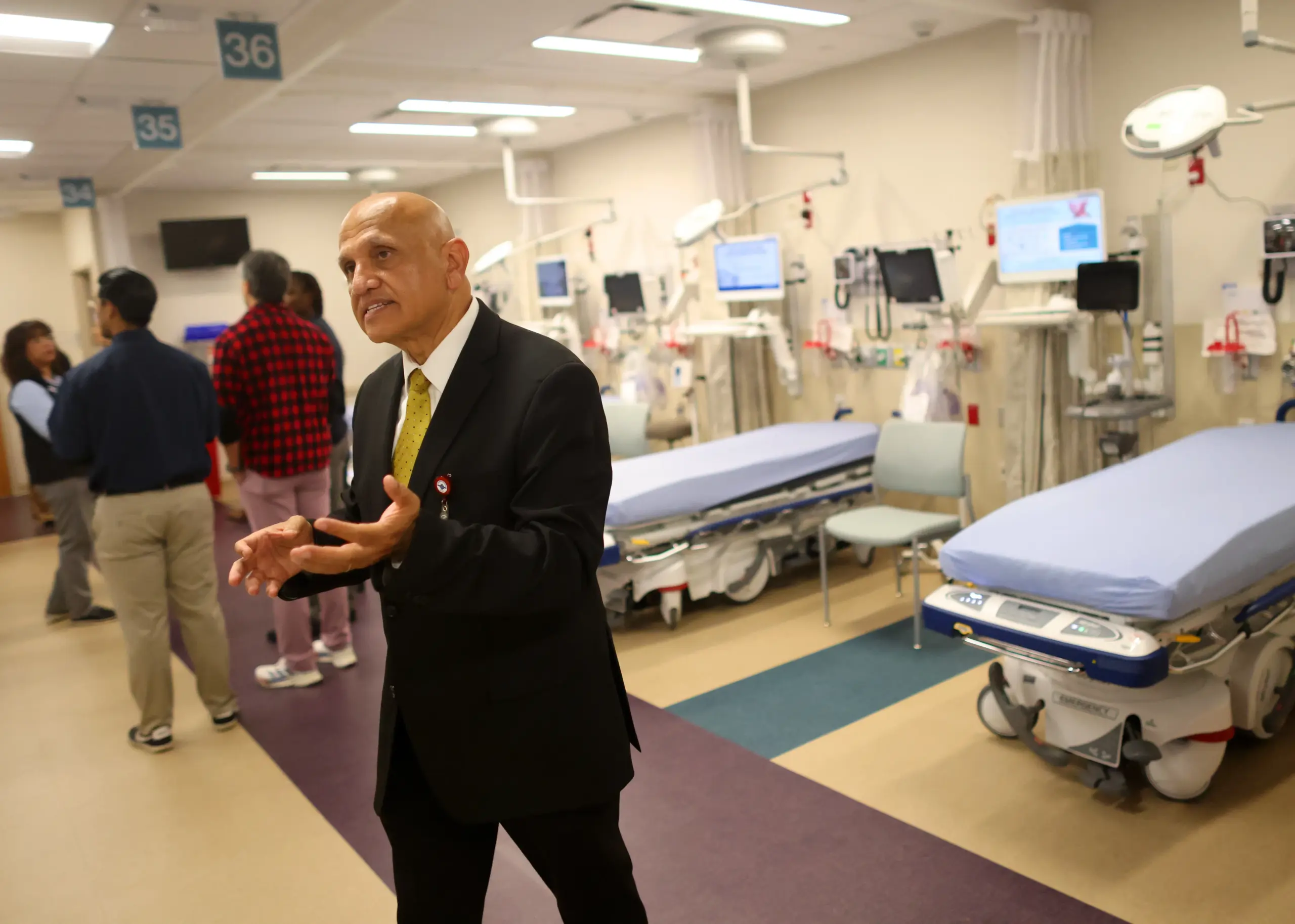
In the face of growing demand for its emergency services, Regional Medical Center significantly expanded its emergency room this week as it aims to reduce wait times and bolster access to medical care in East San Jose.
Read more The Posh Bagel opens in South San Jose; 3 more Bay Area shops are coming
“Who comes to this ER are the people who need it most,” said Santa Clara County Supervisor Sylvia Arenas, who grew up in East San Jose, at a press conference celebrating the expansion. “We are expanding our ability to save lives, that’s what it comes down to.”
Regional Medical Center opened 20 new beds to expand its ER capacity by 60% – jumping from 33 beds to 53 beds. The new beds include three private rooms and an OB/GYN room for emergency deliveries. As of Wednesday afternoon, the expanded ER is open 24 hours daily.
Santa Clara County acquired Regional Medical Center last year for $150 million. The acquisition followed years of shrinking healthcare access at the hospital under its previous owner HCA Healthcare – from loss of labor and delivery services to the downgrading of trauma services to the shuttering of care for cardiac and stroke patients. Community advocates pushed back against the cuts as they rallied for local and state leaders to preserve medical care. When the county officially took over in April of last year, it restored the lost services and promised to expand access.
“Your zip code, your income, your immigration status, or the language you speak should never determine whether life-saving care is within reach,” said Santa Clara Supervisor Betty Duong, who grew up near the hospital and whose district includes East San Jose, which has for decades been home to immigrant and working-class communities in the city. “We fought to keep it here. We fought to restore it, and now we are investing in its future-an investment that has already paid back dividends.”
The expansion cost $17 million, according to a spokesperson for the county hospital system.
The county healthcare system is the second largest in the state. Under state law, the county is mandated to ensure that those without insurance can receive care. Currently, the county run hospital system handles more than half of emergency department visits in the county and over 80% of trauma care in the county. Last year, the county-led Latino Health Assessment found that East San Jose, along with southern Santa Clara County, had higher rates of emergency room visits due to violent injury, including intimate partner violence and assault.
Read more Walks doom SF Giants in series finale defeat vs. Pirates
“It’s been clear since the first second that the need in this part of the city is immense,” said Dr. Thomas Gildea, Medical Director for the ER at Regional Medical Center, recalling the day that the county took over the hospital. He expects the expansion will enable faster care when “minutes matter” for patient outcomes, and allow the hospital to serve more people.
“It’s going to be amazing for patient experience because rather than spending all this time waiting … they’re going to be spending more time in an actual treatment space,” he said.
The demand is only growing. While Regional Medical Center saw an average of 220 ER patients a day last year, that number has grown in recent months and peaked near 300 in recent days. At the same time, demand for trauma care has gone up by a fifth and surgeries by nearly half.
Meanwhile, the cuts to Medicaid in the Trump administration’s landmark spending bill are expected to lead to more people losing their insurance and have already prompted significant cuts in spending and jobs in the county healthcare system. County officials argue that this can lead to a domino effect as more people put off primary care and end up relying on emergency rooms, making the investment even more important.
“The volume continues to grow,” said Paul Lorenz, CEO of Santa Clara County Healthcare, the county-run medical system. “These numbers represent patients – lives that this hospital and the staff here have saved, lives that can continue to support this community and care for their families.”
About the Author