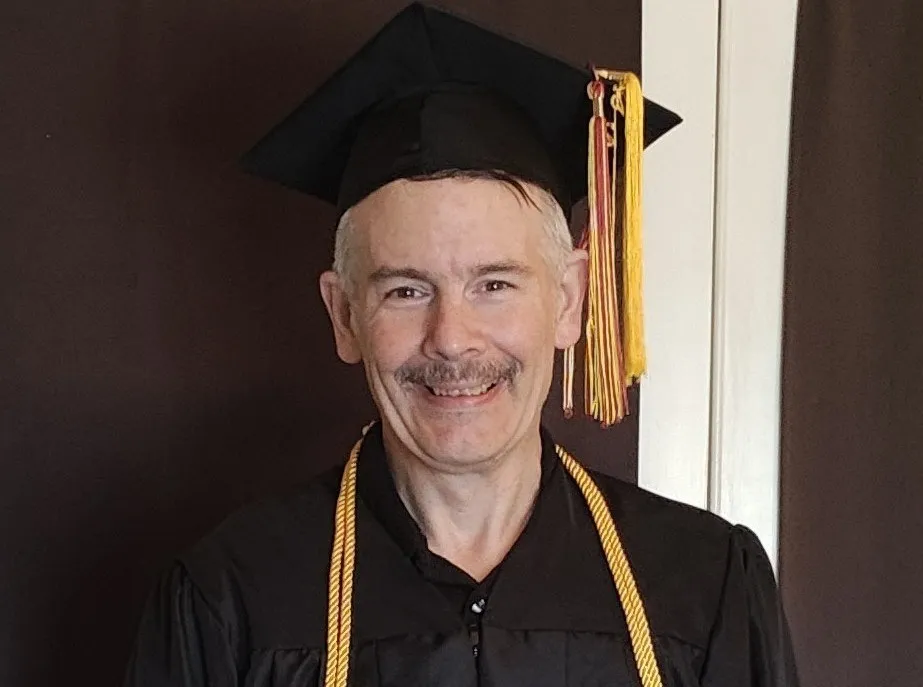
Benjamin Osborn never expected community college to become his turning point in a life marked by addiction, incarceration and years of uncertainty.
Read more Investigation underway into fatal crash in Santa Clara
At age 51 today, the honors graduate from Pittsburg’s Los Medanos College is a Cal State East Bay student, a mentor and an advocate who helped shape the Resilience, Inclusion and Self-Empowerment (RISE) program at Los Medanos, creating new opportunities for students who are currently or were formerly incarcerated.
Osborn, who was born in Mount Shasta and grew up in Siskiyou County, earned his GED while incarcerated during the COVID-19 pandemic. At the time, his goal was practical: Completing educational milestones reduced prison sentences. The classes soon became something much larger, though.
“I found out that not only was I a good student, but I enjoyed school,” Osborn said.
He spent a total of 21 years incarcerated over two prison terms. His most recent sentence stemmed from convictions including car theft, burglary, heroin possession, assault and being a fugitive from another state. During the pandemic, educational opportunities slowed dramatically as correctional facilities restricted programs, delaying opportunities for sentence reductions.
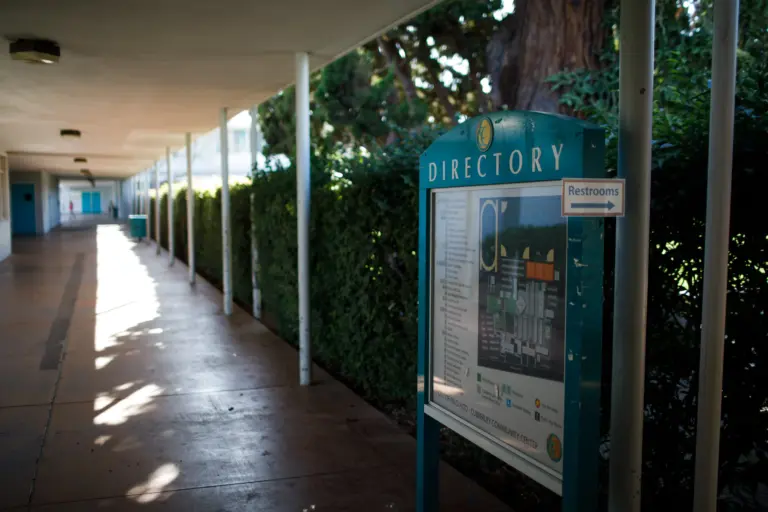
After earning his GED in 2022, Osborn enrolled in college courses while incarcerated at the California Medical Facility in Solano County. Representatives from Project Rebound and Rising Scholars encouraged him to attend Los Medanos College after his release because they believed similar support existed there. Instead, Osborn discovered the campus had no program for justice-impacted students (those whose lives the criminal justice system has affected in one way or another).
“When I enrolled at Los Medanos in 2024, I found out that neither of these programs existed on my campus,” he said. “That started my journey of advocating for RISE to be created.”
That conversation led him to Nicole Gomes, who, along with Andrew Murphy and Director Carissa Craig-Huddleston, was developing what would become the RISE program. The program officially launched last year after receiving funding through California’s Rising Scholars initiative from the California Community Colleges Chancellor’s Office.
Murphy, an Extended Opportunities Programs and Services (EOPS) coordinator and RISE co-coordinator, said the program’s mission is to help justice-impacted students navigate higher education while overcoming barriers unique to re-entry.
“At its core, RISE is about creating opportunities,” Murphy said. “We want students to know that their past doesn’t define their future and that they belong here.”
While EOPS supports low-income and educationally disadvantaged students, Murphy said RISE addresses challenges specific to students returning from incarceration, including employment barriers, rebuilding confidence and overcoming stigma. Many participants qualify for both programs, allowing staff members to provide comprehensive academic, financial and personal support.
Murphy said students often juggle family responsibilities, housing concerns, transportation issues and gaps in technology skills after spending years away from classrooms.
“Despite all that, they’re among the most determined and resilient students I’ve had the privilege of working with,” he said.
Osborn quickly distinguished himself as more than a participant, becoming the college’s first RISE student and now serving as its mentor while also working as a student ambassador. He regularly helps classmates with assignments, technology and navigating college resources.
“I don’t want a single student to feel left behind or like they don’t matter,” Osborn said.
His advocacy extends beyond Los Medanos College. As an ambassador for Berkeley Underground Scholars, he helps connect justice-impacted students with transfer opportunities and is developing a nonprofit, “From Shackles to Scholarships,” to assist formerly incarcerated students with scholarship applications.
Read more Timberwolves agree to deal with Jonathan Kuminga to fill power forward void, AP source says
Education transformed more than Osborn’s career plans. Graduating with honors represented a personal promise fulfilled after years of addiction and separation from his family. His 13-year-old daughter attended Osborn’s commencement, along with relatives who traveled from Oregon.
“I wanted to change the label of being a felon … to something that is positive and memorable,” he said.
Osborn initially planned to become a drug and alcohol counselor but changed his major to sociology after discovering his passion for advocacy. He also completed multiple liberal arts degrees after realizing he had accumulated enough coursework while incarcerated to earn additional credentials.
He transferred to Cal State East Bay after being accepted by several universities, including UC Berkeley, UC Davis, San Francisco State University and the University of San Francisco. Although now pursuing a bachelor’s degree, Osborn continues working at Los Medanos College while searching for full-time employment. He said a criminal record remains a significant obstacle despite his academic success and that his long-term goal is to work permanently at Los Medanos, expand RISE and eventually teach.
“I know it started with me, but now we have over 50 students,” he said. “The goal is 100 RISE students.”
Murphy said watching students gain confidence is the most rewarding part of his work.
“You see someone come unsure of themselves, and over time they become confident, graduate, transfer to a university or start a career they never imagined was possible,” he said.
Gomes, a RISE co-coordinator and NextUp coordinator, said students often discover support services simply by asking questions.
“So many students don’t realize there are programs specifically designed to support them,” she said. “Sometimes all it takes is one chat to see what resources can help.”
Osborn hopes his story encourages others rebuilding their lives to pursue education, regardless of age or circumstance.
“The most important thing to remember is that it is never too late to start doing great things,” he said.
He said he believes community colleges offer critical support systems for justice-impacted students, helping them replace cycles of incarceration with opportunities for education, employment and service. Through determination, education and RISE, Osborn says he has found a sense of belonging and purpose.
“I am very passionate about the RISE program, and I want nothing but good things to happen to it,” Osborn said. “For the first time in my life, I am a part of something that matters and that can make a difference and do some good in this world.”
Reach Diablo Valley College journalism professor and freelance writer Charleen Earley at [email protected] or 925-383-3072.
Read more Sierra LaMar retrial: Charging doc alleges new attempted kidnapping as jury selection begins
About the Author