BIG SUR — With the Timber Fire burning nearby, Kurt Mayer, owner of the Big Sur Taphouse and Deli, labored round-the-clock with a crew of workers, some his own, some borrowed, to prepare for the worst.
Read more Richmond-San Rafael Bridge lanes closed Saturday for maintenance
“I haven’t slept in a couple of days,” said Mayer earlier this week. “For the moment, what I’m worried about is getting the leaves up, the brush cleared, the skirts on the trees up.”
It’s hard work, but Mayer says it needs to get done.
The fire couldn’t have come at a worse time for Mayer— sparked after years of various closures on Highway 1 and devastating storm damage and a costly rebuilding process. Now, during the peak of Classic Car Week, which brings in hundreds of thousands of visitors to Monterey County, government and fire officials are warning tourists to stay away from Big Sur again.
Business owners say Highway 1 is the economic lifeblood of Big Sur, bringing millions of tourists who eat at restaurants, stay in hotels and soak in the scenery. The success or failure of the hospitality businesses depends on keeping Highway 1 open and the steady flow of customers coming and going. According to Caltrans, year-to-date guest counts at restaurants and retail doubled on peak weekends after Highway 1 reopened on Jan. 14. The highway had been closed at Regent’s Slide, about 40 miles south of Carmel, for nearly three years. Occupancy rates in hotels in February and March went from about 70% to nearly full, reaching 95% at times. “We were all losing money before that point,” said Mayer of the reopening of Highway 1.
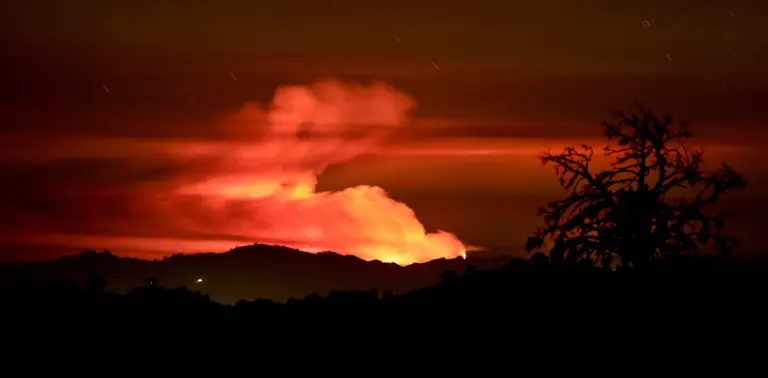
The Timber Fire, which began Aug. 8, has grown to over 4,500 acres in the hills east of Highway 1. On Monday, Big Sur was still full of tourists. But traffic slowed the following day, and the road was closed Tuesday afternoon near Fernwood. At the same time, expanding mandatory evacuation zones limited access to the region, even in areas north of the highway closures.
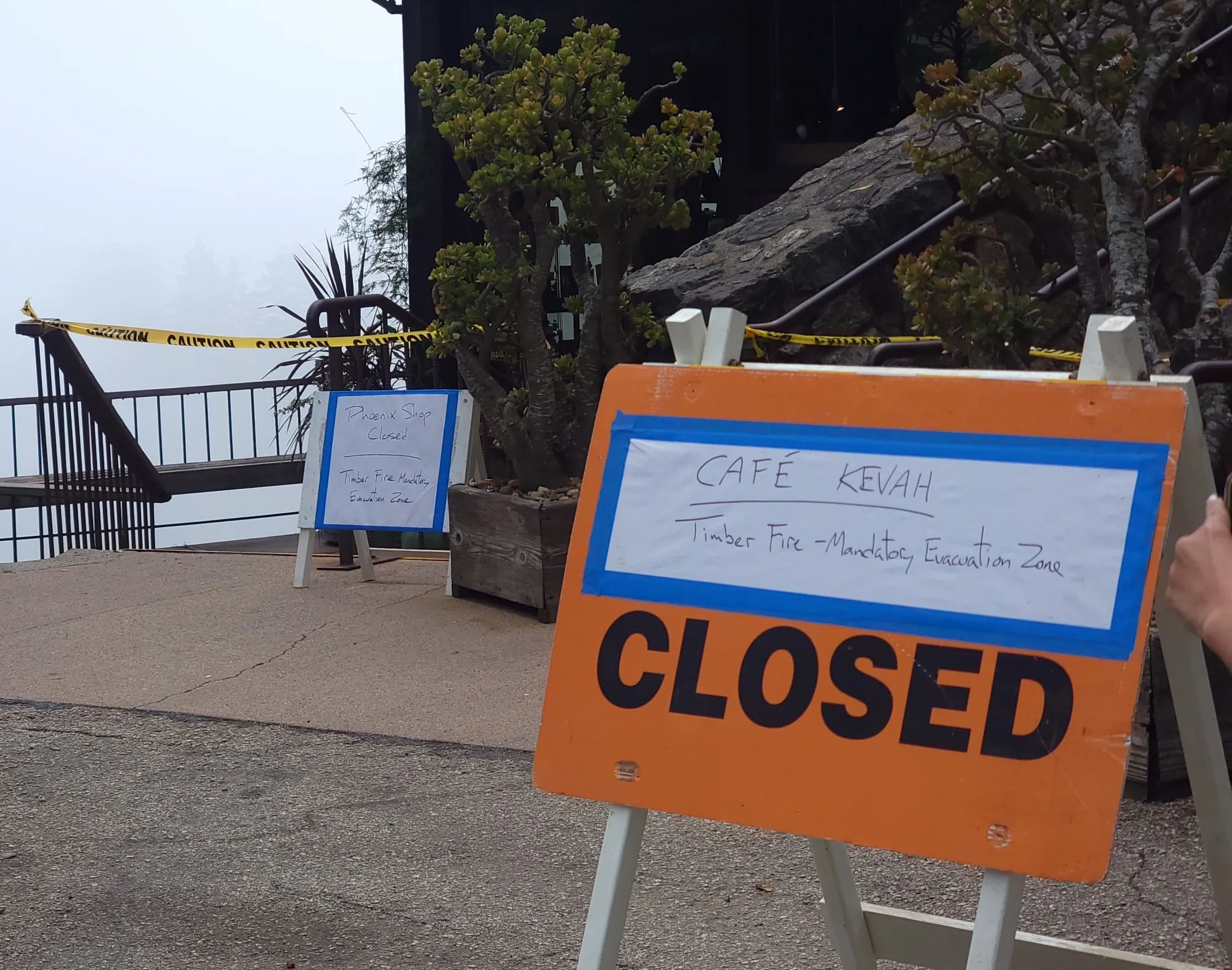
For some businesses, the losses began almost as soon as the fire. Due to its proximity to the Timber Fire, Nepenthe, the iconic Big Sur restaurant off Highway 1 overlooking the coast, was almost immediately under an evacuation order. Droves of guests, who hadn’t been informed of the full scope of the fire yet, had to be turned away. Kirk Gafill, owner of Nepenthe and president of the Big Sur Chamber of Commerce, estimated that his restaurant would lose $60,000 to $70,000 a day as long as they stayed closed.
“It just keeps tallying up day after day after day,” said Gafill.
“It all has to do with duration,” said Gafill, “How many days will the highway be closed and traffic levels will operate at zero or a vastly reduced level.”
There is not yet an estimate of when Highway 1 will reopen and the evacuation orders lifted. On Saturday morning, the fire was 12% contained.
The loss doesn’t just affect the business owners. LinkedIn lists more than 400 available positions for hospitality workers in Big Sur. When the restaurants and hotels close, workers lose income and tips.
Patsy H. Gasca, community disaster program manager for the American Red Cross of the Central Coast, has run the shelter set up at Carmel Middle School during fires and other disasters for over 20 years. She says they don’t typically see a lot of traffic, but when they do, it’s almost always service workers. “We had three last night,” said Gasca on Tuesday, “all employees from restaurants that had been evacuated out there, which is normally what we see. Sometimes we see service staff from homes that had been evacuated.”
Big Sur has endured fire, flood and all manner of cataclysm before. And despite the millions of tourists who come every year, U.S. Census data reports fewer than 2,000 people actually live along the picturesque coastline. That’s why it’s so important for businesses to make money in the peak visitor times, like during Classic Car Week.
Highway 1 was closed at Regent’s Slide in January, 2023. A study conducted by Beacon Economics, an independent economic research firm based in California, estimated total losses for the region at $438 million through September 2025. Tourist spending dropped by nearly $10 million, from an expected $27 million to $17 million in 2023 and 2024.
“On a day-to-day basis, this time of year is our peak high season,” said Gafill. “Every day that we’re closed for whatever reason, it’s equivalent to losing three or four days of business in the off-season. I think we’re at a pivot point in the next day or so to know if this is going to be a much longer event or stabilized in a pretty short order.”
Read more SF Giants’ Chapman talks season-ending surgery, playing through injury, next steps
The closure affects all businesses differently. Gafill says restaurants could be up and running the day the highway reopens. But a hotel has to cancel existing bookings and wait for new reservations, which may take days to return to peak business.
“They have a longer runup,” said Gafill, “even when access is restored.”
Even the places that have remained open are facing the potential for huge losses. Gafill estimated businesses on the north side of the closure would see a 35% to 40% loss of business, and for those south of the closure, closer to 50% or even 65%.
That’s what Mayer is staring down at the Taphouse, which remains open and still receiving some traffic, as it lies just outside the mandatory evacuation line.
Keeping the restaurant open is also about the staff. Mayer says he took out loans during the previous Highway 1 closure to keep his staff paid, rather than make cuts. “I’ve known the people who are working for me for a long time. They have bills and family and stuff; they depend on that. We wanted to make sure everyone could pay their rent.”
Others have had to shut their doors. On Tuesday, when the fire was still under 2,000 acres, the Ripplewood Resort and Cafe was open and even taking reservations. Owner-operator Carol Shadwell said she would be open as “long as possible” while the fire spread, for the benefit of her staff and for first responders. But as the fire spread north, so did the evacuation orders, and the restaurant was forced to close.
“Half of the property is in a ‘go-now’ status, and you walk across the highway, and it’s just ‘be prepared,’” said Shadwell. “I’m going close tomorrow, but I’ll think of other ways to be in service. … As long as I have legal availability at the Ripplewood, I’ll provide housing for people.”
Shadwell has managed to keep some staff on board, a skeleton crew calling people to cancel reservations and staying in cabins in the resort that aren’t under an evacuation order
Shadwell says the closure is bad for business, but not disastrous. “We just don’t have income for a while,” said Shadwell. “We had a really good summer, most of us have built up our bank accounts, most of us have been through a two- to three-week interruption of business, and the Fair Plan (the California fire insurance plan of the insurer of last resort) is friendly to fire interruptions.”
Shadwell has a tree on her property that’s been through a fire before. It’s not far from where she’s staying now, so long as the fire doesn’t spread. It’s been “scorched 10 feet up,” according to Shadwell, burnt badly at some point in its past and unable to fully heal. But like many in Big Sur, it’s found a way to keep going. The possibility of the Timber Fire lasting for weeks and months is reason enough for pessimism for business owners like Shadwell. But many seem to resort to the opposite, a kind of optimism, or at least a hard-edged realism.
“Are we going to get that hopeful news tomorrow morning? I just don’t know,” said Gafill, speculating about when they might be able to reopen. “I’m an incorrigible optimist, so I’m going to root for it, but you know, there’s a lot of unknowns and variables that we’re dependent on. “
For Mayer, the economic stress only mirrors the physical realities of Big Sur. “Big Sur is extremes. It’s extremely beautiful, and it can be extremely deadly.
“It’s got these extremes, road closures, fire so steep you can’t fight it. If you live there, work there, you understand.”
Read more Barber charged with murder nearly seven years after Hayward fatal shooting
About the Author