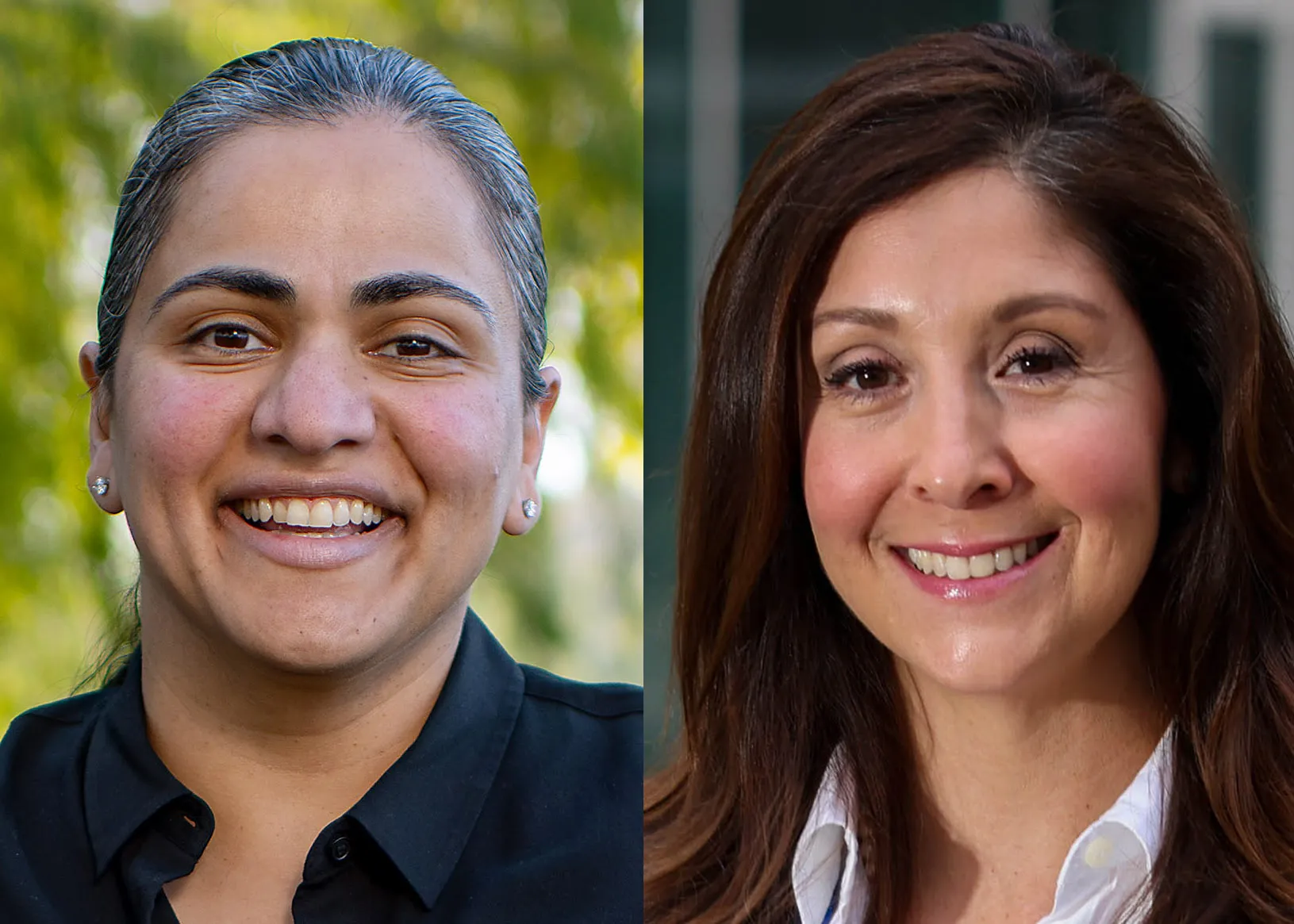
Following a spending spree in congressional primaries across the country, the American Israel Public Affairs Committee is turning to its latest fight: the congressional seat previously held by embattled ex-Rep. Eric Swalwell.
Read more Car driven by child strikes woman walking dog in Oakland
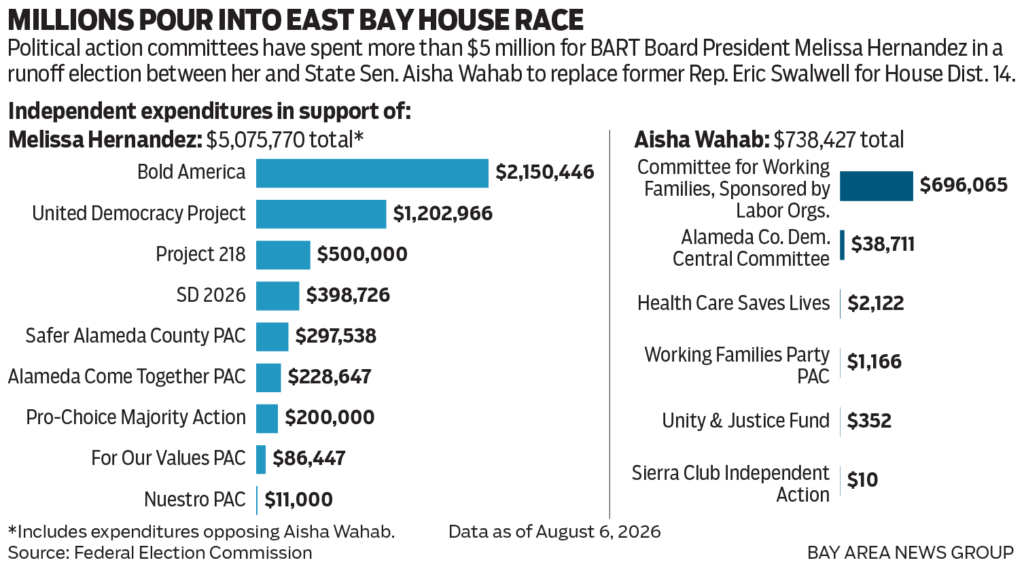
The United Democracy Project, a super PAC associated with the pro-Israel group, spent $1.2 million on new ads supporting BART Board President Melissa Hernandez and opposing state Sen. Aisha Wahab, financial disclosure forms filed Wednesday show.
The media buy comes ahead of the Aug. 18 special election to temporarily fill the seat after Swalwell, whose term ends at the end of this year, resigned in April over sexual assault allegations. Hernandez and Wahab will face off again in November to fill a full term starting next year to represent the 14th congressional district that encompasses parts of Alameda County, including the cities of Fremont, Hayward, Dublin and Livermore.
AIPAC had previously endorsed Swalwell’s 2022 reelection run for Congress and donated over $61,000 to his campaign.
The $1.2 million, of which over $800,000 was spent on ads opposing Wahab, marks the first time the United Democracy Project has waded into a California congressional race this cycle. Political action committees associated with AIPAC have ramped up their spending in recent years as the United States’ relationship with Israel has become a litmus test for some progressives within the Democratic Party.
“In multiple races we are seeing AIPAC use its considerable financial power to try to get friendly folks elected and to block critics of Israel from winning their elections,” said Melissa Michelson, a political science professor at Menlo College. “They’ve really opened their wallets in some stunning ways in a couple of these races.”
Wahab raised $631,748 between Jan. 1 and July 29, 2026. Hernandez raised about $635,004.
A progressive Democrat from Hayward, Wahab has been a vocal critic of Israel’s occupation of Palestine, while also condemning the capture and killing of Israelis by Hamas on Oct. 7, 2023.
At an April forum, in response to a question about whether the candidates consider what’s happening in Gaza a genocide, Wahab answered affirmatively. Hernandez declined to give a yes or no answer, instead saying that she believes “Israel had the right to defend itself,” while adding that the “destruction in Gaza has gone too far and the people are paying the cost.”
Wahab, an Afghan-American woman who was the first Muslim elected to the state Senate, told the Bay Area News Group that she’s seen the “devastations of war” affecting generations of her family and deeply opposes “unnecessary wars and conflicts.” She said she would refuse any financial support from AIPAC and said the group’s spending shows she’s a target of a “racist, prejudiced organization.”
“They seem to be going after candidates that don’t line up with them. But under what grounds?” she said. “The fact that AIPAC is spending this much money for one congressional race — ask why?”
AIPAC’s spending this cycle through its United Democracy Project super PAC touched two major primaries this week that yielded mixed results for the group trying to install pro-Israel candidates in Congress.
They spent roughly $30 million in Michigan’s Democratic Senate primary trying to block Abdul El-Sayed, a progressive and critic of Israel, from defeating Rep. Haley Stevens. El-Sayed, however, won, becoming the first Muslim to win a major party’s primary for Senate. In Missouri’s primary, however, the super PAC got one step closer in succeeding in its quest to reelect Rep. Wesley Bell (D-MO) as the incumbent beat out Cori Bush, a progressive who was unseated in 2024, in the Democratic primary.
The United Democracy Project’s direct dollars in the Congressional District 14 race aren’t the only AIPAC-affiliated money touching the open contest.
Read more Review: AC/DC delivers something rock fans won’t likely see anywhere else
Bold America, which was formed by former members of the Congressional Hispanic Caucus, has received $1.55 million in contributions from the United Democracy Project since May, according to financial disclosures from the Federal Elections Commission. Bold America, in turn, has spent more than $1.6 million in support of Hernandez and $518,470 on ads opposing Wahab since May, according to FEC records.
Elsewhere in California, Bold America spent $300,000 in support of Rep. Linda Sanchez’s reelection campaign to Congressional District 41. Sanchez, a Democrat, heads into a runoff election in November against Mitch Clemmons, a Republican.
Outside spending has been heavily skewed to supporting Hernandez in the race, with United Democracy Project, Bold America, Alameda Come Together, Safer Alameda County, SD 2026 Project 218, Pro-Choice, Majority Action, For Our Values and Nuestro spending more than $5 million combined, according to FEC records.
Hernandez, who served as Dublin’s mayor between 2020 and 2024, did not return multiple requests for comment on this story Thursday. Her campaign spokesman, Ajay Mohan, also did not respond to requests for comment.
When asked whether she had ties to AIPAC, Hernandez previously told this news organization on Monday via email that “I answer to the people of our district, and right now our people want a local leader who knows their challenges and will go to Washington and lower costs, just like I did as mayor — they don’t want another Sacramento politician.”
Bold America, the United Democracy Project and AIPAC did not respond to requests for comment.
Wahab was the frontrunner coming out of the primary. In the June 2 primary to fill the full term starting next year, the state senator received about 38% of the vote compared to Hernandez’s 17%. In the subsequent June 16 special election to fill the seat on an interim basis, she performed even better, securing 43% of the vote compared to Hernandez, who had nearly 17% of the vote.
Michelson, the political science professor, said the primary election results, coupled with AIPAC’s recent loss in Michigan, make it seem as if the pro-Israel group is “setting themselves up for another loss.”
AIPAC is currently considering whether to support Republican Mike Rogers in November, according to reporting from the New York Times. The group has historically supported both Republicans and Democrats, but Michelson said the latest strategy could potentially “undermine” AIPAC’s mission in a heavily Democratic district.
“Why would I listen to them telling me, a Democrat, how to vote when they also support Republicans?” she said.
For Wahab, AIPAC’s spending is also emblematic of the greater problems with politics in the United States.
“This is the whole reason why we need money out of politics,” Wahab said. “We need the American voice and the American people to be heard, not super PACs, not special interest groups.”
About the Author