You won’t hear a Bay Area hockey fan say this too often, but thank goodness for Anaheim Ducks.
And thank the hockey gods for their general manger, Pat Verbeek, falling asleep at the wheel.
And thank them, while you’re at it, for Daniel Brière, GM, of the Philadelphia Flyers, for taking advantage of Verbeek’s mistake .
Because when Philly dropped a jaw-dropping $18 million offer sheet on Ducks forward Leo Carlsson, it didn’t just shock Orange County — it changed the entire NHL landscape.
The Flyers’ offer sheet was an act of aggressive, beautiful sports anarchy. And while the Ducks matched the offer, it led us to today in San Jose.
Because it also set both a market and expedited the timeline for Macklin Celebrini’s contract extension.
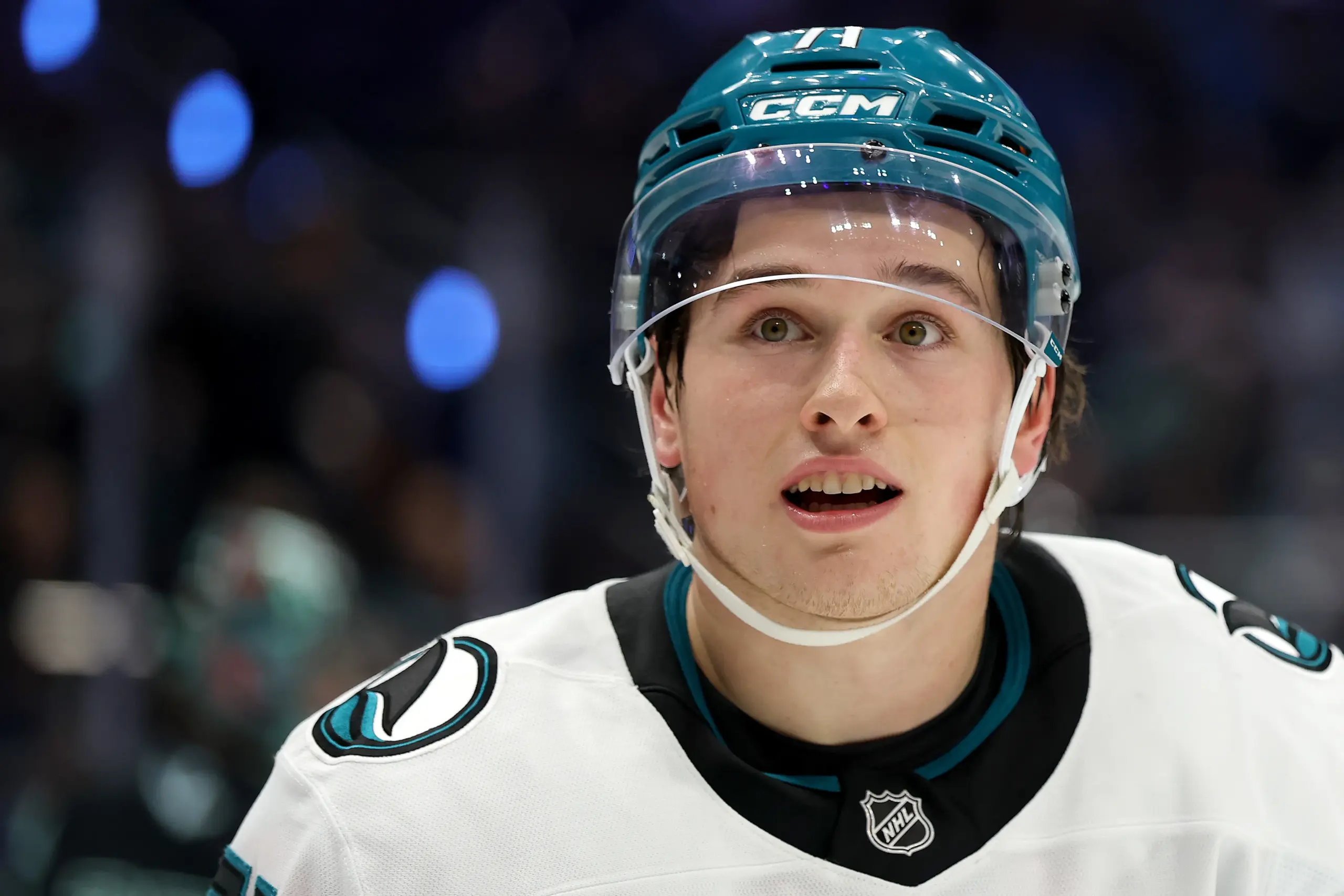
And here we are today: is now locked down for five years at an $18.8 million annual average value. The deal was finalized Wednesday.
I know I’ve said this before, and I meant it then, too, but there will be no further questions: the Sharks’ rebuild is officially, unequivocally over.
Was there ever any real doubt Celebrini would sign a long-term extension in San Jose? No.
But Mike Grier was never going to be caught napping with his shoes on.
He surely has a giant whiteboard in his office, a hyper-organized calendar syncing across his smart devices, and a crystal-clear set of executive priorities.
Securing Celebrini’s signature on an extension was item 1A — top of the list — on his off-season agenda.
It reached a whole new, never-before-seen level when Brière pulled the pin on a financial grenade.
The moment Carlsson’s $18 million baseline hit the wire, Grier’s timeline shrank from months to minutes. Any further delays would prove costly.
Celebrini’s camp didn’t even have to raise their voices — the market raised the price for them.
And while Grier probably lost a few nights of sleep watching the economic ceiling go up, up, and even more up, but he didn’t flinch for a second.
He simply adjusted his spreadsheet, handed over the pen, and secured the franchise before the market went completely insane.
Read more Pearsall’s continued knee issues lead 49ers’ injury concerns early in training camp
Is $18.8 million a year an eye-watering sum for someone who just turned 20? Sure. As it stands, Celebrini is set to be the highest paid player in the NHL once the new deal begins.
But will this deal look like a historic bargain in two years?
There is simply no doubt.
It’s like building home in the Bay Area — the concrete and steel will seriously deplete the bank account long before you shop for furniture.
But you need the best you can get in a place where earthquakes are the norm.
The NHL is no different. There’s always seismic activity — the Carlsson offer sheet just being the latest of league-rattling moves.
But Celebrini is the best foundation you can buy in this game, and now he’s poured deep into SAP Center for the next decade.
Because while Carlsson is a wonderful player, Celebrini is a generational, franchise-altering — league-changing — superstar.
With the salary cap skyrocketing and Celebrini’s trajectory heading straight for rarely-explored territory, he could have driven a hard bargain to become the NHL’s first $20 million a year player — the first $100 million man under the league’s new collective bargaining agreement.
Hell, he probably could have asked for even more than that.
And the Sharks would have been right to give it to him, too.
When it was all said and done, the Sharks secured the far superior player for less than a million dollars more per year than Anaheim got stuck paying.
That isn’t just sound executive maneuvering — it’s daylight robbery with a teal bandana.
Don’t feel bad for the kid. Celebrini still secured generational wealth, but the Sharks are the winners in this transaction: they secured another half-decade of guaranteed relevance with 71 here long term.
They made the move that could — no, should — pay off down the line with a parade through downtown San Jose. And they did it in a tidy, no-nonsense fashion. You have to love it.
It now that parade won’t be happening anytime soon, but we’re far closer to the finish than the start.
In the end, the Sharks paid the cost to be a serious franchise, while Anaheim paid the tax for thinking they had everything under control.
And in this rivalry, which is poised to be a fixture of the national TV schedule in the years to come, this offseason could prove a pivot point. Sure, the Ducks are further ahead, but they slipped and the Sharks can take the lead in 2026-27.
But signing Celebrini was the easy part for San Jose. Tricky, given the landscape, but straightforward.
Read more Nvidia leases San Jose industrial building for possible AI and advanced tech work
Now comes the hard part: building a champion team around him.
But what has Grier done to make you think he can’t get that job done, too?
About the Author