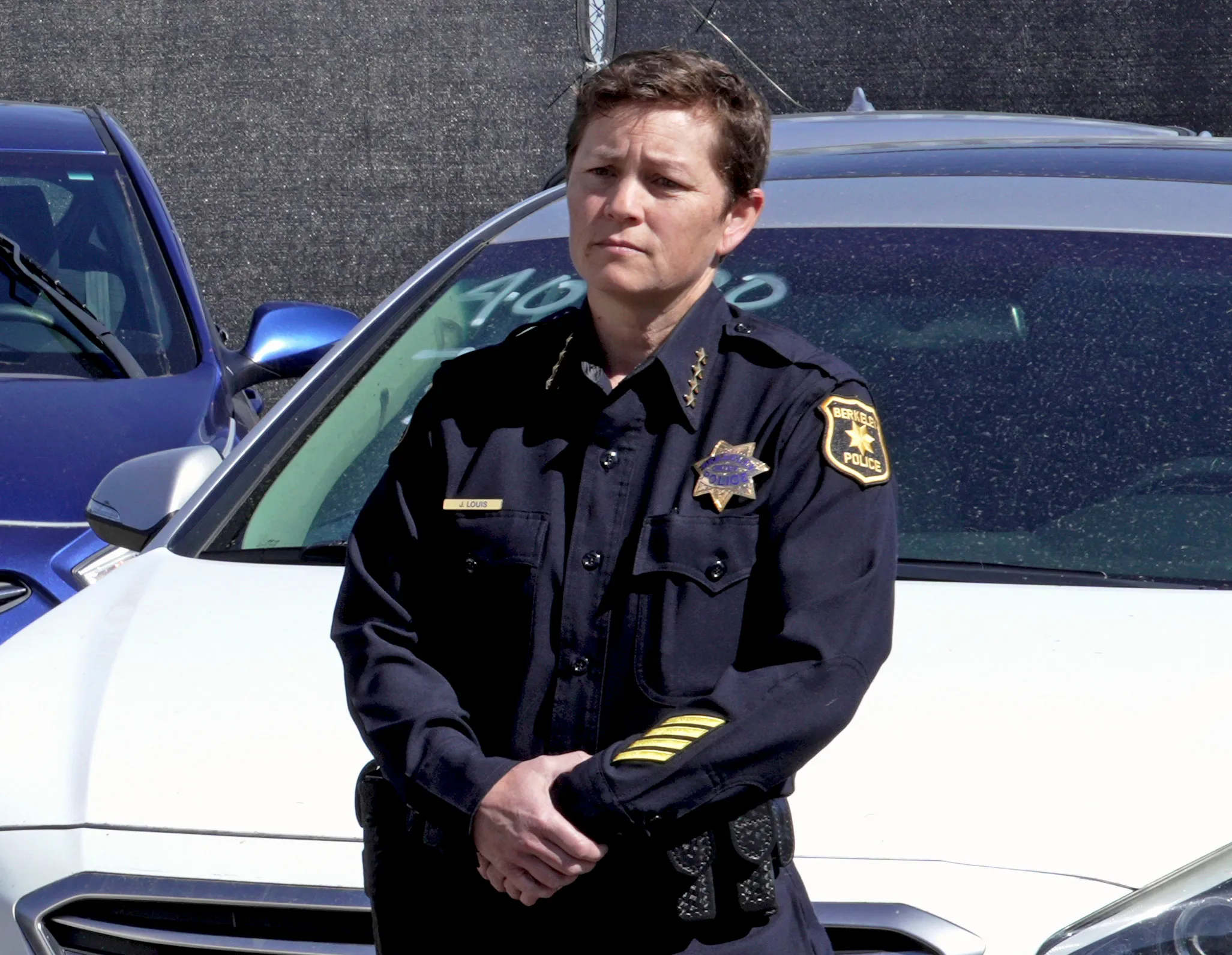
Berkeley’s civilian police oversight board sustained 13 misconduct allegations last year. Police Chief Jennifer Louis rejected every one.
Read more Dangerous waves, currents to slam Bay Area coastline
The disparate evaluations come as staffing shortages forced to be closed without a full investigation.
“This has been a consistent year-over-year problem for as long as I’ve been on the board,” said Josh Cayetano, chair of the Police Accountability Board. “The decisions that we come to are very well-reasoned and well-supported, and I have not really been persuaded by either of the rationales by the police chief or the city manager in any of these cases.”
In 2024, the board received 53 complaints. While only 10 were sustained, a significant number were administratively closed — 86 allegations and 15 complaints — and 28 allegations and 7 complaints remained active at the time of reporting, according to
The Berkeley Police Department did not respond to inquiries by this news organization seeking a response from Louis.
Berkeley’s Police Accountability Board, established by voters in a charter amendment in 2020, sought to enhance and strengthen the civilian oversight of law enforcement. According to its rules, once a misconduct complaint is filed to the Office of the Director of Police Accountability (ODPA), the office must notify officers within 28 days, an investigation is launched and must be completed within 120 days, then the Director of Police Accountability presents those findings to the Police Accountability Board in a closed session hearing.
The board has 240 days to evaluate the findings in one of four categories: sustained, unsustained, unfounded or exonerated. The findings are then delivered to the chief of police who accepts or rejects them.
If there is any disagreement between law enforcement and the board, the Director of Police Accountability can choose to appeal the decision to the city manager, who has the final say, according to city policy.
In 2025, the Office of Police Accountability received 230 unique allegations of misconduct in complaints that met the evidentiary standards for an investigation. Among those complaints, 23.9% alleged improper or inadequate investigation, 19.1% alleged discourtesy, 12.6% alleged discrimination, another 12.6% alleged improper search, and 8.7% alleged harassment, according to the report.
The board investigated 69 allegations in the complaints, finding that 13 were sustained, 14 were unsustained, 34 were unfounded, seven were exonerated and one where no finding was issued, according to the report. While more than 80% of the investigated complaints were dismissed in one form or another, all of the sustained allegations were rejected by the police chief. Cayetano said the director appealed 12 of the 13 misconduct complaints to the city manager; all but one of them were rejected.
Read more San Mateo County deputies arrest Fremont man in residential burglaries
Cayetano said public officials and board members are unable to discuss the complaint allegations because of state confidentiality law.
“I think it’s unfortunate because I do believe that the staff of the ODPA does very thorough, thoughtful investigations,” said Kathy Lee, interim director of Police Accountability. “I don’t think they make decisions just because they want to find misconduct.”
In addition, the Accountability Board “administratively closed” 22 cases in 2025, meaning they were closed before investigative findings could be made.
Eight of those complaints were closed because of inadequate staffing due to the turnover of investigators and the city’s hiring freeze, according to the report. Six were dismissed as “frivolous” or “retaliatory,” and another five were dismissed because investigators could not contact the complainant or the complaint was voluntarily withdrawn. Three others were closed due to procedural issues.
Based on the outcomes of these cases, Cayetano said he has begun to question whether making complaints to the Office of Police Accountability is worth it after numerous years of sustained complaints being summarily dismissed. There’s the paperwork, the revisiting of victims’ experiences and the many public dollars spent on investigations.
“It’s a lot of money to go nowhere,” Cayetano said. “I think that our board is set up so that it’s only effective if the institutional players in the city believe in it and if they fund it. And if they don’t fund it, if they don’t believe in it, and if they don’t trust us, everything that we do can be cast aside very quickly.”
Many of the Police Accountability Board members from 2025 have since left, Lee said, adding that she has only been working with the board since April. She said the board has continued to provide valuable guidance on Berkeley Police Department policies and procedures.
Still, she lamented the board’s work may be coming up short for some. Bridging the gap of understanding between the Berkeley Police Department and the Police Accountability Board, Lee said, will be central to resolving concerns between the police and the people they serve.
“The reason for this divergence is a difference of opinion — clearly a difference of opinion — between the board and the chief of police,” Lee said. “Even though the new oversight structure has not been what most people had hoped for, I believe there is still room to improve it and make it more effective.”
Read more BART to close Green Line, part of Orange Line five weekends this summer
About the Author