Outbreaks of an intestinal bug which prompted recalls of bagged lettuce have sparked consumer interest in locally-sourced produce that’s typically immune from such concerns, North Bay vegetable growers and agriculture and health officials say.
Read more Big rig jackknifes and overturns; northbound I-238 to I-880 closed
With the origins of multiple clusters of cyclosporiasis nationwide still shrouded in mystery, local farmers markets and growers say their customers are increasingly interested in buying from regional growers.
RELATED: Taylor Farms remains focus of FDA investigation, despite false positive
Kelly Smith, executive director of Agricultural Community Events Farmers Markets for Sonoma and Marin, said the local markets are seeing an uptick in consumers due to concerns about Cyclospora cayetanensis, a microscopic parasite that can cause watery diarrhea and intestinal illness.
That enthusiasm was seen among some customers shopping on a cloudy Wednesday morning at Luther Burbank Center, including at the Sonoma-based business The Patch. Co-owner Fernando Calderon said that while overall business has been steady, the outbreak has driven people’s interest in lettuce within the last week.
“People are more into the lettuce than other vegetables,” Calderon said. “We have been selling way more lettuce.”
Some consumers there had already been shopping locally for years, and said they weren’t worried about outbreaks affecting their produce for that reason. Santa Rosa resident Elham Rafla said she’s been a loyal customer with Healdsburg-based Ridgeview Farm for years, because “Everything’s fresher and better quality, and it supports the local farmers.” She added “Most things are fresh produced and picked this morning – what could be better?”
Co-owner Renee Kiff agreed, saying she has never seen an outbreak of the virus at local farms in several decades at the farmer’s market.
Cody Curtis, foreman at Sonoma-based Paul’s Produce, said in an interview with The Press Democrat that people shopping at local markets can expect “natural accountability” from small-scale growers that help avoid such outbreaks. He saw current concern over the outbreak as an opportunity to encourage conversations about food sourcing.
“Our customers aren’t worried, and we don’t have anything to really explain to them,” Curtis said. “Buying local is absolutely a safer and healthier choice. These outbreaks happen periodically and are a consequence of the consolidated industrial food system.”
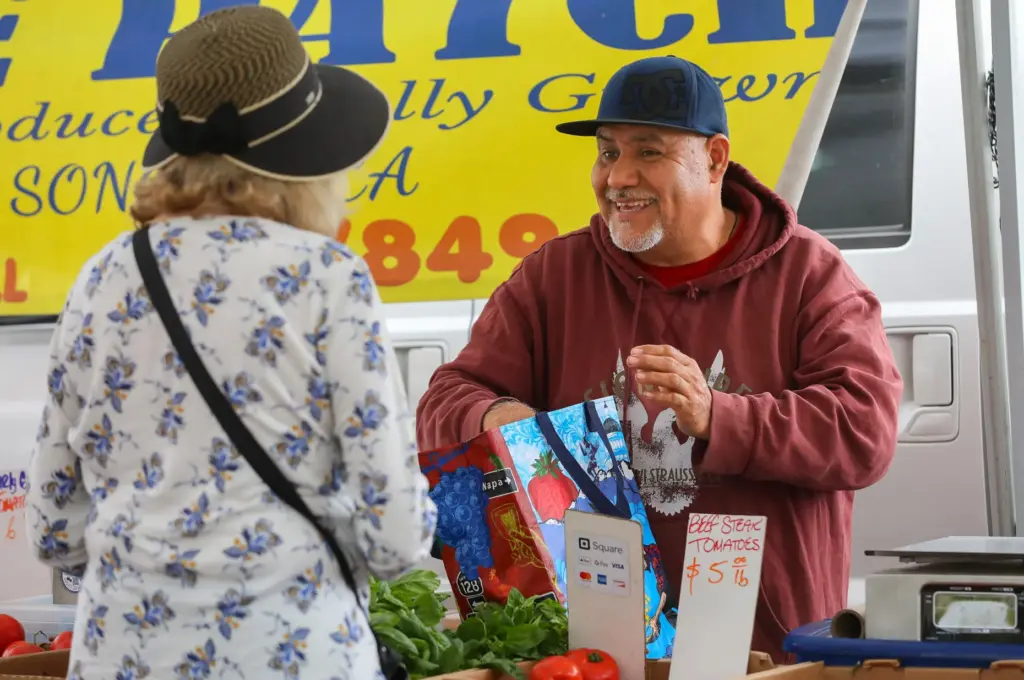 Fernando Calderon, right, owner of The Patch, packs Kathleen Eckert’s produce into a bag in his stall at the Santa Rosa Original Certified Farmers Market in Santa Rosa on Wednesday, July 22, 2026. (Christopher Chung/The Press Democrat)
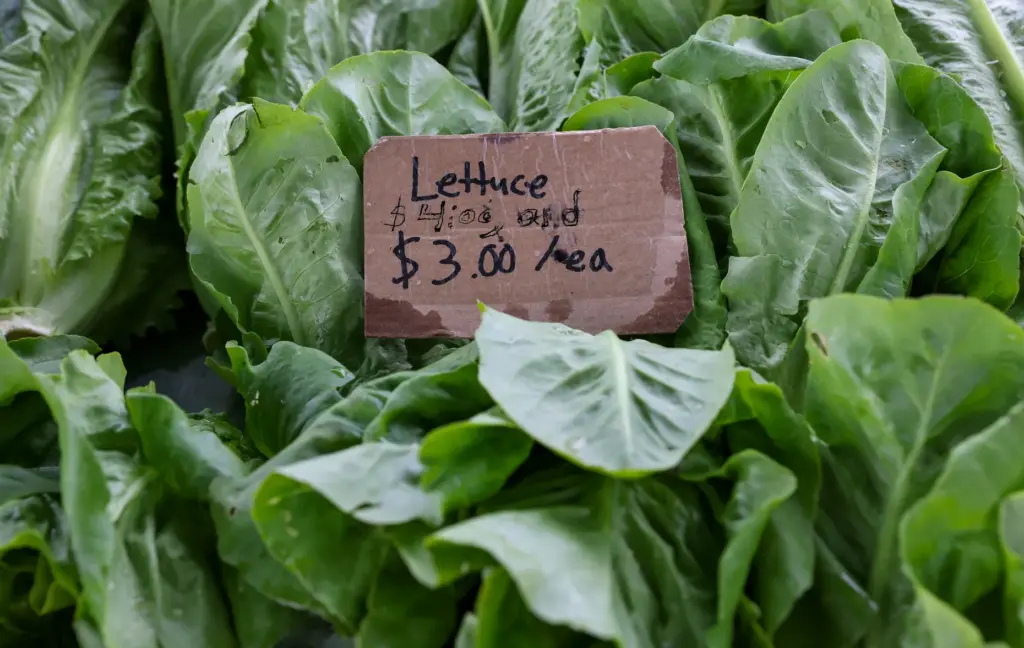 Lettuce for sale in the Alexander Family Farm stall at the Santa Rosa Original Certified Farmers Market in Santa Rosa on Wednesday, July 22, 2026. (Christopher Chung/The Press Democrat)
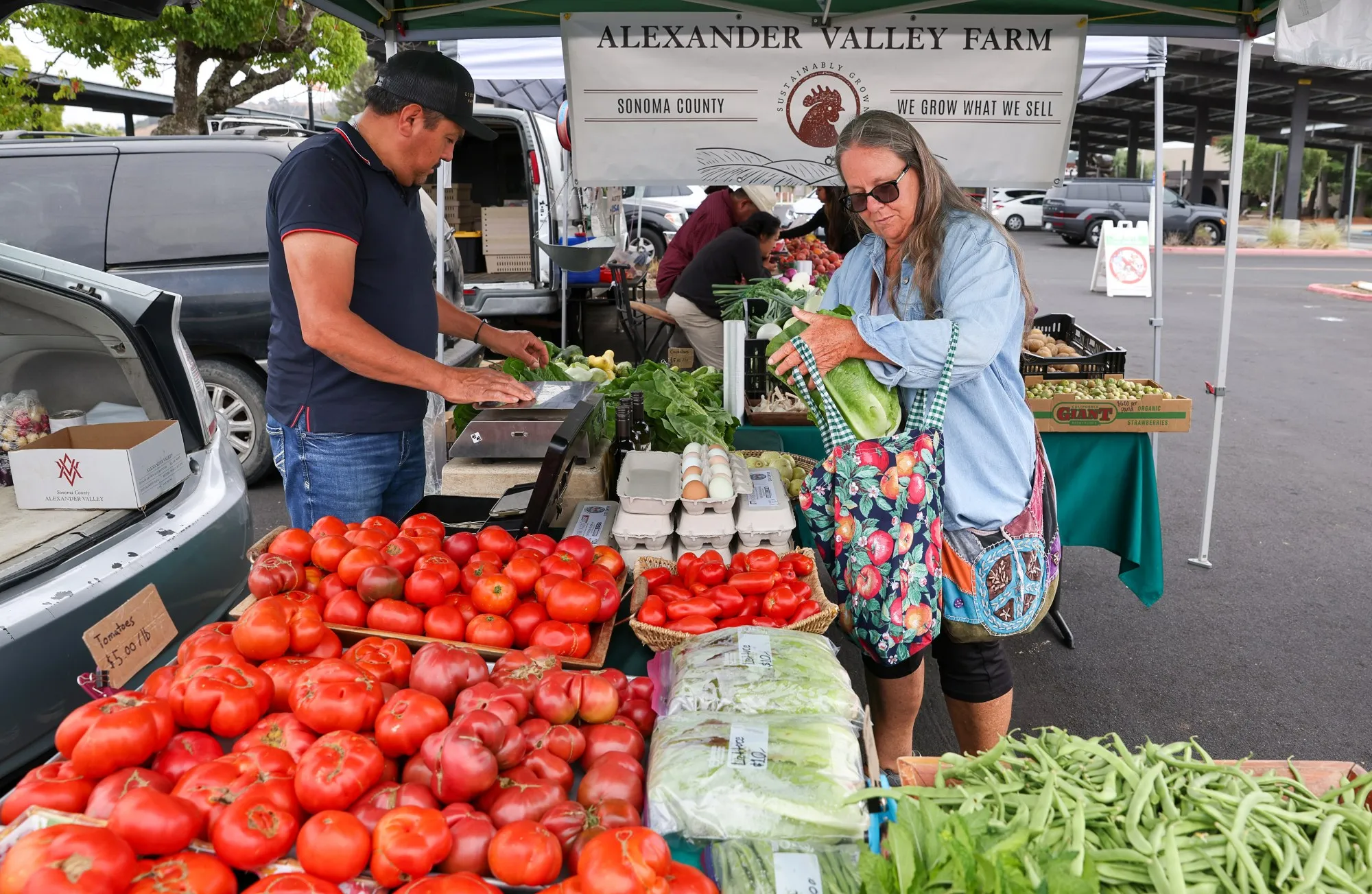
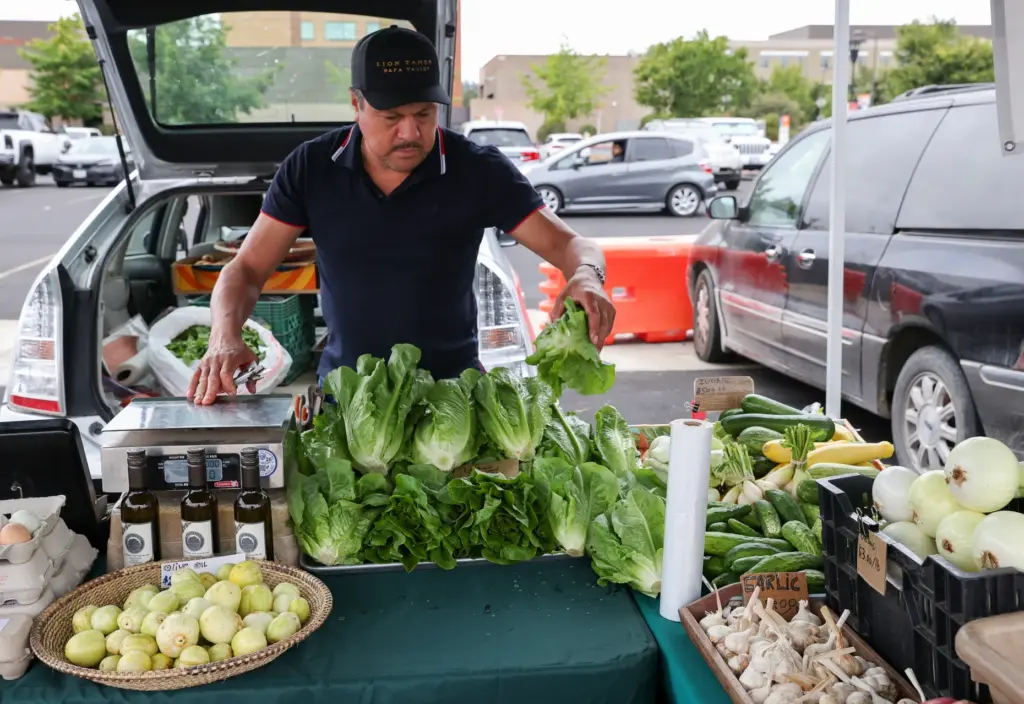 Javier Patino puts out more lettuce in the Alexander Valley Farm stall at the Santa Rosa Original Certified Farmers Market in Santa Rosa on Wednesday, July 22, 2026. (Christopher Chung/The Press Democrat)
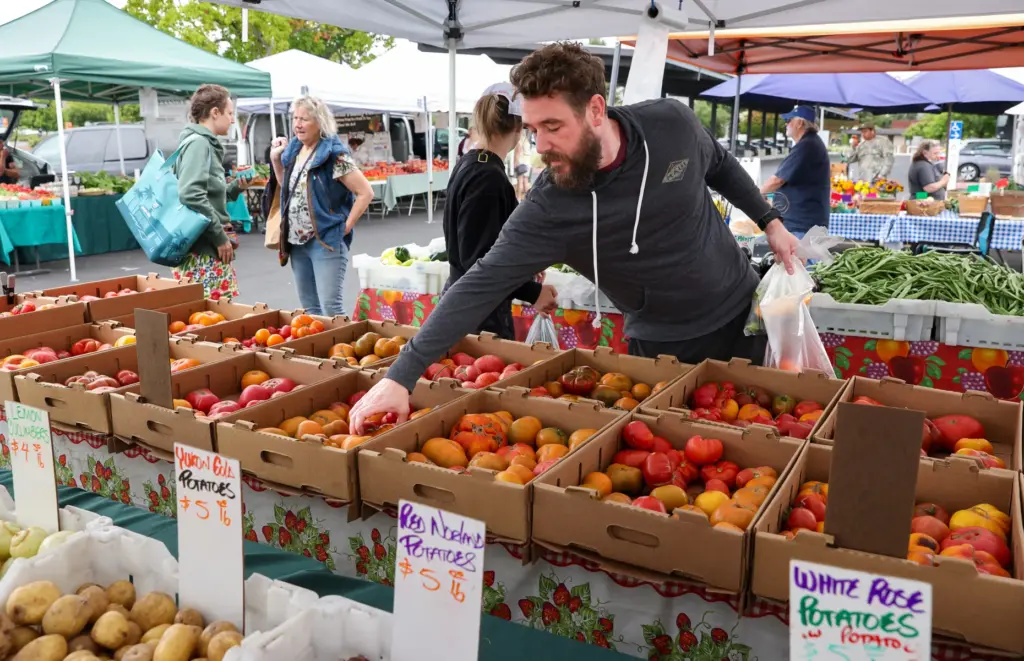 Bod Robinson picks out tomatoes in The Patch stall at Santa Rosa Original Certified Farmers Market in Santa Rosa on Wednesday, July 22, 2026. (Christopher Chung/The Press Democrat)
Lucy O’Dea, purchasing manager at FEED Cooperative — a food hub network of more than 50 farms — said some customers have reached out with concern about the outbreak.
RELATED: How Bay Area farmers markets became a symbol of downtown resilience
“No food is completely risk-free, but smaller supply chains allow for greater accountability and lower contamination risk,” O’Dea said. “We know who grows our food and exactly where it was grown; our farmers grow food not only for their communities but also for their own families. This is a great opportunity to ask questions about our supply chains: Where does your food come from, who grew it, and how?”
Will Holloway, co-owner at Longer Table Farm, said customer interest is typically good for business during such outbreaks. For example, when outbreaks affect romaine lettuce, “we tend to sell more romaine lettuce.” While he also saw an uptick in business at the farmer’s markets within the last week, he said he isn’t sure if it’s connected to the issue as people don’t necessarily flock to Sonoma County farmers’ markets to replenish their supply of iceberg lettuce.
Holloway emphasized that messaging around public health concerns should avoid “hysteria” as people should always wash their produce. “All the messaging from this administration is confusing at best,” he added.
Read more Malcolm-Jamal Warner’s widow opens up about his ‘unfair’ death
Public health officials advise Californians on risk
Although fresh produce like basil, raspberries, cilantro and lettuce have been identified as culprits in past outbreaks of cylcosporiasis, this time around health officials had initially focused on bagged iceberg lettuce as a likely source of the latest clusters.
On July 17, Taylor Farms announced a voluntary recall of shredded iceberg products sourced from Mexico and distributed to 27 states from June 29th thru July 16th. Taco Bell announced the removal of all Taylor Farms products from its restaurants the same day, “out of an abundance of caution.”
But two days later, on July 19, the Salinas-based company said that the Food and Drug Administration had made a mistake, and that a test that had supposedly determined one of the company’s iceberg lettuce products was contaminated with cyclospora had been a “false positive.”
“To be clear, at this moment, FDA has not identified a single positive product test result for cyclospora,” the company said.
Sonoma County Agricultural Commissioner Andrew Smith did not comment when asked how the local department of Agriculture, Weights & Measures monitors parasitic outbreaks and regulates local produce. He said outbreaks renew public awareness of food safety and rinsing produce before consumption, and wondered if local grocers saw “reductions in sales of Taylor Farms branded products.”
Taylor Farms did not immediately respond to questions about the safety of its products before publication.
Sonoma County Public Health spokesperson Sheri Cardo said July 22 that the parasite is not an emergency in California and is a manufacturer-related contamination potentially related to a product that has not been distributed in the state. Data collected by the U.S. Centers for Disease Control shows that of the 41 states reporting laboratory-confirmed illnesses, states in the Midwest and Northeast including Michigan, Ohio, New York and North Carolina have been the hardest hit.
Dr. Jessica August, chief of infectious diseases at Kaiser Permanente Santa Rosa, said the state is not seeing more than the usual number of cases of cyclosporiasis, compared to some states in the Midwest as of the most recent counts.
“There has never been a reported outbreak of cyclospora from our local farms,” August said. She said that while it’s good to “lean in” to purchasing vegetables from local producers, she recommended thoroughly washing all produce before handling and eating, including using a brush for cleaning, and to remove and discard outer leaves from lettuce plants.
Most people who contract the illness recover without treatment within a week, and cannot pass it to others, August added. However, people suffering from symptoms for more than one week should speak to a health provider about potential testing and treatment.
Staff Writer Natalie Hanson reports on business and agriculture for The Press Democrat. She can be reached at [email protected] or at 619-665-5887.
Read more With a historic 3 Michelin stars, a Mexican restaurant in San Francisco defies stereotypes
About the Author