It’s been a long, purposeful journey that has brought Christopher Nolan to his keenly anticipated version of Homer’s almighty “The Odyssey.”
Read more 3 dog-friendly Bay Area camping spots to scout out this summer
His 12-feature-film canon suggests the treasured British-American director has been building up to this grand spectacle, and that he’s the creative force with the guts and the know-how to do this Greek myth right.
From his first film — the award-winning B&W neo-noir “Following” — to the Oscar-winning “Oppenheimer,” cinema’s reigning filmmaking magician continues to produce thinking-persons’ crowd-pleasers.
“Odyssey,” with its estimated $250 million budget and status as the first major film shot entirely with 70mm IMAX cameras, looks to follow on that path. The R-rated film sets sail in theaters July 17.
Nolan’s track record is impeccable: He’s never made a bad movie, other “great” directors can’t lay claim to that. He’s a master showman with an innate ability to take full control of our senses, inviting us on intoxicating journeys through space, time, dreams, historical events — wherever a story leads us.
It’s appropriate that Nolan’s latest effort is “The Odyssey,” since the majority of his cinematic characters are on odysseys, searching and exploring and sussing out who they are. It all makes for unique, thoughtful, movie experiences that immerse us in such things as cerebral vortex science, fate, wormholes, forgotten memories and more.
You can also rely on Nolan films for key elements: a discussion about time and how we wish we could turn back the clocks to create a better present and tomorrow; a protagonist that is neither all good nor all bad; and the appearance of Michael Caine (just kidding). Maybe, just maybe, Oakland native Zendaya might become a Nolan regular now that she’s in “The Odyssey.” One can only hope.
In honor of Nolan — who now has a theater in San Francisco renamed for him — and “The Odyssey,” we look back at the films he’s made, ranking them in the order we like them most.
“Inception” (2010): Ingenious in concept (the notion of entering and architecting dreams and the inherent danger in doing so) and execution (scene after scene inspires child-like wonderment), Nolan’s grandiose piece of entertainment swallows you whole. Leonardo DiCaprio adds heart as Dom Cobb, a troubled leader of a dream team on a mission to enter and tinker around with the dreams of a man (Cillian Murphy) who’s heir to a wealthy and dying energy magnate. Heady stuff. It’s a movie lover’s ultimate all-you-can-eat buffet — a thriller, an ill-fated romance, a mindblower, and a parable about the treachery we face when we try to alter our pasts. You’ll be awed by its Escher-like effects, its confident audacity and how its many moving pieces crescendo for one of the best endings in film history. Hans Zimmer’s score and Wally Pfister’s cinematography are just as stirring and invigorating as Nolan’s premise. Favorite scenes: 1. The upside-down hotel sequence with Joseph Gordon-Levitt bouncing off walls; 2. Elliot Page discovering what an architect can do as a Paris street scene gets made into a visual sandwich. 3. The runaway train. 4. And … heck, there are too many to count.
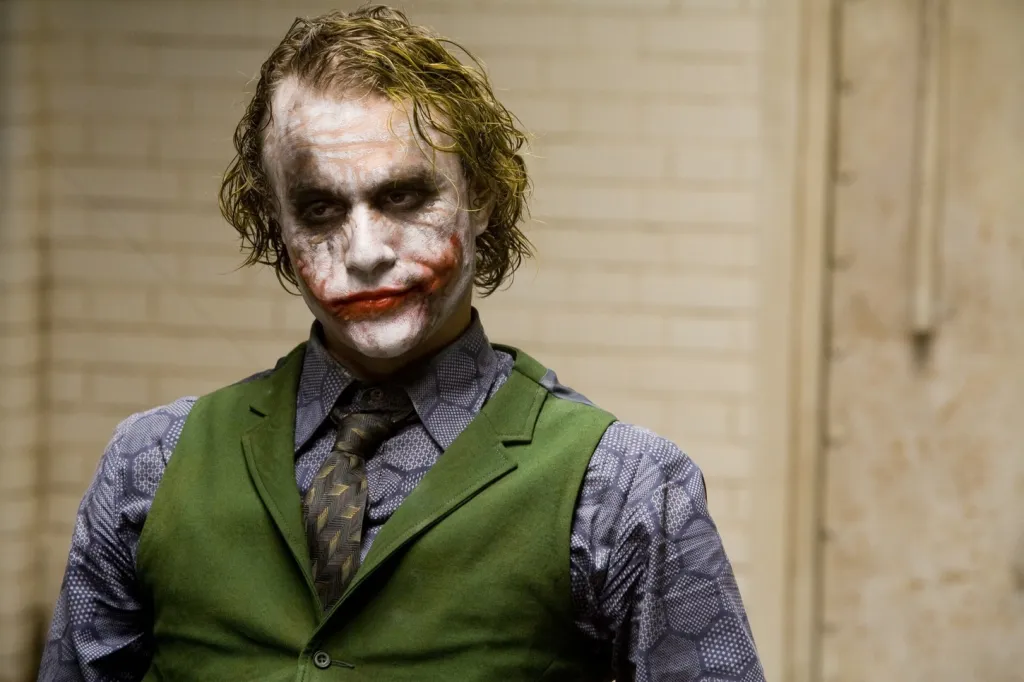
“The Dark Knight” (2008): “Batman Begins” was just an opening act for this main event, a dark crime saga noir that’s the definitive version of the Batman myth. Sorry, Matt Reeves and Tim Burton. The screenplay by Christopher Nolan and his brother Jonathan contains enough quotable lines to fill a notebook. Christian Bale is more confident as the caped crusader, and that could be because he squares off with a more formidable foe, the Joker (Heath Ledger in an iconic performance; the best villain turn from anyone in a comic-book-based film). The stakes are higher and major characters die as the Joker takes over Gotham City. Maggie Gyllenhaal replaces Katie Holmes as Bruce/Batman’s childhood crush and she gives Rachel a more seasoned bearing that fits the grim tone. Cupertino native Aaron Eckhart is well cast as a square-jawed DA hero who becomes Two-Face.
Incredibly, “The Dark Knight” is even more on the nose and relevant today, showing us how there are grays to morality and that heroes and villains aren’t all that much different. “Sometimes people deserve to have their faith rewarded,” Batman says. And the rewards in this film are plentiful. Favorite scenes: 1. The Joker, dressed as a nurse, blowing up Gotham General Hospital. 2. Every other scene with Ledger in it.
Read more List: Nude beaches in the Bay Area
“Interstellar” (2014): Easily Nolan’s most emotional work, it is also one of his longest (2 hours, 49 minutes) and needs to be given that it weaves in weighty ideals and science jargon about black holes and wormholes while giving high-fives to explorers and dreamers. Time, once again, factors heavily in this profound story about an apocalyptic Dust Bowl that threatens to wipe out the human species. Worried about the fate of his daughter and son, a rancher/former NASA pilot named Cooper (Matthew McConaughey) joins a small mission spearheaded by a professor (Michael Caine) designed to pinpoint which of three planets in another galaxy would be suitable for earthlings to relocate to. Cooper leaves behind his science-loving daughter Murph and his son and blasts off with the professor’s highly intelligent NASA scientist daughter (Anne Hathaway) and a handful of others. The mix of science, faith and love make this a particularly moving and masterful film of radical ideas. Jessica Chastain as an older version of Murph gives the film its strong emotional center. That “Interstellar” manages to be impressive in size, scope and scale yet intimate and poignant is an amazing feat. It is spectacular in every way. Favorite scenes: 1. The threat of crushing tidal waves on a planet. 2. Matt Damon as a scientist the astronauts meet on a planet. 3. Any scene between Chastain and McConaughey. They’ll leave you in tears.
“Memento” (2000): Whereas “Following” found Nolan testing the neo-noir waters, his second film finds him plunging right in. As with almost all of Nolan’s films, it plays artfully and creatively with time as a desperate man with no short-term memory (Guy Pearce) scurries around to piece together his shattered life. Effectively, it’s the cinematic equivalent of a jigsaw puzzle, and it moves in reverse at times as the tatted-out protagonist (each saying on his flesh bearing a clue) scans Polaroids he’s taken for clues to a truth that might just destroy him. It’s an ingenious film, and one of the finest neo-noirs ever made. Pearce’s performance is unwavering in its commitment. Favorite scenes: 1. The black-and-white flashbacks when Leonard shares a story about the insurance claim his older self investigated. 2. The final scene — which I’ll not give away.
“The Prestige” (2006): In this devilishly entertaining piece of high-brow entertainment — also one of Nolan’s most underrated films — two feuding magicians (Hugh Jackman and Christian Bale) try to one up the other in the aftermath of a gutting death that fuels their vengeance. Not only does Nolan draw from Jackman one of his best performances, the film itself is an absolute joy that revels in sleight-of-hand storytelling. It’s beautiful to watch and benefits from the additional star power of Scarlett Johansson, Rebecca Hall, Michael Caine and the late David Bowie. As one character says to another: “It’s very rare to see real magic.” This film is pure escapist movie magic. Favorite scenes: 1. The grand reveal when Bale’s Alfred Borden shares how he pulled off a baffling and impossible magic trick that’s stymied Jackman’s character for years. 2. When those “lights” turn on at Nikola Tesla’s (David Bowie) Colorado Springs estate.
“Oppenheimer” (2023): Despite some flaws — Florence Pugh’s Jean Tatlock character and Emily Blunt’s Kitty Oppenheimer get short shrift – this Oscar winner triumphs in key ways, primarily in its build-up when Robert Oppenheimer detonated the A-bomb in what became known as the Trinity Test. You simply don’t breathe while watching a perfectly directed scene that will go down as one of the best moments ever recorded on film. Cillian Murphy nabbed an Oscar for his haunted performance as the former UC Berkeley professor and physicist whose groundbreaking work led to one of the most frightening, formidable scientific discoveries in all of mankind. There is little doubt that the film loses some of its narrative steam when it shifts to Lewis Strauss’s political maneuvering (shot in B&W, a favorite of Nolan) and how he became a frenemy to Oppenheimer, but Robert Downey Jr. is such a master showman he keeps you riveted. Favorite scenes: 1. The Trinity Test. It sears into your brain forever. 2. A conversation between Oppenheimer and Albert Einstein (Tom Conti) — another time shift — at its end.
“Following” (1998): Filmed over a span of a year due to reported time and financial constraints, Nolan’s first feature foretells many of his signature trademarks: a love for B&W, neo-noir, anti-heroes and overlapping time elements. The Hitchcockian plot captivates from the get-go as a sort-of writer talks to someone off camera about his obsession for shadowing strangers. He claims he’s doing it all for “research” (yea, right). He shadows a handsome guy and then starts doing some very bad, bad things with him. Is he a mere pawn? Or is he happily shedding his unkempt looks to turn into someone else? Not saying. The lean psychological thriller liberally confuses and plays around with time, features the prerequisite femme fatale and keeps us off center and as uncertain as that spinning top from “Inception.” A first feature debut that stands up today. (Available to watch on Criterion Channel) Notable scenes: A shot of a Batman logo affixed to the protagonist’s apartment door, perhaps an ambitious calling card for what was yet to come from this brash, then 28-year-old filmmaker.
“The Dark Knight Rises (2012):” After the tremendous reception “The Dark Knight” received from audiences and critics alike, the conclusion of Nolan’s Batman saga proved to be a bit of a letdown. But it’s still decent, just not in the same league as the second film. Nolan’s more solemn final act attempts too much and doesn’t develop some key moments. On the good side, you get Anne Hathaway as an extra-crafty Catwoman and Joseph Gordon-Levitt as a more human and interesting Robin. Now for the bad stuff: The main villain Bane (Christian Bale) is a bit of a bust; a physically intimidating madman whose dialogue is muffled and who doesn’t have the same oomph or presence of Ledger’s Joker; it mars the film. The bigger problem, though, comes in a character played by Marion Cotillard, a duplicitous figure who takes over the reins of the film later. Regardless of that, there’s much to enjoy including that Alfred-Batman relationship and the frisky one between Batman and Catwoman. Favorite scenes: 1. The blowing up of a football stadium. 2. Bruce Wayne finally escapes the pit.
“Tenet” (2020): Sometimes when watching a Nolan movie, you just want to shout out: “Speak up” or “Enunciate already.” That’s particularly true with this thought-provoker that plays around with time and deals with hardcore cerebral ideas that almost require that you have a degree in physics to figure out. But it is worth your focused concentration since it entertains in a James Bond way, with the notion that World War III might be on the future horizon. The sound and score do obscure some of the dialogue; a quick fix is just use the subtitles. I did. John David Washington as The Protagonist and Robert Pattinson (who in a bit of irony went on to play The Batman) as his assistant look dapper as they wrestle with time inversion and tangle with a brutish Russian oligarch (Kenneth Branagh) who’s amassing a deadly power. What makes “Tenet” worthwhile, beside that score from Ludwig Göransson (replacing Zimmer, who was busy with “Dune”), is its sleek visual look, spectacular chase scenes and its heady scientific talk that gets layered on way too thick at times. It’s likely to make your head ache, but that’s not entirely a bad thing. Favorite scenes: 1.That gripping opening terrorist attack at a Ukrainian opera house. 2. A wild car chase in which inverted time makes cars go reverse and forward; it’s an astonishing and exhilarating feat.
“Dunkirk”: Nolan’s taut (at 1 hour, 46 minutes, it’s one of his shortest) WWII re-enactment of a pivotal battle designs all of its time-framed action around a broad swath of characters. For that reason alone it suffers from us not feeling entirely invested in who these characters are. That said, Nolan does an amazing job at illustrating just how crucial time factored into this battle. It’s a marvel on the technical level, from the editing down to the cinematography. Favorite scenes: 1. Farrie’s (Tom Hardy) daring aerial acrobatics to help save Allied lives. It’ll have you gnashing your teeth. 2. And the aerial attack on an Allied medical ship.
“Insomnia” (2002): Audiences in the early 2000s queued up for a rash of serial killer thrillers; some were decent and others absolutely wretched as they tried to tap into the popularity of “The Silence of the Lambs” and “American Psycho” fashion. Nolan’s adaptation of a killer 1997 Norwegian thriller of the same name (it starred Stellan Skarsgard) was expected to be like those films. We got something else instead, a cerebral cat-and-mouse thriller with Al Pacino as a sleep-deprived Los Angeles detective who’s feeling the heat of an IA investigation. While chasing after the killer of a teen-aged killer in Alaska, he accidentally shoots and kills his partner. There isn’t much of a mystery; the killer’s identity gets revealed early on, with Robin Williams playing against type. (He’s good.) What makes the film compelling is how Pacino’s Will Dormer and Williams’ Walter Finch toy with each other over their pasts that are consuming them both. Favorite scenes: A foot chase of the killer in a dense fog; Wally Pfister’s stunning cinematography mirrors the moodiness of Nolan’s themes and storylines.
“Batman Begins” (2005): The weakest in Nolan’s Batman trilogy, this one’s best viewed as a prelude to Nolan’s landmark caped crusader film, “The Dark Knight.” It’s OK overall and serves to set the dark superhero tone with a psychologically damaged Bruce Wayne (Christian Bale) testing out martial arts skills in Bhutan under the tutelage of Henri Duchard (Laim Neeson) before returning to Wayne Manor. The mentor-student dynamic strikes the right chord, but the best scenes — besides when the Batmobile hits the road — occur between Bruce/Batman and Alfred (Michael Caine). They’re funny and sweet, and give the film its heart. On the downside, the Scarecrow (Cillian Murphy) isn’t fleshed out enough and the chemistry between Bale and Katie Holmes, as an assistant DA and the childhood friend of Bruce’s, falls flat. Favorite scene: When Bruce/Batman turns to Alfred, who’s been tasked with driving the Batmobile for the first time, and asks: “Can you drive a stick?”
Read more Cyclosporiasis: What to know about the diarrhea outbreak, Taco Bell and California
About the Author