Ahead of the June primary election, the Bay Area News Group compiled a list of questions to pose to the California insurance commissioner candidates. You can find the full questionnaire below. Questionnaires may have been edited for spelling, grammar and length.
Read more Kyle Busch passed out in racing simulator before dying in hospital
You can read our endorsement in this race here.
To read our endorsements for other important Bay Area races click here.
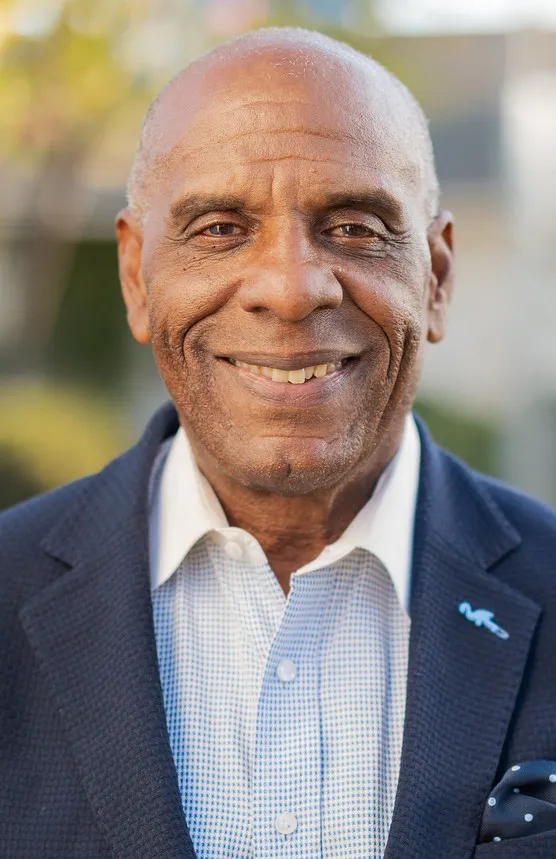
Name: Steven Bradford
Current job title: Retired State Senator
Date of birth: January 12, 1960
Political party affiliation: Democrat
Other political positions held: State Senate, State Assembly, Gardena City Council
City where you reside: Gardena
What are the top three problems you’re seeking to solve if elected?
Insurance availability and affordability: Too many Californians are struggling to even get insurance as companies leave the state at a rapid and unsustainable pace. Disaster readiness: For many Californians, their home represents their entire life savings, and losing insurance coverage means living one disaster away from financial ruin. Consumer protection: Insurance only works if companies follow the law and honor their commitments. As insurance commissioner, I will enforce consumer protection laws, investigate unfair practices, respond quickly to complaints and ensure claims are handled fairly and promptly.
Why are you uniquely qualified to solve these problems?
After nearly 27 years as a local elected official and state legislator, I am uniquely qualified to deliver real change to working families across California. This experience directly translates to the office of insurance commissioner, where I will be solely focused on creating a fair and stable insurance system that protects working families. I have a proven record of building consensus on tough issues, especially from my time on the Insurance Committee, and I am confident that I will continue to deliver results for hard-working Californians.
What differentiates you from your most serious competitors for this seat?
What sets me apart is the depth and breadth of my experience serving Californians at every level of government. I have spent nearly three decades in public service, beginning on the Gardena City Council, where I helped lead my city out of financial distress and restore economic stability. From there, I served in both the state Assembly and the state Senate, working on issues that directly impact people’s daily lives, from health care and public safety to energy, workers’ rights and economic development. That combination of local and statewide experience matters.
What did Ricardo Lara do right as insurance commissioner?
He recognized that the insurance crisis is being driven by real factors like increasing wildfire risk and rising rebuilding costs, and that ignoring those realities would only make things worse. His Sustainable Insurance Strategy reflects an effort to address those pressures while keeping insurers in the market so consumers still have access to coverage. He also took steps to try to strike a balance by allowing rates to better reflect risk while requiring insurers to expand coverage and participate more broadly across the state. That approach is an important starting point for stabilizing the market.
In what ways did Ricardo Lara fail as insurance commissioner?
The challenges we’re facing today have been building for years, driven by climate change, rising costs and structural issues in our system. That includes Proposition 103, which has played an important role in protecting consumers, but has also, at times, limited the flexibility commissioners need to respond quickly to a changing and more volatile risk environment. Where I believe there is room for improvement is in adapting our system more quickly and transparently to these new realities. We need to modernize aspects of our regulatory framework, including how rates are reviewed and approved, while still maintaining strong consumer protections.
As of today, how much has your campaign accepted from insurance companies?
I haven’t taken contributions from insurance companies in this race. I’ve built my career on independence and integrity, and no contribution, from any source, will influence my decisions or my commitment to doing what is right for California consumers. Throughout my time in public service, I’ve demonstrated that I will stand up to powerful interests when necessary and always put working families first. As insurance commissioner, my responsibility will be to the people of California, not to any industry. I will hold insurers accountable, enforce the law, and make decisions based on fairness and what best serves the public interest.
Do California homeowners have a right to insurance?
Yes, I believe California homeowners should have a fair and meaningful opportunity to obtain insurance. For most families, their home is their largest investment and represents years of hard work and sacrifice. When people cannot insure that investment, they are one natural disaster away from losing everything. Declaring a “right” to insurance doesn’t help if the market is broken and coverage is unavailable or unaffordable. My approach is to restore a stable insurance marketplace where companies are willing to operate in California, while ensuring strong consumer protections so coverage is fair and accessible.
Should homeowners in lower risk areas subsidize high-risk homes? Why or why not?
There does have to be some level of shared responsibility to ensure that communities are not simply abandoned and that people can continue to live in parts of California that have long been established. However, homeowners in lower-risk areas should not feel like they are being asked to carry an unlimited burden without accountability. I believe any approach to risk-sharing must be paired with strong incentives for communities to reduce risk and clear rules so people understand how costs are being distributed. We need to protect access to insurance while also encouraging safer, more resilient communities across the state.
In Dec. 2024, Commissioner Lara issued a regulation requiring that insurers wanting to do business in the state have to provide comprehensive policies to homeowners in fire-prone areas. His rule was not limited to already-built homes. Do you agree with that rule? Would you require that insurance companies provide comprehensive policies to newly-built homes in fire-prone areas?
We cannot allow entire communities, especially those in fire-prone areas, to be abandoned by the insurance market. If insurers want to do business in California, there has to be some expectation that they serve the full range of Californians, including those facing higher risk. That said, any requirement like this has to be part of a broader approach that keeps the market stable and ensures companies are willing to stay and compete in our state. When it comes to newly built homes in high-risk areas, I believe coverage should be tied to strong, enforceable wildfire mitigation and resilience standards.
Do you support requiring insurance companies to cover homeowners who participate in community wildfire mitigation efforts that meet state standards?
Yes, I do support that approach. If homeowners and communities are taking proactive steps to reduce wildfire risk and are meeting clear, state-established mitigation standards, they should absolutely be rewarded with access to insurance coverage. That kind of policy aligns incentives in the right way by encouraging people to invest in safety and resilience, while also helping insurers better manage and price risk.
The climate models used by insurance companies are said to be a black box. How are you going to ensure the rate increases used by the newly approved climate models are going to be fair and accurate?
Transparency has to be the foundation of any system that allows insurers to use climate models to justify rate increases. Right now, too many of these models operate as a “black box” and that is simply not acceptable when Californians are being asked to pay more. As insurance commissioner, I will require full transparency into the models being used. I will also push for independent review and public accountability at every step of the process, including strengthening oversight within the Department of Insurance and making sure consumer advocates have real access to evaluate these models.
What state or country offers California a proof of concept, if any? Or are the regulations you’re seeking to apply untested by other states or countries?
I believe it’s important to learn from other states and countries, but we also have to recognize that California’s situation is unique. States like Florida and countries like Australia have faced serious climate-driven insurance challenges, and there are lessons to be learned from how they handle risk, mitigation and market stability. That said, I’m not interested in copying any one model or approach. I plan to study what works, especially where transparency and resilience are prioritized, and adapt those lessons to California’s needs.
Insurance affordability will functionally encourage or discourage new construction. In what ways, if at all, would you use this office to discourage construction in predictably dangerous (flammable, floodable, etc) areas?
I would work to ensure that insurance pricing and availability accurately reflect real risk. If an area is predictably high-risk for wildfire or flooding, that risk needs to be clearly communicated, so decisions about building there are made with full transparency and responsibility. I would also strongly encourage building in a more resilient way, including by supporting policies where access to coverage is tied to meeting strict mitigation and safety standards, and where communities are investing in wildfire prevention, flood control and infrastructure. The goal is not to punish development, but to discourage unsafe building practices and promote responsible growth.
Assuming your goal is to get people off the FAIR Plan, explain how. If it’s not your goal, explain why not.
Yes, my goal is absolutely to get people off the FAIR Plan. My top priority is to stabilize and restore a competitive private insurance market so more homeowners have access to comprehensive coverage and real choices, not just a fallback option. In the meantime, we have to make sure the FAIR Plan is working for the people who depend on it today. That means improving transparency and accountability in how claims are handled so policyholders are treated fairly and disputes are resolved quickly.
What other information should we know about your vision and competency for this office?
My vision for this office is grounded in experience and a very clear understanding of what’s at stake for California families. For too many people, their home represents their entire life savings, and if they can’t insure it, they are one disaster away from financial ruin. In terms of competency, I bring nearly three decades of public service at the local and state level, including leadership roles on major committees like Energy and Utilities, Banking and Financial Institutions, Labor and Public Safety. I’ve built a reputation for doing the homework, engaging with people from all perspectives, and solving complex problems.
Read more Bay Area News Group boys athlete of the week: Kolby Breining, Dublin baseball
About the Author