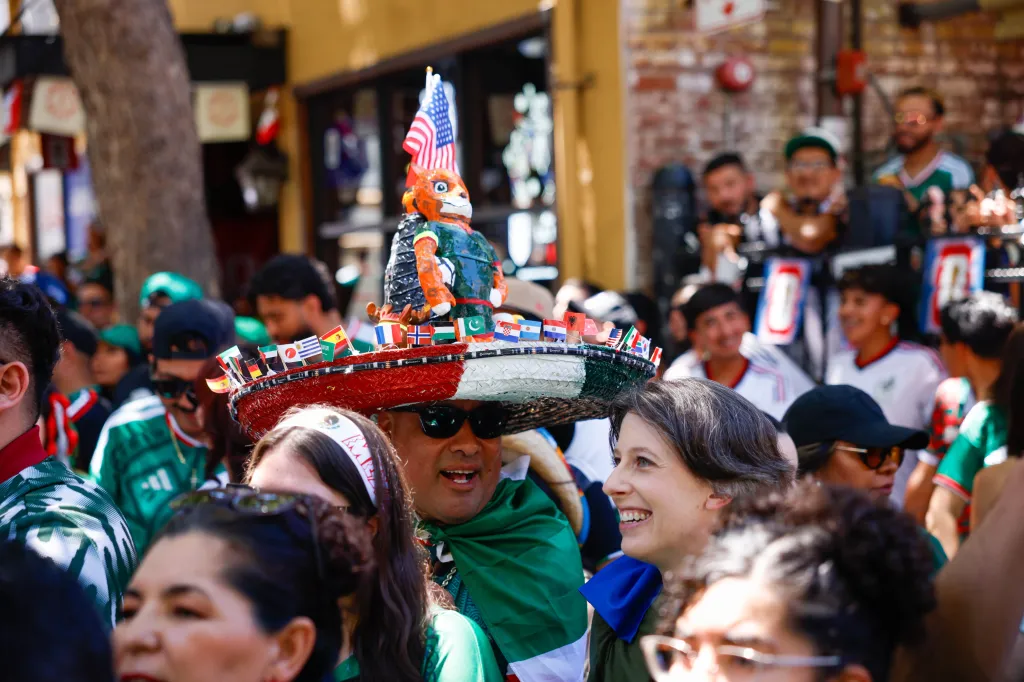
This summer, World Cup teams and fans are traveling from city to city as the globe’s biggest sporting event unfolds in 16 cities from Canada to Mexico.
Read more How Andrés Cantor went from San Marino High to the unmistakable voice of soccer
Along with the joy and celebration of the world’s game? Some public health risks, experts told this news organization.
Matches kick off in the South Bay when Qatar faces Switzerland on Saturday at Santa Clara’s Levi’s Stadium. But fans have packed Bay Area watch parties and official “fan zones” since Thursday, from Richmond to San Francisco, Oakland and San Jose.
All of these people coming together means local public health officials expect a busy month tracking infectious diseases. They’re urging attendees to take basic precautions like hand-washing and masking up when appropriate.
“We really are an invisible shield, while everyone’s out enjoying the game,” said Dr. Monika Roy, deputy public health officer for the Santa Clara County Public Health Department. “There’s a lot of folks working behind the scenes to help keep them safe.”
Behind the scenes, public health officials in Santa Clara County, San Francisco and the East Bay have alerted hospitals and doctors to potential health risks, and they’re encouraging providers to begin tracking patterns in symptoms that could indicate clusters of cases or outbreaks.
“We don’t know what could happen, but we have to be prepared,” said Yvonne Maldonado, professor of infectious diseases and global health at Stanford Medicine.
The main risks are familiar viruses like influenza, also known as the flu, said Shruti Gohil, professor of infectious diseases at UC Irvine School of Medicine. COVID-19 continues to linger. The U.S. is breaking generational records of measles cases as more residents decline to vaccinate themselves or their children. In the last decade, measles outbreaks in California have been linked to international travelers arriving in the Golden State.
And outbreaks of stomach bugs like norovirus are “always a big concern” at sports events like the World Cup, said Stanford’s Maldonado.
Norovirus, the top cause of vomiting, diarrhea and stomach illness in the U.S., is highly contagious and spreads when people share food or liquids. You can also get norovirus by touching a surface and then touching your unwashed hands to your mouth, according to the Centers for Disease Control and Prevention.
Read more Police detail stolen car hit-and-run crash that killed San Jose bicyclist
A norovirus outbreak at the 2026 Winter Olympics in Milan this winter at the athletes’ village forced the delay of a hockey game. Authorities warned competitors to steer clear of salad dressing and condiments in shared areas.
World Cup attendees in the Bay Area should wash their hands often and avoid foods or condiments available in communal areas, Gohil said.
“Simple hand hygiene can go a long, long way,” she said.
To prevent food contamination in general, Santa Clara County is also ramping up inspections of food vendors and helping operators get permits if needed, Roy said.
There’s always the potential of more unusual disease outbreaks, as well. When the public health department in Santa Clara County issued an advisory of the World Cup last week, top of mind was the fast-evolving Ebola outbreak in the Democratic Republic of the Congo and Uganda, which has the attention of the world public health community.
No cases of the deadly virus have been located in the U.S. as of Friday afternoon, and experts say the risk to the American public is low. Spread of Ebola requires direct contact with the bodily fluids of an infected person, limiting its contagiousness.
Even so, the public health department urged health providers to suspect the virus in symptomatic people who traveled to certain East or Central African nations in the last three weeks. Providers should immediately isolate people suspected of infection, the department said, and notify public health authorities.
“We are currently, as are all health jurisdictions across the country, monitoring returning travelers,” Roy said in an interview.
Andes hantavirus, which spread on a cruise ship last month in the Atlantic Ocean, likely won’t pose much of a risk to World Cup revelers in the Bay Area either, Roy and other experts told this news organization. No cases of the virus have been confirmed in the U.S. This type of hantavirus spreads between people through prolonged, close contact with a sick person.
“The likelihood of either of those is low,” said Shruti Gohil, professor of infectious diseases at UC Irvine School of Medicine. “I would worry less about that and more of the other stuff.”
Read more San Jose: Authorities release new details on man who died after shooting woman in Kaiser parking lot
About the Author