With Cesar Chavez’s name still visible on landmarks, public facilities and artwork in San Jose, the city is finally taking the first steps to renaming them since sexual allegations surfaced against the iconic labor leader.
Read more Voters approve new parcel tax for open space in Santa Clara County
San Jose has announced a timeline for gathering community input to rename them following a recent New York Times investigation that revealed decades of alleged sexual abuse against women and girls.
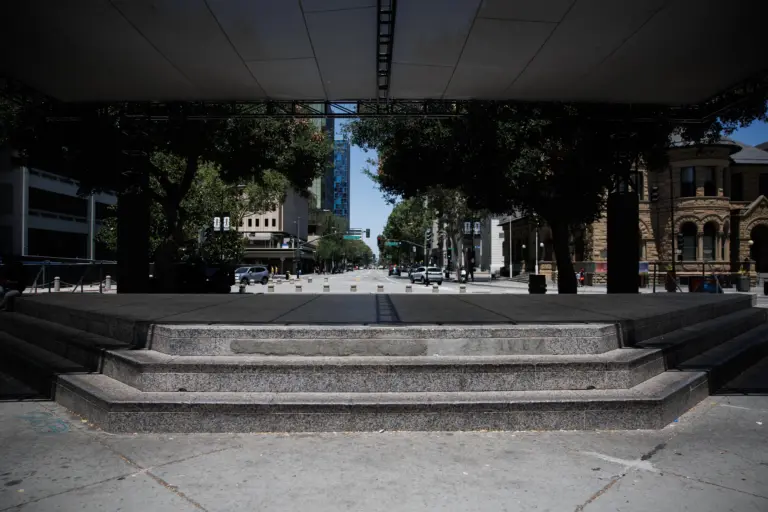
This includes the city’s most prominent landmark bearing his name, Plaza de Cesar Chavez in downtown San Jose, where the city has already covered his name on the park’s stage and removed a dedicated plaque. City officials will host two community listening sessions on June 15 and June 17, followed by a public meeting on June 24, to share the formal renaming process and debut a community survey. Residents can RSVP to attend online.
The first community listening session will take place on June 15, between 6 and 8 p.m. at the Center for Employment Training at 701 Vine Street. The second will be held on June 17, from 6 to 8 p.m. at the Mayfair Community Center at 2039 Kammerer Avenue. Meanwhile, the public meeting detailing the renaming process and community survey will take place on Wednesday, June 24, from 6 to 8 p.m. at the Leininger Center at 1300 Senter Road.
Following the meetings, the city will launch the first public survey specifically focused on gathering new name suggestions from the community. In July, if necessary, a second city-sponsored public meeting will be planned. From July to August, the city plans to release a “ranked choice” survey to allow participants to rank the pre-vetted name options in order of preference.
By September, the Parks and Recreation Commission is scheduled to meet to review a staff report that will incorporate the survey results and community input. The commission’s recommendation will then be presented to the City Council for final consideration and official adoption in the fall, making the new name official by the end of the year.
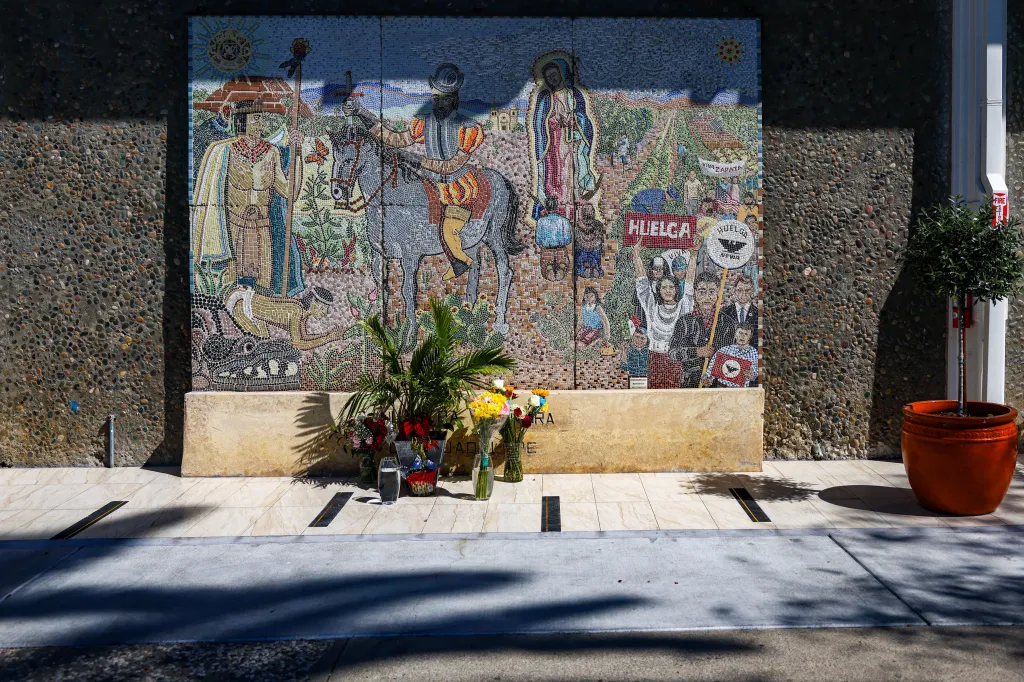
Beyond the downtown plaza, the city’s inventory includes several other sites. Public art at Backesto Park, Plata Arroyo Park, Biblioteca Latinoamericana, the Gardner Center, and the Mayfair Community Center are all slated for upcoming art committee reviews.
Meanwhile on the East Side — the heart of the city’s Latino community — District 5 street banners, the Mayfair banquet hall sign, and installations at Emma Prusch Park and the Washington United site already have been removed or covered, with remaining Mayfair directional signs scheduled for replacement this month. Staff determined that a small community tile at the Mexican Heritage Plaza requires no further action.
Raymond Costantino, Deputy Director of the Parks, Recreation, and Neighborhood Services Department, noted that while an initial list has been vetted, it is a working inventory that remains ongoing.
The planned meetings come after the city’s rules committee in March ordered a full accounting of city properties or landmarks bearing Chavez’s name or likeness. Staff was asked to map out the legal steps required for renaming and design a community process prioritizing Latino and farmworker communities.
Read more Trump’s granddaughter — his ‘new Ivanka’ — dismisses boos at NBA Finals
The effort to rename landmarks in a city so central to the farmworker labor movement was pushed last March in a joint memorandum by Councilmembers Peter Ortiz, Pamela Campos, Anthony Tordillos, Domingo Candelas, and Mayor Matt Mahan.
San Jose holds deep ties to the labor leader.
Born in Arizona, Chavez moved frequently with his farmworker family before settling in the city’s Mayfair neighborhood on the east side, where relatives lived. After serving in the Navy, he married and returned to Mayfair.
By the 1960s, he had relocated to Kern County in the Central Valley, where he co-founded the United Farm Workers union alongside Dolores Huerta, herself a celebrated labor leader. The New York Times investigation alleged that Chavez sexually abused Huerta and fathered two of her children.
While no specific replacement name suggestions have been formally finalized in city documents, Huerta’s name has been frequently raised in other California cities reckoning with the fallout of the Chavez scandal.
Other groups have advocated for honoring the critical role of Filipino farmworkers in the labor movement. This includes leaders Larry Itliong and Philip Vera Cruz, who famously spearheaded the Delano grape strikes in the 1960s.
The local push aligns with broader state actions; earlier this year, California Gov. Gavin Newsom signed a bill officially renaming the March 31 state holiday to “Farmworkers Day.”
Whatever the ultimate renaming choice is, councilmembers emphasized that victims should remain at the core of the city’s response.
“At the center of our conversation must be survivors,” Ortiz, who co-sponsored the memo, previously said. “Our responsibility is to ensure that accountability, dignity and healing guide how we move forward.”
Read more Japan-based concrete firm acquires San Jose properties
About the Author