Continuing a long trend of Silicon Valley voters supporting environmental issues, Measure D, a parcel tax to raise $17 million a year to buy new open space preserves, build trails and reduce fire danger across large swaths of Santa Clara County, has passed.
Read more Trump’s granddaughter — his ‘new Ivanka’ — dismisses boos at NBA Finals
The measure, the most prominent environmental ballot question in California during the June 2 primary election, led Tuesday by 55% to 45% — roughly 28,000 votes, with Santa Clara County elections officials estimating there were only about 6,500 ballots left to count.
Environmental and open space groups claimed victory Tuesday and called the tax, which needed 50% to pass, a game-changing event for the Santa Clara Valley Open Space Authority, a government agency based in San Jose whose budget will be more than doubled by the new funding.
“Residents made it clear that caring for nature is a shared priority,” said Kathy Sutherland, chairwoman of the open space authority board. “Their support reflects an understanding of the urgency and importance of protecting our natural lands and a deep trust in our organization to meet that need.”
Taxpayer activists who had opposed the measure said they understand the appeal of saving open space and wildlife, but noted new taxes raise the cost of living in an already expensive area.
“A lot of people can’t afford to stay here when they retire,” said Mark Hinkle, president of the Silicon Valley Taxpayers Association. “They are off to Texas, Nevada, Utah. Last time I looked at my property tax bill there were 19 different line items. This will be 20. Each one doesn’t seem like much, but then when you add them up you say “wait this is $10,000!”
The measure, placed on the ballot by the Santa Clara Valley Open Space Authority, was endorsed by a wide range of elected officials, including all five members of the Santa Clara County Board of Supervisors; Congressmembers Ro Khanna, Sam Liccardo, Zoe Lofgren and Jimmy Panetta; the League of Women Voters; the South Bay AFL-CIO Labor Council; and a long list of environmental groups.
“We are thrilled,” said Gordon Clark, president of the Peninsula Open Space Trust, a non-profit environmental group based in Palo Alto that funded much of the Yes on D campaign.
The trust buys land in Santa Clara and San Mateo counties, using private donations, often from large foundations, philanthropists, tech leaders and state agencies, and sells it at or below cost to agencies like the Santa Clara Valley Open Space Authority.
“Having the public support Measure D to fund the work we are doing together ensures that the projects we take on today will deliver the environmental, economic and social benefits we all want,” Clark said. “Like clean air, clean water, places to connect with nature and each other, and local farms.”
Measure D will impose an annual tax of 2 cents per square foot of buildings on property owners within the Santa Clara Valley Open Space Authority’s boundaries, which include San Jose, Milpitas, Santa Clara, Campbell, Morgan Hill and unincorporated areas of Santa Clara County, making up about 70% of the county’s population.
The owner of a typical 1,600-square-foot home in those areas would pay $32 a year. Owners of a 2,500-square-foot home would pay $50 a year. Seniors age 65 and over could apply for an exemption, as could low-income residents on Supplemental Security Income, or SSI.
Read more Japan-based concrete firm acquires San Jose properties
It does not affect other parts of the county, such as Palo Alto, Los Gatos, Mountain View or Sunnyvale, most of which are within the boundary of the Midpeninsula Regional Open Space District, an agency based in Los Altos.
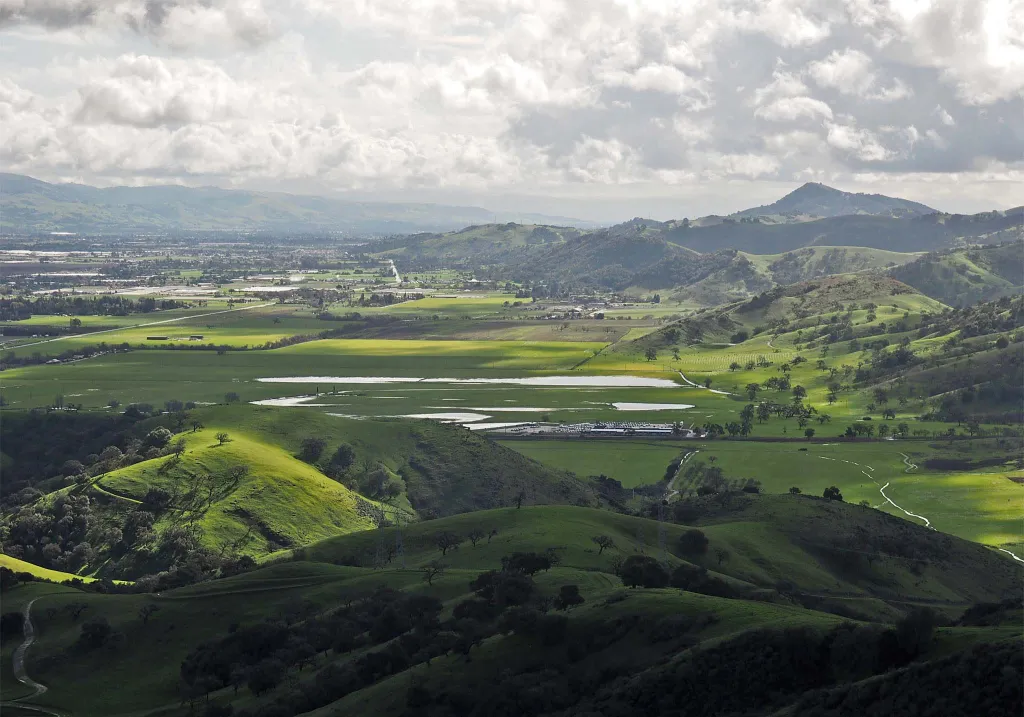
The Santa Clara Valley Open Space Authority has protected about 30,000 acres since it was established by state lawmakers in 1994. Much of that property is located in Santa Clara Valley’s eastern foothills and the rustic areas of Coyote Valley between San Jose and Morgan Hill.
The agency’s current operating budget is $12.2 million, much of it derived from two earlier parcel tax measures that voters passed in 1996 and 2014. By adding another $17 million a year, agency officials say, they will be able to hire more rangers, buy more land, build more trails and complete more projects to reduce fire danger.
In 2014, the agency’s four preserves had 150,000 visitors. That doubled to 300,000 visitors by 2020. Last year, there were 500,000. By 2041, an estimated 1 million people will hike, bike and ride horses in its preserves, according to the agency.
Measure D was one of several environmental measures on local ballots Tuesday across California. Among the others:
– In Contra Costa County, Measure A, which will extend Contra Costa County’s Urban Limit Line through 2051, and continue rules requiring at least 65% of that county’s land to be zoned for open space, farms, parks and other non-urban uses, also passed. It was was leading 70-30% Tuesday, needing 50% to pass.
– In Monterey Park, in Los Angeles County, voters approved the state’s first permanent ban on the construction of data centers. By 88%-12%, Measure NDC passed, as voters and city councilmembers voiced concerns about water use, electricity use and utility bill prices following a proposal by investors to build a 250,000-square-foot data center there that was later withdrawn.
– In the North Bay, Sonoma County voters approved Measure B to extend a quarter-cent sales tax for another 30 years to fund the Sonoma-Marin Area Rail Transit District, or SMART train system. It led 72%-28% Tuesday.
– In Yolo County, a plan to build an 1,800-unit housing project on 498 acres of farmland on the north side of Davis was trailing in a close race. Measure D, to approve the project, called Village Farms, was behind 52%-48%. The measure was a face-off between supporters who said the community needed more housing and opponents who raised concerns about traffic, wildlife and polluted groundwater from a nearby former landfill.
– In San Luis Obispo County, voters in Los Osos near Morro Bay were narrowly approving Measure B-26, a parcel tax of $185 per parcel per year for 15 years, to convert a former school site into a new community park with sports fields, open space, trails, and pickleball courts. The community was divided over whether the 12-acre site should become a park or be developed into a new downtown district. The measure led 51-49 Tuesday.
Read more Police arrest man in Valley Fair sex assault, link him to other attacks
About the Author