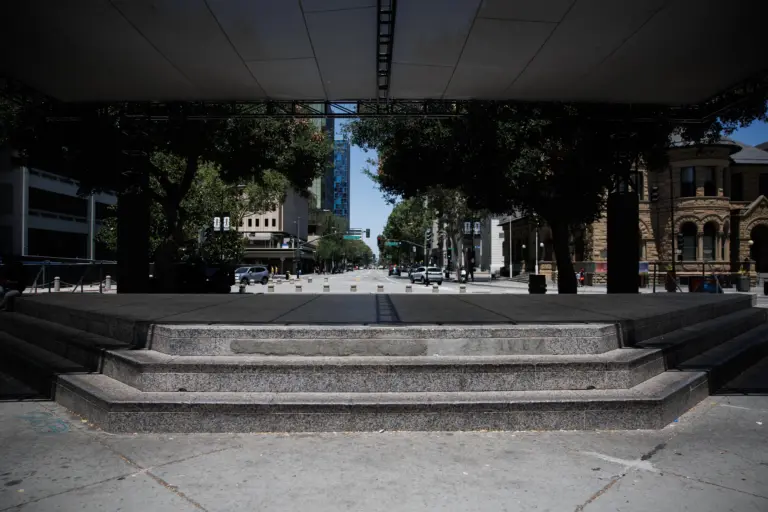
Every downtown in the Bay Area has its origin story, and one of the strangest is that of Crockett, an unincorporated town hiding under a bridge that also happened to be part of a late experiment in utopian society.
Crockett’s main employer through the 20th century was the California and Hawaiian Sugar Company, whose local refinery gave the community its nickname “Sugar Town” and also the persistent rumors of underground “sugar caverns.” C&H Sugar president George Rolph wanted to keep the workforce stable and productive, so he invested in affordable housing, education, the arts and even a hothouse-gardening program with free vegetables for all.
“I surmise that Rolph said, ‘If I have to live in this backwater, I’m going to make it what I want it to be,’” says Barbara Denton, author of the 2024 book “Sweet Success: How Industry, Immigrants and Working Women Shaped a Town.” “This led to what I call Crockett’s Golden Age, which was from the 1920s to the mid-’70s.”
Downtown Crockett had two cinemas, two meat markets, a bakery and shops for produce, furniture and shoes. It was a walkable community, in the true sense of the word, and swelled to a population of 5,500.
“The kids in Crockett had the most robust recreational programming to take advantage of – everything from puppet theater and athletics to art classes and music,” says Denton, 78, who grew up there. “Every Christmas, there was a beautiful pageant with professional choreographers and musicians from San Francisco, and every child in Crockett got a gift.”
The good times, however, were not to last. The sugar company saw its revenues drop, and invested less and less in the community. In the 1950s, the state of California decided to build a second bridge over the Carquinez Strait that cut right through this populated area. The Italian immigrant-heavy community didn’t have the resources to fight the development, and 150 homes were destroyed.
“It lost a huge portion of its population,” Denton says. “There were 9.5 million cubic feet of dirt moved for the freeway that connected to the bridge. Slowly, the downtown started to decay, and businesses closed up. That was a very, very sad time.”
But as it happens, historical cheap-to-rent buildings and an advantageous location between Sonoma and San Francisco has given Crockett something of a revival. Today, it’s home to a tight-knit populace of artists, workers and rugged individualists, who come together for community Italian dinners and daffodil planting.
There are “Walk It and Shop It in Crockett” events every third Saturday that feature local makers, as well as annual events like the Sugartown Festival in July, the Downtown Crockett Wine Stroll in August and an Oktoberfest with beer and axe chucking.
People in Crockett seem to take pride in what they call their “S.T.U.B.” — Small Town Under the Bridge.”
One of the first things visitors might do in Crockett is grab a drink. There are a few options, including Club Tac – a darkened watering hole plastered with certificates from E Clampus Vitus, a men’s only organization devoted to the history of the Western Gold Rush – and Toot’s Tavern, a 1901-era haunt for cocktails and live music that’s reportedly the oldest continuously operating bar in Contra Costa County.
The Golden Age of Crockett saw dozens of such bars crammed into town. “That was because these guys would work their shift, and [then] there was no place for them to go,” Denton says. “So they would go to the bars and drink, and then go lay in the fields to sleep, get up and do their shift again.”
Bootlegging during Prohibition led to the legend that Crockett sits atop an intricate network of underground tunnels. Some people swear they’ve seen smuggling exit holes down by the water. Other folks talk about the existence of massive, underground troves of sugar, a relic of the town’s history.
“Walking up Pomona Street, someone even went to the point of putting a little sign on a manhole that says, ‘Entrance to the Sugar Caverns,’” Denton says.
“I have also been told about tunnels and how there’s old cars down in these tunnels, kind of like a time capsule. I doubt that is true, but it’s kind of fun to think about,” says Erin Mullen, a volunteer at the Crockett Museum.
Read more 17 new officers graduate from Oakland police academy
If all these tunnels were real, hard-up developers certainly would have turned them into new real estate by now.
“There’s no room to build new houses, so we’re sort of stuck with where we are. We’re surrounded by the East Bay Regional Park District and ranch lands and the water, so there’s really nowhere to grow,” Mullen says. “That part is a little limiting in terms of some of the businesses – like, we don’t have a grocery store. We have a little mini-mart, which generally has everything you need.”
Crockett’s a great place for relics. The historical museum itself is one, located inside an old railroad station where trains still roar by on a regular basis. The volunteer staff know them by sight, yelling “That’s Amtrak!” over the racket. Among the interesting treasures in the museum is a 468-pound stuffed sturgeon, the largest ever caught in San Pablo Bay; fishers used to haul these living fossils out of the water to teach youngsters to harvest caviar.
There’s also California’s last mechanical telephone switchboard, removed from Crockett in 1968. “Up until then, we had operators and three-digit phone numbers,” Denton recalls. “When I was away at college, I couldn’t dial my parents. I’d have to dial zero, get the operator and say, ‘Okay, Crockett 297, please.’ She’d say, ‘Yeah, what’s the rest of it?’ And I’d have to explain the whole thing. Crockett and Santa Catalina Island in Southern California were the last two places in the state to have operator-assisted calls.”
A handful of antique stores dot the streets, among them The Cat Vintage. The store has slowly accumulated thousands of feline-related knick-knacks and artworks, to the point where it will soon open a “Vintage Cat Museum.” This future roadside attraction, according to the shop’s website, will serve as a “love letter to the quirky, forgotten and a-meow-zing world of secondhand kitties.”
On a recent afternoon, arranged like Bela Lugosi in a coffin on the counter was a duck puppet from the 1986 movie “Howard the Duck.” Wikipedia describes the George Lucas-produced comedy as being “among the worst films ever made.” A sign on the puppet, which looks like it has rabies or some sort of wasting disease, reads: “No touching. Howard bites … is very delicate and old.”
A staffer swears it is the real thing and was built by a local craftsman. “A lot of people who worked with Lucas were stationed out of here and worked [at Skywalker Ranch] in Marin,” she says.
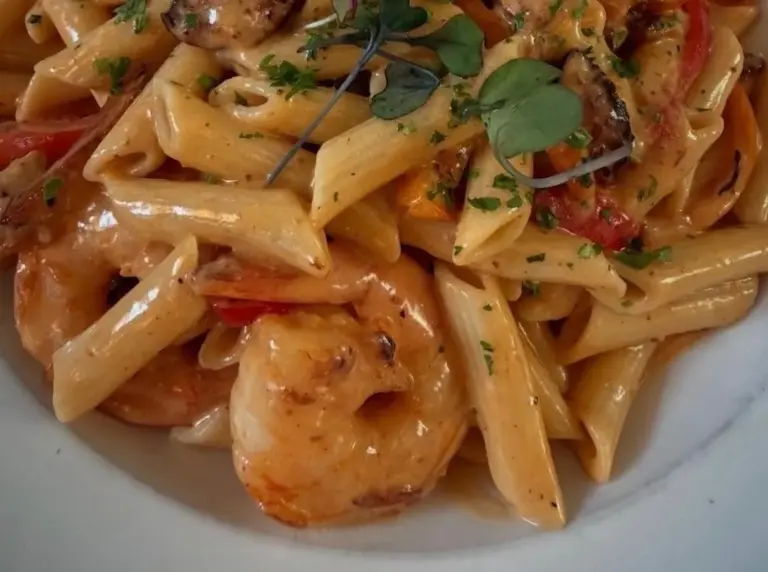
Folks who visit Crockett have some good choices for dining. There’s The Dead Fish, a winningly kitschy surf-and-turf restaurant with prime views of the water, and casual favorite Crockett Cocina. Lucia’s Craft Sandwich is a bustling place for the breakfast-and-lunch crowd, and consistently ranks on Bay Area restaurant lists for its inventive sandos – the mortadella with artichokes and ricotta is a delight. This winter, its owner opened Duke’s Dining Hall next door, serving bistro-style comfort food like roasted bone marrow, moules-frites and pan-seared filet mignon with mashed potatoes.
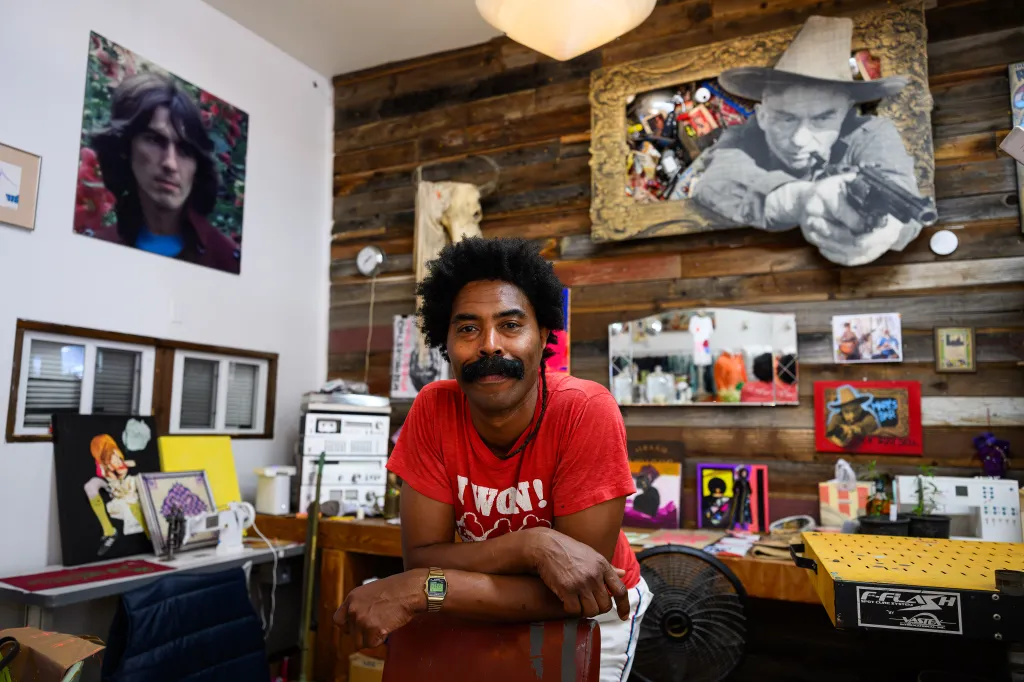
The Monarch Store debuted downtown last year and specializes in customized coveralls, the full-body denims popular with factory workers and the French. “What I’m finding is that coveralls kind of are fan favorites. Most people just kind of like coveralls,” owner Davin Che explains.
Che moved from Brooklyn to Crockett several years ago, partly for its creative vibe. “The arts scene here reminds me of an Oregon or a Vermont with the idea that everyone, everywhere can do anything. Like, everyone can build a house or do a project, and everyone knows how to play instruments.”
The current housing market has attracted more artists and Bohemian types to Crockett. “On the residential side, it’s having its own little boom, partly because of the pandemic,” Che says. “Other Bay Area people came and bought these additional homes, because it was such a cute, little, perfect town to live in during the pandemic. Now that the world has opened up again, they don’t need to live here, so they open it up for rent.”
And the rent is pretty sweet. “Crockett is still very much based on what’s reasonable. It’s not necessarily a market rate. Let’s say you’re not paying the 1982 rate, right? You’re kind of playing the 2012 rate.”
Denton, the author, says she’s also noticed change washing over her hometown. “New people are moving here, so there’s new energy. It’s kind of a convergence right now of forces that are putting Crockett on the map, which is kind of fun.”
Read more Chabria: No, Mr. Hilton, our elections are not ‘a joke.’ It’s time for you to stand up to Trump.
But, she jokes, “we don’t want it to be TOO much on the map.”
About the Author