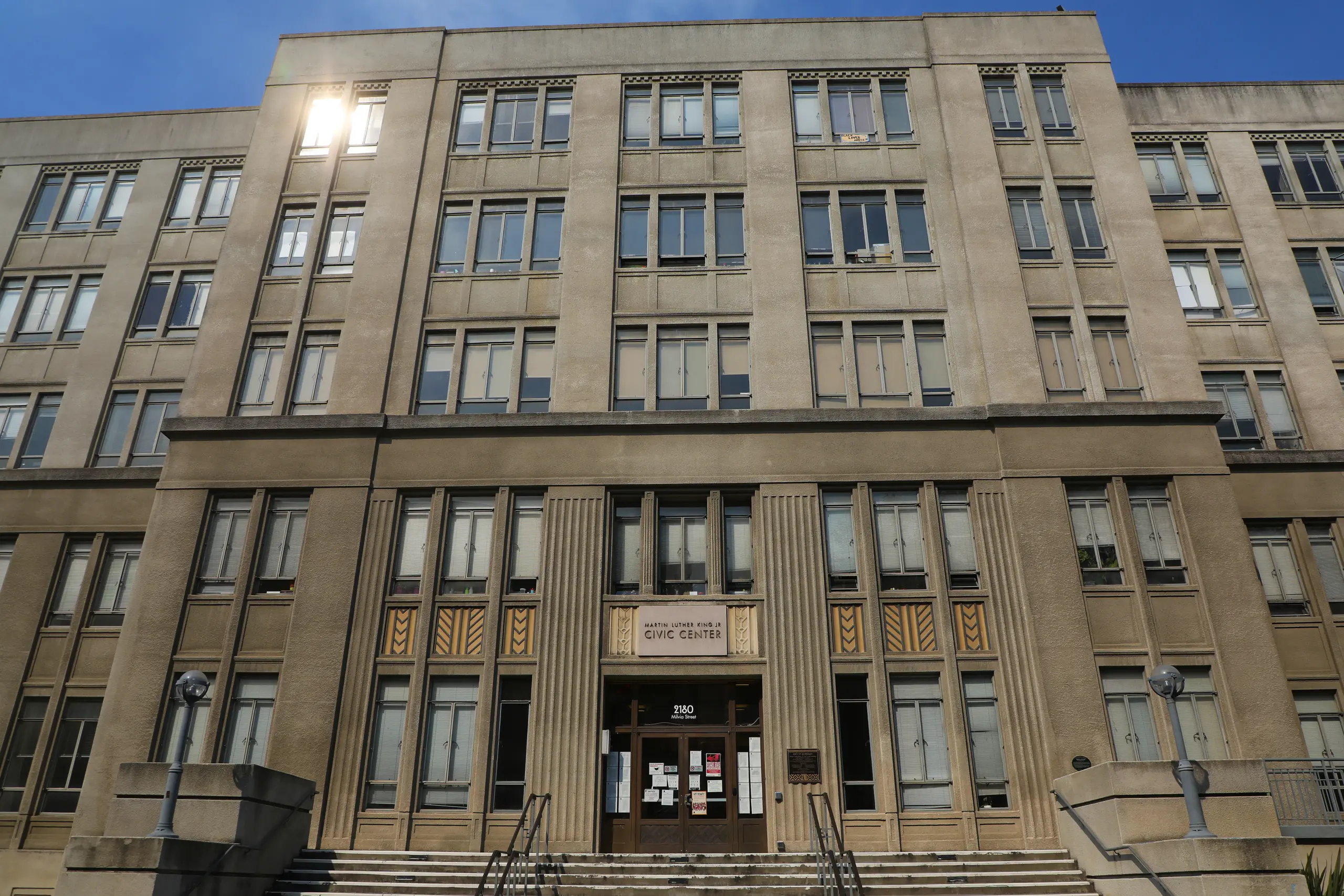
With four of Berkeley’s nine City Council seats on the ballot this November, voters will have a chance to influence the city’s approach toward public safety and revitalizing commercial corridors amid a $30 million budget deficit.
Read more Drummer of East Bay band Locked Up sentenced in child pornography case
In the progressive bastion of Berkeley, the divide on these issues is more often nuanced rather than ideological. Deciding who is on the council will be crucial to decisions on surveillance technology and the support of historic businesses.
“I do believe that this election may be a little bit of a referendum on the direction of the council,” said Donna DeDiemar, a 47-year resident of Berkeley and president of Save Hopkins, a community organization opposing the city’s repavement plan that would remove about 200 parking spaces in favor of Class IV bike lanes. “It’s not a referendum on a single issue, it’s on the entire disconnect between what they think is important and what the council does.”
Development challenges ahead
Izat Eliyan, co-owner of La Val’s Pizza, Berkeley’s longest-running restaurant with locations on College Avenue and Euclid, said mom-and-pop restaurants are facing pressure from all sides. Foot traffic from UC Berkeley has tapered off, the cost of rent has outpaced business growth and delivery app fees have eaten into profit margins, Eliyan said.
“Beef has increased significantly, paper products have increased. If we have big inflation next year, that is going to affect our rent. And there is only so much you can raise prices.” Eliyan said. “This is a student community and we need to be aware of the prices we charge our guests.”
As the city seeks to revitalize its commercial corridors following closures by a series of historic businesses, City Council candidates are considering how to build up safely without endangering businesses along College Avenue, Solano Avenue and North Shattuck.
To address those challenges, candidates generally fall into three categories.
Incumbents Igor Tregub and Mark Humbert support market solutions to spur growth in the housing and commercial districts. Specifically, their platforms call for permit streamlining and broad upzoning along commercial corridors and transit hubs to enhance local businesses.
Candidates such as Syrak Micael, Mari Mendonca and Moni Gangpadhyay view broad upzoning and market-rate housing development as a giveaway to developers. They each have platforms that call for the creation of 100% affordable housing on public land, and to establish rent caps and pass vacant property taxes to guarantee growth is beneficial to Berkeley’s most vulnerable.
Other candidates reject both blanket upzoning of commercial corridors and 100% affordable housing development. Candidates Daria Wrubel and Michael Wallman favor more moderate development paired with protections for small businesses to preserve neighborhood character.
The City Council has proposed several methods to preserve legacy businesses from displacement. If approved, the proposals would provide lease protections, temporary tax relief during upzone construction, reserve ground-floor retail space for anchor businesses and construct move-in ready storefronts.
How far the city goes to protect businesses as the city upzones College Avenue, Solano Avenue and North Shattuck will be determined by the next council.
Read more Election 2026: Who are the candidates running for California governor?
“A lot of good things have come out of the (pro-development) YIMBY movement,” DeDiemar said. “But it is a movement that is hell bent on building what it wants, where it wants, when it wants and it’s not looking at communities.”
Looking out for the public
There’s no shortage of public safety issues for Berkeley residents. From Flock Safety surveillance cameras to pedestrian and bicyclist infrastructure, it’s these issues where residents are demanding a more responsive council.
The City Council has used concerns of public safety to address each of these seemingly disconnected issues, often choosing publicly-contrasting responses to extend its contract with Flock and pursuing a plan to replace parking spaces for bicycle infrastructure along commercial corridors.
“We have a City Council that operates on its own agenda and its own set of rules,” DeDiemar said. “The councilmembers, by and large, are plugged into somewhere else, and it’s not their constituents. It may be to a small subset of their constituents, but it’s not to the city in general.”
The council voted 5-4 to extend its Flock Safety contract in May for another year for $200,000, despite community pushback regarding privacy concerns. The council will evaluate the contract with alternative vendors next year to chart the future of surveillance technology in the city.
On Hopkins Street, a group of residents sued the city over its controversial plan to remove around 200 parking spaces from the commercial corridor in favor of Class IV bike lanes, arguing the city failed to conduct an environmental impact review and failed to analyze the impact on elderly and disabled residents.
“Reducing the parking in downtown for parking will affect business,” Eliyan said. “if parking is not easily found, this is something that will create a problem for guests from surrounding areas who come to downtown Berkeley or one of these commercial corridors.”
DeDiemar alleges the council has used “biased” community surveys to steamroll through public opinion on controversial issues. As the litigation proceeds in Alameda County Superior Court, the City Council will decide whether to maintain its existing plan for the street or seek a compromise with litigants to dial back the removal of parking spaces.
“It’s not whether there should or shouldn’t be housing. It’s not whether there should or shouldn’t be development,” said DeDiemar, “It’s that reasonable people do not have a say anymore in what’s going on.”
Read more Bernadine Bluntly’s brand was trad wife. Then she got divorced
About the Author