The Mesoamerican traditions of honoring the dead for Dia de los Muertos, Nov. 1-2, will fill homes and cemeteries with commemorative altars, sugar skulls and bright orange marigolds to lift the spirits of the spirits.
Read more Jay-Z to headline halftime show for Super Bowl LXI: report
Along with those come holiday foods traditionally made at this time of year to honor the deceased: Hearty bowls of Sopa Azteca, the savory Mole Negro, the Pan de Muerto sweet bread, and so many others.
RELATED: Expert chefs share their favorite Día de los Muertos recipes and traditions
If you aren’t cooking and baking at home, you’ll find many Bay Area restaurants specializing in these dishes. Here are several options, from San Jose to Pleasant Hill and Redwood City to Oakland:
MOLE NEGRO: Mezcal Restaurant (San Jose)
Born and raised in Oaxaca, longtime San Jose restaurateur Adolfo Gomez naturally gave a Oaxacan focus to his menu when he opened his vibrant Mezcal restaurant downtown in 2008. There are such authentic dishes as chapulines, tlayuda and the sauces from this Mexican state known as “the land of the seven moles.”
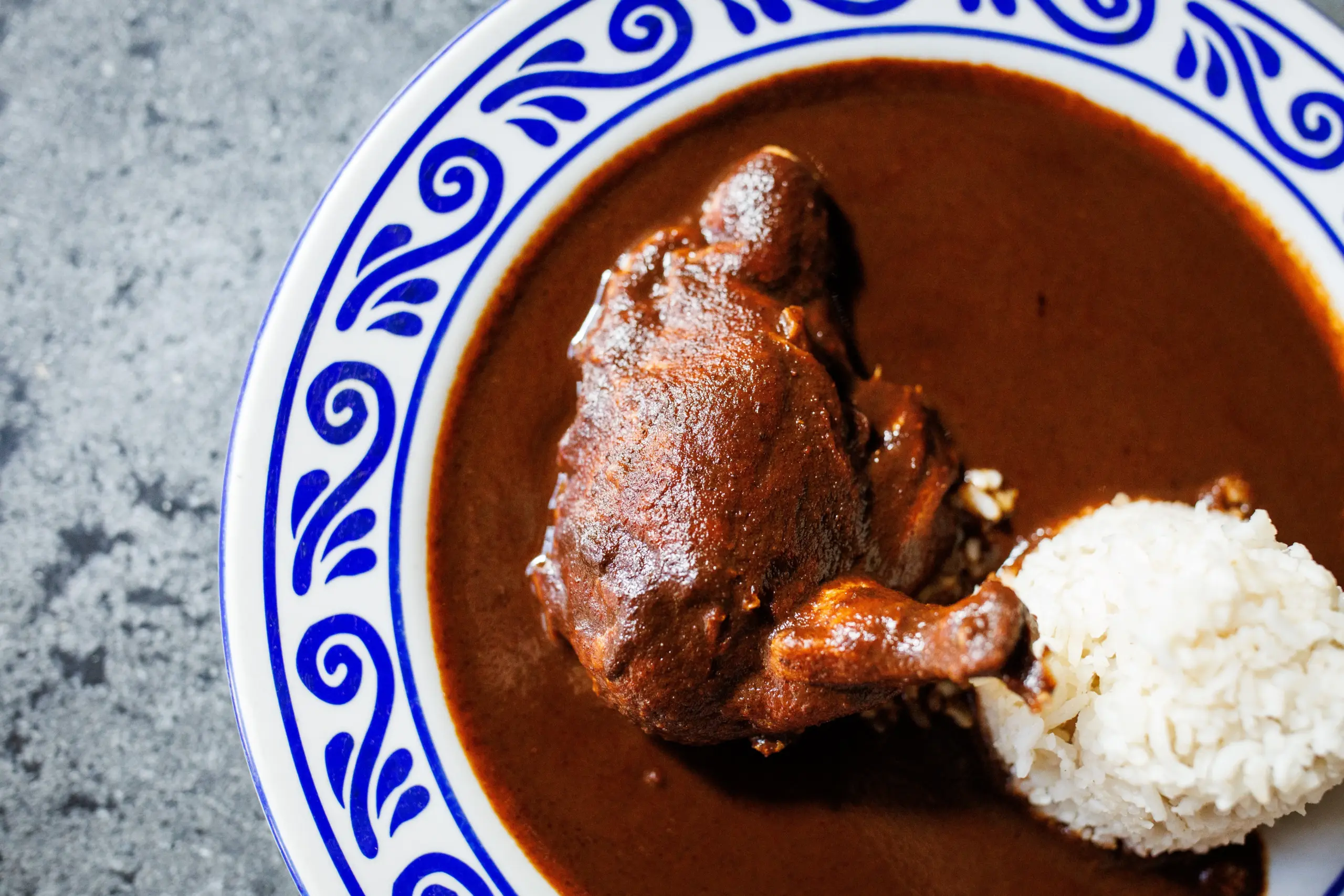
Mole negro is Mezcal’s signature sauce and the one whose aromatic properties are said to lure the souls of the dead. The restaurant’s version — made with 35 ingredients, though the family will divulge only about a dozen — has been described as deep, dusky, rich, smoky-sweet, irresistible. The recipe has been passed down through the generations.
Gomez characterizes it as “complex.” Two days of labor-intensive preparation by the stellar cooks in the family — mother Libo, brother Tavo and sister Mari — go into each batch. “They have to grind the chocolate, toast the nuts …” he says, realizing the enormity of the list. “This has to happen the day before.”
The next day, they do the simmering and tasting and tweaking. For example, “if the chiles are too spicy, they add more chocolate,” he says.
The same process is employed for Mezcal’s Coloradito, or red mole.
Mezcal’s moles are offered three ways: Chicken Mole platter ($26), a boneless chicken breast with attached drumette, served with rice and handmade corn tortillas; Enchiladas ($16); Tamal de Mole wrapped in banana leaf ($8).
Details: Open from 11:30 a.m. to 9 p.m. Tuesdays-Fridays, noon to 9:30 p.m. Saturdays, noon to 8 p.m. Sundays, 25 W. San Fernando St., San Jose; mezcalsj.com.
RELATED: Día de los Muertos 2026: How to celebrate around the Bay Area
CHAPULINES: San Agus (Palo Alto)
Toasted grasshoppers are one of the shareable sides at San Agus Cocina Urbana & Cocktails in Palo Alto, a restaurant inspired by the street food of Mexico City. Chapulines ($5), as they’re called, come roasted and seasoned with salt, lemon, garlic and chile de arbol, according to Chef Eduerdo Coc.
A common street food in Oaxaca, Mexico City and Central Mexico, chapulines are ultra-high in protein – between 50% and 75% – double to triple the ratio that’s found in lean beef. And, at least when consumed as prepared at San Agus, they are also flavorful, crunchy and surprisingly satisfying (though it helps to not look too closely at each bite).
Details: Open 3-9 p.m. Mondays-Tuesdays, 3-9:30 p.m. Wednesdays-Thursdays, noon-10 p.m. Fridays-Saturdays and noon-9 p.m. Sundays at 115 Hamilton Ave, Palo Alto; sanagus.com.
POZOLE ROJO: Bombera (Oakland)
A hearty bowl of red pozole, loaded with fork-tender meat and a stomach-warming chili broth, is a fantastic cold-season dish. A fine version of the dish is on the menu at Bombera, a buzzy Oakland restaurant where chef and owner Dominica Rice-Cisneros turns out Michelin Bib Gourmand versions of Mexican classics like chicken achiote and duck mole verde.
The brick-red soup is deep and earthy from a chile base and quite spicy – to remind you, perhaps, that it’s in pain that we truly know we’re alive. There are hunks of both chicken and pork, fork-tender and full of flavor, and enlarged, ivory kernels of heirloom corn that resemble flower buds or molar teeth. The dish is available by both cup and by bowl ($8/$15), the larger of which will fill you up, especially when served with fresh tortillas.
Pozole rojo is significant in Día de Muertos celebrations. Pozole is said to have been consumed ritually in pre-Columbian times, and its use of corn harkens back to the days when maize was the be-all and end-all of life. A traditional version may use a starchy variety with big kernels that, when put through the process of nixtamalization, become akin to hominy.
“The dish comes from ancient ceremonies where maíz symbolized the creation of humankind. Today, pozole rojo made with guajillo and ancho chiles is common in Puebla, Michoacán, and Mexico City,” writes Rick Martinez, a cookbook author and writer of the Substack newsletter Sazón.
“In Michoacán, families often serve it during the Noche de Ánimas, the all-night vigil for returning souls held on Nov. 1, eating it in cemeteries or after keeping watch through the night,” Martinez says. “Its use of maíz, the crop most tied to life and sustenance, makes it a natural fit for Día de Muertos.”
Details: Open 5-9 p.m. Mondays and Wednesdays-Saturdays, 3459 Champion St., Oakland; bomberaoakland.com.
PAN DE MUERTO: Acopio (San Jose)
Every year, the owner of this contemporary Mexican restaurant, Lorena Vidrio (of the Taco Lorena family), and her chef, Mimi Mendoza, put a Día de los Muertos specialty on the menu. For this season, this creative pair with Michelin cred — they had first crossed paths at Chez TJ in Mountain View — is doubling down on holiday flavors with two dishes.
“Honoring tradition is important to us,” says Vidrio, calling it a “joyous time” for sharing memories of ancestors through food and drink.
From now through Nov. 2, they are featuring Pan de Muerto con Pozol ($10) for Acopio’s dinner and brunch customers. Mendoza puts her baking expertise to work, starting with a tender French pain de mie dough and infusing it with orange blossom and a touch of anise. She then shapes the pastries into rounds to resemble the “circle of life” (with a subtle bone motif), bakes them and dusts them with Mexican cinnamon and sugar.
The sweet bread is paired with an iced drink that Vidrio discovered while researching pre-Columbian dishes. Made with masa, cacao and piloncillo, just as it was hundreds of years ago, the pozol is creamy despite containing no dairy. “When we discover an Indigenous recipe, there’s no reason to change it,” she said.
RELATED: This pan de muerto is perfect for dunking in chocolate
For those who want a spirited drink, the Shandy-Baza ($13) is a lighthearted riff on the calabaza (squash) dishes popular during Día de los Muertos. The cocktail is made with Del Cielo Morena Mia Mexican amber lager, pumpkin spice syrup and lemon, with a cinnamon spice rim.
Joining the menu is Calabaza en Tacha, a candied squash dessert ($14). Mendoza’s version for this year will feature nixtamalized pumpkin stewed in a spiced piloncillo syrup and lemon posset, an eggless custard. This dish will be adorned with whipped Mexican vanilla sour cream and a turulete, a Mexican masa harina cookie.
Details: Open for dinner from 5-9 p.m. Wednesdays-Thursdays and 5-10 p.m. Fridays-Saturdays. Brunch was added in July, with 10 a.m.-3 p.m. hours on Sundays. 399 S. 24th St. at William Street, San Jose; acopiosj.com.
SOPA AZTECA: Taqueria Los Gallos Express (Pleasant Hill)
This soup that goes by a few names is deceptively simple. Rick Bayless, who claims it belongs in “practically every collection of Mexican recipes,” cites the key ingredients as dried chiles, tomato, epazote, alliums and fried tortilla strips (often day-old). The type of chili used varies across regions; in central Mexico, it might be pasilla, whereas in other places it could be New Mexico or even smoky chipotle.
A simple recipe leads to a soup that’s much more flavorful than the sum of its parts – and only then do you start adding in more ingredients to “build your own bowl.” At the Pleasant Hill location of the Contra Costa County chain Taqueria Los Gallos Express, a no-frills eatery that’s open 24 hours – yes, these wonderful places still exist, and this one has free salsa with chips and beans – diners can literally hear, and smell, the chefs making this menu special one step at a time ($16.50).
The steaming bowl of sopa de pollo con tortilla arrives with a literal half-bird’s worth of meat rising from a rich, orange broth with carrots, corn and celery. Toss in your desired amount of the toppings: sliced avocado, crispy tortilla, shredded white cheese, sour cream and onions with cilantro. It’s satisfying and filling, with the vegetables giving it a healing chicken-soup quality – definitely something you might eat at 4 o’clock in the morning.
Sopa Azteca factors into the Day of the Dead in its use of corn, the life-giving crop of the ancients. “While not exclusively tied to Día de los Muertos, its roots in ancient Aztec cuisine make it a reflective dish during the celebration, connecting participants to Mexico’s rich history,” according to Mexican food-tour company Sabores México.
Details: Open 24 hours daily at 1974 Contra Costa Blvd., Pleasant Hill; 925-798-0575.
CAFÉ DE OLLA: Con Azucar Cafe (Redwood City, Gilroy, Hayward, San Jose and more)
Con Azucar Cafe, which started in downtown San Jose in 2022, has made café de olla ($3.50/12 ounces) the growing Mexican cafe chain’s house coffee. This sweet and cinnamon-spiced traditional Mexican coffee drink is prepared with brown sugar, cinnamon and star anise, and is served at this cafe hot or iced. The warm flavors of this authentic Mexican beverage make it an excellent choice for fall sipping.
Since its first location, it has expanded to two other San Jose locations, Gilroy, Redwood City, Hayward, Salinas, Modesto, Manteca and Sylmar. The cafes are bursting with vibrant colors, murals and Instagram-friendly backdrops.
Café de olla, traditionally brewed in a clay pot, is seasoned to complement pan de muerto, a sweet orange-butter bread traditionally served during Día de los Muertos. Additionally, café de olla is often placed on ofrenda altars to welcome back loved ones’ souls, or sipped by family members to keep energized and warm during nighttime vigils at cemeteries.
Details: Operating hours vary by location; conazucarcafe.com.
CARAMEL FLAN: Casa Mia (Mountain View, San Carlos, San Jose)
Caramel flan ($9), a soft, eggy custard, is a dessert specialty at Casa Mia, which just opened its third location in San Carlos. It’s served here drenched in caramel sauce, drizzled with chocolate sauce, sprinkled with powdered sugar, and surrounded by fresh sliced strawberries.
The San Carlos location, which opened in late September, separates indoor and outdoor dining with a long bar stocked with ingredients for a full cocktail menu, and in the afternoon, sunlight streams in from the front. Elias Sandoval, one of the owners, says that the restaurant’s menu serves up Mexican-American fusion dishes, with carefully tested recipes, and is known for its chilaquiles served with six different sauces. The restaurant is also developing two special cocktails for Día de Los Muertos.
“The food is so tasty,” Sandoval says.
During Día de los Muertos, caramel flan is often sold on the streets leading up to cemeteries, and the custards are often brought as offerings to dead loved ones who used to enjoy the dessert.
Details: Open 8 a.m.-9 p.m. daily at 877 Laurel St., Ste. B, San Carlos; casamiasancarlos.com.
Read more Officer injured, shot fired during San Jose traffic stop
About the Author