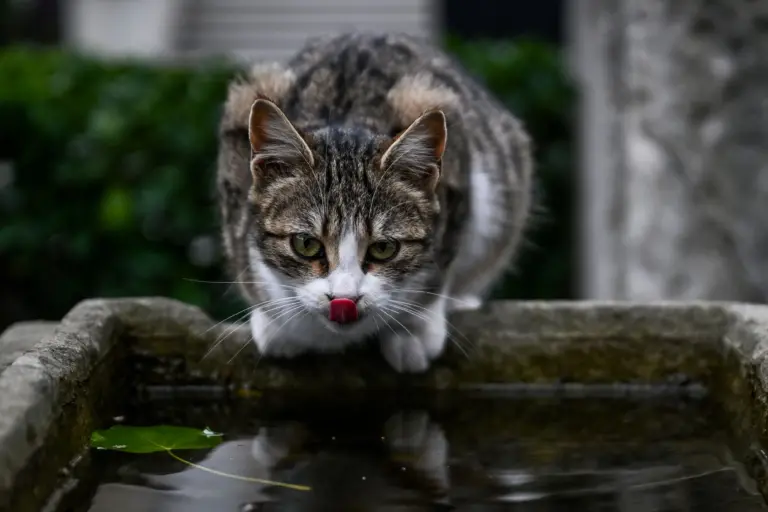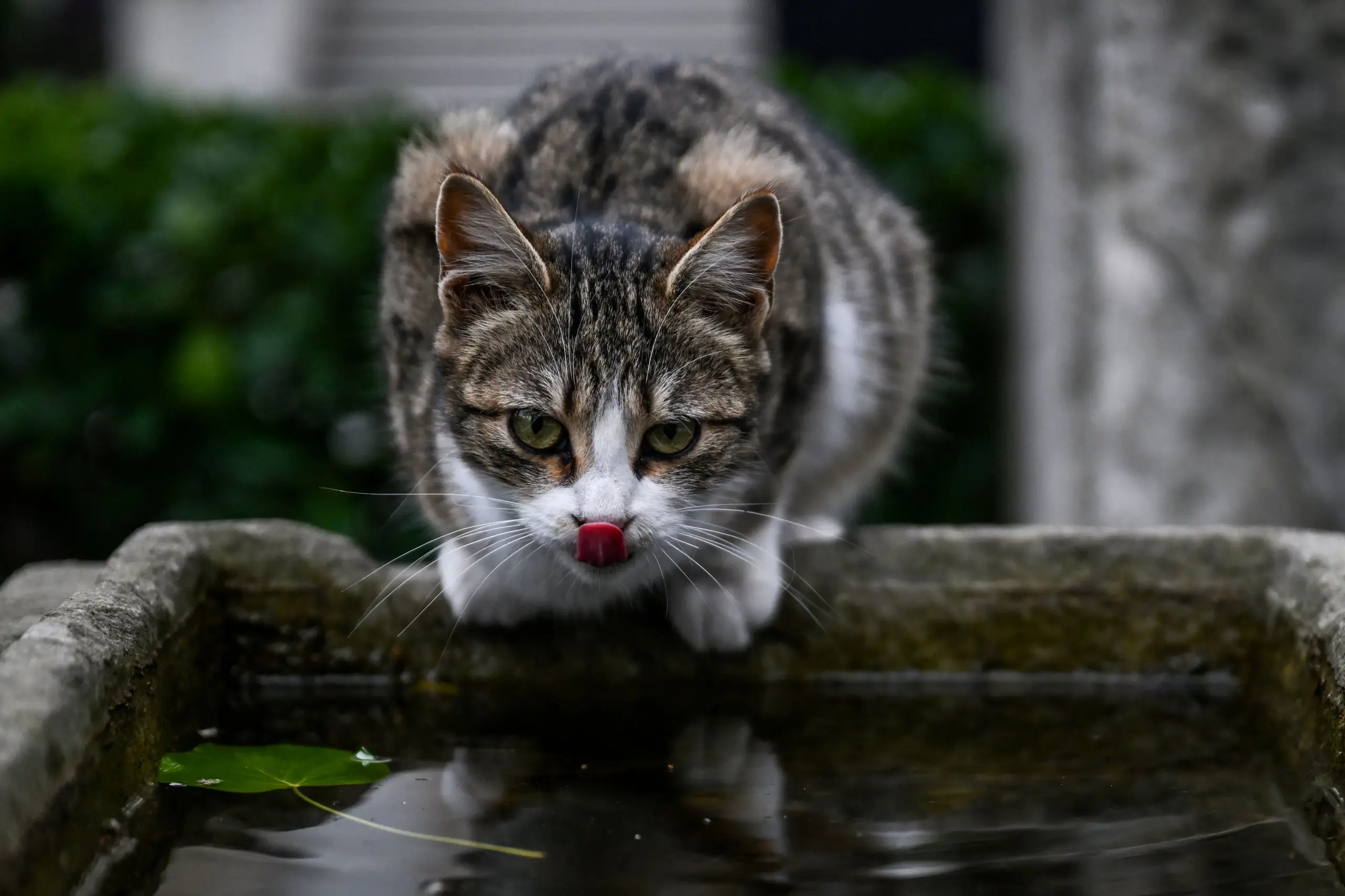
DEAR JOAN: Why would my two indoor cats rather drink water from a flower arrangement than from their own water dish?
Read more Crews focus on interior of Lucas Fire as red flag warning is lifted in Lake County
— Florence Bell, Los Gatos
DEAR FLORENCE: Cats’ gonna cat, and they cat hard.
As I’ve said before, there’s not a whole lot of difference between wild and domesticated cats when it comes to behaviors, and their choices in water sources is a good example of that.
If your water dish is next to the food dish, that can be off-putting to cats. In the wild, cats avoid drinking water that is near where they have killed or consumed prey. Instinct tells them the water could be contaminated by the dead animals. The house cat might not have killed the can of food or stalked the bag of Meow Mix, but the instinct to avoid nearby water is strong.
Cats also aren’t particularly fond of tap water. They have a very good sense of smell, and even though we might not detect the odor, it can smell of chlorine. On the other hand, water from plants and floral arrangements can smell of minerals and other things cats find attractive.
Lastly, cats like to hunt and explore, and that includes searching out new sources of food, water, sleeping places and playthings. They can be excited by discovering water in the vase.
It’s not the best idea to let cats drink dirty water, so to prevent it, try moving the water bowl into another room, or as far from the food dish as possible. Cats prefer to drink moving water as they can struggle with seeing the surface of still water. A drip or little ripple helps them focus.
Whatever water and food bowl you use, make sure they are wide enough that your cats’ whiskers aren’t pressing against the sides. They can develop whisker fatigue, which can make them reluctant to use the dish.
Read more Rapper Lil Durk acquitted of Los Angeles murder-for-hire plot
DEAR JOAN: I have questions about a plant and the bugs living on it.
I was told at the nursery when I bought them that this plant is a milkweed of the variety that is beneficial to the monarch butterflies. But the leaves seem too slim to match what I’ve found on the internet, and there hasn’t been any real butterfly activity throughout the summer. Can you tell if this is the right kind of milkweed or even if it’s even a milkweed?
Second, what the heck kind of bugs are these? Nothing seems to be interested in eating them, and they definitely don’t turn into monarch butterflies.
— Dave B., Morgan Hill
DEAR DAVE: Judging by the photos, you have a narrow-lead (Asclepias fascicularis) milkweed, which is one of the preferred varieties. If you still have doubts, I’d pull it out and replace it with the narrow-leaf, showy (A. speciosa), woollypod (A. eriocarpa) or heartleaf (A. cordifolia) milkweed.
The insects are oleander aphids, which feed on oleanders and milkweed. Even great infestations of the aphids probably won’t kill the plant, although it might stunt the growth. You can wash them off using water or insecticidal soap. Encouraging natural predators, such as lady bugs, can also thin the aphid herd.
The Animal Life column runs on Mondays. Contact Joan Morris at [email protected].
Read more Oakland changed the rules for homeless RVs. Now vehicle sweeps are accelerating
About the Author