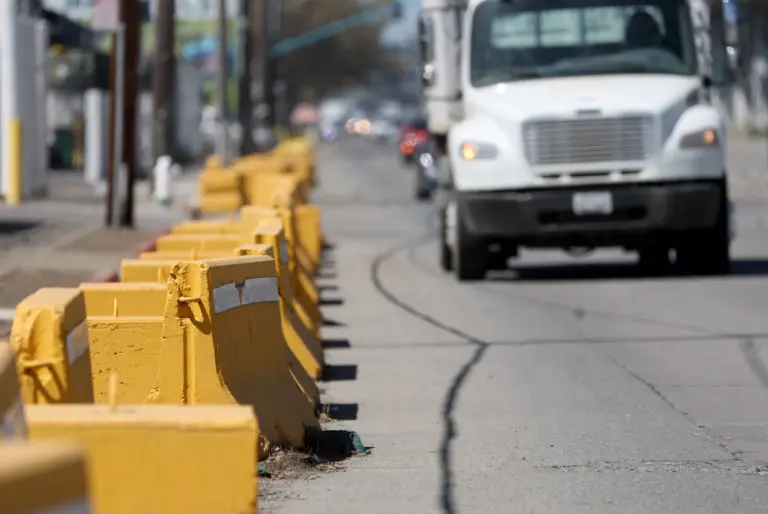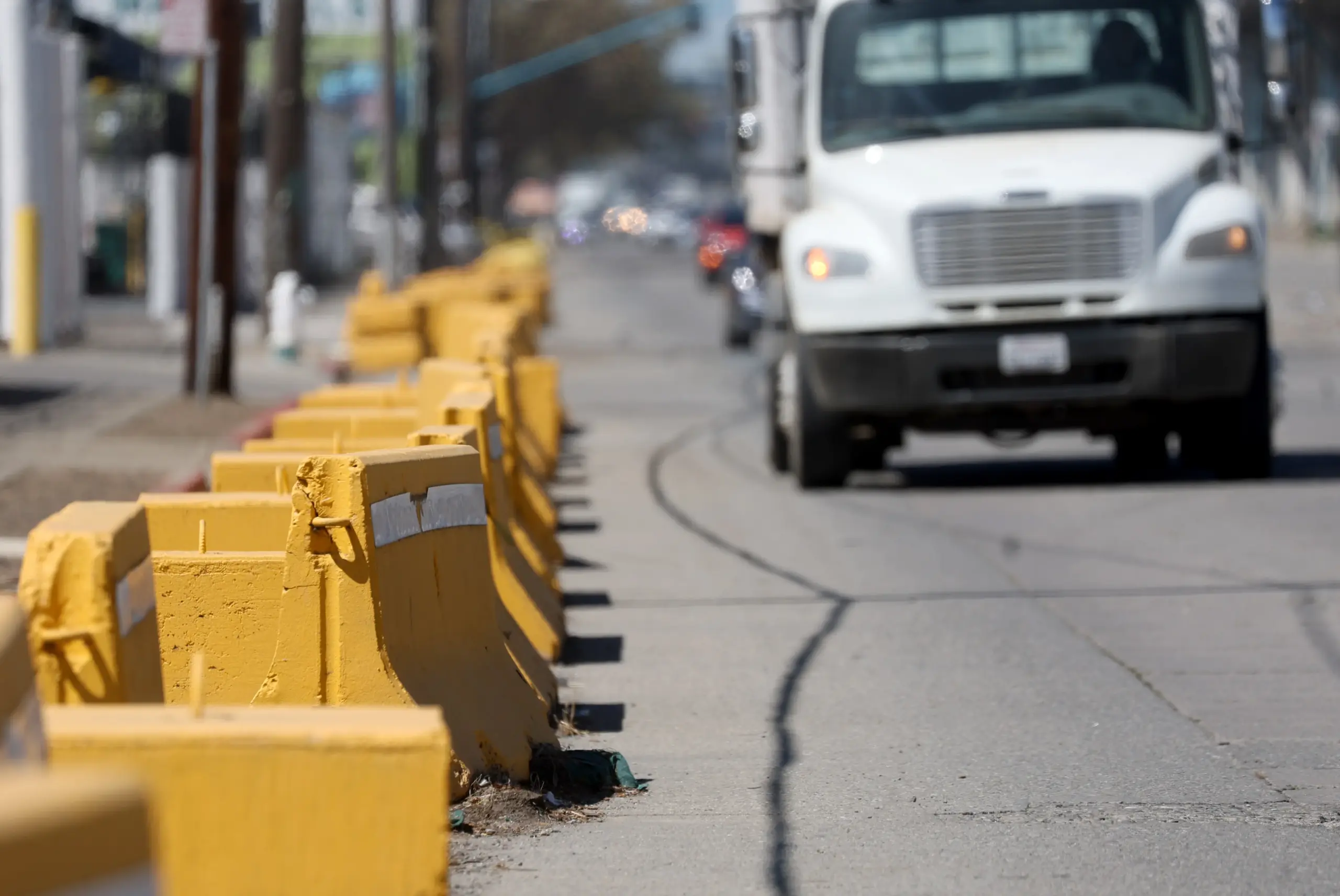
Oakland is ramping up tows and sweeps of vehicles — the most common shelter for homeless people on the East Bay city’s streets — aided by a tougher policy that weakened rights for those residents this summer.
Read more Chris Rock pitches ‘white slaves’ for next Taylor Sheridan spinoff
City workers began towing vehicles or requiring owners to relocate on San Leandro Street south of the Oakland Coliseum in late August, according to City Council member Ken Houston, who represents the area. People priced out of the East Bay housing market had lived in scattered groups of RVs and cars along the corridor even before homelessness spiked by 20% during the COVID-19 pandemic — when it rose to 9,747 in 2022 from 8,022 in 2019, according to the city’s point-in-time counts.
It’s unclear exactly how many of those vehicles were abandoned, which is common in the area, and how many were inhabited on the mile-long stretch of road. A spokesperson for city officials, Jean Walsh, did not provide information or comments about the operation. Of Oakland’s nearly 3,660 homeless people counted on a single night on the streets in 2024, about 2,120 lived in vehicles, or 58%.
Oakland police said they towed more than 60 abandoned and stolen cars and RVs in nearby neighborhoods on a single night in late August. A spokesperson also did not respond when asked whether anyone had been living in the vehicles.
Houston and advocates for homeless people — two parties usually at odds in Oakland politics — say city officials are moving vehicles more aggressively under a city policy championed by the East Oakland council member. Following crackdowns in San Jose, San Francisco and other Bay Area cities, Oakland City Council members voted in April to strip inhabited vehicles from the official definition of a homeless encampment. That went into effect in July.
That change gave city workers and police the green light to treat RVs and cars with people living in them as if they were abandoned and tow them with less or no notice for code violations. Meanwhile, city workers are required to give homeless residents living in tents or structures a week’s notice of planned sweeps and also offer shelter.
In practice, however, Oakland is far short on shelter — just 1,260 units for 4,410 homeless residents, including those who already had a spot at a shelter.
Houston said last week that the southern stretch of San Leandro Street south was “one of the worst areas” for inhabited and abandoned vehicles. In a given month since the pandemic, dozens of vehicles were crammed onto the side of the busy, four-lane road. It is an industrial corridor where auto lots, storage facilities and warehouses are cordoned off with razor wire, and nearby train tracks are an illegal dumping ground.
On Thursday, city workers were removing the last resident from the street. A man named Calvin, who did not give his last name, rushed to jump-start his truck while Oakland Public Works employees waited to clear the area.
Calvin’s belongings, guarded by a dog, had spilled onto the sidewalk and into the traffic lane, along with rubbish and feces. He said he had lived in that spot for years. Although city policy doesn’t require it, he said he’d been offered a spot in one of Oakland’s tiny homes, and workers had posted warnings of the operation more than a week prior.
Houston said the operation on San Leandro Street was long overdue and is ongoing. He touted the stricter Encampment Abatement Policy he’d carried through the City Council this spring.
“This is because of the EAP that many did not think Oakland would pass, because it was so aggressive,” he said.
Kelsey Hubbard, an organizer with Wood Street Commons who helps unhoused people move their belongings during removals, said city workers and police are clearing more and more vehicle camps, leaving advocates overwhelmed.
“It’s so extensive,” she said. “They’re coming after people in every corner now.”
Overall, homelessness declined about 20% from 2024 to 2026 in Oakland. Officials credited “hundreds of operational improvements,” such as faster coordination between shelters and outreach workers who sign up residents for those shelters in encampments.
Shelter availability dwindled this year. In March, the city closed a safe RV parking site for 31 vehicles at 71st Avenue and San Leandro Street, citing budget shortfalls, and a tiny home village in West Oakland, also a swath of the city with an outsized number of RV and car dwellers.
City officials have recognized the gulf. “There are too few emergency or transitional placements for people who are unsheltered, forcing them to remain in encampments,” they wrote in a strategic plan earlier this year.
The city is also thousands of units short of affordable housing. However, the city has seen an acceleration of new affordable housing construction as officials dole out money from multimillion-dollar bonds. More than 683 units of supportive housing and homes specifically for homeless people were recently completed or are in the pipeline with funding from Measure U, Oakland’s 2022 housing bond.
Hubbard said breaking up vehicle camps has the effect of removing shelter and belongings from residents, while breaking up communities that can be tight-knit. Under Oakland’s policy, vehicles with code violations are removed by a private towing company, and owners must pay fees for the tow and storage.
Hubbard and other advocates opposed to “sweeps” of homeless camps have long pointed out that residents often move a short distance after being forced to relocate — sometimes less than a city block away, outside of an operation’s boundary.
Read more DA seizes 12 guns, 3,700+ rounds of ammo in raid of Pleasant Hill home
About the Author