As the Democratic Party searches for its next standard-bearer, Rep. Ro Khanna believes his brand of economic populism will lead the country in the right direction, influencing him to seriously consider a run for president in 2028.
Read more Los Gatos High celebrates 10-year relationship with Japanese sister school
The 49-year-old congressman has spent years traversing Middle America and the Rust Belt as he visits hollowed-out factory towns and rural farming communities, developing and promoting an economic agenda he says would benefit people beyond the borders of his wealthy Silicon Valley district.
During his recent “Heartland Tour” that swung through Pennsylvania, Ohio and Michigan earlier this year, he pitched his “New Economic Patriotism” agenda, laying out plans to create an industrial development bank, bring back manufacturing jobs, and invest in new trade schools and tech institutes while also redistributing wealth by instituting a new nationwide tax on billionaires. Khanna characterizes his vision as a new “Marshall Plan for America,” a reference to the post-World War II aid program that helped rebuild Western Europe’s economy.
“The only reason to run is if you believe your experience and your vision meet the times and you can make a contribution to America,” he said in an interview. “For me, the more that AI and the future economy and wealth inequality become issues, the more I’m inclined to run.”
Khanna said he will make his decision by the end of the year. For now, he’s focused on helping Democrats take back the House and fighting for the passage of Proposition 40, a 5% tax on the state’s billionaires that has divided party leaders. The ballot initiative, he said, is one of his “top priorities” in the run-up to November.
A progressive long known for his political ambitions, Khanna will face tough competition from other 2028 hopefuls as early polling places him at 1% to 2% among the potential Democratic field. The field of suspected contenders features a slew of governors, senators and other high-profile politicians — including two big names from his own state, Gov. Gavin Newsom and former Vice President Kamala Harris, who are weighing their own bids and are far ahead of Khanna in recent polls such as Emerson College Polling. A sitting House member also hasn’t been elected to the presidency since James Garfield in 1880.
But Khanna’s political star has been rising. Last year he notched a major legislative win, working with Rep. Thomas Massie, a Kentucky Republican, to pry loose investigative files related to the late sex offender Jeffrey Epstein from the Department of Justice. He’s become a mainstay on the national media circuit, and hasn’t been afraid to buck the Democratic establishment as he stumps for progressive candidates mounting primary challenges.
Christian Grose, a political science and public policy professor at USC, expects Khanna to be a “formidable,” but “quirkier” candidate than some of his California colleagues and will offer an economic message that’s “distinct from a lot of the other candidates.”
“He may run as somebody who’s a Democrat, but who is a little different than some of the more mainstream Democrats, which there’s been some appeal for in primaries so far in state races across the country,” he said. “He can play with tech and talk to people in communities like that, but then also (appeal to) more of the Bernie progressive wing economically.”
The lane Khanna might run in, though, could shrink if Rep. Alexandria Ocasio-Cortez, a New York Democrat, decides to mount a campaign, Grose said. Ocasio-Cortez and Khanna are among those on the party’s left flank seen as the potential next leader of the progressive moment. Ocasio-Cortez has been polling better than Khanna nationally, with Emerson College Polling in July showing Ocasio-Cortez at 13% and Khanna at 2% among prominent Democrats. An Atlas National Poll in May of the potential Democratic field put her at 26% and Khanna at 0.9%.
“I think she’s probably a little more dynamic and more exciting to a wider swath of voters,” Grose said.
But Khanna said whether Ocasio-Cortez, or any other candidate, decides to run has no bearing on his own decision.
Jeffrey Weaver, a senior adviser to Khanna, said the congressman’s appeal to voters in 2028 would be his “unique message about how we transform a modern economy into one that benefits a vast majority of Americans.”
“He wants that kind of wealth, that kind of success (in his district) to be spread out to many, many, many more people,” he said. “In a sense, he’s somewhat of an evangelist for a sort of message of shared prosperity and dealing with the new economy and the challenges that come with technology and AI.”
Read more Horoscopes September 7, 2026: Shannon Elizabeth, don’t hang on to the past
Weaver, who previously managed Sen. Bernie Sanders’ 2016 presidential campaign, said Khanna hasn’t shied away from the “hard fights,” and has proven himself to be an effective legislator who works across the aisle. Like Sanders, the strategist said the congressman has become a national leader while also staying connected to his district in ways many House members aren’t.
Whether Khanna’s populist message resonates with voters in 2028 remains to be seen. President Donald Trump’s right-wing populism message was central to his 2024 campaign, and while the economy is at the forefront of many voters’ minds right now, Grose said winning Democratic primaries also means appealing to “micro-targeted groups” important in different states.
With several candidates from California among the suspected 2028 field, the wealth tax could also become a key issue on the campaign trail.
While the idea is popular among progressives, the congressman has received fierce criticism from deep-pocketed mega donors over his economic positions. Last month, billionaire Mark Cuban, who often donates to Democratic causes and candidates, wrote in a social media post about Proposition 40 that “if this passes, only idiot startup founders stay in Cali.”
But Dan Schnur, a political science professor at UC Berkeley and USC, said that a wealth tax “probably does more to hurt a candidate like Newsom than it does to elevate Khanna himself” because it separates the California governor from his base. Newsom opposes Proposition 40, but has called for a national wealth tax.
The opposition didn’t imperil Khanna in his June primary. He cruised through the June primary against fellow Democrat Ethan Agarwal, backed by some of his wealth tax critics and will face a little-known Republican, Ritesh Tandon, in his November bid for reelection in the state’s Democratic-leaning 17th congressional district.
Jim Kessler, the senior vice president for policy and co-founder of the moderate think tank organization Third Way, said that despite progressive victories across the country, he believes voters will likely be looking for a more centrist Democrat as the nominee in 2028, like they have in past presidential elections.
Kessler pointed to the 2018 midterms when Ocasio-Cortez knocked incumbent Rep. Joe Crowley out of the primary, triggering a surge of energy on the left. But two years later, Democrats passed over more progressive presidential candidates like Sanders and Massachusetts Sen. Elizabeth Warren in favor of Joe Biden.
Khanna could also struggle with contending with bigger names in a crowded field, where, Kessler said, “if you’re not at the top of people’s minds, it’s very easy to just sink down low.”
“Ro is more like a young Chuck Schumer than any politician I’ve ever met,” Kessler said, evoking the New York senator who he used to work for. “He is smart, media savvy, creative and has an abundance of energy, and I think that serves him well. Now Schumer never became president, but he became leader of the Senate.”
While Khanna mulls his political future, he’s keeping his focus on November, campaigning for Proposition 40 and the candidates he has endorsed in key races like Randy Villegas’ challenge of Republican incumbent Rep. David Valadao in a San Joaquin Valley congressional district.
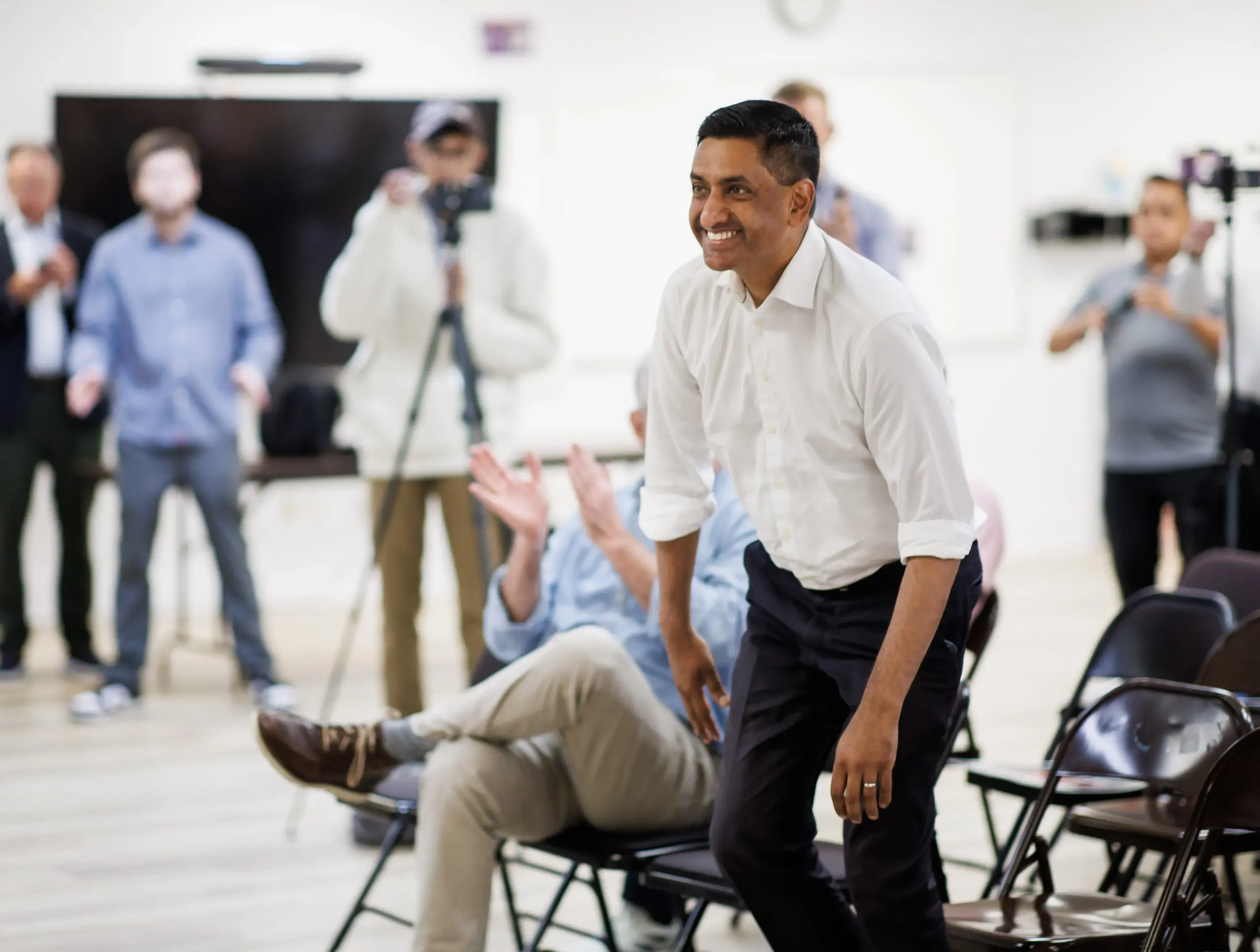
During a rally at a San Jose labor hall last month for the billionaire tax, Khanna stayed true to his economic populist roots, giving union members a sort of preview of what he could bring to the 2028 campaign trail.
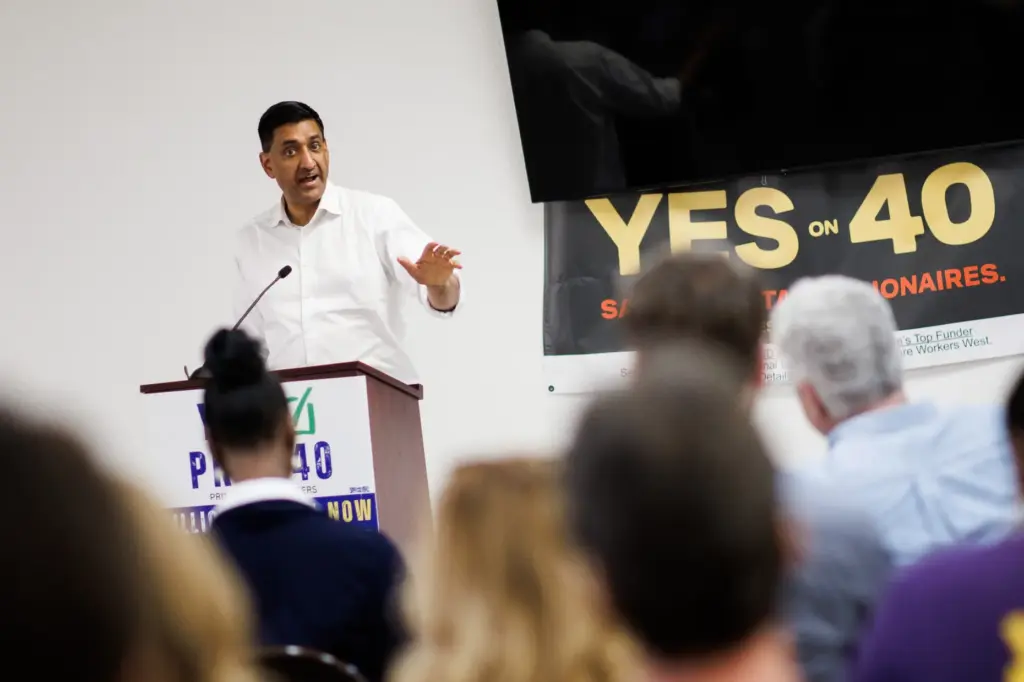 U.S. Rep. Ro Khanna (D-Calif.) speaks during a rally for Prop 40, also known as the “Billionaire Tax,” at the South Bay Labor Council headquarters on Aug. 18, 2026, in San Jose, Calif. (Dai Sugano/Bay Area News Group)
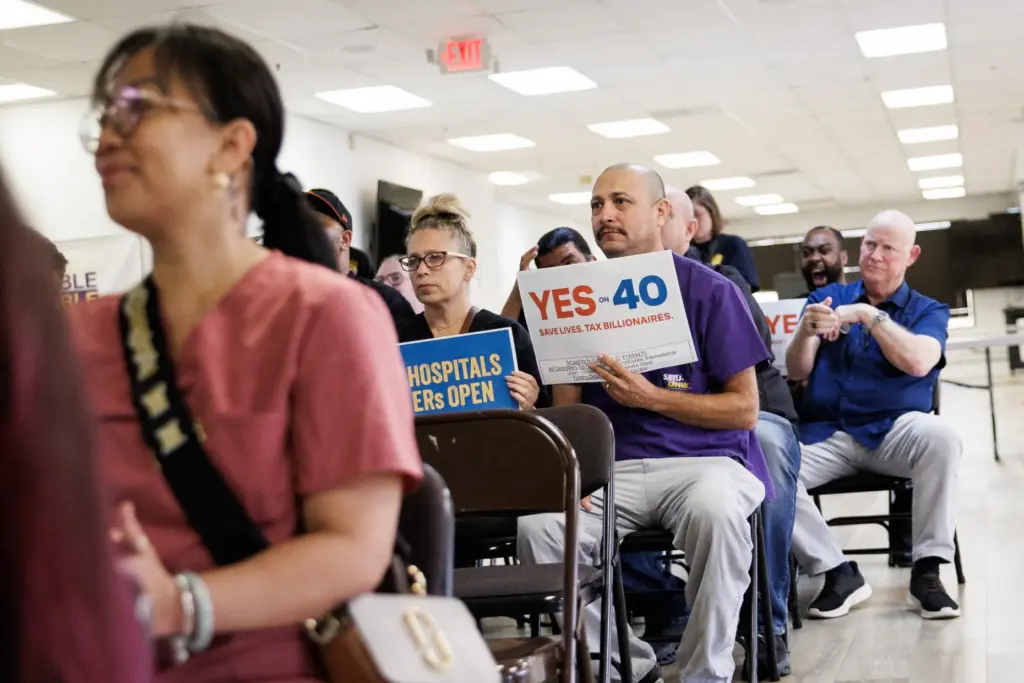 Attendees listen to U.S. Rep. Ro Khanna (D-Calif.) as he speaks during a rally for Prop 40, also known as the “Billionaire Tax,” at the South Bay Labor Council headquarters on Aug. 18, 2026, in San Jose, Calif. (Dai Sugano/Bay Area News Group)
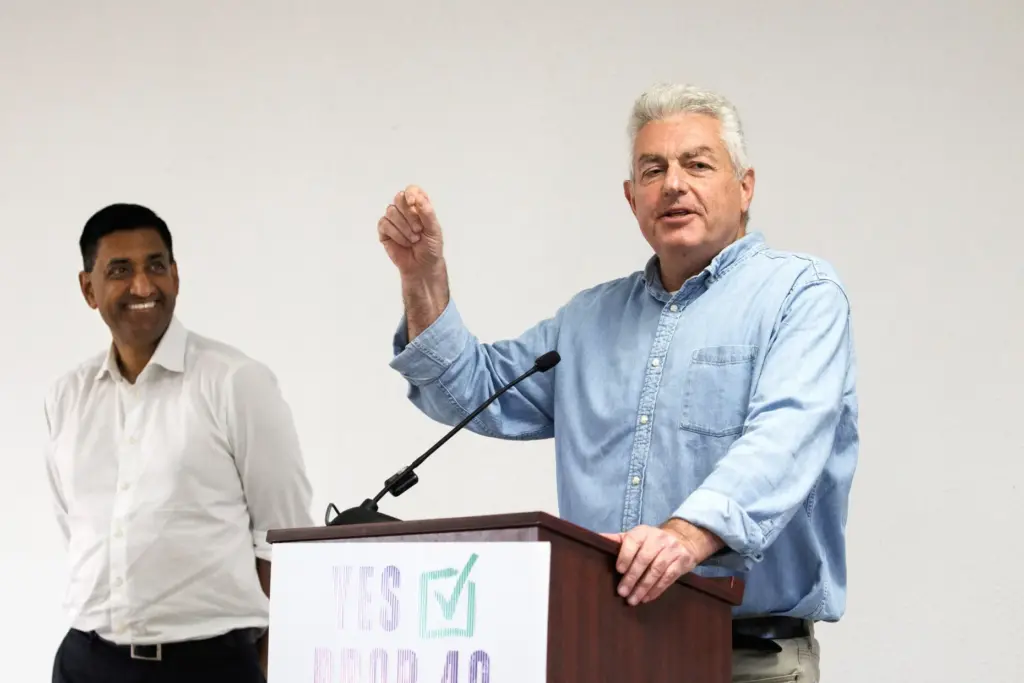 U.S. Rep. Ro Khanna (D-Calif.), left, listens as SEIU-United Healthcare Workers West President Dave Regan speaks during a rally for Prop 40, also known as the “Billionaire Tax,” at the South Bay Labor Council headquarters on Aug. 18, 2026, in San Jose, Calif. (Dai Sugano/Bay Area News Group)
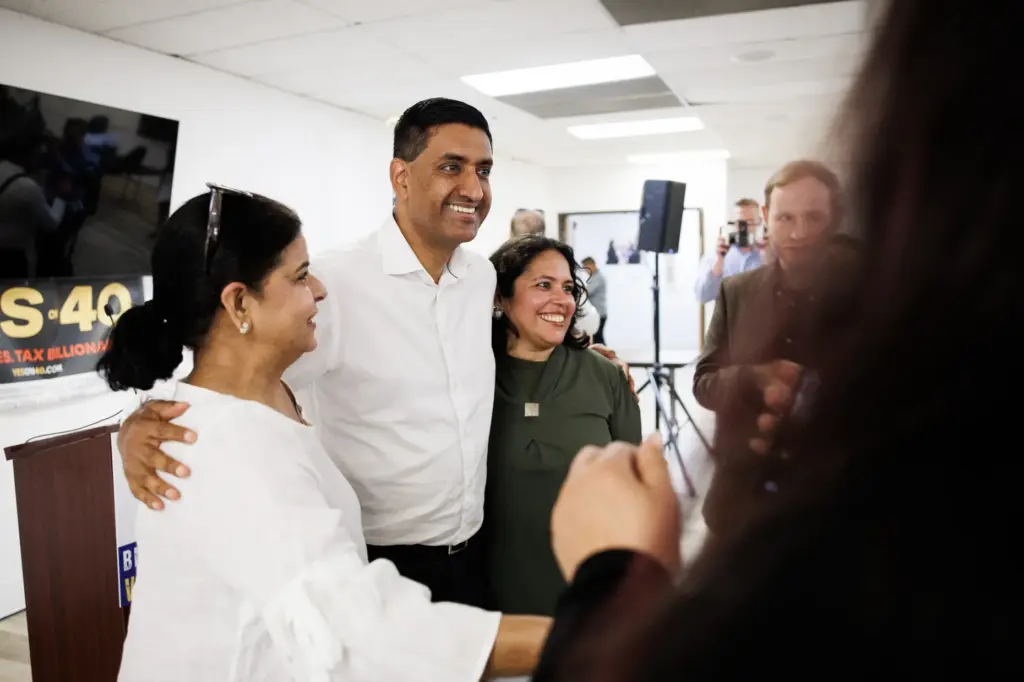 U.S. Rep. Ro Khanna (D-Calif.), center, mingles with attendees during a rally for Prop 40, also known as the “Billionaire Tax,” at the South Bay Labor Council headquarters on Aug. 18, 2026, in San Jose, Calif. (Dai Sugano/Bay Area News Group)
“Why are politicians on the side of the billionaires? In some way they get the system — they need these billionaires to fund their campaigns for governor, to fund the campaigns for president, to fund the Super PACs,” he said. “The question for our country, the question for California and the question for the Democratic Party is simple: Are we going to be a party that’s for the working class or are we going to be a party for the donor class?”
Read more Asking Eric: I matched with him on a dating app. I haven’t told him he’s my pastor.
About the Author