A clarification to an earlier version of this article has been appended to the end of the article.
Read more Democratic leader condemns AIPAC-linked ads and party opposition to Wahab
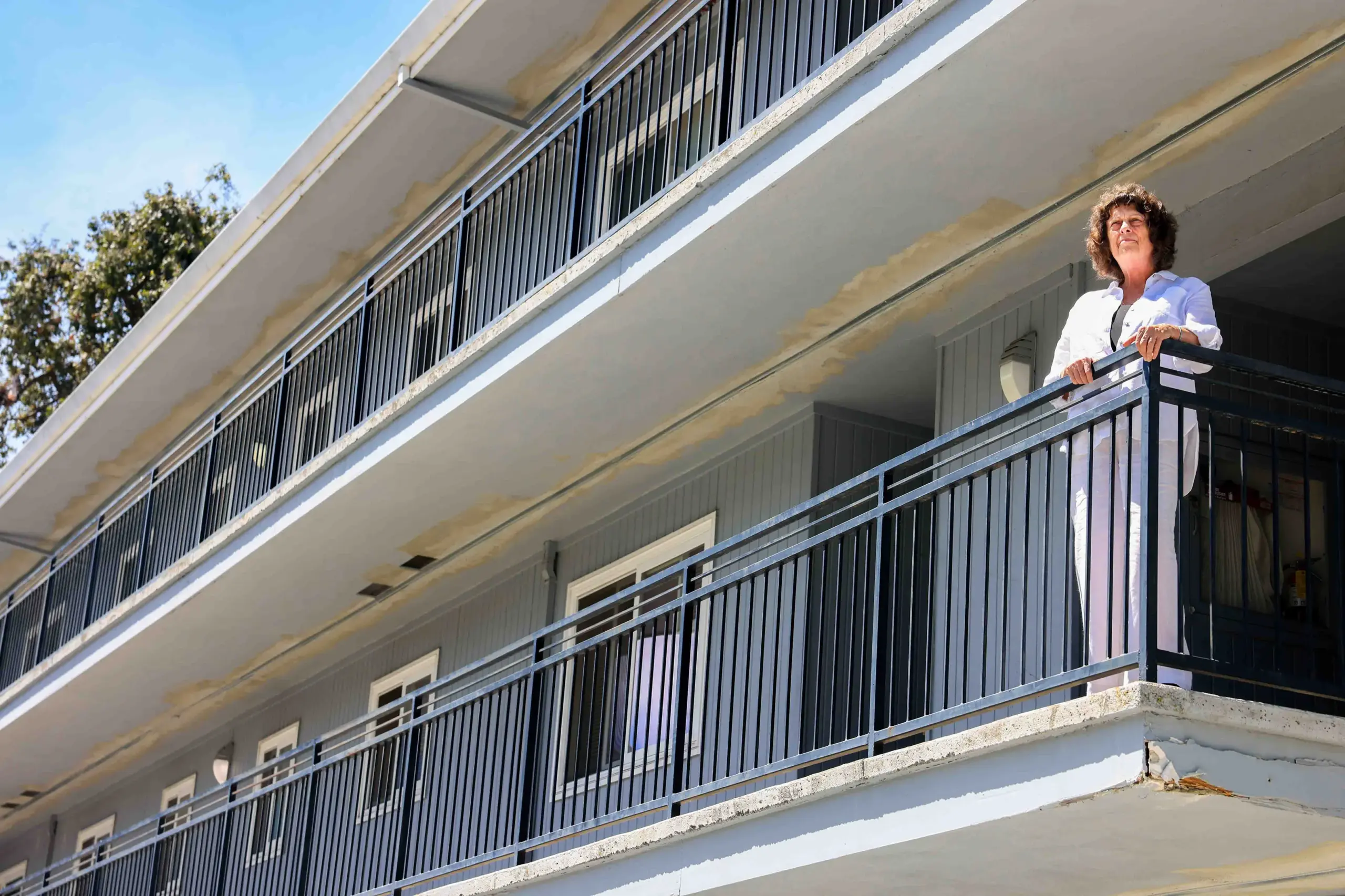
Redwood City renter Kathleen Layden is tired of the 5% annual rent increases from her landlord. It’s getting harder to afford the $3,000 she currently pays for her two-bedroom apartment on Hudson Street.
“I looked to see what was out there and wanted to move, but there was virtually nothing (affordable),” the 58-year-old said. “I felt like I couldn’t budge. I had to stay where I was at and put up with rent increases.”
That’s why this fall, she plans to vote yes on a city ballot measure that would establish stricter rent controls that could reduce her yearly rent increases and just-cause eviction protections.
Layden is among the voters in two Bay Area cities who will decide in November whether to impose such laws. Measure E in Redwood City would limit annual increases on qualifying buildings and add eviction protections. In San Pablo, voters will consider Measure S that would enforce a 3% cap and additional tenant protections.
If approved by a majority of voters, Measure E will limit annual rent increases for units built prior to Feb. 1, 1995 to 5%, or 60% of the inflation rate based on the consumer price index — around 2.28% for San Mateo County — whichever is lower. The new increases will be calculated and added based on the cost of rent in October 2025. Layden’s apartment would qualify, and her rent last year was around $2,900.
But if Layden wants these new initiatives to pass, she and other supporters are going to have to convince Jeff Schabowski, a small landlord who owns a condo on Whipple Avenue, about a mile away from her Hudson Street apartment.
It won’t be easy. The longtime Redwood City resident is a vocal critic of rent control, saying mom-and-pop landlords can’t afford the rising operating costs or pay evicted tenants relocation assistance fees, which are at least $12,000 and required under the proposed law.
“The problem is, you’re dealing with one of the most expensive areas in the world,” he said. “It’s just economically unfeasible.”
In San Pablo, Measure S has drawn public support from renters and housing justice groups like the Contra Costa County-based Rising Juntos, but opposition from local realtors.
Linda Jackson, a resident of San Pablo’s Willow Mobile Home Park, also worries about rising rental costs. The proposed rent control provisions would apply to mobile homes, offering Jackson and her neighbors some relief. She wishes more people were on board with it.
“I don’t know whether to live or die anymore because every time I turn around everything is against me as a human,” Jackson said during a July San Pablo City Council meeting discussing the measure.
Right after Jackson spoke, Roland Wilson took the stage to oppose the idea, saying it would deter property managers like herself from renting out their homes. She would rather sell her house and move to another city than have her family deal with that financial stress.
“I would rather buy somewhere else and leave that legacy than be able to put all of this on my family and on my financial burden,” Wilson said.
In 2019, California passed a rent control bill that caps annual rent increases at 5% plus the change in the cost of living, or 10%, whichever is lower. The law exempts several categories of housing, including units built within the previous 15 years and certain single-family homes and condominiums, but cities may adopt stricter limits.
Read more He posed as a 49ers player. Feds say he and an accomplice defrauded 26 women of $1.3 million
The current divide over rent control is to be expected, said Kenton Card, an assistant professor at San Jose State University who researches rent reforms. Tenant groups tend to be more supportive because they are the ones benefiting the most, he said, but landlords oppose the additional regulations on how they can do business.
“They are always going to be in opposition to each other because they represent different parties involved in that transaction,” Card said.
Residents placed both measures on the ballot by gathering the required signatures.
Redwood City’s measure was spearheaded by Affordable Redwood City and Faith in Action Bay Area, which is a local chapter of the religious social justice organization Faith in Action.
Faith in Action’s funding roots can be traced back to billionaire-backed organizations like the Ford Foundation and George Soros Open Society Foundation, however Faith in Action Bay Area did not receive funding from the organization for the campaign.
Even though more than 7,500 residents signed the petition to put the measure on the ballot — about 3,000 more than what is needed for a citizen’s initiative to appear on the ballot — landlords like Schabowski insist that it doesn’t represent the will of all residents.
But Card is not surprised to see support for Measure E at a time when inflation and overall cost of living are high in the Bay Area.
“Price regulations around rent are coming into the foreground of policies because of the increase of prices,” he said. “People are being displaced from their homes and communities and schools … and that has a very big social cost that contributes to homelessness and poverty.”
For Layden, who moved into her apartment in 2015, the space is all she has. She doesn’t have retirement plans, and even if she left the apartment, she doesn’t have anyone to stay or live with to help her foot the cost. “It’s pretty much me here in the Bay Area,” she said.
But Schabowski said he is feeling the pressure, too. He rents out the Whipple Avenue condo for $2,500 a month. After paying off fees like his mortgage and homeowner association dues, his monthly loss is $453, or $5,436 a year. If Schabowski wants to sell or move into the condo, he said he would have to pay his current tenant $12,000 in relocation fees with money he doesn’t have.
Whatever voters decide, the debate demonstrates the demand for more immediate rent relief, Card said.
“Whether this ballot initiative succeeds or fails,” he said, “the pressure is mounting on policymakers to find solutions that are immediate.”
Correction, Aug. 29, 2026: An earlier version of the story incorrectly implied that Faith in Action Bay Area received financial support for the Measure E campaign from its parent organization Faith in Action. Faith in Action Bay Area and Affordable Redwood City were funded locally.
About the Author