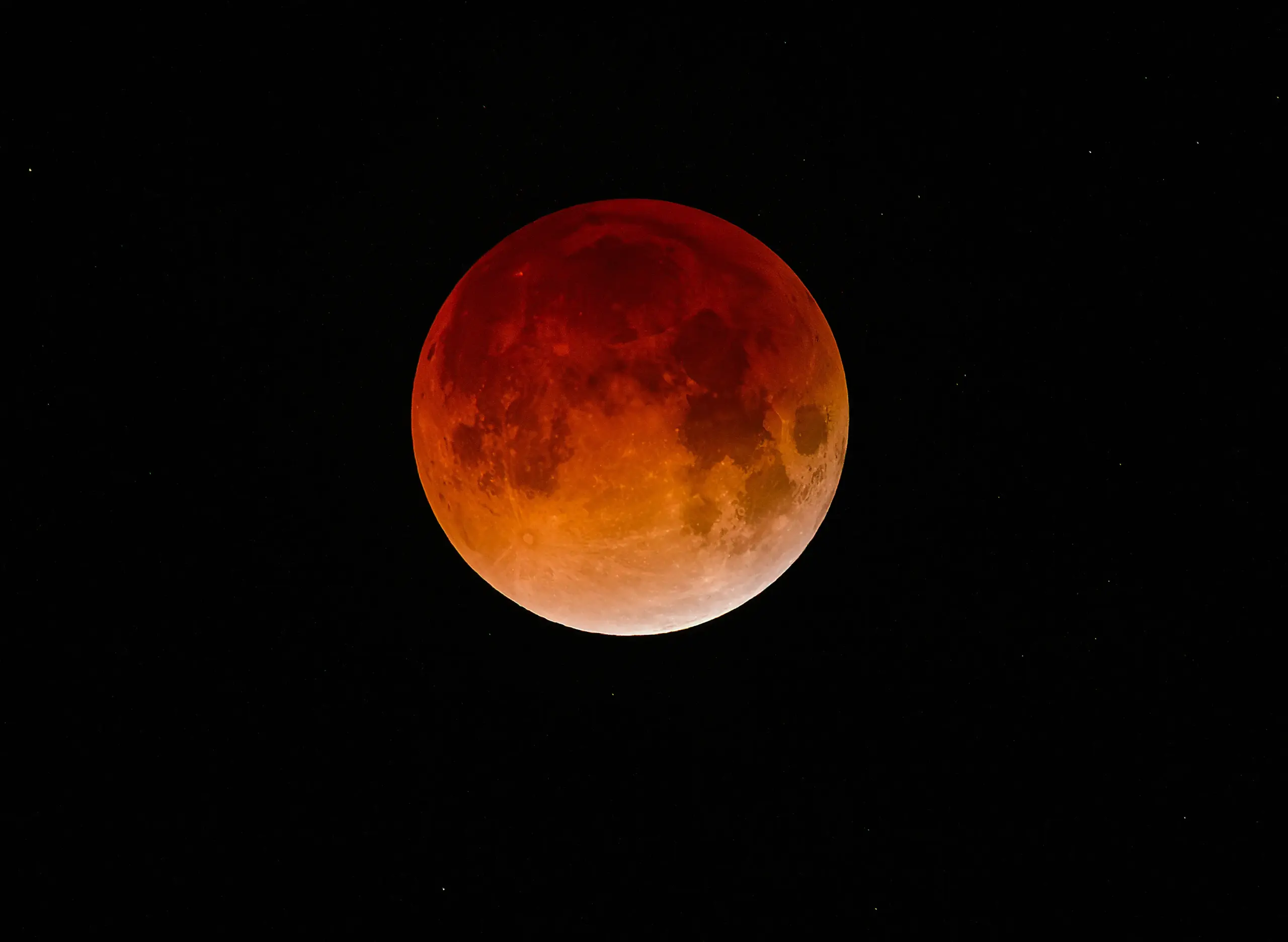
If Bay Area skies cooperate Thursday night, a near-total lunar eclipse will turn most of the moon orange-red during a celestial show that peaks early enough for children — and their parents — to watch.
Read more Study’s alarming finding: At least 1 in 4 NFL players gets brain disease
Starting at around sunset, a near-total lunar eclipse will take place when the Earth’s shadow stretches across the moon, covering 96% of its surface.
The eclipse will peak around 9:13 p.m.
“What I like about this eclipse for West Coast viewers is that it’s pretty early in the evening,” said Andrew Fraknoi, a professor emeritus of astronomy at Foothill College. “So you can show it to your school-age kids and not worry about them falling asleep in the classroom Friday.”
For West Coast viewers, it is the first lunar eclipse to unfold in the early evening since Sept. 18, 2024.
As the eclipse deepens, most of the moon will take on a rusty orange-red color.
The event will end around 10:52 p.m., although a faint outer shadow will remain on the moon until about midnight.
“It’s not quite a total lunar eclipse,” said Ben Burress, staff astronomer at the Chabot Space & Science Center in the Oakland Hills, of Thursday’s event. “Most of the moon will be in the Earth’s shadow. There will be a little sliver sticking out. But it will be similar to a total lunar eclipse. It will be pretty impressive.”
Unlike a solar eclipse, which occurs when the moon passes between the sun and Earth, Thursday night’s lunar eclipse can be viewed safely without special glasses. Binoculars and telescopes will make the moon appear larger but aren’t required.
“No special eye protection is needed,” said Elizabeth Danco, a meteorologist with AccuWeather based in State College, Pennsylvania. “That makes this an especially accessible event for people who want to step outside on Thursday.”
Read more Alameda girl, 5, who beat cancer runs a lemonade stand to raise funds
Clouds could complicate viewing in parts of the Bay Area. Burress said the eclipse should be visible from urban areas, although viewers will have better chances from places with clear skies and unobstructed views, including the foothills around Mount Diablo, Mount Hamilton and Mount Tamalpais and in the Santa Cruz Mountains.
Chabot is holding a public viewing event Thursday on its observation deck, with telescopes and staff members explaining the science from 7 to 10 p.m. Tickets are $24 for adults and $19 for youth, seniors and students. Admission is free for members, according to the Chabot website.
To take a good photo, NASA recommends using a camera on a tripod with exposures of at least several seconds.
Most years bring two or three lunar eclipses. The only other eclipse of the moon this year occurred March 3. The next partial lunar eclipse visible from North America will occur Jan. 12, 2028, while the next total lunar eclipse visible locally will arrive June 26, 2029, according to NASA.
Thursday’s eclipse comes just over two weeks after a solar eclipse drew worldwide attention. On Aug. 12, the moon covered the face of the sun during a total eclipse over parts of Greenland, Iceland and Spain.
“With a solar eclipse you have to either be really lucky or travel a long way,” Burress said. “A lunar eclipse is easier to see. It’s a moment in which the sun, earth and moon line up. It’s as if earth is reaching out and touching the moon. You can feel the connection.”
Read more ‘He’s the family pet’: Tortoise escapes from South Bay family’s home
About the Author