Since the 1970s, Steve Wozniak (commonly known as Woz) has become an icon of the tech industry, gaining incredible fame and wealth, but all he really sought out to do was to build computers for himself.
Read more Gallagher introduces Representation Act in Chico
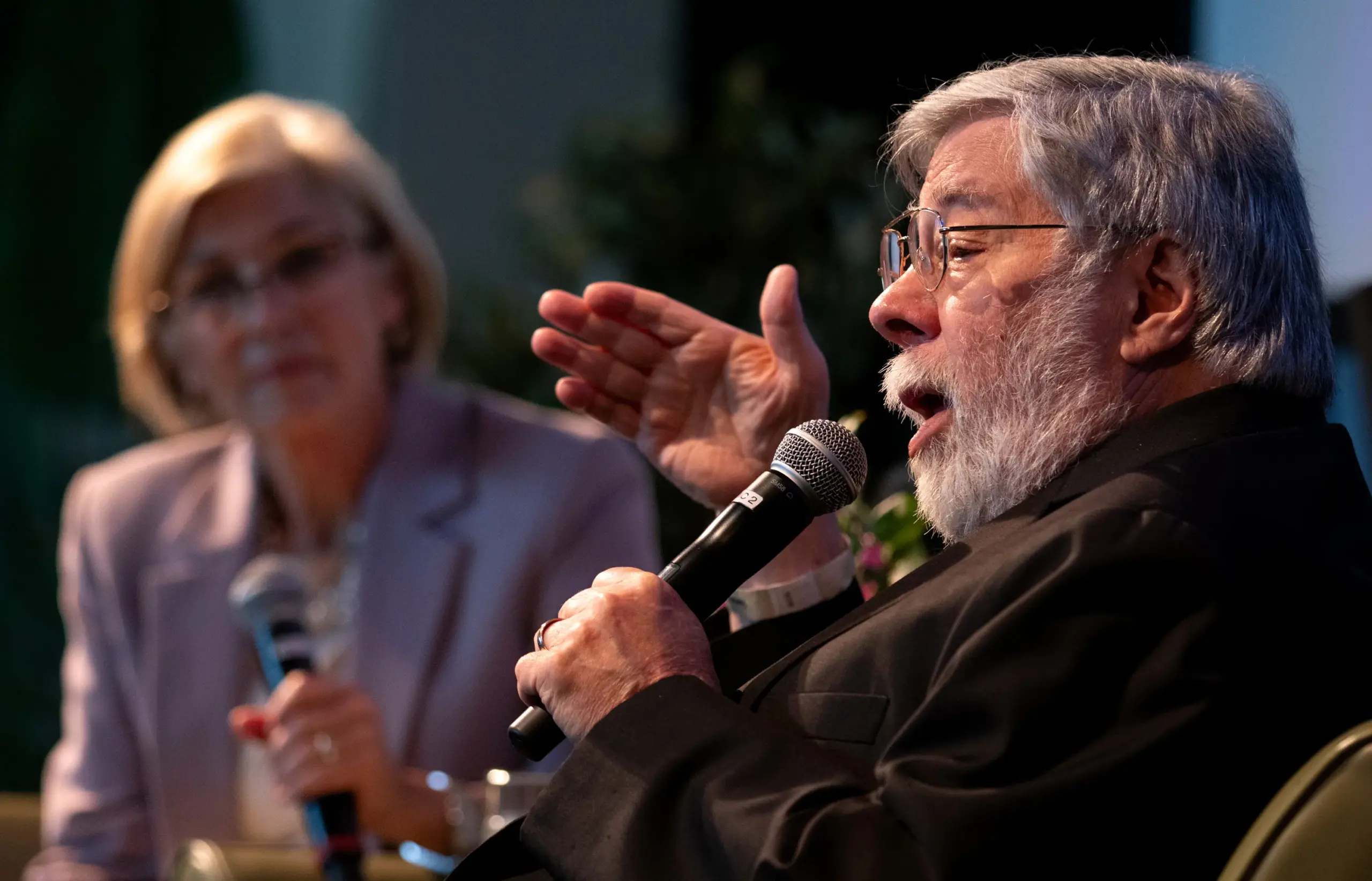
“The fact that it turned out to be the start of a huge, huge industry that we have to this day was chance,” he told an enthralled, sellout crowd while being interviewed by Laura Zimmerman during a Sonoma Speaker Series event at Hanna Center on Monday, Aug. 17.
Driven by a passion for electronics and engineering while growing up in San Jose, he obtained a ham radio license when he was 10 years old and developed formulas for analog electronics. Wozniak then became motivated to create his own computer or parts of a computer.
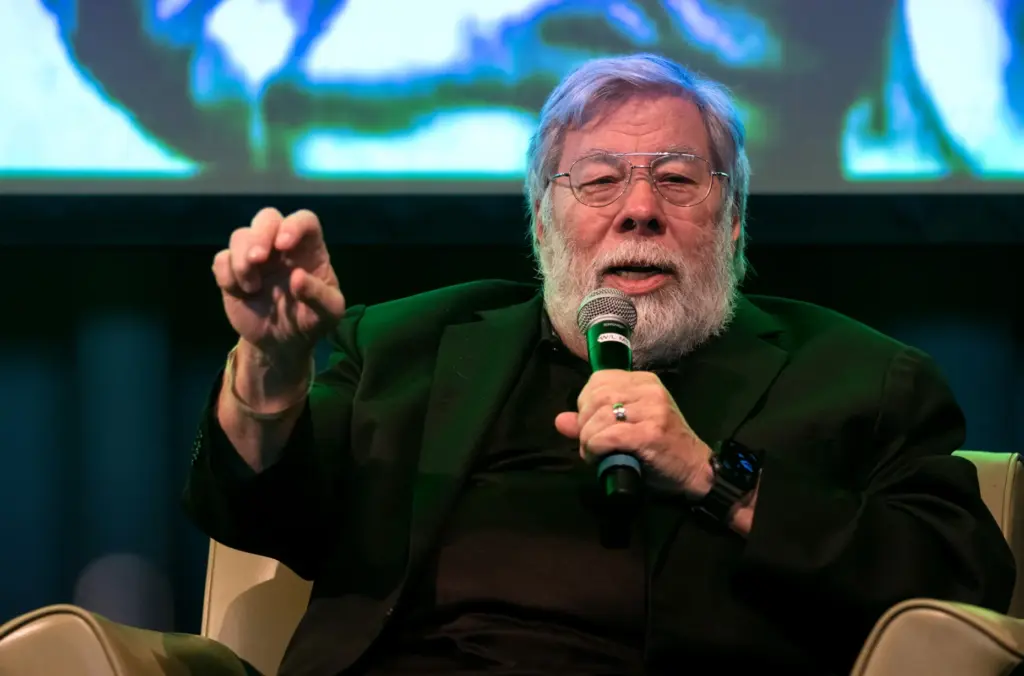 Steve Wozniak, a pioneer of the personal computing revolution, speaks during a Sonoma Speaker Series event at Hanna Center in Sonoma on Monday, August 17, 2026. (Darryl Bush / For The Press Democrat)
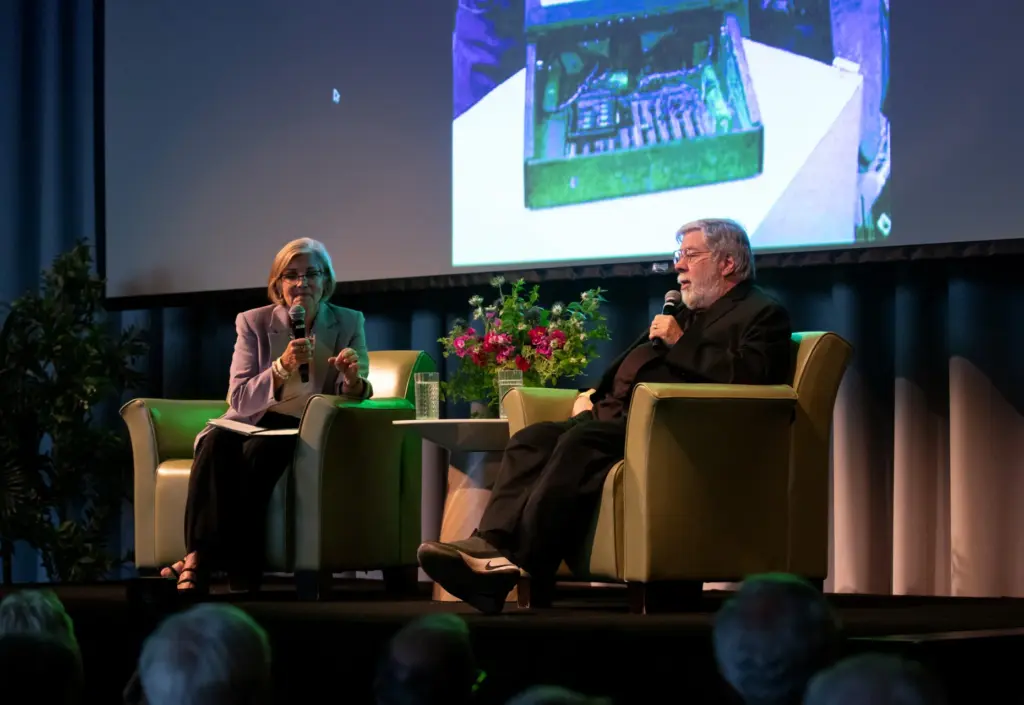 Steve Wozniak, a pioneer of the personal computing revolution, is interviewed by Laura Zimmerman during a Sonoma Speaker Series event at Hanna Center in Sonoma on Monday, August 17, 2026. (Darryl Bush / For The Press Democrat)
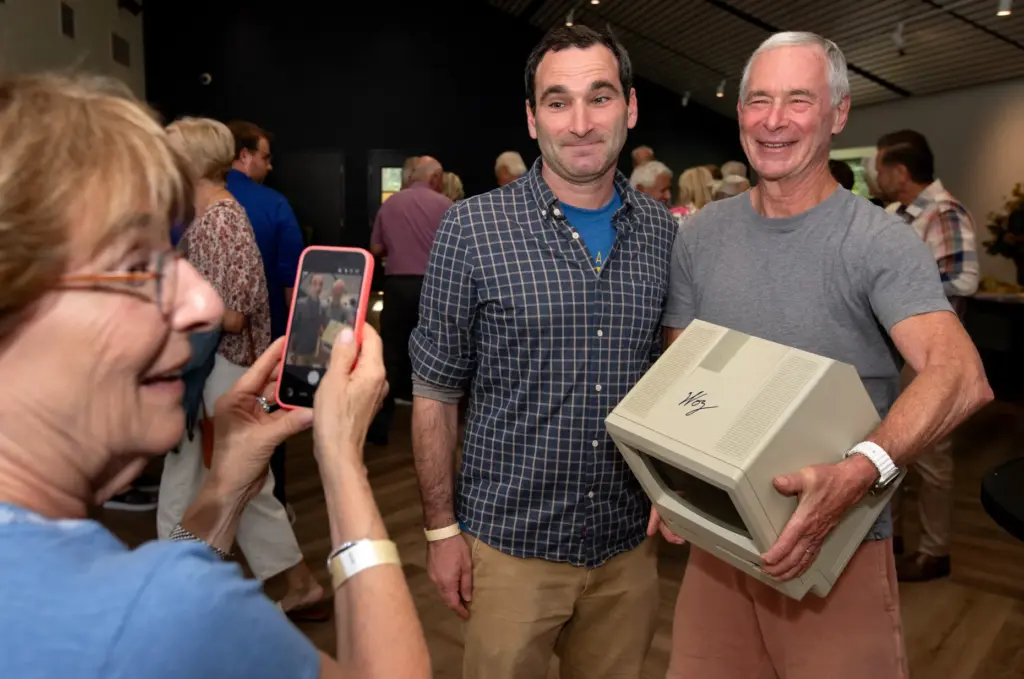 Gail Shak of Sonoma takes a photo of her son, Josh Shak of Burlingame, and her husband, Steve Shak of Sonoma, with their Macintosh Plus computer signed by Steve Wozniak, a pioneer of the personal computing revolution, before Wozniak’s appearance at a Sonoma Speaker Series event at Hanna Center in Sonoma on Monday, August 17, 2026. (Darryl Bush / For The Press Democrat)
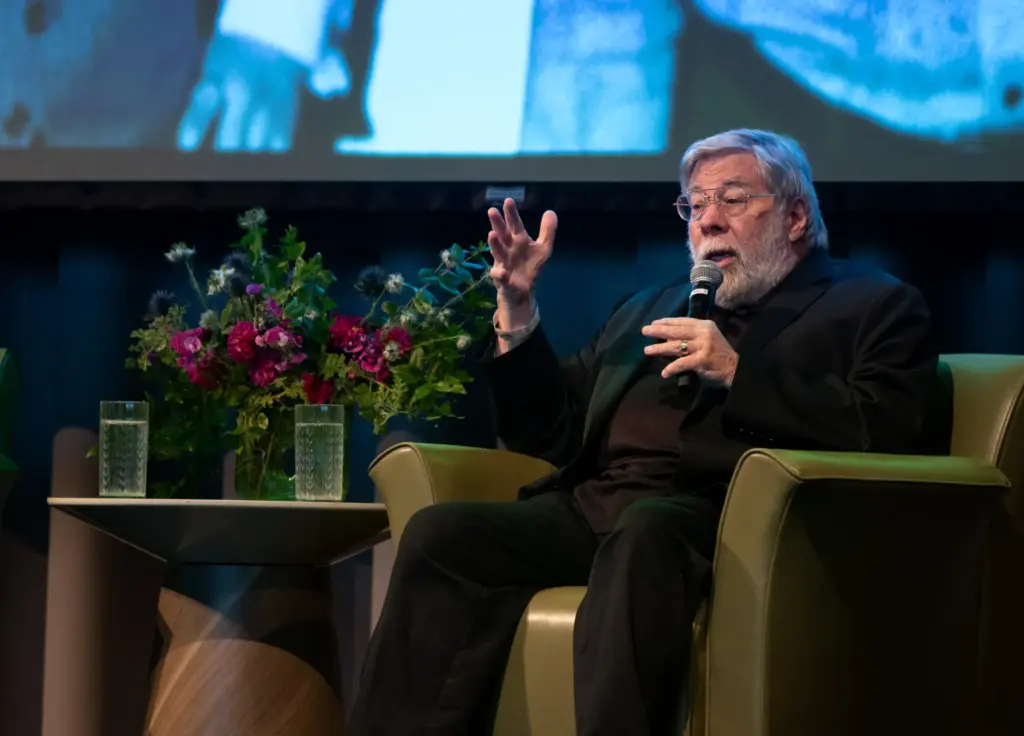 Steve Wozniak, a pioneer of the personal computing revolution, talks on stage during a Sonoma Speaker Series event at Hanna Center in Sonoma on Monday, August 17, 2026. (Darryl Bush / For The Press Democrat)
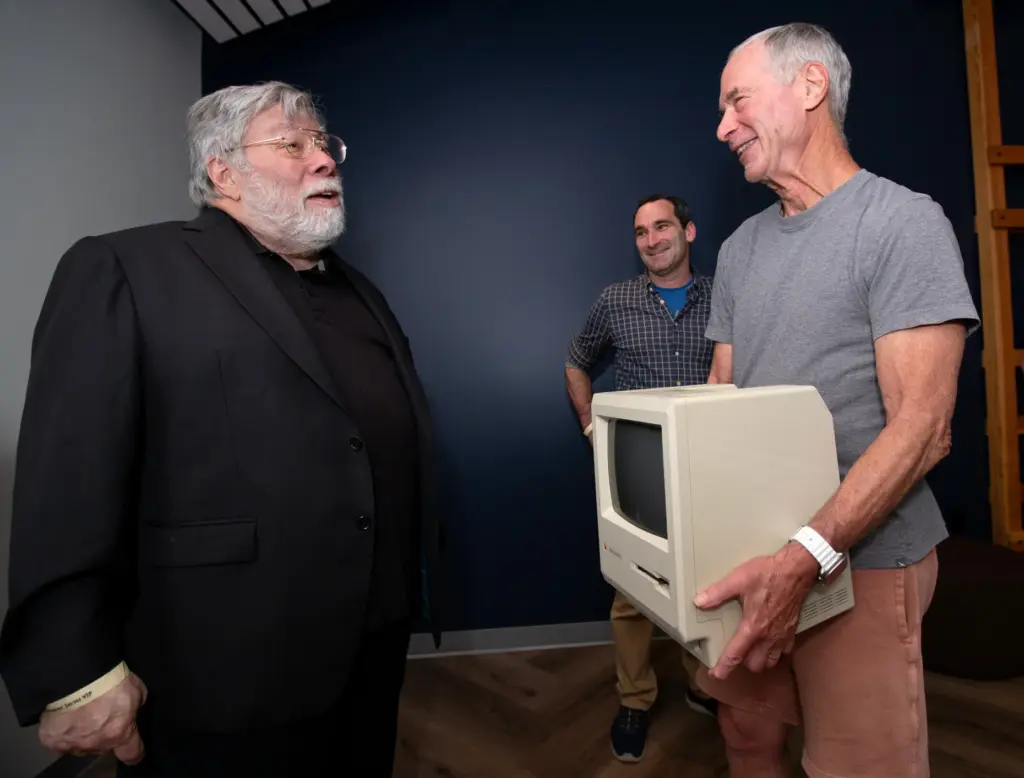 Steve Wozniak, a pioneer of the personal computing revolution, talks with Steve Shak of Sonoma as he presents a Macintosh Plus computer to Wozniak to sign during the VIP reception before the Sonoma Speaker Series event featuring Wozniak at Hanna Center in Sonoma on Monday, August 17, 2026. (Darryl Bush / For The Press Democrat)
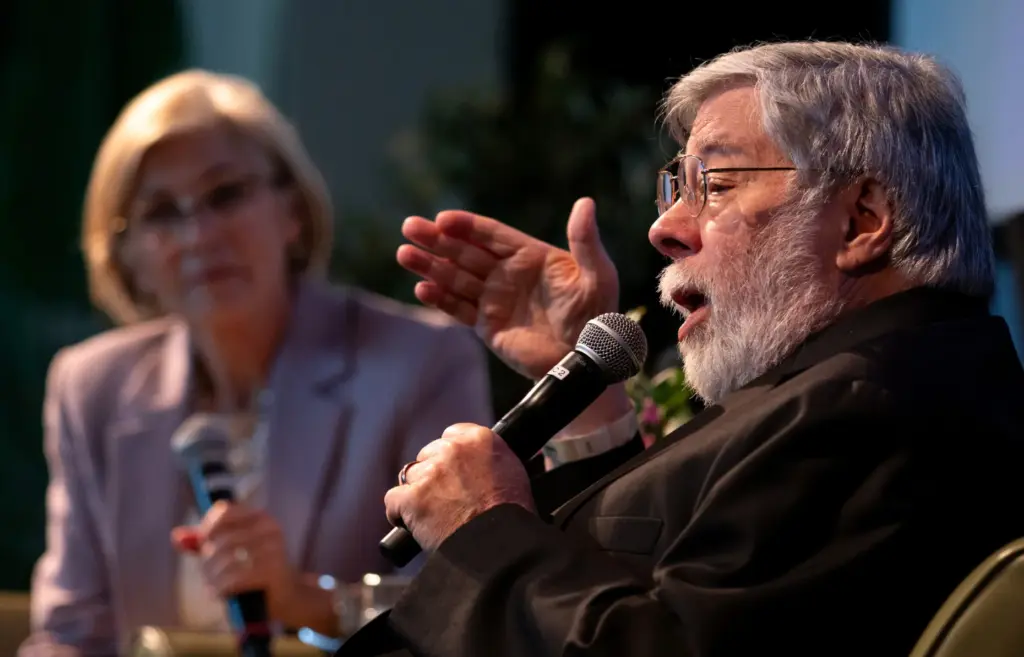 Steve Wozniak, a pioneer of the personal computing revolution, is interviewed by Laura Zimmerman during a Sonoma Speaker Series event at Hanna Center in Sonoma on Monday, August 17, 2026. (Darryl Bush / For The Press Democrat)
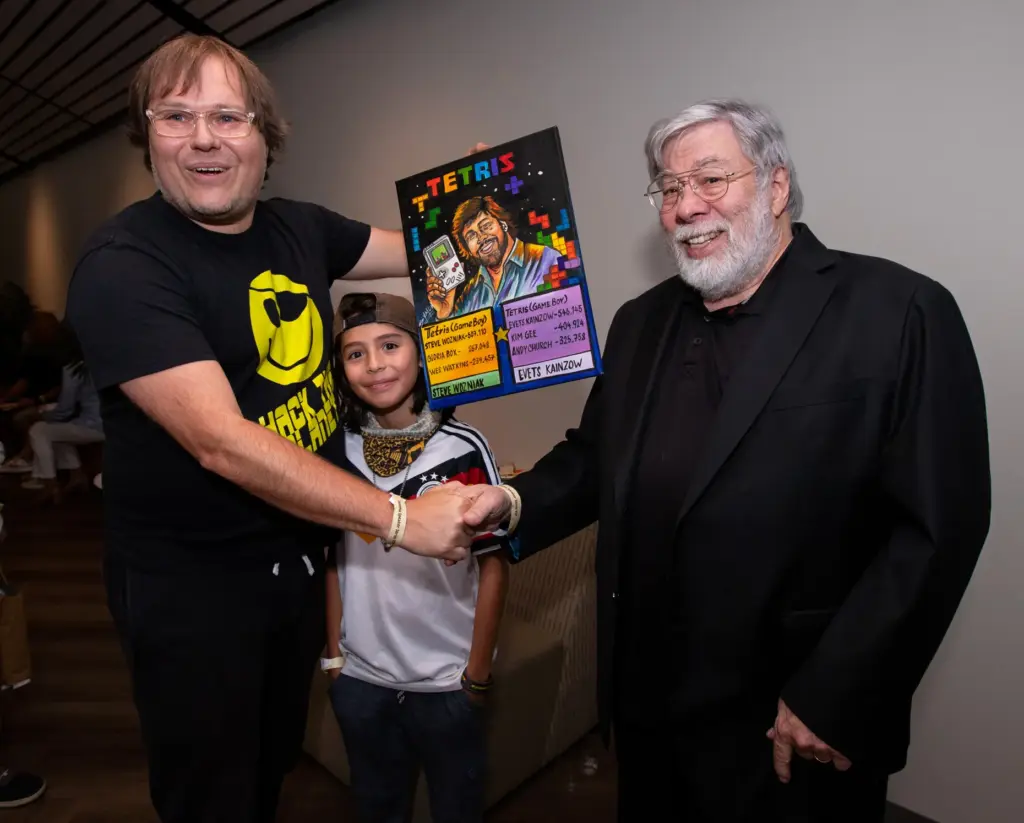 Steve Wozniak, a pioneer of the personal computing revolution, right, poses with Martin Samuel of Quito, Ecuador, and his son, Leo, as they present him with a 1991 Nintendo Power illustration at a VIP reception before the Sonoma Speaker Series at Hanna Center in Sonoma on Monday, August 17, 2026. (Darryl Bush / For The Press Democrat)
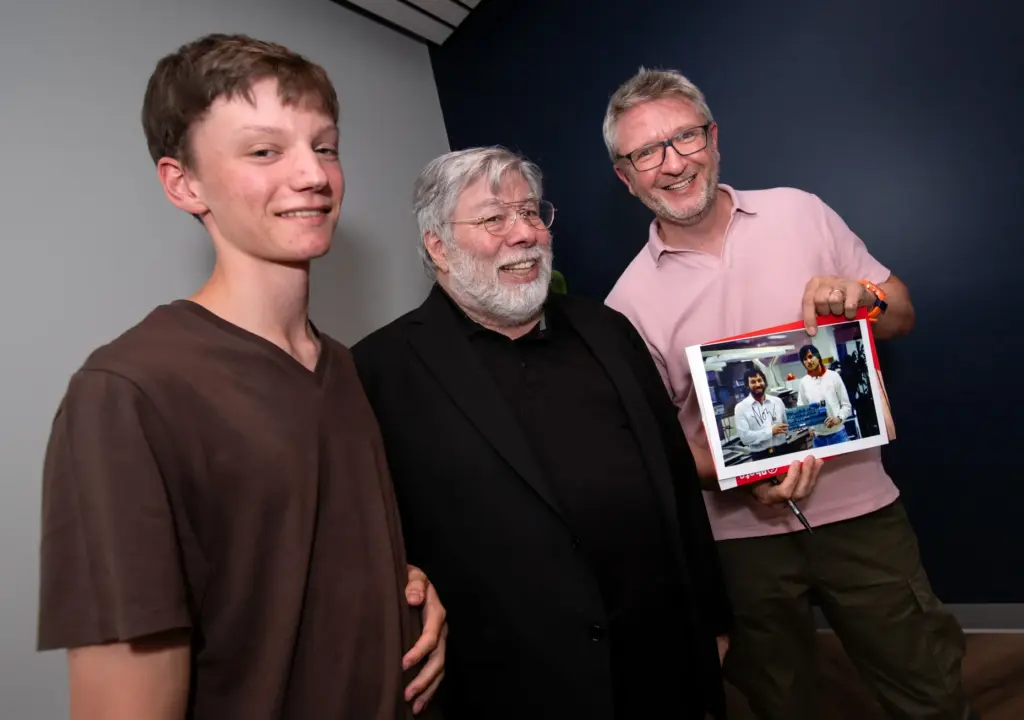 Steve Wozniak, a pioneer of the personal computing revolution, poses with Jerome Derenne and his son, Neil, both of Brussels, Belgium, at a VIP reception before the Sonoma Speaker Series event featuring Wozniak at Hanna Center in Sonoma on Monday, August 17, 2026. (Darryl Bush / For The Press Democrat)
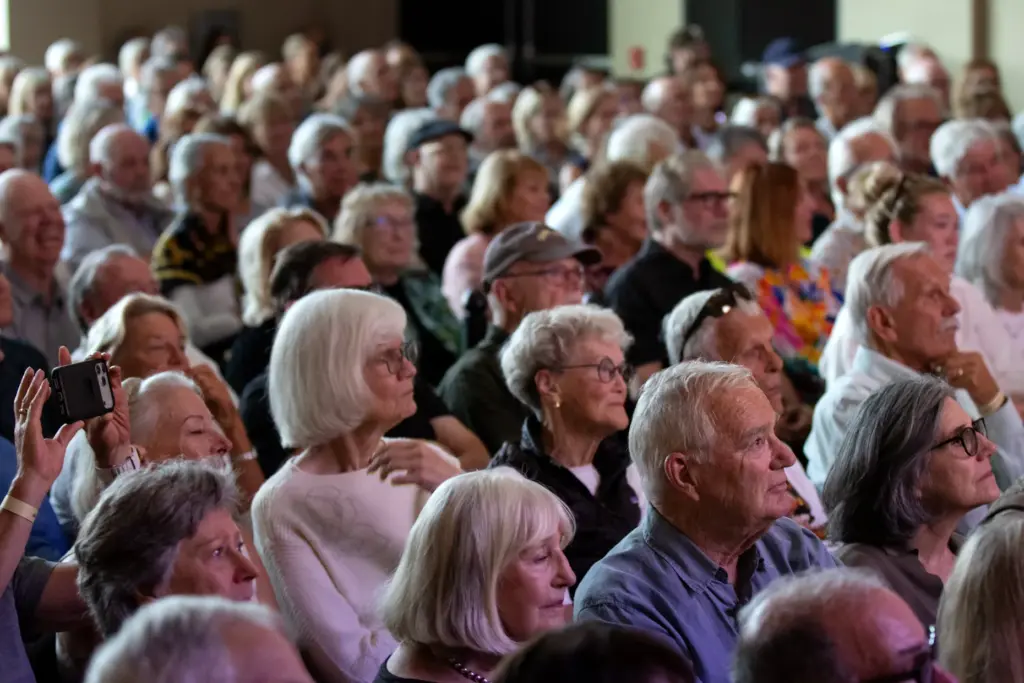 A sellout crowd listens to Steve Wozniak, a pioneer of the personal computing revolution, speaking on stage during a Sonoma Speaker Series event at Hanna Center in Sonoma on Monday, August 17, 2026. (Darryl Bush / For The Press Democrat)
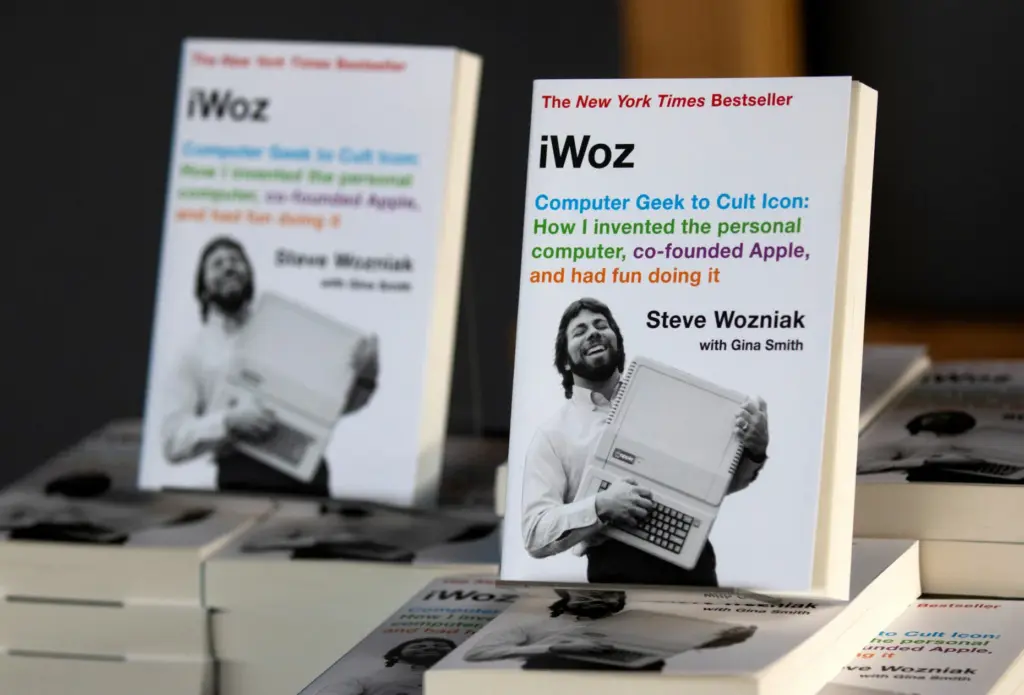 The autobiographical book “iWoz,” by Apple co-founder Steve Wozniak and co-writer Gina Smith title is displayed for sale in the lobby as Wozniak is interviewed during a Sonoma Speaker Series event at Hanna Center in Sonoma on Monday, August 17, 2026. (Darryl Bush / For The Press Democrat)
“I worked my way up with science fair projects not assigned by my school’s science teachers,” he said. “There were no computers and no computer books, so I just taught myself and loved it, knowing it was the passion of my life and that I would never do it as a job.”
In June 1971, Wozniak enrolled at the University of California, Berkeley, and for a self-taught engineering project he teamed up with a friend, Bill Fernandez, to build his first computer. It predated useful microprocessors, screens and keyboards, and used punch cards and only 20 TTL chips that were donated by an acquaintance.
Wozniak soon dropped out of UC Berkeley (but returned to earn a bachelor’s degree in electrical engineering and computer sciences in 1987) to work at Hewlett Packard, where he designed calculators.
Fernandez, who had attended Homestead High School with Steve Jobs, then introduced him to Wozniak, not only because of their mutual interest in electronics, but because of the delight they both took in pulling pranks.
Wozniak soon designed the “Blue Box,” a device for hacking into the telephone network without paying for long-distance calls that he and Jobs sold to other students beginning in 1972.
He and Jobs began working on other projects together and in 1976, Wozniak completed the basic design of the Apple I computer. Jobs advised him to start a business of their own to build and sell bare, printed circuit boards of the Apple I computer, which led to them, along with Ronald Wayne, establishing Apple Computer Company that same year.
Some 200 Apple I computers were produced, but they did not come with a power supply, keyboard and display, all of which needed to be provided by users.
In 1977, Wozniak finished his design of the Apple II, the first personal computer with the ability to display color graphics, and featuring a central processing unit, a keyboard, color graphics and a floppy disk drive.
The Apple II was a major financial success and was integral in launching the personal computer industry. Wozniak received a U.S. patent for the computer, as well as for Apple I and two other Apple products. In 1980, Apple went public and achieved significant financial profitability, making Wozniak and Jobs millionaires.
They had different personalities, as illustrated by how they viewed their success, but they did not have any serious conflicts.
“Some people think that because we are different types of people that we fought or something, but never, never,” Wozniak said. “We got along and we liked each other. Steve wanted to be important in the world, one of those people who moves the world forward, like Isaac Newton. He wanted to be that, and he got it.’
Wozniak, on the other hand, was very shy.
“I would never talk to the press,” he said. “Just put me in a laboratory and let me design new pieces for the Apple II, new computers and things like that.”
Most important to him was to gain the respect of engineers.
“I didn’t want to start a company, and I didn’t want to start an industry,” Wozniak said. “I wanted other engineers to look at my designs and say, ‘Whoa, how did he get five years ahead? I wanted to impress them, and I’ve gotten that in my life.”
He emphasized that he didn’t help to start Apple Computer Company to make money.
“When we had this huge amount of money at Apple, I gave it away to a lot of people, to a museum in San Jose (Children’s Discovery Museum of San Jose) on the street named after me and to the city where I was born (San Jose),” he said.
Read more Person injured after fight leads to stabbing at Castlemont High
He said many people become wealthy due to luck and being in the right place at the right time.
“But some of these people act like they’re God, that they can do anything and you can’t touch them, just because they became wealthy,” he said. “I did not want to be in that category and treat other people that way. I’m definitely different.”
Wozniak’s values are extremely important to him. He continues to emphasize the need for truth, trust and transparency in all matters, including the rapid growth of artificial intelligence.
“I think AI is a really good tool for a smart person to get a whole bunch of little insights and ideas and correct mistakes when they see them,” he said. “But then they turn in what they worked on as their own and make themselves look smart.
“Well, I don’t like that, and the funny thing is, everybody says we should regulate it. It’s the least thing we can do, and it doesn’t cost us a cent,” he said. “For years, I’ve been on stage saying how the regulation should work.
“First, if you get something that is AI or largely from AI, you should indicate it is from AI. Second, you should say which AI and what databases on the internet it was trained on. Third, they should have all the attributions, all the scientific journals that move our lives forward. As you’re reading sentences in AI, they should have little footnotes so you can go down and find where the research was done or what article it was taken from.”
He noted that many people are worried that due to the rapid, uncontrolled growth of AI, they increasingly might not be able to tell what is true and what is not.
Recognizing the important role that AI and computers in general play in students’ lives, Wozniak adopted the Los Gatos School District, providing students and teachers with hands-on teaching and donations of state-of-the-art technology equipment.
When using AI, he recommends first dividing the class into two parts, one educational and one fun, with gags and similar things.
“And the worst thing in the world is to solve computer problems over the phone,” he added. “It just takes forever: In person is much better.”
He suggests that students who seek to become inventive engineers should clarify their focus.
“That’s the advantage I had: I knew exactly what I wanted to be and how I wanted to do it,” he said. “Don’t just say, ‘I’m smart from the classes I took in school.’
“You might be the greatest engineer in the world, but you can’t be an inventor that way. You need an idea that you could run into a laboratory to test it out and actually make something that didn’t exist before. That’s how we change the world.”
Wozniak continues to pursue his entrepreneurial and philanthropic interests. He recently co-founded Efforce, a separate company from Apple that leverages disparate applications of blockchain technology to focus on ecological sustainability and energy efficiency.
He also remains on the payroll at Apple.
“I never retired from Apple,” he said. “I’m the only person who has received a paycheck — now a token, a small amount — every week since we started the company. I’m real important and I still have an employee number: 1”
Reflecting back on his life, which has featured everything from creating world-changing tech inventions to co-organizing two massive music and culture US festivals and participating in the “Dancing with the Stars” TV show, Wozniak seems very content.
Read more Santa Clara County coroner seeks help identifying man found in Coyote Creek in 1997
“I am so happy I would never trade my life for anyone else’s life,” he said.
About the Author