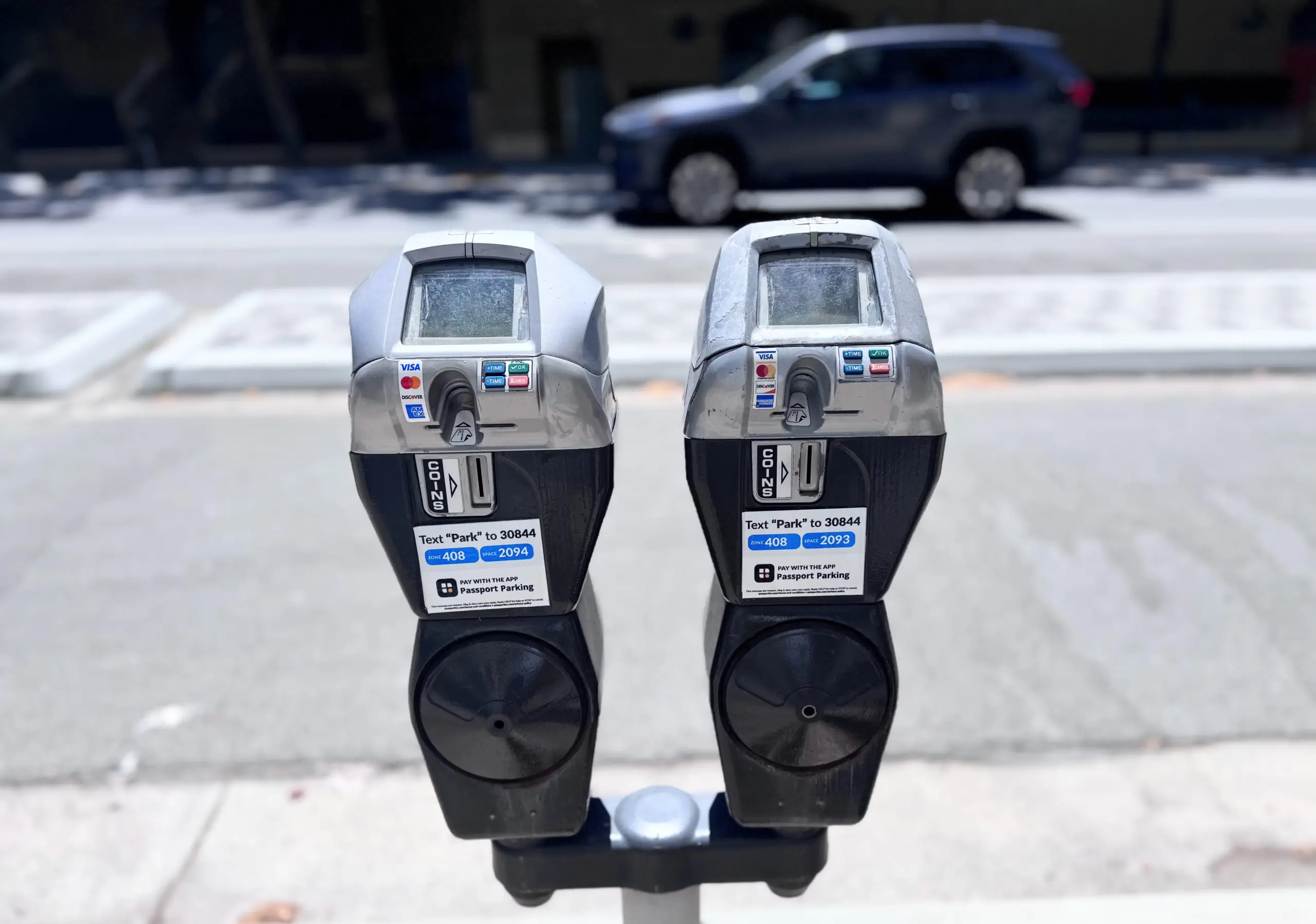
As San Jose contends with looming parking rate increases, city officials confirmed during a downtown parking board meeting Wednesday that faulty meters displayed double the standard rate this week, showing $4 instead of $2. Officials said the problem has been fixed and any drivers who were overcharged will be automatically refunded.
Read more Letters: Shaming pet owners won’t fix poor veterinary care
The city is still looking into how the error happened — reported on forums such as Reddit on Tuesday night — how many parking spots were affected, and whether anyone was actually charged. Downtown community members reported seeing the $4 rate at meters near San Pedro Square and Lightston Alley around Post Street, among other areas.
The glitch reflected a proposed rate hike postponed by the City Council in June. Colin Heyne, a spokesperson for San Jose’s Department of Transportation, said the city’s smart meters, which typically take cards or mobile wallets, will make it easy to automatically refund affected cards.
City officials learned of the error Wednesday morning as the public met to discuss proposed downtown parking hikes, which many workers, business owners, and community members say would unfairly burden working-class and low-income people. The finalized proposal on downtown parking rates is expected to be heard by the City Council at its Sept. 15 meeting.
Under the initial proposal, meter enforcement for 1,600 downtown spots would be extended from 6 p.m. to 9 p.m. Hourly rates would also double from $2 to $4 at meters within two blocks of city-owned lots or garages.
The concerns over parking come after the city touted the success of its World Cup watch parties — which brought an estimated 1 million people to downtown San Jose, centered at San Pedro Square — and expressed optimism that the crowds signal better times ahead. Downtown San Jose has struggled to recover since the pandemic, facing thinned-out office crowds and quiet daytime foot traffic.
The city cannot completely scrap the rate increases because they were already factored into the budget approved in June. Officials project the new rates will generate $1.2 million annually, helping plug multi-million-dollar deficits over at least the next two years.
As an alternative, the city is proposing to phase in the increases over five years.
At the June meeting, City Manager Jennifer Maguire acknowledged the city fell short in engaging the community affected by the increases. Since then, staff reported that they had engaged smaller groups through social media outreach and neighborhood committee meetings before its presentation to the parking board committee on Wednesday.
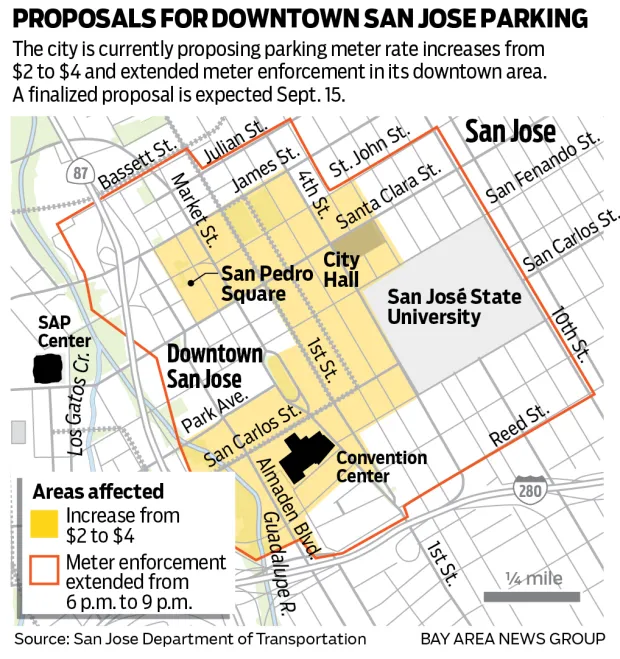
Changes would impact garages citywide and follow a separate schedule. In July 2028, hourly rates at all city garages would rise by $1, bringing the cost to $5 an hour. The plan’s final phase would take effect in July 2030 with higher flat rates for special events. Throughout the rollout, the first 90 minutes of parking will remain free at all city-owned garages.
The city also highlighted discounts for low-income employees and discounted monthly passes, while emphasizing that the first 90 minutes are free for all downtown garages.
Read more Photos: Hillsborough mansion once owned by a Walmart founder listed for $11.5 million
Still, many were not satisfied with the proposals, all of which delay the increases rather than reduce or eliminate them.
“It’s hard to come away not seeing this as just a tax on the working class,” said downtown parking board member Robert Massey, artistic director at Symphony San Jose. “We have patrons who are coming down into garages that we want to be safe, secure and functional. Most concerts are beyond 90 minutes, so that 90 minutes of free parking doesn’t really have an impact from a performing arts standpoint.”
Aside from financial burdens, people also highlighted safety issues in dimly lit garages, mobility concerns that force people with disabilities to park farther from work or businesses they patronize, and frustration over downtown parking funds not being reinvested in the area that generated the revenue.
Rachel Warner, who works at 7 Bamboo Lounge and the Caravan Lounge, said this will especially affect employees who work at night.
“The option is to park one to three blocks away from your business and walk back to your car at 2 a.m., especially with the advent of these 18 and up places downtown,” she said. “Violence has increased, there’s a bunch of crazier stuff happening, and it’s just not safe to be walking downtown that far away from your car if you’re trying to avoid stuff like that.”
While acknowledging criticism over increased parking rates, Transportation Deputy Director Heather Hoshii noted that higher rates are designed to increase turnover and move long-term parkers off the street and into garages.
“Having parking in front of businesses and on the curb also helps with illegal parking and double parking,” she said.
Juan Carlos Aguirre, who works downtown, noted his involvement in a community of individuals recovering from addiction and shared that meeting attendance “increased by 400%” in San Jose compared to when meetings were held in Campbell, due to the area’s parking availability and access to public transit.
“We go to get burritos, pizza, or ice cream, and that adds vibrancy and money to local businesses,” Aguirre said. “The proposal now would potentially force our meetings in our community, who are mostly straight out of prison or transitioning from rehab, to go to a different location. So not only will this affect all people who spoke up here, but a vulnerable community that is not reflected here.”
The proposal is not final and people still have time to get involved. They can reach out to the city’s transportation department to find out more about how to give input.
Read more What to watch: ‘Shards’ is a terrifically tawdry thriller
About the Author