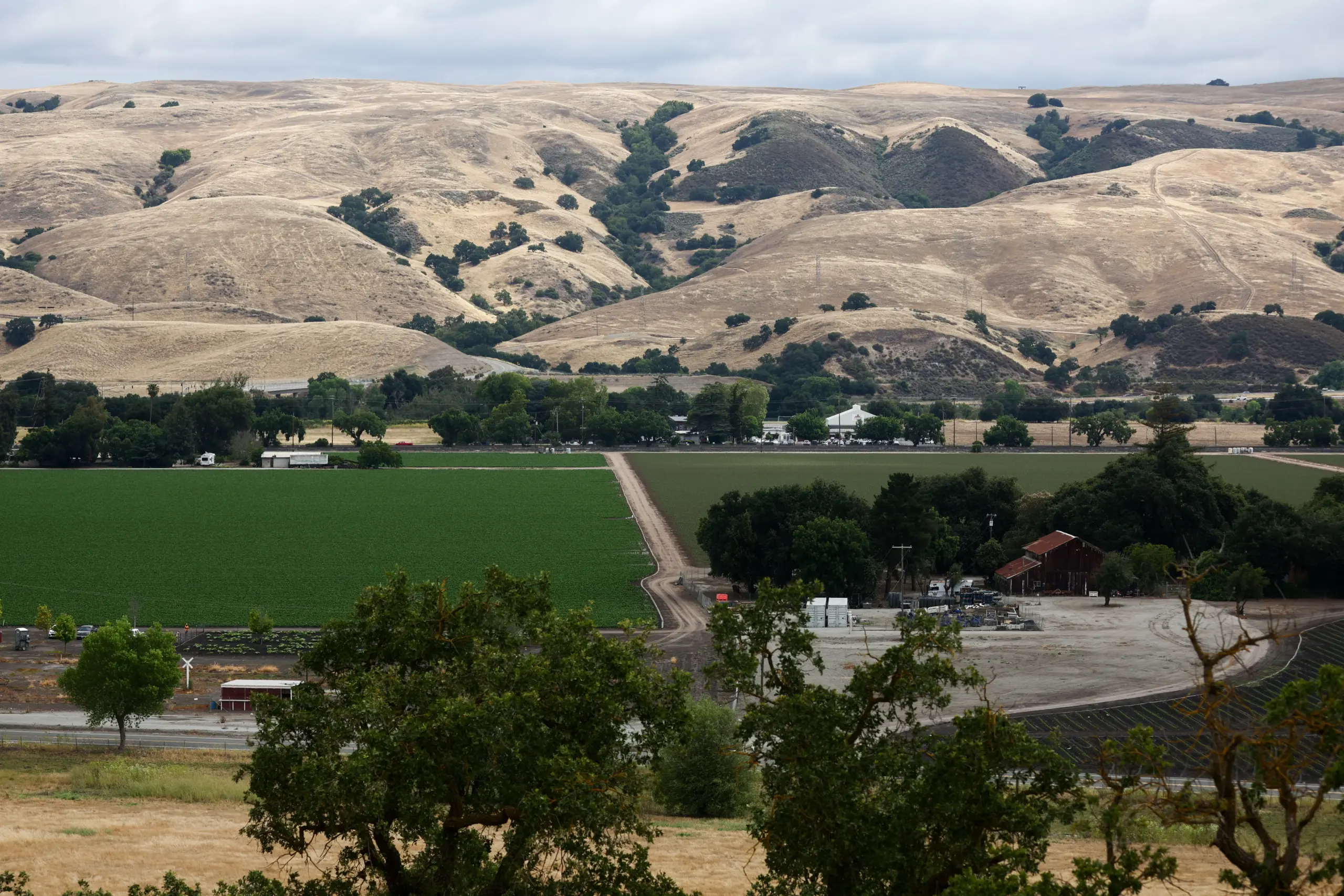
A Virginia energy company that proposed building one of the largest battery storage plants in California in Coyote Valley, a rural expanse of farmland and open space on San Jose’s southern edges, has pulled the plug.
Read more Stanford, UCSF Medical Center ranked among best hospitals in the U.S.
Located west of Highway 101 along Bailey Avenue between Monterey Road and Santa Teresa Boulevard, the facility would have included thousands of lithium-ion batteries in 312 shipping containers, spread across 40 acres — an area roughly the size of 30 football fields — on a 128-acre parcel now used for growing crops.
But the 350-megawatt plant drew broad opposition from local leaders, environmentalists, parents of children at the nearby Charter School of Morgan Hill and three state legislators. On Tuesday, the company, AES, announced it has “decided not to move forward” with the effort, known as the Jewelflower Project, citing in a statement “a range of factors, including project economics, infrastructure requirements, market conditions, community considerations and long-term investment priorities.”
AES officials did not elaborate when asked why they abandoned the project.
Opponents cheered the news.
“Great! This is a huge win for our community,” said State Sen. Dave Cortese, D-San Jose. “Hopefully this episode signals to other would-be developers our resolve to protect Coyote Valley.”
Cortese said he supports expanding battery storage plants in California, which are critical to increasing renewable energy by storing electricity generated by large solar farms in the daytime and releasing it onto the power grid at night when the sun isn’t shining. But, he said, they belong in industrial areas, not near protected open space and farmland.
Opponents noted that over the past decade, environmental groups and public agencies, including the city of San Jose, have spent more than $160 million to buy thousands of acres in and around Coyote Valley to preserve it as a key wildlife corridor, farming region and natural buffer between San Jose and Morgan Hill. Seven years ago, Gov. Gavin Newsom signed a law designating Coyote Valley as an area of statewide environmental significance.
“An industrial facility in the heart of Coyote Valley would have undermined that investment,” said Marc Landgraf, assistant general manager of the Santa Clara Valley Open Space Authority, a government agency in San Jose that opposed the project.
“We agree that California needs more battery storage systems in place,” he said. “We just need them in the right places. The highest value of Coyote Valley is for farmland, wildlife, groundwater recharge and recreation.”
Coyote Valley has been a flashpoint for development battles for generations. It is widely viewed as one of the last landscapes in San Jose that reflects what the region looked like before the growth of Silicon Valley began in the 1950s.
In the 1980s, the area was eyed as a potential world headquarters for Apple. In the 1990s, Cisco drew up a similar proposal. Both plans encountered staunch opposition from environmental groups and farming advocates and were eventually withdrawn.
In 2022, former San Jose Mayor Chuck Reed, working as an industry consultant, submitted preliminary documents to the city proposing the battery storage plant at the site.
Read more Tech companies chop several hundred Bay Area jobs in fresh layoffs
But in February 2023, San Jose city planning officials said the project was inconsistent with the open space and agricultural zoning in Coyote Valley and stated they would recommend that the City Council deny it.
In response, AES announced plans to use a state law to take the project directly to a state agency, the California Energy Commission, for approval later this year — essentially going around city officials. Newsom signed that law, AB 205, in 2022 to streamline approval for solar, wind and battery projects statewide over local opposition.
Three state lawmakers, Assemblymembers Ash Kalra, D-San Jose, and Gail Pellerin, D-Santa Cruz, along with Cortese, came out in opposition to the AES project.
Two months ago, Cortese suggested that if the company didn’t find another location, it would be a good idea for opponents to file a lawsuit under CEQA — the California Environmental Quality Act. Such suits can drag on for years, potentially costing the company millions with no guarantee the project would ever be built.
California has seen a massive increase in large battery storage plants in recent years, going from 29 statewide in 2020 to 248 today. Many more are planned across the Bay Area, in the Central Valley and Southern California.
Complicating the politics, however, was a huge fire at a battery storage plant last year in Moss Landing in Monterey County.
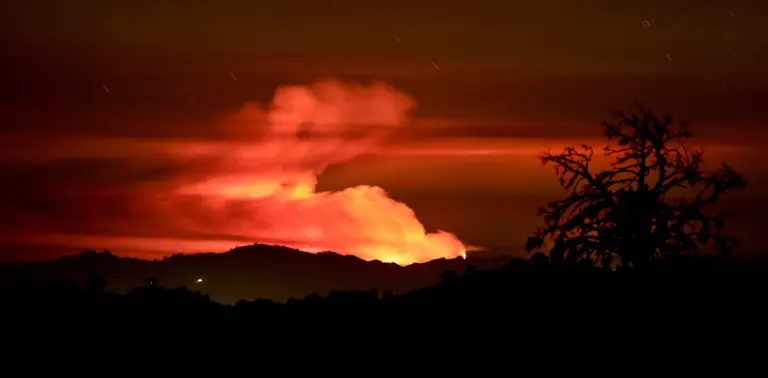
That plant, owned by Texas-based Vistra Energy, sent a column of toxic smoke into the air as its batteries burned in January 2025, leading authorities to evacuate 1,200 people and close Highway 1. The cleanup is continuing, with the burned batteries being shipped to a recycling plant in Nevada, and the EPA, state regulators and company officials investigating the cause of the fire.
One of the largest utilities in the nation, AES, based in Arlington, Va., had $12 billion in revenue last year. It operates a range of power plants including coal and natural gas-fired plants around the nation, and has been shifting to clean energy projects such as solar arrays, wind farms and battery storage.
“Over the past several months, we have held valuable conversations with landowners, local officials and organizations, and other community stakeholders,” the company said of its Coyote Valley plans. “We are grateful to everyone who took the time to learn about the project and share their perspectives.”
Environmental groups say their campaign worked.
“We are glad that AES has listened to the community and decided not to pursue the project,” said Alice Kaufman, policy and advocacy director for Green Foothills, an environmental group in Palo Alto. “The moral of the story is that if we want to protect Coyote Valley for future generations, we always need to show up and make our voices heard.”
About the Author