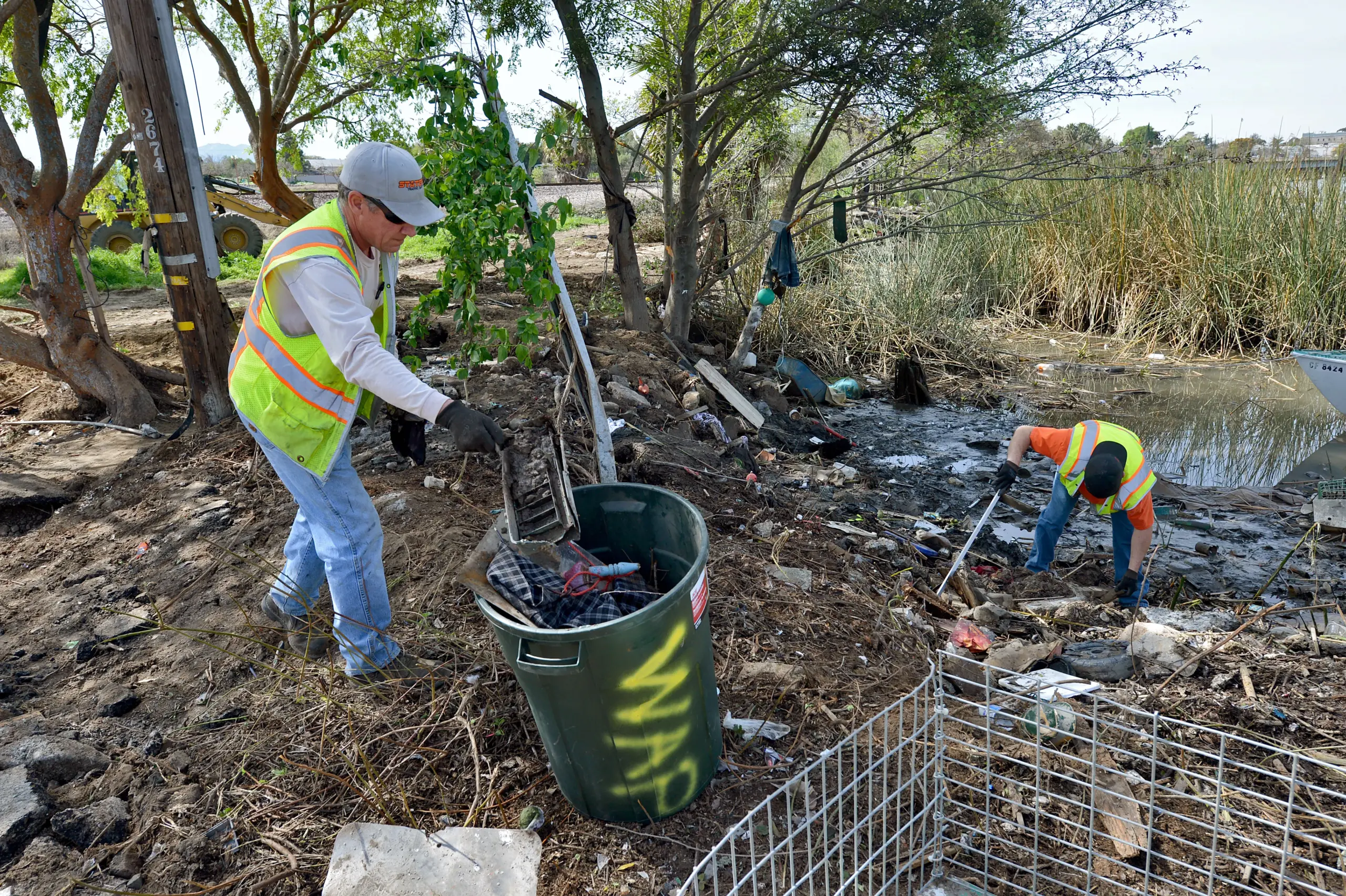
ANTIOCH — Facing a projected $15 million deficit, Antioch rejected Tuesday millions in state funding to help house the homeless – an effort that would have cost the city as much as $1.2 million a year for the next 15 years.
Read more Deals: July 29 is National Chicken Wing Day
With a 3-1 vote, the City Council turned down a $34.9 million state grant for Homekey+, a statewide program intended to aid the homeless or those at risk of homelessness find housing. Councilmember Monica Wilson was the lone dissenting vote.
With a deficit for the 2027-28 budget cycle in view, had the city accepted the grant, it would have had to contribute $750,000 just to start the project.
Mayor Pro Tem Donald Freitas said accepting the state grant could impact city services.
“It absolutely befuddles me when people say, ‘Just do this. The money’s there, jump in. Let’s spend hundreds, millions of dollars on this particular project,’ knowing that it is irresponsible, knowing that some future City Council, or maybe us, will have to declare bankruptcy,” said Freitas on Tuesday.
The council previously submitted its Homekey+ application in partnership with nonprofit California Supportive Housing in 2025.
The plan was to convert the Comfort Inn hotel on Mahogany Way into 85 permanent supportive housing units.
The hotel, which recently defaulted on $15 million in real estate loans, would offer wraparound services for those experiencing homelessness, including youths, veterans and other vulnerable groups through a “Housing First” model.
Advocates said the city’s participation was crucial in providing essential resources, while opponents said committing to it would further burden the city financially.
Contra Costa County Point-In-Time Count data revealed that Antioch has 251 people experiencing homelessness, a drop from the 413 individuals accounted for in 2024.
While the city wants solutions, the Homekey+ program was not the “right project” for Antioch, said Freitas.
District 1 Councilmember Tamisha Torres-Walker, who was absent due to a work conflict, was unable to participate remotely despite submitting a request to acting City Manager Ana Cortez to do so last week.
Torres-Walker said she received a virtual meeting link from Cortez, but the agenda published on Friday evening did not have her location.
“They didn’t do an amendment to the agenda in time to add my location, and therefore it will be a violation of the Brown Act if I join the meeting via Zoom,” Torres-Walker told this news organization. “So the only course of action I have is that my vote is omitted tonight, and the only thing I can do is make a public comment.”
During public comment, Torres-Walker offered her support for Homekey+, adding that the city had “months, if not years,” to address the issue.
Torres-Walker said the former City Council had invested and sought outside funding for other programs, including clearing encampments.
“To my peers on council, I don’t envy you tonight. Even though I cannot be there, you have a large moral dilemma you have to consider tonight,” she said. “We’re thinking about the budget deficit in the city and how we can cure that after decades of not having a strategy for economic development.”
Read more Top draft pick Jackson Flora thrilled to join hometown SF Giants: ‘This is where I want to be’
The city, said Torres-Walker, carried a “heavy load” with its slogan, “Opportunity lives here.”
“Whatever decision you make tonight, I know it will be because you thought you made the best decision, and we can’t do anything but respect that,” she said. “But I would ask you to think about my neighbors, who have to live with unhoused folks every day, and me, and we care about them. Support HomeKey.”
Wilson said the city needs to figure out a solution and proposed to have a study session on homelessness.
“We need to address this because what we’re doing now is not working. It’s not working. It’s costing us money,” she said. “You know, it’s costing us a lot of money to push people from corner to corner.”
Antioch currently spends about $2.4 million annually across multiple departments for homeless-related programs and services, such as outreach, encampment response, emergency and interim housing, nonprofit service contracts, among others, according to a staff report.
From 2024 to 2026, the city has spent about $7.16 million to help the unhoused and has also applied for funding to help provide temporary housing, outreach and stabilization services, according to the staff report.
Councilmember Louie Rocha acknowledged that addressing homelessness was pivotal, but said he was also elected “to be the steward” of taxpayers’ dollars.
Rocha said he initially thought the units in the hotel could help get about one-third of Antioch’s homeless off the street, but learned that unhoused individuals will be referred through Contra Costa County’s Coordinated Entry System based on eligibility and prioritization criteria.
“It wouldn’t be our decision, and looking at it that way, it appears to me clearly that it’s a regional problem in Contra Costa County. It’s not simply Antioch’s responsibility,” said Rocha, adding that the city was not in a position to take on the long-term project.
He said there needs to be a partnership with neighboring jurisdictions and cities.
“So we can address this issue together. That hasn’t transpired, so we’re sitting here by ourselves trying to figure out how we’re going to serve not only the Antioch community, but the unhoused community throughout Contra Costa County,” Rocha said.
Mayor Ron Bernal said the city had adopted policies and guidelines for unhoused resident services in 2021 and 2023. Bernal said the city had spent close to $500,000 in developing the plans.
Bernal said handling permanent supportive housing was “a whole different animal,” noting that communities in other cities such as Sacramento, Los Angeles and San Francisco do not dip into their general fund for these types of projects.
“The city of Antioch does not have a structure like that. And so when this proposal came forward, it required us to use our general fund money, which, as we all know, is very precious and limited,” he said.
A regional discussion was needed to address homelessness, said Bernal, but added that not many cities had the “appetite” to commit funding to resolve it.
“People believe it’s an Antioch problem and it isn’t perceived as a regional problem. It’s perceived as Antioch’s problem because we are the ones experiencing it firsthand,” he said.
Read more Kavinsky dies at 50; French DJ was composer of ‘Nightcall’
About the Author