Tesla has reached a settlement deal with the Black worker who launched a landmark racial-discrimination lawsuit against the automaker in 2017, resolving his claims even as hundreds of current and former Tesla workers spurred by his lawsuit to join legal action against the company continue pursuing allegations of rampant racism at the company’s Fremont factory.
Read more Kurtenbach: LeBron James’ decision leaves Warriors with empty offseason
Marcus Vaughn, who launched the lawsuit in 2017, and two other Black former Tesla workers who joined the legal action later, Titus McCaleb and Monica Chatman, came to an agreement with Tesla last month. An Alameda County Superior Court judge has ordered the parties to appear Sept. 11 for an update on finalizing the confidential settlement.
RELATED: Tesla’s cratering Cybertruck sales evoke Ford Edsel comparisons
The agreement would end the litigation for the three workers but not the broader legal fight the case helped ignite. The case continues for two other plaintiffs in Vaughn’s lawsuit. Five related lawsuits involving 440 workers are moving forward, along with cases brought by California’s civil rights agency and the federal Equal Employment Opportunity Commission.
The lawsuit ballooned in 2024 into a class action potentially including thousands of Tesla workers allegedly victimized by racism, but Tesla successfully fought to remove class-action status from the case last year, and it has fractured into several separate lawsuits.
The judge who in 2024 certified the Vaughn case as a class action ruled that claims for damages against Tesla would have to be made in separate lawsuits. Although the court later decertified the class action, 440 workers filed five lawsuits, with 54 to 98 plaintiffs in each, seeking damages over the alleged racism at the Fremont plant.
An Alameda County Superior Court judge last year ruled that the dozens of plaintiffs in each case had been improperly joined together. But late last month, a three-judge panel at the California Courts of Appeal overruled that decision, and the five lawsuits are going ahead.
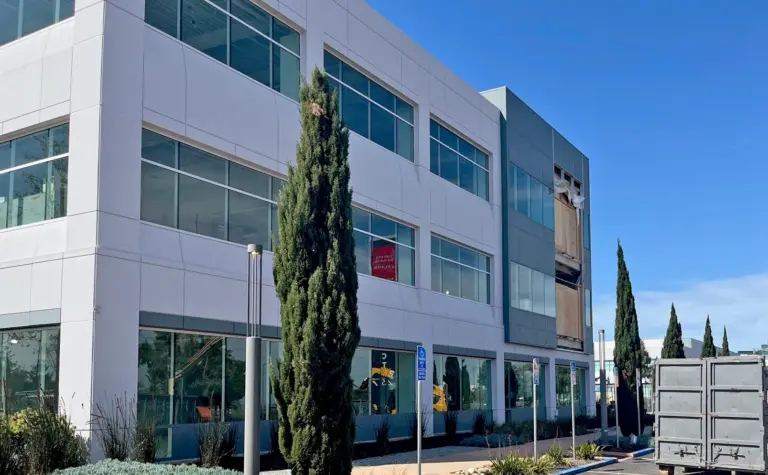
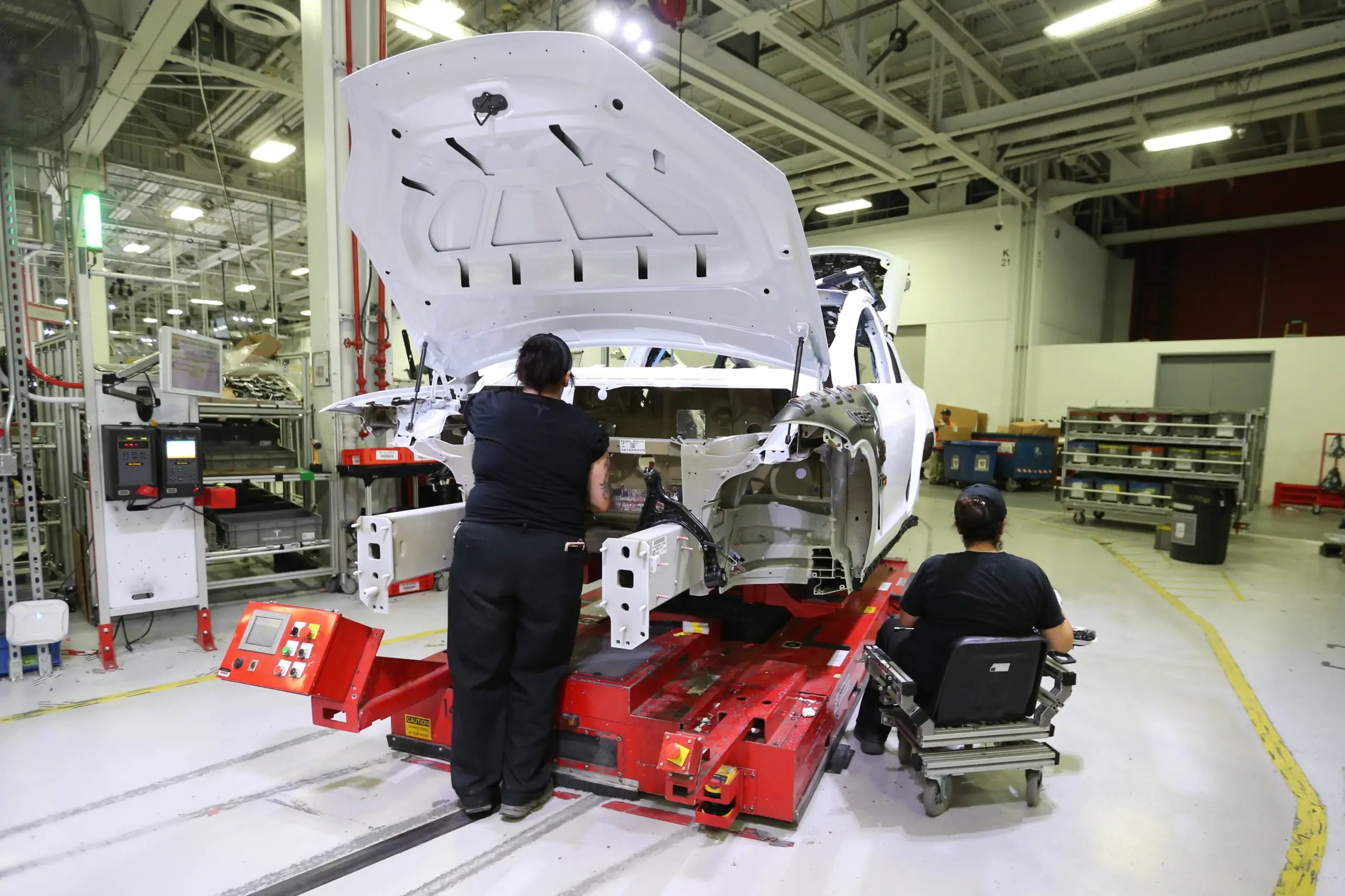
Vaughn’s case, and other lawsuits filed by workers, the state of California’s Civil Rights Department, and the federal government, claim Tesla allowed scrawled nooses, swastikas and anti-Black racism to proliferate at its car factory beside I-880 in Fremont.
Vaughn’s lawsuit in Alameda County Superior Court described the Tesla factory floor in Fremont as a “hotbed for racist behavior” that Tesla had “done nothing to stop.” Vaughn claimed he was regularly called a racial slur, and heard it used against other Black workers in the plant.
Hundreds of current and former Black workers at the Fremont facility filed sworn declarations to the court in the Vaughn case, claiming Black workers at the plant were segregated into the hardest, most dangerous, lowest-paid jobs, and subjected to frequent racist treatment, language and graffiti.
Tesla did not respond to questions about the settlement and claims of racism at the factory. In response to Vaughn’s lawsuit, the company said in a 2017 blog post that it had already investigated “disappointing behavior” from a group who worked near Vaughn, and fired three of them. A 2022 Tesla blog post in response to an impending lawsuit by the State of California making similar claims said the company “strongly opposes all forms of discrimination and harassment.”
In court filings, Tesla has claimed that Vaughn and other plaintiffs failed to establish that they were harassed or discriminated against on the basis of race. The company also said it could not be held liable for the behavior of non-supervisory employees under the circumstances alleged.
The lawsuit alleging race-based discrimination and harassment and failure to prevent discrimination and harassment seeks unspecified damages, anti-harassment training and a public declaration of the illegality of the allegedly racist behavior.
Read more Your guide to pairing seafood and beer
Virshon Meadows, one of the workers who submitted a declaration, told this news organization he was overjoyed to get a job in 2018 polishing newly painted Teslas, but within a week he saw slurs scrawled in the bathroom and heard managers refer to the factory as “The Plantation” and describe colleagues with racial epithets. In his declaration, he said he worked at a paint-baking station where the temperature was hotter than the rest of the factory, air circulation was poor, drinking water was distant, and nearly all workers were Black.
When an older Black woman collapsed, and he went to help her, a non-Black supervisor came up and told him, “Boy, you better get back on the line,” Meadows said in his declaration. “It was as if he was more concerned for the production on the line than the unconscious African-American woman on the ground, and made me feel that African-American workers had no value as human beings at Tesla.”
Worker Keyanna Campbell said in a declaration that on her production line, Black workers were singled out for the most strenuous tasks.
“These positions require moving one’s body constantly into contorted positions, often assembling or carrying heavy parts and equipment,” Campbell said.
Of the hundreds of Black workers who provided sworn statements, about two-thirds said they saw anti-Black graffiti including scrawled nooses, racial slurs and swastikas, and about 75% said they heard Tesla workers refer to the Fremont plant as “The Plantation” or the “Slave Ship,” according to a court filing. More than half said they heard production leads, supervisors and managers use an anti-Black slur, while a quarter said supervisors or managers directed the slur at them. A court filing lists more than 50 anti-Black slurs allegedly uttered or scrawled freely at the factory.
Nearly half the Black workers said they complained to bosses, supervisors, managers or the human relations department, but Tesla failed to address their concerns. Dozens said their complaints drew retaliation, including termination, the filing said.
Tesla submitted to the court declarations from 228 others who said they did not observe harassment at the factory, or if they did, Tesla took immediate and appropriate action against it.
In 2024, a judge overseeing the case, Noël Wise, said the statements from the workers alleging racism suggested they had “experienced conditions that might reasonably be characterized as race harassment.” The year before, in a separate lawsuit against Tesla, San Francisco federal Judge William Orrick cited “awful, pervasive racism” at the Fremont factory. Orrick called Tesla’s workplace practices “grievously reprehensible.”
Filed with Vaughn’s lawsuit was a 2017 letter from Tesla CEO Elon Musk to employees, addressing treatment at the Fremont factory of workers he described as being part of “historically less represented” groups.
“If someone is a jerk to you, but sincerely apologizes, it is important to be thick-skinned,” Musk wrote. Musk in recent years has on social media repeatedly attacked “anti-White” discrimination.
Vaughn’s legal action led to lawsuits from the State of California, which drew heavily on allegations from the Vaughn case, and the federal government’s Equal Employment Opportunity Commission, which finished a probe of Tesla’s Fremont factory practices in 2022. Both cases are ongoing.
Read more What it’s like aboard the street-legal banana that’s giving rides in the Bay Area
About the Author