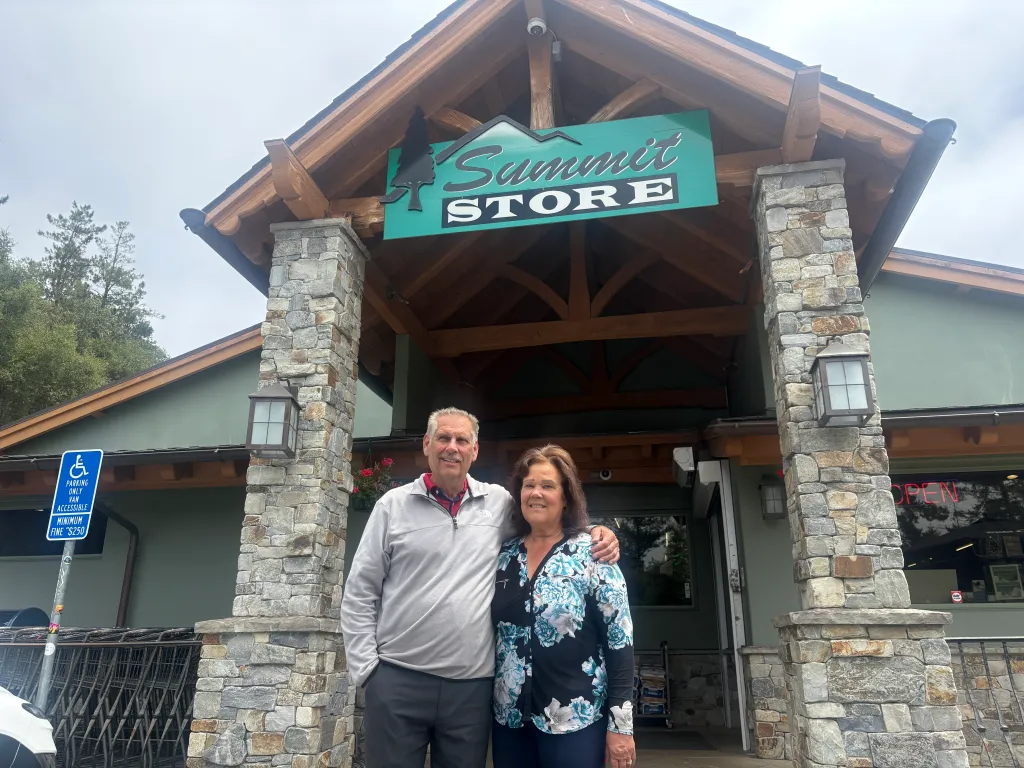
At independent grocery store Summit Store, Inc. in Los Gatos, locally sourced foods from Aptos, Santa Cruz and Monterey share shelf space with familiar commercial brands like Kellogg’s, Nabisco and Coca Cola.
Read more House passes bill to rename San Jose VA clinic after late NFL star, veteran Pat Tillman
Summit Store is a small, local, community-oriented grocery store that supplies both conventional and organic products to Santa Cruz Mountain residents, said owner Darrell Osborn. Store manager Ben Abeln acknowledged that the need for commercial products comes from both customer demand and corporate acquisitions of local brands.
“Sales is not what I want; it’s what you want. And if you want it and it moves off of the shelf, that’s not my choice, it’s a customer’s choice,” Abeln said.
During the COVID-19 pandemic, Forbes reported that many consumers shifted to buying food locally due to supply chain disruptions, labor shortages and demand fluctuations. That trend has continued in recent years, with half of all retail sales in 2025 made at local stores, according to a Capital One Bank shopping research report in June.
However, the number of independent grocery stores has dropped rapidly since the 1980s as large retailers like Grocery Outlet, Walmart and Kroger dominated the market, which led to food deserts and higher prices, according to a 2024 article by the Institute for Local Self-Reliance. Despite emphasizing a commitment to locality, some grocers agreed that it is difficult to avoid carrying conventional products.
Whole Foods local forager Patrick Wyman said the chain store, which has a Los Gatos location, focuses on sourcing many goods from local and emerging producers, but they continue to carry some conventional products like Siete Foods, Poppi and Justin’s Nut Butters because they started locally before becoming national brands on household names.
“These brands continue to deliver value to our customers as well as their supply chain,” Wyman said.
Consumer expectations for year-round access to produce that cannot be grown locally during certain seasons is just one reason why local grocery stores cannot rely on just regional products, said Santa Clara University environmental studies professor Chris Bacon. He added that in order to compete in the market, small grocers need to carry commercial household products,like Charmin toilet paper or Dawn dish soap because they provide cost advantages to the sellers due to cheap mass production.
Additionally, buying strawberries grown in Watsonville doesn’t automatically equate to an ethical purchase. Bacon said that if a local food system is not organized around equity, sustainability and justice, buying local can continue to reinforce existing inequalities, like poor working conditions or low pay for farmworkers.
Héctor Reider, co-director of the Farm-to-Market Program at Community Alliance with Family Farmers, emphasized the disparities between farmers and consumers. According to the U.S. Department of Agriculture, small family farms that make under $350,000 made up 86% of all farms in the country in 2023. However, they only accounted for 17% of the value of production that year. Feeding America also reported that nine out of 10 counties in the U.S. with the highest food insecurity rates are rural.
Read more San Jose doesn’t want plastic bags, case wrap in recycling. So what should you do with them?
Buying locally made products tends to raise concerns about higher prices than for conventional products, but producers face a lot of challenges that can drive the cost up, Reider said. Smaller, mostly migrant farmers tend to lease their land, thus reducing their access as farmland becomes consolidated by a few large farms. And many laws that were meant to support smaller farmers, like the USDA’s Local Food Purchase Assistance and Local Food for Schools programs, had their funding canceled or paused due to the Trump administration’s 2027 budget request. On top of that, small farmers have to handle the growing, transporting and marketing tasks of building a business that large companies have dedicated branches for. Additionally, large farming companies benefit from visa programs that can result in workers not being paid fair wages, which reduces production costs.
“We’re talking about people who don’t have access to a lot of markets, have difficulty accessing land (and) potentially, if they can’t afford food, that means their economic situation is probably not great,” Reider said.
However, Bacon said there is still economic, environmental and cultural value in buying locally made goods. He said the collective value of the food system in San Jose is over $3 billion. And when that money is spend in the local food economy, there is a multiplier effect that keeps dollars circulating further within the community.
“One of the biggest challenges our food system faces is the disconnection between the farmer and the eater,” Bacon said. “Engaging with local food systems creates face-to-face relationships, connects us to the place we inhabit and its seasonal cycles and builds local economic resilience.”
The Summit Store has historically established itself as a community fixture between Los Gatos, Scotts Valley and Soquel. Abeln called the store a “hub” during natural disasters, where people can get information from authorities without internet and schools, unhoused residents and emergency responders can get food. Lyman said in an email that Whole Foods launched the Nourishing Our Neighborhoods program to provide food to community organizations like West Valley Community Services. The grocery store chain also has a Local and Emerging Accelerator Program that provides mentoring and direct financial support for local and emerging brands.
“We have a strong focus on local and emerging brands and an opportunity for suppliers to grow with Whole Foods Market,” Lyman said.
Bacon advised consumers to learn about and engage with the people, institutions and businesses that their food comes from and support farmers’ markets and small local catering co-ops, because direct engagement helps make sure that food choices align with personal and social values.
“The key is to align your purchasing choices with your values, whether that means supporting certified organic produce, fair labor practices or small-scale operations,” Bacon said.
Read more The Bay Area’s largest music festival announces lineup of bands for 2026
About the Author