Petaluma has served as a proving ground for tightened mobile home park regulations and is poised to do so again as the owners of Little Woods Mobile Villa seek to push forward with shuttering the 78-space park off Lakeville Highway.
Read more $3.2 billion shipyard project chooses Texas over California Forever
The city has been a ground zero of sorts as a group of park owners have launched a flurry of lawsuits over new rules passed to limit rent increases on mobile home spaces and bolster resident protections as part of a wave of tighter regulations regionally and at the state level.
REALTED: Real estate investors wheel and deal to buy South Bay 3 mobile home parks
In June 2024, Little Woods owners notified the city of their intent to close, setting off a lengthy, complex and not often used process that has emerged as one of the flashpoints in the wider fight over mobile home park regulation.
“I think it is a rare occurrence,” said Petaluma Assistant City Attorney Dylan Brady. “I know there’s no case law. It’s very new.”
Closing and converting mobile home parks, which are governed by different rules than other housing, comes with noticing requirements, a relocation impact and compensation assessment conducted by a consultant of the city’s choosing and at the cost of the park owner, and an ultimate decision by elected council members.
While Petaluma’s guiding rules have been in place for two decades, California tightened its own laws on the process starting in 2021.
Advocates say the strict regulations are necessary to preserve a slim share of affordable housing and protect low-income residents who own their homes but rent the spaces below them and have few affordable options to relocate. The homes themselves are often difficult and costly to move.
In May 2025, after their unsuccessful protest, Little Woods ownership paid a roughly $200,000 deposit to the city for the relocation assessment, which started later that year.
But, owners also filed a claim for a refund, and in November 2025, sued the city over the cost, asking a judge to deem it unlawful. That case, and a similar one out of Petaluma’s Capri Villa with the same owners, are ongoing. Meanwhile, on June 29, Little Woods submitted another legal filing to compel the city to produce the report.
RELATED: Fierce backlash prompts San Jose to punt mobile home park ordinance that would allow raised rents and passed-on costs
Little Woods owner Nick Ubaldi said the city’s tightened rent control drove them to pursue closure in the first place. Now, “they’ve collected hundreds of thousands of dollars from us, and they’re just playing games,” he said. “We’ve basically been left in (the) lurch here.” He noted that the city had originally estimated completion of the report, outlining how much it will cost to close the park, by the end of March 2026. After multiple inquiries, Ubaldi said, it’s been “radio silence.”
The report is still in process, Brady said, but nearing completion and expected within the next couple months.
“I think everybody agrees that property owners should have the ability to use their property,” Brady said. But, nearly 100 residents could be displaced “through no fault of their own,” he added, noting the city wants to make sure the report accounts for the true weight of that impact and meets the complex legal requirements. “It’s a big deal.”
The Lakeville Highway property is only zoned for mobile home parks, and owners haven’t pursued a change in zoning for any other building to date.
Protections and pushback
Other cities, too, are grappling with the threat of park closures and the backlash around protections. A national legal group recently waded into the legal fight in Windsor, where Ubaldi is challenging the town’s emergency moratorium preventing the closure of another of his family’s parks.
The lawsuit was initially dismissed but is up on appeal.
Ubaldi and his family own at least six mobile home parks outright in Sonoma and Napa counties and have stakes in a number of others across the state. He has been an outspoken critic of regulations he said have “effectively strangled” his business, and his parks have been at the forefront of much of the related litigation in Petaluma and several other cities in Sonoma County.
Little Woods ownership has brought six lawsuits against Petaluma. Another lawsuit, filed in federal court with the owner of nearby Youngstown Mobile Home Park, relating to Petaluma’s rent restrictions and the state’s closure law was dismissed in 2024. While Ubaldi isn’t alone in pushing back, Petaluma hasn’t seen the same resistance from all owners, Brady said.
Ubaldi also works for Stockton-based Harmony Communities, a controversial mobile home park management company that oversees dozens of properties in California and Oregon, including Ubaldi-owned parks in Sonoma County.
A KQED analysis of property records showed Harmony Communities has become a major player, managing roughly 80 parks in California as of 2025.
Read more Sausalito’s new city manager arrested in burglary case
The wave of local and state regulations shoring up mobile home rent increases and protections in recent years came in response to widespread advocacy from residents. Many are older and retired or living on low or fixed incomes. The rising cost of living and fear of displacement has pushed them to the brink, residents say.
In some parks, including some managed by Harmony Communities, residents have described — and in some cases sued over — aggressive tactics, pointing to harsh rule enforcement, eviction threats and passed-through expenses.
After hearing from Sonoma County and other mobile home residents, Rep. Mike Thompson recently reached out to the Sonoma County district attorney to look into their concerns and state Attorney General Rob Bonta, requesting he review allegations of unfair business practices and consumer harms. Separately, Thompson, D-St. Helena, asked the Trump administration to investigate anti-competitive practices by institutional mobile home park investors — a point of focus in the national debate over mobile home parks.
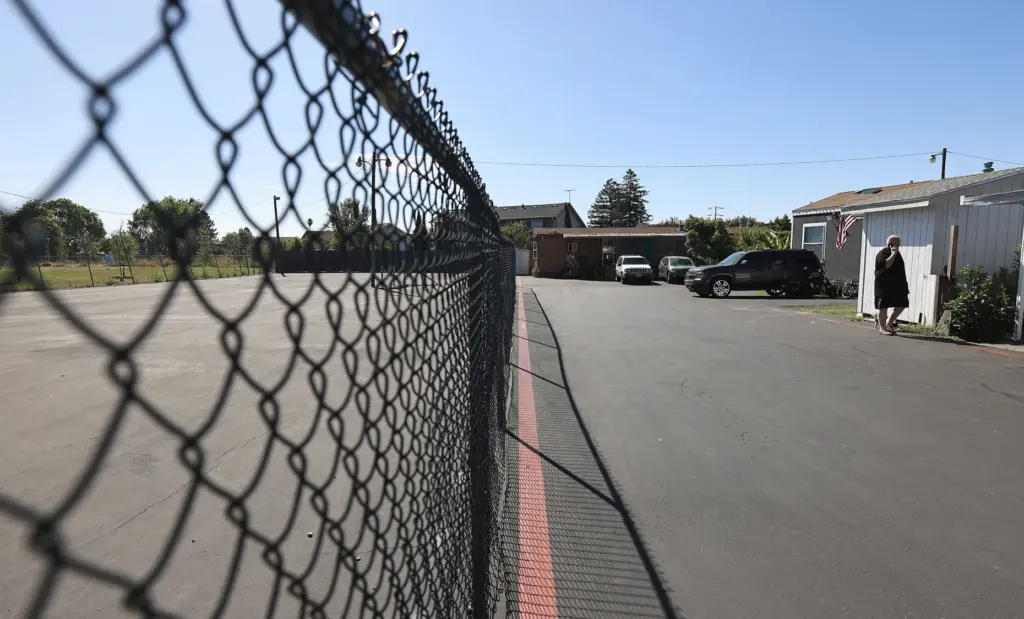 At the edge of the Little Woods mobile home park neighborhood in Petaluma, Friday, July 17, 2026. (Kent Porter / The Press Democrat)
 File photo by Crissy Pascual / Petaluma Argus-CourierLittle Woods mobile home park in Petaluma. (File photo by Crissy Pascual / Petaluma Argus-Courier)
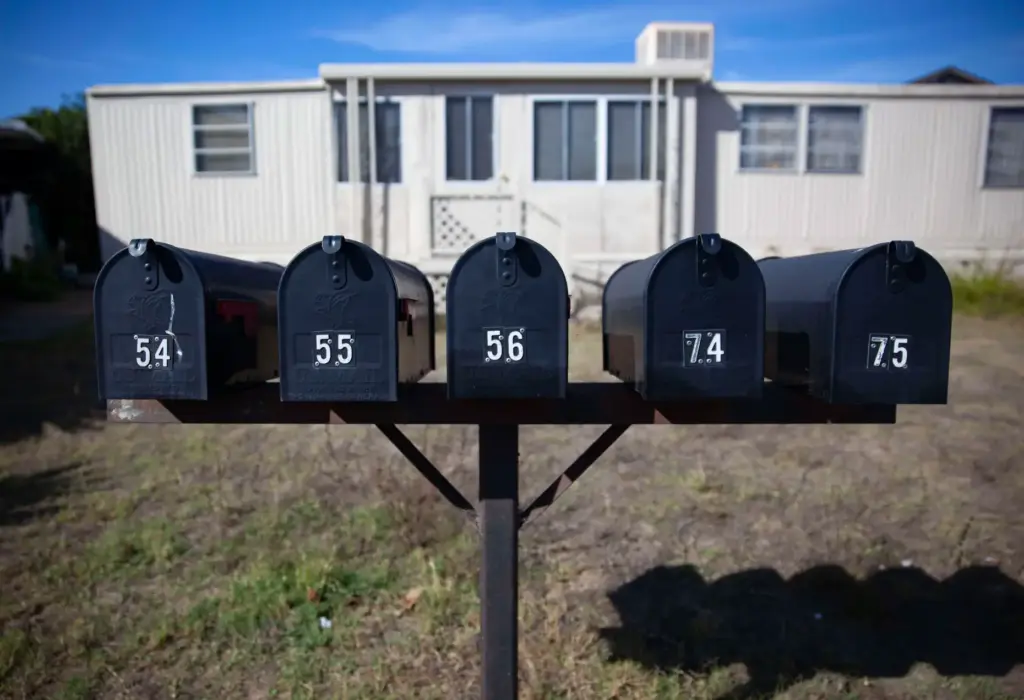 File photo by Crissy Pascual / Petaluma Argus-CourierLittle Woods mobile home park in Petaluma. (File photo by Crissy Pascual / Petaluma Argus-Courier)
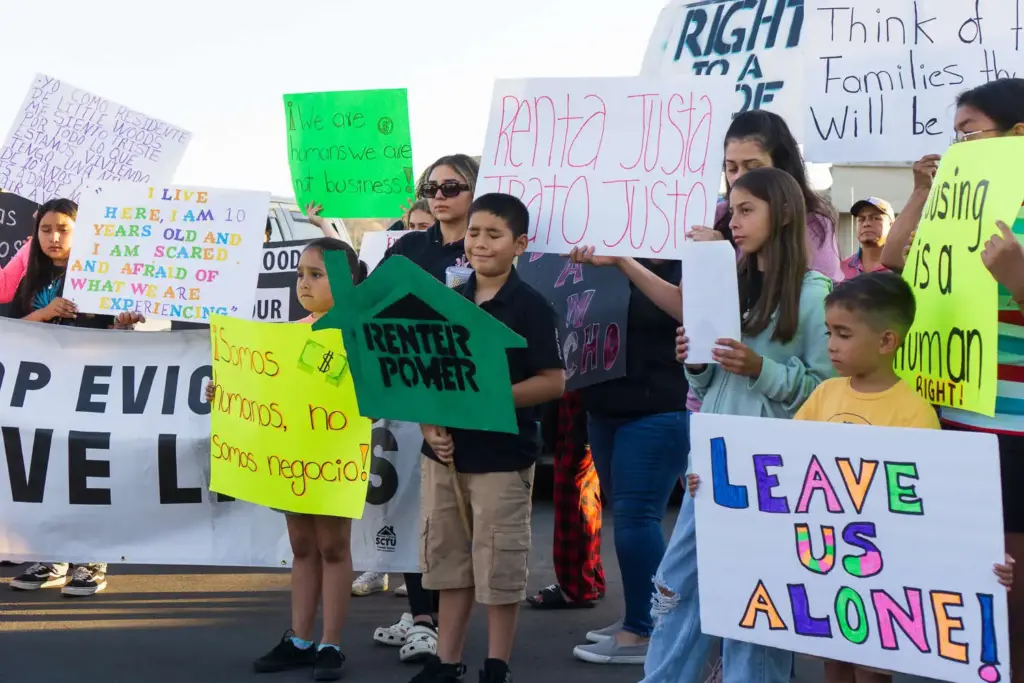 Courtesy of Lina Blanco-Ogden/North Bay Organizing ProjectResidents of Little Woods Mobile Villa hold signs during a news conference held in the wake of threats to the mobile park’s closure on Aug. 29, 2023. (Courtesy of Lina Blanco-Ogden/North Bay Organizing Project)
Pressures on the ground
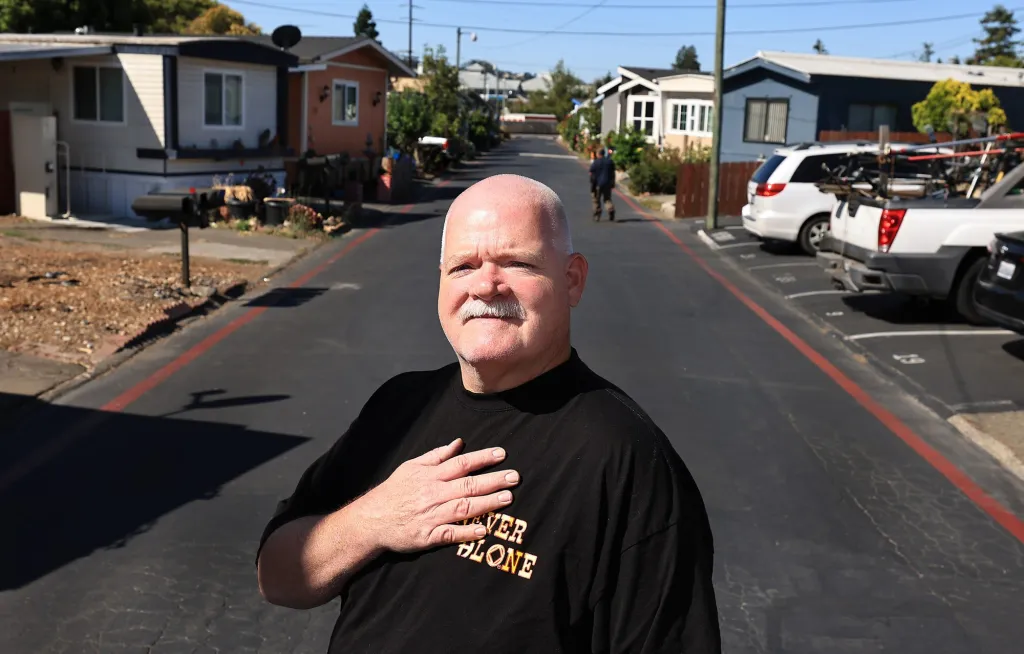
Christopher Brown has lived in his old Great Lakes trailer at Little Woods for 30 years. Over that time, “there’s been hiccups,” which he characterized as a two on the Richter scale. Since park owners and management have escalated their fight over city regulations, accompanied by a series of rent hikes, eviction threats and other changes, “it’s been an eight to 10,” he said.
“They can cross the line on all levels. Our city has been great, but the thing is, we’ve been dealing with this for years now.” With the impending closure, it’s a “fear of not having a place to live,” he said.
The interview for the relocation report was “emotional.”
“Someone comes in your house, asks all these questions,” about the home’s value, health issues, family nearby. “It made it feel real that I’m going to have to go somewhere, and I don’t know where I’m going to go.”
Brown is anxious to see the results. “The sooner I know, the sooner I can start negotiating how I’m gonna function,” he said. He’s tried applying for housing, but affordable options come with long waiting lists.
Meanwhile, on June 30, Brown received notice that ownership is seeking another monthly rent increase — $189.81 in Brown’s case, far above the $5.18 allowed this year by city limits tightened in 2023 to 70% of the annual consumer price index, the average measure of goods and services in an area.
That rent increase would bring Brown’s rent for the land beneath his home to $660 “and take out every cent I have,” he said. He has a roommate but also an income of $1,300 per month.
The move triggers an arbitration where a park owner can make the case they aren’t getting a fair return, and residents can fight it.
At Little Woods, it is the fourth arbitration in as many years. The first arbitration, in 2023, sought to increase rents by 300%. All three previous arbitrations have come out in residents’ favor, although owners have appealed the decisions. The process is costly and time consuming for all involved, and residents have pooled resources and fundraised with outside support to mount their defense.
Although Ubaldi has challenged bias in arbitrators’ previous rulings for Little Woods, Brady, the Petaluma assistant city attorney, said he believes those results “show the ordinance is working fine.”
While Ubaldi did not provide Little Woods’ specific profit margin, right now, he said “it’s not that the park is losing money, it’s that every single year the park is going down in value because it can’t keep pace with inflation.”
“They’ve made it untenable to operate as a mobile home park,” he said.
“There has been plenty of options put on the table to negotiate away from this closure, and we’ve been rebuffed every which way we turn,” he added, referencing efforts to get rid of limits on rent increases at point of sale. “We have no option left but to arbitrate every year or to close the business.”
To Brown, however, it feels like “they’re wanting to terminate the mobile home park because they’re not getting their way.”
“They’ve banded together, and they have these deep pockets,” he said, referencing owners and companies like Harmony Communities and groups like the Western Manufactured Housing Communities Association that have poured money into the fight against regulations in Petaluma and beyond. “Look at how much money they have spent, but yet they’re saying they’re not making enough money from us?”
He pointed to the trail of arbitrations, lawsuits, alleged threats of displacement, a move to suddenly restrict residents’ on-site parking. “They know what it does to people,” he said.
You can reach senior reporter Marisa Endicott at 707-521-5470 or [email protected]. On X @marisaendicott and Facebook @InYourCornerTPD.
Read more How to play the day away in Monterey
About the Author