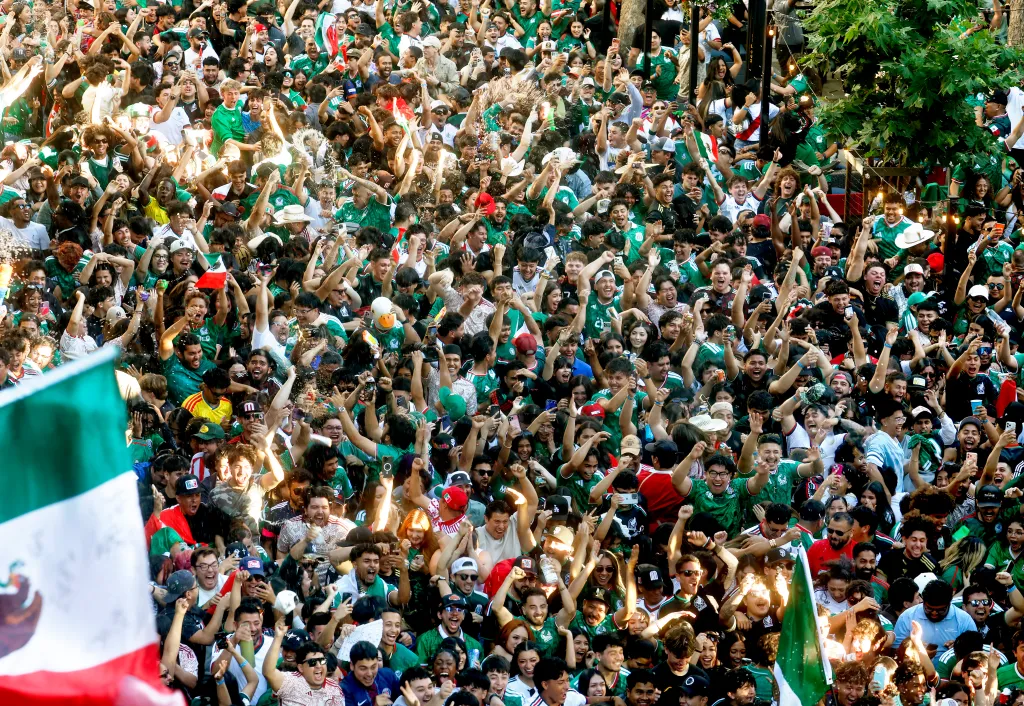
San Jose has long laid claim to being the Bay Area’s soccer capital. Over six weeks of World Cup play, boisterous watch parties strengthened that claim, helping draw more than 900,000 visits downtown.
Read more 49ers face tight end bind as they enter training camp with Kittle injured
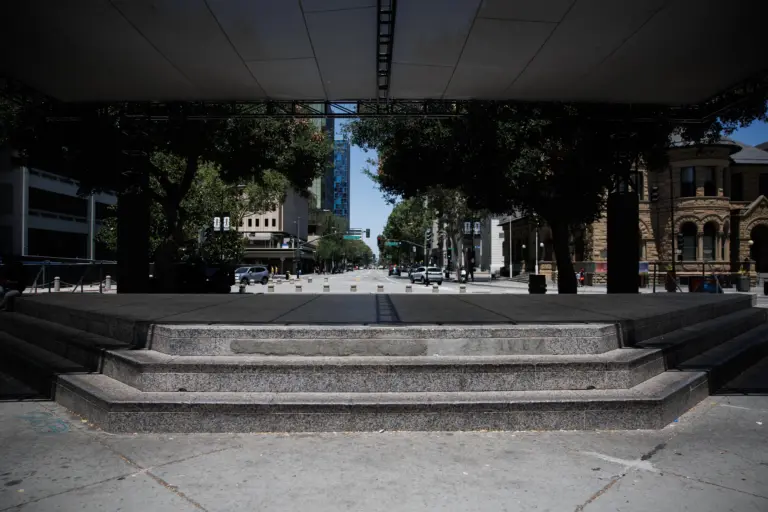
As Spain and Argentina prepare to meet Sunday in the tournament final, the crowds have offered a glimpse of what San Jose’s business district could become. Streets often quiet since remote work thinned office crowds instead saw packed light-rail trains and lines outside restaurants and cafes, a sharp contrast for a downtown that has struggled to recover from the pandemic.
City leaders continue to champion housing and job growth as long-term solutions, but the World Cup, other entertainment draws and major tech conferences have raised a more immediate question: Can San Jose turn weeks of extraordinary activity into a lasting downtown strategy?
Crowds exceed expectations
Bars, restaurants and cafes across San Jose played the games, but San Pedro Square became the heart of the city’s tournament events. The one-block, 450-foot pedestrian mall, tucked between West Santa Clara Street and Sharks Way, served as the primary gathering place for fans following the tournament, whether the day’s match was being played at Levi’s Stadium in Santa Clara or thousands of miles away.
The city and the Earthquakes, San Jose’s hometown Major League Soccer club, transformed the square into a weeks-long festival. The tournament built on the city’s established soccer culture, anchored by the Earthquakes, their purpose-built stadium, and a network of amateur and youth programs.
Organizers originally projected roughly 350,000 visits to downtown events. City data released July 15 shows more than 900,000 visits have been recorded across downtown since the tournament’s first match, about 2½ times the original projection.
When attendance spiked during high-demand matches, organizers doubled the number of jumbo screens along San Pedro Square’s narrow promenade from two to four. The volume of fans during Mexico’s matches eventually forced the city to move the most-watched games to the nearby SAP Center and Discovery Meadow on July 5.
According to city attendance data, the highest-attended matches included Mexico-Ecuador on June 30, which drew an estimated 37,200 fans, USA-Bosnia and Herzegovina on July 1, which drew 20,000, and Mexico-England on July 5, which brought nearly 40,000 people across downtown.
Business owners said the games brought consistent foot traffic and sales they had not seen since before the pandemic.
“Early on, we’d have two to three games in a day — that’s when we saw sales that we didn’t think could happen,” said Randy Musterer, owner of Sushi Confidential, a well-established restaurant in the middle of the square. “One group would come in and spend money, then they’d leave, and another group would come in. I’d say, in terms of sales, it was more than six Super Bowls.”
Over those six weeks, David Mulvehill, a partner in O’Flaherty’s and several other bars and restaurants at San Pedro Square, said he felt like he had “actually been working at a music festival.”
“It’s just been nonstop here for a while. But it’s been very positive. The economic input over that period, we’ll probably never see that again,” he said.
When Mayor Matt Mahan proposed spending $500,000 to plan San Jose’s major events this year, including hiring a dedicated sports and major events coordinator to oversee branding and logistics, he faced pushback from colleagues who questioned the expense amid tight city budgets.
“There was a lot of skepticism, and it was a very open question,” Mahan said. “This would not have happened without City Hall choosing two years ago to put half a million dollars in.”
Managing the crowds
The crowds also created public safety problems outside the official viewing zones. At least two people were stabbed nearby hours after the June 30 match ended.
Since the tournament began, police have declared unlawful assemblies twice, including late July 5, when a crowd began throwing bottles at officers. Reports of a shooting followed early the next morning.
Mahan attributed the disorder to the scale and frequency of hosting 104 games across 39 days, while maintaining that the events and downtown remained safe overall.
“Unfortunately, there’s a very, very small fraction of a percent of people who choose to make bad choices … but I think that happens in every city,” Mahan said.
Read more Oakland school closure raises statewide questions over charter renewals
Other Bay Area cities have confronted similar challenges while managing recurring community events. Oakland’s monthly First Fridays festival, which is celebrating its 20th anniversary this year, can draw between 8,000 and 25,000 people around art, entrepreneurship and local culture.
In addition to hiring private security and coordinating with police, organizer Venessa McGhee said regular attendees and vendors frequently step in to de-escalate problems.
“Our first line of defense is community,” McGhee said. “A lot of people who show up, including the vendors, are incredibly protective of this platform.”
Can the momentum last?
San Jose had already tested its ability to manage a major influx of visitors during Super Bowl LX in February. The city hosted the official opening night while the Seattle Seahawks practiced at San Jose State University, and downtown held multiple fan events, including a large gathering at San Pedro Square Market.
John Poch, executive director of the San Jose Sports Authority, said the Super Bowl served as a testing ground for managing high-volume fan experiences.
“The Super Bowl is one game on the weekend,” Poch said. “For this, we knew we had to plan for 104 matches over 39 days.”
While World Cup watch parties of this magnitude may not return soon, Poch said San Jose’s major-event calendar will continue. During the tournament, the city hosted the U.S. Table Tennis Championships from July 3 through July 9.
A day after the World Cup final, the CrossFit World Championships will begin at the SAP Center and McEnery Convention Center. San Jose also plans to host tech conferences, concerts and street festivals throughout the year.
With its nearby airport, VTA light-rail lines and compact downtown core, Mahan said he hopes global visitors leave recognizing that San Jose has the infrastructure, partnerships and “know-how” to make large events repeatable.
“We’ve also had huge success independent of sports, with live downtown concerts at affordable price points,” Mahan said. “And so it’s just being creative about unique cultural experiences in the downtown that draw people from across the city.”
Greg Martin, who lives downtown and rented a Lime scooter every morning to reach the San Pedro Square watch parties, called the enthusiasm and spectacle “riveting.” But he questioned whether the city could maintain the momentum.
“I’m skeptical that this type of vibe will carry over. The policies of the city government sometimes make it hard for businesses to really catch on and stay,” said Martin, who owns Thai Soul Kitchen restaurant across town with his wife. Closing downtown streets for more festivals and music events would help, he said. “More stuff like that needs to happen again to help sustain this type of vibe moving forward.”
Some downtown business owners said the tournament demonstrated that San Jose can manage major events and improve as crowds grow.
At Dr. Funk’s tiki bar, general manager Alena Aaron said she wants to see San Jose build on that momentum as it presents itself as an event destination.
“If we can find other things that can bring us together, like the World Cup did, then I think we have that capacity. We can handle that type of crowd,” Aaron said. “Each game we got better and better, and we were able to handle more volume. Now we’re gonna miss it.”
Councilmember Anthony Tordillos, who represents downtown, said that while “there’s nothing like the World Cup,” the tournament offered a snapshot of the area’s potential.
“Feeling the energy downtown night after night, whether you were headed to San Pedro to watch one of the games, grabbing dinner at a local restaurant or doing some evening shopping, really showcased the potential vibrancy of our downtown,” Tordillos said. “If you give people a reason to be downtown, they’ll come downtown.”
Read more Asking Eric: My ex-wife lied, and our daughter cut me off
About the Author