By Kristina Peterson and Elizabeth Elkin, Bloomberg
Food-safety experts warned that plans to shutter a US Department of Agriculture research facility will hinder efforts to protect consumers from the foodborne cyclospora parasite — a risk that’s underscored by the outbreak that’s spreading across the country.
Read more Data center approved for office building in North San Jose
The agency is in the process of closing the Beltsville Agricultural Research Center just north of Washington, DC, and relocating its programs to facilities across the country under a restructuring plan announced last year. The center has two laboratories that play a significant role in investigating cyclospora as well as coordinating research with other federal agencies.
RELATED: Report: Salinas-based Taylor Farms linked to cyclosporiasis outbreak
Don Schaffner, chairman of the food science department at Rutgers’ School of Environmental and Biological Sciences, said the closing could set back foodborne parasitology research “a decade or more” and “put the United States farther away from understanding complex outbreaks like the current cyclospora outbreak.”
A representative for the USDA said that cyclospora research at the Beltsville center is continuing without disruption, without offering further details.
The agency hasn’t officially announced a closure date for the facility, but employees expect to move before the end of September, according to people familiar with the matter.
Health authorities expect cases of severe diarrhea caused by the parasite to keep rising this summer. At least 1,645 cases across 34 US states have been confirmed by lab tests, the US Centers for Disease Control and Prevention said on Tuesday. Michigan has had the largest number of cases and state officials say lettuce or salad greens are likely to be the source of the outbreak.
Schaffner cited work at the center’s labs to design filtration strategies to reduce cyclospora levels in irrigation water, as well as efforts to sequence and detect the parasite. He said the US should modernize and improve the center, instead of dismantling it.
“At a time when Americans are facing foodborne threats like Cyclospora, the Trump Administration is cutting the very research programs and agency resources that help prevent them,” Representative April McClain Delaney, a Maryland Democrat, said in a statement Thursday. She called for greater investment in efforts to keep the country’s food supply safe.
Last July, the USDA said it would move workers out of Washington and cut jobs around the nation’s capital by more than 50% while also closing regional offices. The agency reaffirmed its plans to decommission the Beltsville center in April, saying it would relocate research programs to facilities across the country “better aligned with regional agricultural needs.”
Read more Michelle Trachtenberg fans praise Rosie O’Donnell for discussing her addiction struggles
The agency spent $34 million renovating the facility, known as BARC, disbursing money for it as recently as 2023, according to contract details. The USDA has said it would be “financially unsound to keep BARC open” because many of its more than the 400 buildings require maintenance. USDA said to modernize 11 of those building would require a one-time cost of $500 million, plus $40 million annually.
Maryland Democrats have said that shuttering the facility is unlawful, given that Congress passed bipartisan legislation funding it. The Maryland attorney general’s office has said the reorganization and closure threaten more than 1,000 jobs in the state.
In a letter to the lawmakers in June, USDA Deputy Secretary Stephen Vaden defended plans to close the facility, citing the cost of maintenance, adding that accusations the USDA is abandoning research are “categorically false.” He wrote that the research will continue across more than 90 research centers across the US.
The produce industry has also signaled alarm over the plans, even before the current cyclospora outbreak intensified.
The USDA plans threaten research supporting food safety and pathogen detection, Joelle Mosso, associate vice president of science programs at the Western Growers Association, wrote in a May blog post. Her group represents produce farmers in states such as California and Colorado. Researchers at BARC are critical to developing food safety solutions for issues including cyclospora and salmonella, she wrote.
“There are very few places and people that do research on it,” Mosso said in an interview on Wednesday.
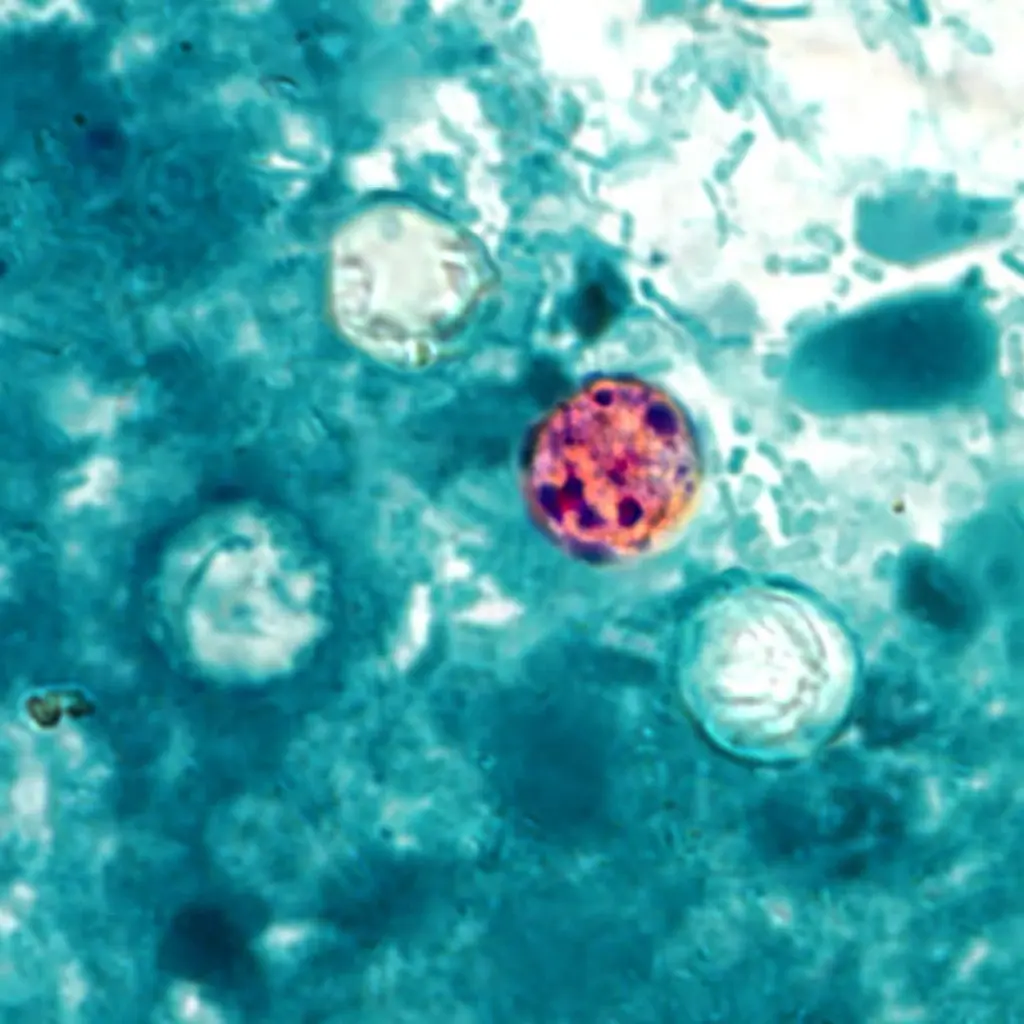
Cyclospora is particularly challenging to research because its oocysts, which are egglike structures, can’t be grown in a lab, unlike bacteria. However, researchers at BARC have cultivated a similar parasite, called eimeria, that has helped to advance understanding of cyclospora and efforts to combat it.
Read more Trump rule puts new limits on how long Bay Area international students can stay
More stories like this are available on bloomberg.com
©2026 Bloomberg L.P.
About the Author